Aperçu en situation
 Envoyer
 Partager
 Détails de l'œuvre
 Guide
Guide

 Télécharger l'image
 Articles similaires
 Radiographie
 Diaporama
 Q&A
Q&A Statistiques
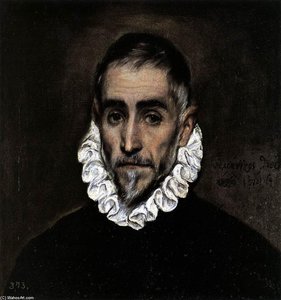
Portrait de Cardinal Tavera

- 103.0 x 83.0 cm


Plongez dans l'univers mystérieux d'El Greco ! Portrait de Cardinal Tavera : une œuvre emblématique, riche en couleurs et émotion. Découvrez ce chef-d’œuvre à reproduire.
 Lire la suite
Explorez l'art dramatique et expressif d'Él Greco (Doménikos Theotokopoulos). Découvrez ses peintures maniéristes emblématiques, ses thèmes religieux, ses figures allongées et son influence durable sur l'Expressionnisme et le Cubisme. Admirez des chefs-d’œuvre comme 'Vue de Tolède'!
Giclées et impressions d'art
Impressions giclées ou sur toile de qualité musée, avec une production rapide et des finitions au choix. ( Commander la reproduction peinte à la main Passer au format numérique)




P118B €10

P118H €10

P118W €10

P438Z €10

P508JH €12

P508YH €12

P805H €10

P805Z €10

P919BZ €10

P919G €10

P919XJ €10

P959ZH €10

P968JZ €12

W106C €8

W218G €10

W218JH €8

W218Y €10

W307PJ €10

W316G €10

W316PJ €8

W316Y €10

W398PJ €8

W4111J €10

W500HY €15

W500JH €15

W692G €12

W849H €8

W940BG €15

W953PJ €8




Format standard
sur mesure
CM
INCH
Choisissez parmi nos formats prédéfinis qui respectent les proportions originales de l’œuvre.
Loading sizes...

largeur
hauteur
Saisissez la largeur et la hauteur souhaitées pour qu'elles s'adaptent à votre cadre ou à votre mur. Une impression peut être recadrée, mais jamais agrandie au-delà de l'image originale ; ainsi, un format de forme différente entraînera la perte d'une partie de l'image. Nous vous envoyons une maquette numérique pour approbation avant toute impression. L'image présentée sur cette page ne montre pas le recadrage réel — seule la maquette le permet.
Livraison dans le monde entier () en 2 semaines au lieu des 4/5 semaines habituelles. (1 novembre)

Livraison express gratuite dans le monde entier

Toile de lin de qualité supérieure

Assurance transport complète

Garantie de remboursement des droits de douane

Garantie de fidélité des couleurs

Politique de retour de 100 jours (uniquement en cas de défaut)

Garantie de remboursement à 100%

Offre de tarifs dégressifs
 L'option verre n'est disponible que pour les dimensions inférieures à 110 cm.

Portrait de Cardinal Tavera
Giclées et impressions d'art
Format de la reproduction
-


Prix total
€ 61
Portrait of Cardinal Tavera by El Greco
Doménikos Theotokópoulos, universally known as El Greco – “The Greek” – remains one of the most profoundly individualistic and captivating figures in Western art history. His paintings are not merely representations; they’re windows into a world of intense emotion, spiritual yearning, and a unique visual language that continues to resonate centuries later. The Portrait of Cardinal Tavera, painted in 1608 and now residing within the walls of the Hospital Tavera in Toledo, Spain, exemplifies this perfectly. It’s a work that transcends its subject matter to become a meditation on faith, power, and the human condition – a testament to El Greco's extraordinary ability to imbue his subjects with an almost palpable sense of presence.El Greco’s artistic vision was a radical departure from the prevailing styles of his time. He didn't simply mimic; he synthesized, drawing upon Byzantine icon painting – particularly its use of flattened forms and symbolic color – with elements of Venetian Renaissance naturalism and Mannerist elongation. In the Portrait of Cardinal Tavera, this fusion is immediately apparent. The figure’s elongated limbs and head, a hallmark of El Greco's style, create a sense of dynamism and spiritual intensity. Notice how he masterfully employs loose, expressive brushstrokes, creating a textured surface that seems to vibrate with energy.
Image: Portrait of Cardinal Tavera by El Greco
A Dramatic Synthesis: Style and Technique
El Greco’s stylistic innovations were driven by a deep understanding of artistic tradition. He drew inspiration from Byzantine iconography, prioritizing spiritual contemplation over realistic depiction. Simultaneously, he embraced Venetian Renaissance principles – notably the use of chiaroscuro (light and shadow) – to heighten dramatic effect. The Portrait of Cardinal Tavera showcases this duality brilliantly. El Greco’s technique involved layering thin glazes of pigment over a gesso ground, achieving luminous colors and subtle gradations that contribute to the painting's ethereal quality.
Furthermore, he utilized a pyramidal composition—a compositional device frequently employed by Renaissance artists—to anchor the figure within a space that feels both intimate and monumental. The careful placement of the book in the cardinal’s hand – a symbol of knowledge and authority – adds another layer of meaning to the portrait.
Historical Context: Toledo and Patronage
To appreciate the Portrait of Cardinal Tavera, it’s crucial to situate it within Toledo’s cultural landscape during El Greco's lifetime. Toledo served as a bastion of Catholicism and artistic excellence under Habsburg rule, attracting commissions from wealthy patrons eager to adorn their homes with masterpieces.
The Hospital Tavera itself commissioned the portrait—a testament to the importance of religious institutions in fostering artistic creativity. The artist modeled his depiction of Cardinal Juan Pardo de Tavera on a funerary mask created by Alonso Berruguete, reflecting the solemn reverence accorded to deceased figures within Spanish society.
Symbolism and Emotional Resonance
El Greco’s Portrait of Cardinal Tavera is laden with symbolic significance. The elongated form represents spiritual aspiration and transcendence—a deliberate departure from naturalistic conventions. The muted palette contributes to the painting’s contemplative mood, inviting viewers to contemplate themes of faith, humility, and mortality.
Ultimately, El Greco's masterpiece transcends mere visual representation; it communicates profound emotional depth—a testament to his unparalleled ability to capture the essence of human experience. It remains a captivating symbol of artistic innovation and spiritual contemplation.
Own a Piece of History: Reproductions at TopImpressionists.com
For art enthusiasts seeking to experience the beauty and power of El Greco’s Portrait of Cardinal Tavera, TopImpressionists.com offers meticulously crafted oil painting reproductions. Each reproduction is created by skilled artisans using traditional techniques, ensuring that it captures the essence of El Greco’s original masterpiece with remarkable accuracy and detail.
Discover more about El Greco and his works at: Wikipedia: El Greco and Wikipedia: El Greco Museum, Toledo.
Questions et réponses
Quand et avec quels matériaux Portrait de Cardinal Tavera a-t-il été réalisé ?
«Portrait de Cardinal Tavera» a été réalisé en 1608, en Huile sur toile.
Quelle pièce s'accorde avec les couleurs de «Portrait de Cardinal Tavera» de Él Greco ?
Avec sa palette Tons terreux, «Portrait de Cardinal Tavera» de Él Greco est recommandé pour une Salon. Ses couleurs justifient d'ailleurs cette suggestion.
Quelle taille et quel format sont recommandés pour un tirage de «Portrait de Cardinal Tavera» de Él Greco ?
Pour une impression de «Portrait de Cardinal Tavera» de Él Greco, un format Grand format avec une orientation Format portrait est recommandé.
Biographie de l'artiste
**Jeunesse et formation**
El Greco (Domenikos Theotokopoulos), un peintre, sculpteur et architecte grec renommé, est né en 1541 à Crète, alors sous domination vénitienne. Son nom de naissance était Domenikos Theotokopoulos. La formation précoce d'El Greco en tant que peintre d'icônes de l'école crétoise, un centre majeur de l'art byzantin post-byzantin, a jeté les bases de ses futurs efforts artistiques.**Évolution artistique et influences**
Le style artistique d'El Greco s'est façonné par ses voyages à Venise et Rome, où il a absorbé les styles maniéristes et du Renouveau, influencé notamment par Tintoret et Titien. Son déménagement à Tolède, en Espagne, en 1577 a marqué une période de création prolifique, donnant naissance à des chefs-d'œuvre tels que La Vue de Tolède et L'ouverture du cinquième sceau.**Œuvres notables et style**
* L'allégorie de l'ordre des Camalodites (méroristique, huile) - témoignant du mélange unique d'El Greco entre les traditions byzantines et les éléments stylistiques occidentaux. * Fable (méroristique, huile) – démontrant son utilisation de choix de couleurs vibrantes et inhabituels. * Giacomo Bosio (méroristique, huile) – mettant en valeur la maîtrise d'El Greco du style méroptique.**Héritage et influence**
Le style dramatique et expressionniste d'El Greco, caractérisé par des figures allongées et une pigmentation fantastique, a été une source d'inspiration pour les poètes et les écrivains. Il est considéré comme un précurseur de l'expressionnisme et du cubisme. Pour en savoir plus sur la vie et les œuvres d'El Greco, visitez [https://TopImpressionists.com/@/el-greco-(domenikos-theotokopoulos)](https://TopImpressionists.com/@/el-greco-(domenikos-theotokopoulos)).- **Consultez les peintures d'El Greco** sur [https://TopImpressionists.com/@@/85fr95-el-greco-(domenikos-theotokopoulos)-allegory-of-the-camaldolite-order](https://TopImpressionists.com/@@/85fr95-el-greco-(domenikos-theotokopoulos)-allegory-of-the-camaldolite-order)
- **Apprenez-en davantage sur la vie et les œuvres d'El Greco** sur [https://en.wikipedia.org/wiki/el_greco](https://en.wikipedia.org/wiki/el_greco)
- **Explorez l'Institut hellénique des études byzantines et post-byzantines**, qui présente une large gamme d'artefacts reflétant le riche patrimoine artistique de Byzance, sur /fr/art/show/art-d3b8bv-fr/

Él Greco
1541 - 1614 , Grèce
L'essentiel de l'artiste
- Artistes Influents:
- Titian
- Tintoretto
- Date De Décès: 1614
- Date De Naissance: 1541
- Influences Artistiques:
- Expressionnisme
- Cubisme
- Lieu De Naissance: Crète, Grèce
- Mouvement Artistique: Manierisme, Renaissance espagnole
- Nationalité: Grecque-Espagnole
- Nom Complet: Él Greco (Doménikos Theotokópoulos)
- Oeuvres Notables:
- Vue de Tolède
- Entombs du Comte d'Orgaz
- Allégorie des Camaldoulins
Articles connexes

Lumière et Matière : Les Secrets de la Peinture à l'Huile sur Toile
Découvrez les secrets techniques de l'huile, du glacis à l'empâtement. Explorez la science et l'âme des maîtres dès maintenant.
Explorez des œuvres d'art classées par thèmes, styles et caractéristiques.