


 Aperçu en situation
 Envoyer
 Partager
 Détails de l'œuvre
 Guide
Guide

 Télécharger l'image
 Articles similaires
 Radiographie
 Diaporama
 Q&A
Q&A Statistiques
Small flower garden


Vibrant expressionistic blooms in red and yellow dance under a moody cloudy sky in this captivating Small Flower Garden by Emil Nolde, an exquisite piece inviting you to bring German Expressionism into your home.
 Lire la suite
Explorez l'expressionnisme vibrant d'Emile Nolde ! Découvrez des couleurs audacieuses, des paysages émouvants et des œuvres emblématiques telles que « La Déposition de Christ ». Figure clé du groupe Die Brücke.
Giclées et impressions d'art
Impressions giclées ou sur toile de qualité musée, avec une production rapide et des finitions au choix. ( Commander la reproduction peinte à la main Passer au format numérique)




P118B €10

P118H €10

P118W €10

P438Z €10

P508JH €12

P508YH €12

P805H €10

P805Z €10

P919BZ €10

P919G €10

P919XJ €10

P959ZH €10

P968JZ €12

W106C €8

W218G €10

W218JH €8

W218Y €10

W307PJ €10

W316G €10

W316PJ €8

W316Y €10

W398PJ €8

W4111J €10

W500HY €15

W500JH €15

W692G €12

W849H €8

W940BG €15

W953PJ €8




Format standard
sur mesure
CM
INCH
Choisissez parmi nos formats prédéfinis qui respectent les proportions originales de l’œuvre.
Loading sizes...

largeur
hauteur
Saisissez la largeur et la hauteur souhaitées pour qu'elles s'adaptent à votre cadre ou à votre mur. Une impression peut être recadrée, mais jamais agrandie au-delà de l'image originale ; ainsi, un format de forme différente entraînera la perte d'une partie de l'image. Nous vous envoyons une maquette numérique pour approbation avant toute impression. L'image présentée sur cette page ne montre pas le recadrage réel — seule la maquette le permet.
Livraison dans le monde entier () en 2 semaines au lieu des 4/5 semaines habituelles. (31 octobre)

Livraison express gratuite dans le monde entier

Toile de lin de qualité supérieure

Assurance transport complète

Garantie de remboursement des droits de douane

Garantie de fidélité des couleurs

Politique de retour de 100 jours (uniquement en cas de défaut)

Garantie de remboursement à 100%

Offre de tarifs dégressifs
 L'option verre n'est disponible que pour les dimensions inférieures à 110 cm.

Small flower garden
Giclées et impressions d'art
Format de la reproduction
-


Prix total
€ 61
A Symphony of Color and Emotion
In the evocative masterpiece Small flower garden, the viewer is transported into a world where nature breathes through a lens of raw, unbridled emotion. The painting presents a breathtaking tapestry of flora, where vibrant reds, sun-drenched yellows, and fiery oranges dance across the canvas in a rhythmic display of life. Each bloom, meticulously yet loosely rendered, possesses its own distinct personality, contributing to a dense, lively thicket of petals and leaves. This is not merely a botanical study; it is an immersive experience that captures the very essence of a garden in full, exuberant bloom, inviting the observer to lose themselves in the intricate details of a miniature paradise.
The atmosphere of the piece is defined by a captivating tension between the terrestrial and the celestial. While the foreground pulses with the warmth of summer, the backdrop reveals a heavy, brooding sky. These swirling, cloudy formations suggest an impending rain, casting a soft, diffused light over the landscape that heightens the saturation of the flowers. This interplay between the radiant vitality of the earth and the melancholic weight of the atmosphere creates a profound visual dynamic, reminding us of the fleeting nature of beauty and the cyclical rhythms of the natural world.
The Expressive Hand of Emil Nolde
As a seminal figure of the German Expressionist movement and a key member of Die Brücke, Emil Nolde brought an unparalleled intensity to his subjects. In Small flower garden, his signature technique is on full display through bold, gestural brushstrokes that prioritize emotional truth over photographic realism. The texture of the paint itself becomes a character in the scene; thick applications of pigment create a tactile depth that makes the flowers appear to surge forward from the canvas. This impasto-like quality, combined with a palette of high-contrast hues, reflects Nolde's deep fascination with the primal power of color.
Nolde’s artistic lineage—rooted in the influence of masters like Van Gogh and Gauguin—is evident in the way he utilizes color to evoke psychological states. For the discerning collector or interior designer, this painting offers more than just aesthetic appeal; it provides a focal point of immense character. The piece possesses a transformative energy that can anchor a room, bringing a sense of organic warmth and sophisticated drama to any space. Whether placed in a contemporary gallery setting or a classic study, Small flower garden serves as a timeless testament to the ability of art to capture the fleeting, magnificent pulse of life.
Questions et réponses
D'où viennent les visiteurs de «Small flower garden» de Emil Nolde ?
Les statistiques concernant «Small flower garden» de Emil Nolde sont disponibles sur la page Statistiques de l'œuvre : nombre de visites mensuelles, consultations des autres œuvres de l'artiste, ainsi que la répartition des visiteurs récents par pays et par langue.
À quelle occasion «Small flower garden» de Emil Nolde est-il recommandé d'offrir ?
«Small flower garden» de Emil Nolde est recommandé comme cadeau pour Mother's Day. Une reproduction de l'œuvre peut être offerte en guise de présent.
Quelle est l'émotion qui se dégage de «Small flower garden» de Emil Nolde ?
«Small flower garden» de Emil Nolde dégage une tonalité émotionnelle Joyful.


Biographie de l'artiste
Emil Nolde : Vie et Héritage
Jeunesse et Débuts Artistiques
Emil Nolde, peintre renommé de Germanie-Danemark, est né Hans Emil Hansen le 7 août 1867 à Nolde, en Schleswig-Holstein, Allemagne. Il venait d'une famille avec de fortes attaches aux modes de vie ruraux et aux croyances religieuses, des facteurs qui ont profondément influencé sa vision artistique. Malgré l'opposition initiale de ses parents, qui préféraient qu'il poursuive une carrière plus conventionnelle, Nolde a poursuivi sans relâche sa passion pour l'art. Il a d'abord travaillé comme sculpteur sur bois et décorateur de meubles avant de se consacrer pleinement à la peinture dans sa vingtaine.
Développement Artistique et Influences
Le parcours artistique de Nolde a été marqué par l'auto-éducation et l’exploration. Il a voyagé largement, absorbant des influences de différentes cultures et formes d'art. Les premières influences comprenaient Vincent van Gogh, Paul Gauguin et l'art populaire traditionnel – en particulier la puissance expressive des masques et sculptures primitifs. Ces rencontres ont suscité son intérêt pour les couleurs audacieuses, les formes simplifiées et les sujets chargés d’émotion. Il a initialement expérimenté le Réalisme et l'Impressionnisme mais s'est rapidement tourné vers un style plus subjectif et expressif.
Die Brücke et la Révolution Expressionniste
En 1905, Nolde a cofondé Die Brücke (Le Pont), un groupe allemand expressionniste clé. Ce collectif cherchait à rompre avec les traditions académiques et à exprimer des émotions intérieures par une expérimentation artistique radicale. La contribution de Nolde au groupe Die Brücke a été significative ; son utilisation intense de la couleur et des formes déformées a repoussé les limites de la représentation. Cependant, il a maintenu un chemin relativement indépendant au sein du groupe, s'écartant souvent en matière de sujet et d’approche stylistique.
Thèmes Clés et Style Artistique
L'œuvre de Nolde est caractérisée par plusieurs thèmes récurrents : scènes religieuses, paysages, marines et portraits. Il était particulièrement fasciné par le pouvoir des masques – à la fois en tant qu’objets physiques et représentations symboliques des émotions primales. Son style artistique est défini par:
- Des couleurs audacieuses et vibrantes utilisées pour exprimer l'intensité émotionnelle
- Des formes déformées qui mettent l'accent sur l’expression plutôt que sur la représentation réaliste
- Une technique d'impasto – application épaisse de peinture créant de la texture
- Un souci de capturer les états psychologiques intérieurs
Œuvres Notables et Réalisations
Tout au long de sa carrière, Nolde a créé un vaste corpus d'œuvres. Certaines de ses peintures les plus célèbres comprennent:
- Masques (1906-1907) – mettant en valeur sa fascination pour l’art primitif
- La Mise à nu du Christ (1909) – une scène religieuse puissante et chargée d'émotion
- Mer d'automne (1908) - démontrant son paysage pictural expressif.
- Jardin de fleurs (Fille et lavage) (1907)
- Danse autour du taureau d’or (1909)
Malgré les critiques et la censure qu'il a subies pendant le régime nazi – son œuvre étant qualifiée de “dégénérée” – Nolde a continué à peindre en secret. Il a produit un important corps d’œuvres aquarellées pendant cette période, démontrant ainsi son engagement inébranlable envers l’expression artistique.
Signification Historique et Héritage
L'utilisation innovante de la couleur et du trait expressif de Nolde a profondément influencé les générations d'artistes. Son œuvre a comblé le fossé entre l’art représentatif traditionnel et les mouvements abstraits qui ont suivi. Il reste une figure centrale de l'histoire de l'expressionnisme allemand, célébré pour son intensité émotionnelle, son expérimentation audacieuse et sa vision artistique durable. Son héritage continue d'inspirer les artistes et les amateurs d’art du monde entier.

Emil Nolde
1867 - 1956 , Allemagne
L'essentiel de l'artiste
- Artistic Movement Or Style: Expressionism, Die Brücke
- Artists Who Influenced This Artist:
- Vincent van Gogh
- Paul Gauguin
- Date Of Birth: August 7, 1867
- Date Of Death: April 13, 1956
- Full Name: Emil Nolde
- Nationality: German
- Notable Artworks:
- Masks
- The Mocking of Christ
- Flower Garden (Girl and Washing)
- Autumn Sea
- Place Of Birth: Nolde, Schleswig-Holstein
Articles connexes
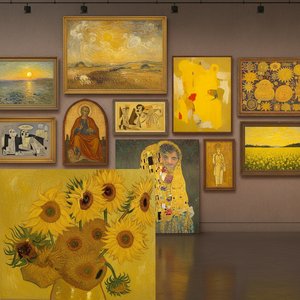
Top 10 des Tableaux Célèbres Dominés par le Jaune Chrome : Art & Décor
Plongez dans le monde vibrant du jaune chrome à travers 10 tableaux célèbres ! Découvrez l'histoire de Van Gogh, Monet et d'autres maîtres impressionnistes. Trouvez l'inspiration déco et achetez des reproductions d'art de qualité muséale sur TopImpressionists.com.

Crimson Threads of Narrative: Exploring Symbolism & Representation in Artworks Featuring the Red Dress
Explore the rich symbolism of the red dress in art history! From ancient power displays to iconic portraits like Cézanne’s 'Madame Cezanne', discover the cultural and artistic significance behind this captivating color. Expert analysis & insights.

The Golden Hue: Exploring Symbolism & Emotion in Yellow Art
Explore the rich symbolism & emotional power of yellow in art history! From Van Gogh to Kandinsky, discover how artists used this vibrant hue. Expert analysis & high-quality reproductions at TopImpressionists.

Cultivating Paradise: A Historical & Artistic Exploration of Gardens in Painting
Explore the rich history of gardens in painting! Discover masterpieces from Renaissance to Impressionism & beyond. Learn about symbolism, artists like Monet & Klimt, and find your perfect artwork at TopImpressionists.

Maîtriser l'émotion : les 25 chefs-d'œuvre emblématiques de Mark Rothko
Explorez les 25 chefs-d'œuvre de Mark Rothko et l'émotion du Color Field. Découvrez toute la collection sur TopImpressionists.com.
Explorez des œuvres d'art classées par thèmes, styles et caractéristiques.


