


 Aperçu en situation
 Envoyer
 Partager
 Détails de l'œuvre
 Guide
Guide

 Télécharger l'image
 Articles similaires
 Radiographie
 Diaporama
 Statistiques
Alone
 Oil On Canvas
- WallArt
- Post-Impressionist Movement
 1893
1893- 19th Century
 50.0 x 73.0 cm
Paul Gauguin’s "Alone," a captivating Post-Impressionist painting from 1893, depicts a serene woman resting in a warm yellow field, showcasing the artist's signature cloisonnism style. Discover this iconic artwork and bring its tranquil beauty into your space.
 Lire la suite
Explore Paul Gauguin's (1848-1903) art vibrant Post-Impressionniste, pionnier du Symbolisme & de la Synthétisme. Découvrez des peintures iconiques tahitiennes et son influence sur l'art moderne. #Gauguin
Reproduction à l'huile faite à la main
Huile sur toile peinte à la main, avec cadre et dimensions personnalisés, réalisée sur commande par nos artistes. ( Passer au format impression Passer au format numérique)




P118B €10

P118H €10

P118W €10

P438Z €10

P508JH €12

P508YH €12

P805H €10

P805Z €10

P919BZ €10

P919G €10

P919XJ €10

P959ZH €10

P968JZ €12

W106C €8

W218G €10

W218JH €8

W218Y €10

W307PJ €10

W316G €10

W316PJ €8

W316Y €10

W398PJ €8

W4111J €10

W500HY €15

W500JH €15

W692G €12

W849H €8

W940BG €15

W953PJ €8




Format standard
sur mesure
CM
INCH
Choisissez parmi nos formats prédéfinis qui respectent les proportions originales de l’œuvre.
Loading sizes...

largeur
hauteur
Saisissez la largeur et la hauteur souhaitées, pour s'adapter à votre cadre ou à votre mur. Cette œuvre est peinte à la main ; ainsi, pour un format de forme différente, l'artiste peut peindre un peu plus autour du tableau ou réduire légèrement les bords — c'est vous qui choisissez. Nous vous envoyons une maquette numérique pour approbation avant que la peinture ne commence. L'image présentée sur cette page ne reflète pas le résultat réel — seule la maquette le fait.
Exemples de personnalisation possibles : remplacer un visage par la photo du client ; ajouter un animal de compagnie (par exemple, remplacer un chat par un chien) ; inclure un message caché en arrière-plan ; modifier le paysage ou les éléments de l'arrière-plan.
Après la commande, l’équipe TopImpressionists.com contactera le client par e-mail pour recueillir ses instructions et lui fournira une maquette d’aperçu
Après la commande, l’équipe TopImpressionists.com contactera le client par e-mail pour recueillir ses instructions et lui fournira une maquette d’aperçu
Livraison dans le monde entier () en 3 à 4 semaines au lieu des 5 semaines habituelles. (26 octobre). Aucun compromis sur la qualité.

Livraison express gratuite dans le monde entier

Toile de lin de qualité supérieure

Assurance transport complète

Garantie de remboursement des droits de douane

Garantie de fidélité des couleurs

Politique de retour de 100 jours (uniquement en cas de défaut)

Garantie de remboursement à 100%

Offre de tarifs dégressifs
 L'option verre n'est disponible que pour les dimensions inférieures à 110 cm.

Alone
Technique de reproduction
Format de la reproduction
-


Prix total
€ 236
Alone: A Portrait of Quietude by Paul Gauguin
Paul Gauguin’s “Alone,” painted in 1893, is more than just a depiction of a woman resting; it's an immersive exploration of solitude and the profound stillness that can be found within. Measuring a modest 50 x 73 cm, this oil-on-canvas work invites viewers into a world of contemplative serenity, a hallmark of Gauguin’s mature style and a poignant reflection of his own increasingly isolated existence.
- Subject Matter: The central figure, a woman lying prone with her head cradled in her arm, exudes an immediate sense of peace. Her relaxed posture suggests either slumber or deep contemplation – the ambiguity adds to the painting’s evocative power. Scattered around her are other figures, smaller and less defined, contributing to the overall impression of isolation rather than distracting from the primary theme.
- Style & Technique: Gauguin masterfully employs the style of Cloisonnism, characterized by bold outlines and flattened planes of color. This technique, reminiscent of stained glass, creates a striking visual impact, emphasizing the geometric forms and contributing to the painting’s tranquil atmosphere. The use of warm yellow in the background field further enhances this sense of calm and adds depth to the composition.
- Historical Context: “Alone” emerged during a pivotal moment in Gauguin's artistic journey, firmly rooted within the Post-Impressionist movement. Influenced by artists like Van Gogh and Bernard, he sought to move beyond mere representation, aiming instead to capture subjective emotions and spiritual truths. The painting’s themes of isolation resonate with the anxieties and uncertainties of the late 19th century, a period marked by rapid social change and increasing urbanization.
Decoding Symbolism: A Journey Within
Beyond its surface beauty, “Alone” is rich in symbolic potential. The woman’s posture immediately evokes feelings of vulnerability and introspection. Her placement on the ground suggests a surrender to the moment, a willingness to embrace solitude rather than resist it. The expansive yellow field surrounding her isn't merely a backdrop; it represents an open space, a realm of possibility, perhaps even a metaphor for the unconscious mind. The smaller figures, though indistinct, could symbolize fleeting memories or the echoes of past experiences – reminders of connections that have faded into the background.
- Color Palette: Gauguin’s deliberate use of warm yellows and earthy tones contributes significantly to the painting's emotional impact. Yellow, often associated with optimism and enlightenment, is tempered by the muted colors, creating a sense of both hope and melancholy.
- Compositional Elements: The diagonal lines created by the woman’s body and the horizon line contribute to the dynamic feel of the composition, preventing it from feeling static or lifeless. This careful arrangement guides the viewer's eye and reinforces the painting's central theme of movement – not physical movement, but rather the internal journey of contemplation.
Gauguin’s Legacy: A Timeless Exploration
"Alone" stands as a testament to Gauguin’s profound understanding of human emotion and his ability to translate complex feelings onto canvas. It's a painting that invites viewers to pause, reflect, and consider the beauty and significance of solitude. Its influence can be seen in countless works of art that followed, solidifying Gauguin’s place as one of the most important artists of the modern era.
A hand-painted reproduction of “Alone” offers a unique opportunity to bring this iconic artwork into your home or office. Each reproduction is meticulously crafted by skilled artisans, ensuring exceptional detail and color accuracy. Whether you are an art collector, interior designer, or simply someone who appreciates beauty, this stunning piece will undoubtedly become a cherished addition to your collection.
Questions et réponses
Quelle est la technique et les dimensions de l'original de «Alone» de Eugène Henri Paul Gauguin ?
«Alone» de Eugène Henri Paul Gauguin est une œuvre réalisée en Oil On Canvas, mesurant 50 x 73 cm.
Quelle est l'atmosphère générale de «Alone» de Eugène Henri Paul Gauguin ?
«Alone» dégage une atmosphère Calm.
Comment le style de « Alone » s'inscrit-il dans l'époque de son créateur ?
Dans «Alone» de Eugène Henri Paul Gauguin, le mouvement Post-Impressionist Movement rencontre l'époque XIXe siècle.
Biographie de l'artiste
Eugène Henri Paul Gauguin : Une Vie en Couleurs et Symbolisme
Jeunesse et Origines
- Né le 7 juin 1848 à Paris, en France, Eugène Henri Paul Gauguin était une figure complexe façonnée par une éducation inhabituelle.
- Son père était journaliste, et sa mère venait d'une famille aux racines péruviennes – sa grand-mère, Flora Tristan, était une écrivaine féministe et socialiste pionnière.
- En 1850, la famille s'est installée au Pérou, où Gauguin a passé quatre années formatrices immergé dans une culture différente. Cette expérience a influencé son art plus tard de manière profonde.
- De retour en France après la mort de son père, Gauguin a reçu une éducation formelle mais a finalement choisi une carrière d'agent immobilier.
De Agent Immobilier à Artiste
- Gauguin a commencé à peindre comme un passe-temps dans son temps libre, influencé initialement par les Impressionnistes.
- Une crise financière en 1882 l'a poussé à abandonner sa carrière d'affaires et à se consacrer pleinement à l’art.
- Il a étudié avec Camille Pissarro, qui l'a encouragé dans son développement artistique et lui a présenté d'autres peintres avant-gardistes.
Développement Artistique et Influences
- Le travail précoce de Gauguin reflétait les techniques impressionnistes, mais il a rapidement recherché un style plus expressif et symbolique.
- Il expérimentait des couleurs audacieuses, des formes aplaties et des compositions simplifiées, s'éloignant du naturalisme de l’impressionnisme.
- Ses voyages en Bretagne, à Martinique et finalement à Tahiti ont été cruciaux pour façonner sa vision artistique. Il recherchait un mode de vie plus “primitif”, croyant qu'il offrait une authenticité spirituelle plus grande.
- Il était influencé par les estampes japonaises (Japonisme) et l’art médiéval, ce qui a contribué à son esthétique distinctive.
Période Tahitienne et Œuvres Majeures
- Gauguin est arrivé à Tahiti en 1891, cherchant refuge de la civilisation européenne et inspiration dans la culture polynésienne.
- Cette période a marqué l'apogée de sa créativité artistique, produisant des peintures emblématiques telles que “Vahine no te miti”, “Manao Tupapau” (Guettée par l’esprit des morts) et “Le Jour des dieux”.
- Ses œuvres tahitiennes se caractérisent par des couleurs vives, un sujet exotique et un sentiment de mystère et de spiritualité.
- Il a souvent représenté les femmes polynésiennes, les paysages et les croyances religieuses, les interprétant à travers son propre prisme symbolique.
Vie Tardive et Difficultés
- Gauguin a rencontré des difficultés financières et des problèmes de santé pendant son séjour à Tahiti et plus tard sur les îles Marquises.
- Malgré ces défis, il a continué à peindre prolifiquement, explorant les thèmes de la vie, de la mort et du spirituel.
- Il est décédé le 8 mai 1903 sur l'île d’Hiva Oa dans les îles Marquises.
Héritage et Importance Historique
- Le travail de Gauguin a été largement ignoré pendant sa vie, mais il a acquis une reconnaissance posthume après sa mort.
- Il est aujourd'hui considéré comme une figure centrale dans le développement de l’art moderne, reliant l’impressionnisme au symbolisme.
- Son utilisation des couleurs, des formes simplifiées et de l’imagerie symbolique a influencé de nombreux artistes, dont Pablo Picasso, Henri Matisse et les Fauves.
- L'exploration de Gauguin des cultures “primitives” et son rejet des conventions artistiques occidentales sont encore débattues et réinterprétées aujourd’hui.
- Il reste une figure controversée en raison de certains aspects de sa vie personnelle, mais ses contributions artistiques sont indéniables.

Eugène Henri Paul Gauguin
1848 - 1903 , France
L'essentiel de l'artiste
- Artistic Movement Or Style: Post-Impressionnisme, Symbolisme
- Artists Or Movements Influenced By This Artist:
- Picasso
- Matisse
- Artists Who Influenced This Artist: ['Pissarro']
- Date Of Birth: 1848
- Date Of Death: 1903
- Full Name: Eugène Henri Paul Gauguin
- Nationality: Français
- Notable Artworks:
- Vahine no te miti
- Manao Tupapau
- Deux Femmes sur la Plage
- Place Of Birth: Paris, France
Articles connexes

The Enduring Legacy of Printmaking: Techniques, Themes & Artistic Innovation Across Centuries
Explore the rich history of printmaking with TopImpressionists. Discover techniques from intaglio to lithography, learn about collecting valuable prints & find museum-quality reproductions. Expert insights for art enthusiasts and collectors.

Giclée Prints: Archival Quality & Aesthetic Nuances for the Discerning Collector
Explore the world of giclée prints with TopImpressionists. Learn about archival quality, aesthetic nuances & investment potential. Expert guidance for discerning art collectors seeking museum-quality reproductions and lasting value.

The Enduring Legacy of Fine Art Prints: Technique, History & Aesthetic Impact
Explore the rich history & techniques of fine art prints. Discover investment potential, assess authenticity, and learn how to preserve your collection with expert guidance. Trusted insights for discerning collectors.

Echoes of Time: Exploring the Enduring Appeal & Historical Context of Vintage Art Prints
Explore the captivating world of vintage art prints! Discover their history, collecting tips & enduring appeal. Expert insights on chromolithography and building a legacy collection with TopImpressionists.
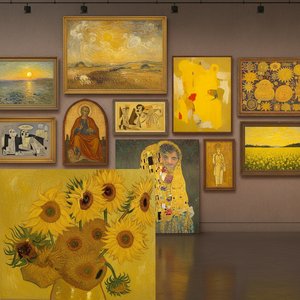
Top 10 des Tableaux Célèbres Dominés par le Jaune Chrome : Art & Décor
Plongez dans le monde vibrant du jaune chrome à travers 10 tableaux célèbres ! Découvrez l'histoire de Van Gogh, Monet et d'autres maîtres impressionnistes. Trouvez l'inspiration déco et achetez des reproductions d'art de qualité muséale sur TopImpressionists.com.
Explorez des œuvres d'art classées par thèmes, styles et caractéristiques.


