


 Aperçu en situation
 Partager
 Partager
 Détails
 Guide imprimable

 Télécharger
 Articles similaires
 Radiographie
 Voir le diaporama
 Statistiques
The man in the blue hat
 Acrylique sur toile
- Art mural
- Cubism
 1937
1937 73.0 x 92.0 cm
The man in the blue hat by Fernand Léger – WikiArt.org explores Purism’s fusion of abstraction and observation, depicting a contemplative figure amidst vases and flowers bathed in warm yellow hues. This portrait captures stillness and contemplation.
 Afficher la suite
Explorez l'art de Fernand Léger (1881-1955), un pionnier du Cubisme et du 'Tubisme'. Découvrez ses peintures audacieuses et figuratives célébrant la vie moderne, les machines et la forme humaine. Un précurseur du Pop Art !
Reproduction à l'huile faite à la main
Huile sur toile peinte à la main, avec cadre et dimensions personnalisés, réalisée sur commande par nos artistes. ( Passer au format impression Passer au format image numérique)




P118B €10

P118H €10

P118W €10

P438Z €10

P508JH €12

P508YH €12

P805H €10

P805Z €10

P919BZ €10

P919G €10

P919XJ €10

P959ZH €10

P968JZ €12

W106C €8

W218G €10

W218JH €8

W218Y €10

W307PJ €10

W316G €10

W316PJ €8

W316Y €10

W398PJ €8

W4111J €10

W500HY €15

W500JH €15

W692G €12

W849H €8

W940BG €15

W953PJ €8




Format standard
personnalisé
CM
INCH
Choisissez parmi nos formats prédéfinis qui respectent les proportions originales de l’œuvre.
Loading sizes...

largeur
hauteur
Saisissez la largeur et la hauteur souhaitées, pour s'adapter à votre cadre ou à votre mur. Cette œuvre est peinte à la main ; ainsi, pour un format de forme différente, l'artiste peut peindre un peu plus autour du tableau ou réduire légèrement les bords — c'est vous qui choisissez. Nous vous envoyons une maquette numérique pour approbation avant que la peinture ne commence. L'image présentée sur cette page ne reflète pas le résultat réel — seule la maquette le fait.
Exemples de personnalisation possibles : remplacer un visage par la photo du client ; ajouter un animal de compagnie (par exemple, remplacer un chat par un chien) ; inclure un message caché en arrière-plan ; modifier le paysage ou les éléments de l'arrière-plan.
Après la commande, l’équipe TopImpressionists.com contactera le client par e-mail pour recueillir ses instructions et lui fournira une maquette d’aperçu
Après la commande, l’équipe TopImpressionists.com contactera le client par e-mail pour recueillir ses instructions et lui fournira une maquette d’aperçu
Livraison dans le monde entier () en 3 à 4 semaines au lieu des 5 semaines habituelles. (25 octobre). Aucun compromis sur la qualité.

Livraison express gratuite dans le monde entier

Toile de lin de haute qualité

Assurance transport complète

Garantie de remboursement des droits de douane

Garantie de fidélité des couleurs

Garantie de retour de 100 jours (uniquement en cas de défaut)

Garantie de remboursement à 100%

Tarifs dégressifs sur quantité
 L'option verre n'est disponible que pour les dimensions inférieures à 110 cm.

The man in the blue hat
Technique de reproduction
Format de la reproduction
-


Prix total final
€ 236
A Portrait of Quiet Contemplation Amidst Mechanical Forms
Fernand Léger’s “The Man in the Blue Hat,” painted in 1937, stands as a striking embodiment of Purism – an artistic movement that sought to reconcile abstraction with observation. Born Joseph Fernand Henri Léger in Argentan, Normandy, Léger's formative years instilled within him a profound appreciation for physicality and craftsmanship, experiences that would later inform his revolutionary approach to painting. Unlike many artists of his era who abandoned representational art altogether, Léger championed the fusion of geometric abstraction with recognizable elements from the industrial landscape, reflecting the anxieties and aspirations of a rapidly changing world.- Subject Matter: The artwork depicts a solitary man seated beside a window, gazing outwards. He wears a prominent blue hat – a deliberate choice that draws attention to form and color—and holds a vase brimming with flowers. Scattered vases adorn the interior space, creating a visual dialogue between organic beauty and mechanized precision.
- Style: Léger’s Purist style prioritizes simplified geometric shapes—circles, squares, rectangles—over detailed realism. These forms dominate the composition, conveying a sense of stability and order despite their inherent abstraction. The artist deliberately avoids illusionistic techniques, opting instead for flat planes of color that emphasize texture and surface.
- Technique: Léger employed tempera on canvas, a medium known for its durability and luminous quality. He applied paint in thick layers—impasto—creating palpable textural surfaces that capture the essence of industrial materials like metal and concrete. This technique contributes to the artwork’s expressive power and reinforces its connection to the machine age.
Historical Context: The Shadow of War and Optimistic Futurism
Painted in 1937, “The Man in the Blue Hat” emerged during a turbulent period marked by escalating tensions leading up to World War II. Léger’s artistic vision was deeply influenced by Futurism – an Italian movement that celebrated speed, dynamism, and technological progress. Futurists envisioned a future dominated by machines and embraced bold geometric forms as symbols of this new era. Léger absorbed these ideas, translating them into his own distinctive aesthetic, demonstrating a belief in the transformative potential of technology while simultaneously acknowledging the anxieties surrounding impending conflict.Symbolism: Harmony Between Nature and Industry
Despite its abstract style, “The Man in the Blue Hat” is laden with symbolic significance. The blue hat serves as a focal point, representing both color and form—a deliberate homage to Purist principles. Simultaneously, the vases filled with flowers symbolize resilience and beauty amidst industrial surroundings – an assertion of nature’s enduring presence even within a mechanized world. Léger's careful arrangement of these elements invites contemplation on the relationship between humanity and technology, suggesting that progress should not come at the expense of aesthetic appreciation.Emotional Impact: Tranquility Amidst Complexity
Ultimately, “The Man in the Blue Hat” transcends mere visual representation. It communicates a profound sense of tranquility—a quiet moment of introspection—despite its geometric abstraction and industrial backdrop. Léger’s masterful use of color and texture evokes feelings of warmth and serenity, inviting viewers to consider the beauty inherent in simplicity and order. This artwork remains an enduring testament to Léger's ability to capture the spirit of his time while conveying timeless themes of contemplation and harmony.Questions et réponses
Quel est le format et les dimensions de « The man in the blue hat » ?
«The man in the blue hat» de Fernand Léger est une œuvre au format Format paysage de 73 x 92 cm.
Quelle est l'identité chromatique de «The man in the blue hat» de Fernand Léger ?
«The man in the blue hat» de Fernand Léger utilise une palette Tons terreux, avec le Blanc (#e7e5e7) comme couleur dominante.
Comment la composition chromatique de «The man in the blue hat» de Fernand Léger est-elle construite ?
La composition chromatique de «The man in the blue hat» de Fernand Léger allie un contraste Déclaration à une harmonie Palette discordante.
Biographie de l'artiste
jeune vie et formation
fernand léger, peintre, sculpteur et cinéaste français, est né le 4 février 1881 à Argentan, Orne, en Normandie inférieure. Son père élevait du bétail, et léger a initialement été formé à l'architecture de 1897 à 1899. Il s’est ensuite installé à Paris en 1900, se débrouillant comme dessinateur architectural.développement artistique
Le travail précoce de léger a été influencé par l'impressionnisme, comme le montrent le jardin de ma mère (mon jardin) (1905). Après avoir fréquenté l'école des beaux-arts et l’académie Julian, il a commencé à travailler sérieusement comme peintre à 25 ans. Son style s'est développé en une forme personnelle de cubisme, que les critiques ont qualifié de "tubisme" pour son accent sur les formes cylindriques.cubisme et le groupe des Puteaux
En 1910, léger a exposé au Salon d’automne aux côtés de jean metzinger et henri le fauconnier. Il a rejoint le groupe des Puteaux, également connu sous le nom de section d’or (la section dorée), avec d'autres artistes tels que francis picabia et marcel duchamp.guerre et son influence sur le travail de léger
Les expériences de léger à la Première Guerre mondiale ont eu un impact significatif sur son œuvre. Pendant son séjour au front, il a produit des croquis d'artillerie, d'avions et de soldats. Sa peinture soldier avec un tuyau (1916) reflète cette période.œuvre ultérieure et héritage
L'œuvre post-guerre de léger, caractérisée par des formes machine-like élégantes, le lia à la tradition de la peinture figurative française. Ses paysages animés de 1921 ont présenté des figures et des animaux dans des formes harmonieuses et rationalisées.- voir les œuvres de fernand léger sur TopImpressionists
- en savoir plus sur fernand léger sur wikipedia
- découvrez le musée national fernand léger (france) avec TopImpressionists
- la femme assise (100 x 81 cm, tubisme)
- élément de machine (cubisme)

Fernand Léger
1881 - 1955 , France
En bref
- Artistes Influents:
- Cézanne
- Impressionnisme
- Date De Décès: 1955
- Date De Naissance: 4 février 1881
- Influences Artistiques: ['Pop Art']
- Lieu De Naissance: Argentan, France
- Mouvement Artistique: Cubisme, Tubisme
- Nationalité: Française
- Nom Complet: Fernand Léger
- Oeuvres Notables:
- La Grande Parade
- Machine Élément
- Femme assise
- Paysages animés
Articles connexes

Fernand Léger : Les 25 Œuvres Maîtresses d'un Pionnier du Modernisme | TopImpressionists
Plongez dans l'univers vibrant de Fernand Léger ! Découvrez les 25 œuvres majeures du cubisme et du tubisme, explorant formes géométriques et couleurs audacieuses. Retrouvez des reproductions d'art exceptionnelles sur TopImpressionists.com.

Modern Geometry & Machine Age Beauty: A Collector's Guide to the Cubist Vision of Fernand Léger
Explore the profound geometric mastery of Fernand Léger. Discover how his 'Tubism' and Machine Age aesthetics redefined modern art, offering timeless inspiration for discerning collectors seeking to integrate Cubist dynamism into sophisticated contemporary interiors.
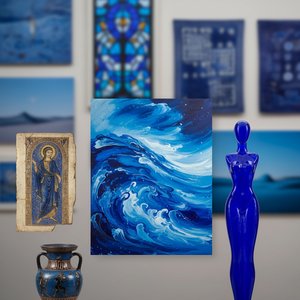
The Allure of Azure: Exploring the Symbolic & Aesthetic Depths of Blue in Art History
Explore the rich history of blue in art! Discover its symbolism, from ancient pigments to modern masterpieces by Kandinsky & Seurat. Uncover the psychological impact and cultural meanings behind this captivating hue.

Les 10 Chefs-d'œuvre Dominés par le Bleu Ardoise : Art, Histoire & Décor
Plongez dans l'univers fascinant des 10 plus beaux tableaux dominés par le bleu ardoise. Découvrez l'histoire, les artistes et les techniques de ces chefs-d'œuvre impressionnistes et contemporains. Inspirez votre décoration intérieure avec !

L'Âme Industrielle : 10 Chefs-d'œuvre Révélant la Beauté du Monde Moderne | TopImpressionists
Plongez dans l'âme industrielle de 10 chefs-d'œuvre emblématiques ! Découvrez les histoires fascinantes de Van Gogh, Monet et d'autres artistes ayant capturé la beauté brute du monde moderne. Reproductions de qualité musée sur TopImpressionists.com – Explorez la collection en ligne.
Explorez des œuvres d'art classées par thèmes, styles et caractéristiques.


