


 Aperçu en situation
 Partager
 Partager
 Détails
 Guide imprimable

 Télécharger
 Articles similaires
 Radiographie
 Voir le diaporama
 Statistiques
July 20th


Fernando Botero's "July 20th" captures a vibrant street scene with exaggerated figures and bold colors, reflecting Colombian culture & Botero’s signature style. Explore this iconic painting!
 Afficher la suite
Découvrez Fernando Botero Angulo (1932-), maître colombien du 'Boterismo'. Art iconique aux volumes exagérés, thèmes satiriques & influences primitivistes. Peintures et sculptures mondialement célébrées !
Reproduction à l'huile faite à la main
Huile sur toile peinte à la main, avec cadre et dimensions personnalisés, réalisée sur commande par nos artistes. ( Passer au format impression Passer au format image numérique)




P118B €10

P118H €10

P118W €10

P438Z €10

P508JH €12

P508YH €12

P805H €10

P805Z €10

P919BZ €10

P919G €10

P919XJ €10

P959ZH €10

P968JZ €12

W106C €8

W218G €10

W218JH €8

W218Y €10

W307PJ €10

W316G €10

W316PJ €8

W316Y €10

W398PJ €8

W4111J €10

W500HY €15

W500JH €15

W692G €12

W849H €8

W940BG €15

W953PJ €8




Format standard
personnalisé
CM
INCH
Choisissez parmi nos formats prédéfinis qui respectent les proportions originales de l’œuvre.
Loading sizes...

largeur
hauteur
Vous pouvez saisir vos propres dimensions pour l'adapter à un cadre ou à un espace spécifique. Si la taille sélectionnée ne correspond pas aux proportions de l'image d'origine, nous recadrerons l'œuvre ou prolongerons la peinture avec des éléments peints à la main supplémentaires. Une maquette numérique vous sera envoyée pour approbation avant le début de la production.
Veuillez noter que l'aperçu à l'écran ne reflète pas le recadrage ou l'extension réels. Seule la maquette montrera fidèlement la composition finale.
Bien que des tailles personnalisées soient disponibles, nous vous recommandons de sélectionner une dimension dans la liste prédéfinie afin de préserver les proportions d'origine.
Exemples de personnalisation possibles : remplacer un visage par la photo du client ; ajouter un animal de compagnie (par exemple, remplacer un chat par un chien) ; inclure un message caché en arrière-plan ; modifier le paysage ou les éléments de l'arrière-plan.
Après la commande, l’équipe TopImpressionists.com contactera le client par e-mail pour recueillir ses instructions et lui fournira une maquette d’aperçu
Après la commande, l’équipe TopImpressionists.com contactera le client par e-mail pour recueillir ses instructions et lui fournira une maquette d’aperçu
Livraison dans le monde entier () en 3 à 4 semaines au lieu des 5 semaines habituelles. (2 octobre). Aucun compromis sur la qualité.

Livraison express gratuite dans le monde entier

Toile de lin de haute qualité

Assurance transport complète

Garantie de remboursement des droits de douane

Garantie de fidélité des couleurs

Garantie de retour de 100 jours (uniquement en cas de défaut)

Garantie de remboursement à 100%

Tarifs dégressifs sur quantité
 L'option verre n'est disponible que pour les dimensions inférieures à 110 cm.

July 20th
Technique de reproduction
Format de la reproduction
-


Prix total final
€ 232
The Weight of the Moment: Unpacking "July 20th"
Fernando Botero’s “July 20th,” painted in 1984, isn't merely a depiction of two figures on a street; it’s a carefully constructed tableau brimming with quiet drama and subtle social commentary. The painting immediately arrests the eye with its monumental scale – a characteristic hallmark of Botero’s signature style, often referred to as “Boterismo.” Here, however, the exaggeration isn't purely for spectacle. Instead, it serves to amplify the emotional weight of the scene, drawing us into an intimate moment of interaction amidst the bustling backdrop of Medellín.
The composition is deceptively simple: a man in a fedora and sporting a baseball bat stands alongside a woman whose hand instinctively rises to her face. Their positioning – close but not touching – suggests a conversation held just short of revelation, a shared experience suspended in time. A few secondary figures populate the periphery, hinting at a larger urban life unfolding beyond this immediate exchange. The inclusion of a handbag and a small child adds layers of domesticity, grounding the scene within the everyday realities of Colombian society.
The Language of Volume: Botero’s Distinctive Technique
Botero's genius lies in his masterful manipulation of volume – a technique he honed during his early years observing the Baroque churches and vibrant street life of Medellín. “July 20th” exemplifies this perfectly. The figures are rendered with thick, almost sculptural brushstrokes, their forms ballooning outwards, creating an illusion of immense size and solidity. This deliberate distortion isn’t about literal representation; it's a conscious choice to emphasize the subjects’ presence and imbue them with a sense of weight and importance. Notice how the man’s bat seems to expand into a formidable weapon, while the woman’s gesture – a subtle shield against an unseen force – adds another layer of complexity.
- Bold Outlines: Botero frequently employs strong outlines to define the shapes and forms within his paintings.
- Exaggerated Proportions: Figures are often depicted with disproportionately large bodies, contributing to the overall sense of monumentality.
- Rich Color Palette: The painting utilizes a vibrant yet restrained color palette, dominated by earthy tones punctuated by pops of red and yellow – colors that evoke both warmth and a subtle undercurrent of tension.
Historical Context & The Spirit of Medellín
Painted in 1984, “July 20th” reflects the social and political climate of Colombia at the time. The country was grappling with internal conflict and economic instability, and Botero’s work often engaged with themes of violence, inequality, and the complexities of Colombian identity. The painting can be interpreted as a meditation on human connection amidst societal pressures – a quiet moment of intimacy within a world marked by uncertainty. It's also worth noting that July 20th is Colombia's Independence Day, adding another layer of cultural significance to the scene.
The choice of Medellín as the setting is crucial. The city’s rich artistic heritage and its distinctive architectural style – characterized by ornate facades and a sense of grandeur – undoubtedly influenced Botero’s aesthetic sensibilities. “July 20th” captures this spirit, transporting us to a vibrant urban landscape where everyday life unfolds against a backdrop of historical and cultural richness.
A Moment Frozen in Time: Emotional Resonance
Despite its seemingly simple composition, “July 20th” possesses a remarkable emotional depth. The ambiguity of the interaction between the two figures invites speculation – are they lovers? Friends? Strangers caught in a fleeting moment of connection? The painting’s power lies in its ability to evoke a sense of nostalgia and quiet contemplation. It's a reminder that even within the most chaotic of environments, moments of genuine human connection can emerge, offering a glimpse into the complexities of the human experience. The painting’s enduring appeal stems from its ability to resonate with viewers on a deeply personal level, prompting them to reflect on their own relationships and experiences.
Questions et réponses
Est-ce que «July 20th» de Fernando Botero est dans le domaine public ?
«July 20th» de Fernando Botero est dans le toujours protégé par le droit d'auteur. Ce statut régit les modalités de reproduction de l'image de l'œuvre.
Quel âge avait Fernando Botero lors de la création de « July 20th » en 1984 ?
Fernando Botero a réalisé « July 20th » à l'âge de 52. L'artiste est né en 1932 et l'œuvre date de 1984.
En quelle année "July 20th" a-t-il été réalisé ?
«July 20th» de Fernando Botero a été créé en 1984.
Que représente "July 20th" et quelle atmosphère s'en dégage ?
«July 20th» présente fernando botero, colombian art, volume, figures, street scene, 1984, urban life, baroque, et l'atmosphère qui s'en dégage est Dramatic.
L'œuvre «July 20th» de Fernando Botero, conservée au Musée national de Colombie, peut-elle faire l'objet de reproductions légales ?
«July 20th» de Fernando Botero, conservée au Musée national de Colombie, est dans le toujours protégé par le droit d'auteur. Ce statut détermine si des reproductions de l'image peuvent être réalisées.
Quel espace est suggéré pour «July 20th» de Fernando Botero ?
«July 20th» de Fernando Botero est recommandé pour une Living Room. Cette suggestion s'appuie sur le sujet, les couleurs et l'atmosphère de l'œuvre.
Qui est l'artiste derrière « July 20th » ?
L'artiste à l'origine de « July 20th » est Fernando Botero. L'œuvre est répertoriée sous le nom de Fernando Botero.
Biographie de l'artiste
**Premières années et inspirations**
Fernando Botero Angulo, un artiste et sculpteur colombien renommé, est né le 19 avril 1932 à Medellín, en Colombie. Son style distinctif, connu sous le nom de « botérisme », caractérisé par des volumes larges et exagérés, a suscité à la fois des critiques politiques et un humour, selon l'œuvre.**Développement artistique et influence primitiviste**
L’enfance de Botero a été marquée par son isolement face à l’art exposé dans les musées et autres institutions culturelles. Cependant, il a été influencé par le style baroque des églises coloniales et la vie urbaine à Medellín. Cette influence primitiviste se manifeste dans son œuvre, qui présente souvent des formes simples mais puissantes.**Œuvres notables et expositions**
- Walk in the hills (art naïf / primitivisme, huile sur toile), une peinture qui met en valeur le style unique de Botero, est présentée sur TopImpressionists.
- La Government Art Collection, un musée du Royaume-Uni, a exposé des œuvres de divers artistes, dont ceux influencés par le primitivisme. (plus d'informations sur Hastings Museum and Art Gallery)
**Reconnaissance internationale et héritage**
L’œuvre de Botero a été reconnue dans le monde entier, avec plus de 50 expositions dans les grandes villes du monde. Son art se vend à des prix atteignant des millions de dollars, ce qui consolide son statut de figure de proue de l'art colombien.- Prix importants : Botero a reçu le prix pour l’ensemble de sa carrière en sculpture contemporaine de l’International Sculpture Center en 2012.
- Expositions notables : Le Salón de Artistas Colombianos (1958) et la Government Art Collection (Royaume-Uni).
- Style artistique : Primitivisme, caractérisé par des formes simples et des volumes exagérés.
**Conclusion**
Le style primitiviste unique de Fernando Botero Angulo a laissé une marque indélébile sur le monde de l’art. Son œuvre continue d’inspirer les artistes et les collectionneurs, consolidant son héritage en tant que maître de l'art colombien. En savoir plus sur Fernando Botero Angulo sur TopImpressionists. Source : Wikipédia
Fernando Botero
1932 - 1959 , Colombie
En bref
- Artistes Influents:
- Xul Solar
- Consuelo Hernández
- Alberto Valenzuela Llanos
- Date De Naissance: 19 avril 1932
- Lieu De Naissance: Medellín, Colombie
- Mouvement Artistique: Primitivisme, Boterismo
- Nationalité: Colombien(ne)
- Nom Complet: Fernando Botero Angulo
- Oeuvres Notables:
- Walk in the Hills
- Le bain des évêques
Articles similaires

High-Volume Art Prints: A Professional Procurement Guide to Quality, Scale, and Archival Durability for Hospitality Design
A professional procurement guide for hotel designers and managers. Learn to navigate high-volume art orders with ease, focusing on Giclée quality, archival durability, scalable sizing, and efficient global logistics for large-scale hospitality projects.
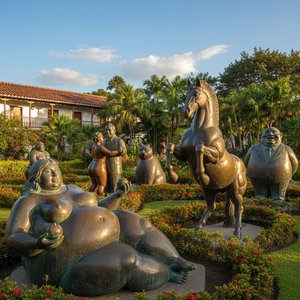
Fernando Botero: Celebrating Volume, Form & Colombian Identity
Explore the captivating world of Fernando Botero! Discover his iconic 'Boterismo' style, Colombian influences, investment potential & lasting legacy. Expert insights for art collectors.

Solutions d'Art de Prestige pour Galeries et Hôtels de Luxe : L'Excellence sur Mesure par TopImpressionists
Sublimez vos projets hôteliers et galeries avec TopImpressionists. Expert en reproductions à l'huile de prestige et commandes sur mesure, nous offrons aux designers des œuvres d'exception alliant maîtrise technique et héritage artistique pour une signature visuelle inoubliable.

Giotto di Bondone : Les 25 Chefs-d'œuvre Incontournables pour Embellir Votre Intérieur
Plongez dans l'univers de Giotto di Bondone : découvrez les 25 fresques et chefs-d'œuvre qui ont révolutionné l'art médiéval italien. Explorez son style unique, ses couleurs vibrantes et l'histoire fascinante derrière chaque œuvre. Retrouvez des reproductions d'exception sur TopImpressionists.com.

L'Excellence de TopImpressionists : Sublimez votre Patrimoine avec des Œuvres d'Art de Qualité Muséale et une Signature d'Exception
Sublimez vos espaces avec TopImpressionists. Découvrez nos reproductions de chefs-d'œuvre peintes à la main, alliant rigueur académique et qualité muséale. Un service d'excellence pour transformer votre intérieur en un véritable patrimoine artistique mondial.
Explorez des œuvres d'art classées par thèmes, styles et caractéristiques.


