

 Aperçu en situation
 Envoyer
 Partager
 Détails de l'œuvre
 Guide
Guide

 Télécharger l'image
 Articles similaires
 Radiographie
 Diaporama
 Q&A
Q&A Statistiques
The Martigues

- 36.0 x 46.0 cm


A serene harbor scene blending Impressionism and Dadaism, this 1904 oil painting by Francis Picabia captures a tranquil blue and white seascape that invites you to bring a piece of art history into your home.
 Lire la suite
Explorez l'art d'avant-garde de Francis Picabia (1879-1953), pionnier du Cubisme, Dada et de l'esthétique de l'Âge Machine. Ses peintures mêlent abstraction, commentaire social & couleurs vibrantes. Découvrez son héritage sur TopImpressionists.
Giclées et impressions d'art
Impressions giclées ou sur toile de qualité musée, avec une production rapide et des finitions au choix. ( Commander la reproduction peinte à la main Passer au format numérique)




P118B €10

P118H €10

P118W €10

P438Z €10

P508JH €12

P508YH €12

P805H €10

P805Z €10

P919BZ €10

P919G €10

P919XJ €10

P959ZH €10

P968JZ €12

W106C €8

W218G €10

W218JH €8

W218Y €10

W307PJ €10

W316G €10

W316PJ €8

W316Y €10

W398PJ €8

W4111J €10

W500HY €15

W500JH €15

W692G €12

W849H €8

W940BG €15

W953PJ €8




Format standard
sur mesure
CM
INCH
Choisissez parmi nos formats prédéfinis qui respectent les proportions originales de l’œuvre.
Loading sizes...

largeur
hauteur
Saisissez la largeur et la hauteur souhaitées pour qu'elles s'adaptent à votre cadre ou à votre mur. Une impression peut être recadrée, mais jamais agrandie au-delà de l'image originale ; ainsi, un format de forme différente entraînera la perte d'une partie de l'image. Nous vous envoyons une maquette numérique pour approbation avant toute impression. L'image présentée sur cette page ne montre pas le recadrage réel — seule la maquette le permet.
Livraison dans le monde entier () en 2 semaines au lieu des 4/5 semaines habituelles. (31 octobre)

Livraison express gratuite dans le monde entier

Toile de lin de qualité supérieure

Assurance transport complète

Garantie de remboursement des droits de douane

Garantie de fidélité des couleurs

Politique de retour de 100 jours (uniquement en cas de défaut)

Garantie de remboursement à 100%

Offre de tarifs dégressifs
 L'option verre n'est disponible que pour les dimensions inférieures à 110 cm.

The Martigues
Giclées et impressions d'art
Format de la reproduction
-


Prix total
€ 61
A Serene Voyage Through Light and Color
In the quietude of 1904, a young Francis Picabia captured a moment of profound stillness in his masterpiece, The Martigues. This evocative oil on canvas invites the viewer into a tranquil harbor scene, where the boundaries between water, sky, and shore seem to dissolve into a dreamlike haze. The composition is anchored by a large sailing vessel that rests upon the calm expanse of the sea, its presence balanced by the solitary figure of a man standing near a boat in the foreground. This human element provides a poignant sense of scale and a touch of narrative intimacy, suggesting a moment of quiet contemplation amidst the vastness of the coastal landscape. As the eye wanders toward the horizon, the soft silhouettes of trees and distant buildings emerge, lending a gentle depth to the scene that draws the observer deeper into this maritime sanctuary.
The technical brilliance of The Martigues lies in Picabia’s masterful ability to weave together the disparate threads of late 19th-century innovation. At first glance, the painting breathes with the luminous energy of Impressionism, utilizing a palette dominated by soothing blues and crisp whites to evoke the cool, refreshing atmosphere of a coastal morning. Yet, beneath this surface lies a more complex structural approach; the artist employs short, broken brushstrokes reminiscent of Pointillism, creating a textured, tactile surface that dances with light. Subtle hints of yellow-gold on the ship's rigging provide a warm, rhythmic contrast to the cool tones, while delicate traces of green in the vegetation add organic vitality. This experimental fusion of styles showcases an artist on the precipice of a revolution, blending the sensory delights of light and color with a burgeoning interest in more structured, modern forms.
The Dawn of an Avant-Garde Spirit
To behold The Martigues is to witness the early tremors of a cultural earthquake. While Picabia would later become a central provocateur of the Dada movement—a movement defined by its rejection of traditional aesthetics and its embrace of the absurd—this particular work captures him in a more lyrical, transitional phase. It serves as a beautiful bridge between the representational traditions of the past and the radical experimentation of the 20th century. The painting does not merely depict a harbor; it symbolizes the spirit of exploration and the fluidity of identity. The sailing ship, poised for movement yet resting in stillness, acts as a metaphor for the artist’s own restless journey through Cubism, Surrealism, and Dadaism.
For the discerning collector or interior designer, this reproduction offers more than just visual elegance; it provides a window into the soul of modern art history. The soft, diffused lighting and the absence of harsh shadows create an atmosphere of peace that is ideal for creating a sophisticated, calming sanctuary within a home or gallery space. Whether placed in a sunlit study or a contemporary living area, The Martelligues brings with it a sense of historical weight and artistic prestige. Owning a high-quality, hand-painted reproduction allows one to inhabit the same world of light and texture that Picabia inhabited over a century ago, making the profound legacy of the French avant-garde a tangible part of your personal environment.
Questions et réponses
À quelle période historique appartient «The Martigues» de Francis Picabia ?
«The Martigues» de Francis Picabia date de la période Modern. Cette époque apporte le contexte historique de l'œuvre.
Quelle ambiance "The Martigues" apporterait-elle à une pièce ?
«The Martigues» de Francis Picabia dégage une atmosphère Serene et s'intègre parfaitement dans une Hotel Room. Cette ambiance reflète l'émotion que l'œuvre apporte à l'espace qui l'entoure.
De quel pays est originaire l'œuvre Dadaism « The Martigues » ?
«The Martigues» a été créé par Francis Picabia, né en France, au sein du mouvement Dadaism. L'origine de l'artiste lie l'œuvre au Dadaism tel que pratiqué par les artistes de France.


Biographie de l'artiste
Premières années et débuts artistiques
Francis Picabia, peintre d'avant-garde français, poète et typographe, est né le 22 janvier 1879 à Paris. Son père, d’origine cubano-espagnole, était attaché à la légation cubaine à Paris. Cette diversité culturelle influencera plus tard son style artistique. La vie précoce de Picabia a été marquée par une tragédie lorsque sa mère est décédée des suites de la tuberculose. Il a été élevé par son père, qui encourageait ses aspirations artistiques. À 20 ans, Picabia vivait déjà de son art et, après avoir hérité d'une somme importante de sa mère, il est devenu l'un des artistes les plus riches de son époque.Évolution artistique
- Période impressionniste (1903-1908) : Influencé par l’impressionnisme, Picabia s’est concentré sur des sujets tels que les paysages parisiens et les rives de fleuve. Les critiques ont remis en question son originalité, ce qui l'a conduit à rechercher une nouvelle approche.
- Période cubiste (1909) : Picabia a rejoint le groupe de Puteaux, se liant d’amitié avec Marcel Duchamp et Guillaume Apollinaire. Cela a marqué un tournant important vers le cubisme.
- Proto-dada (1913) : Picabia a assisté à l'Armory Show à New York, exposant son travail aux côtés d'autres artistes modernistes. Cette période a vu l’émergence de ses compositions planaires abstraites uniques.
Œuvres notables et associations
Picabia a été associé à plusieurs mouvements artistiques majeurs du XXe siècle, notamment l'impressionnisme, le cubisme, le dadaïsme et brièvement au surréalisme. Ses œuvres témoignent d’une exploration constante de nouvelles formes d’expression et d’un rejet des conventions établies. Il a collaboré avec des figures clés de l'avant-garde artistique et littéraire de son époque, contribuant à façonner le paysage culturel du XXe siècle.Influence et héritage
Le style innovant de Picabia, caractérisé par l’utilisation de couleurs vibrantes et de formes abstraites, a laissé une marque indélébile sur l'art moderne. Sa période proto-dada, en particulier, témoigne de son esprit pionnier, qui continue d’inspirer les artistes aujourd’hui. Son œuvre complexe et polymorphe a ouvert la voie à de nouvelles explorations artistiques et a contribué à élargir les frontières de l'expression créative. Picabia est reconnu comme une figure majeure de l'art du XXe siècle, dont l'influence se fait encore sentir dans le monde contemporain.
Francis Picabia
1879 - 1953 , France
L'essentiel de l'artiste
- Artistes Influents:
- Pissarro
- Sisley
- Toulouse-Lautrec
- Date De Décès: 30 novembre 1953
- Date De Naissance: 22 janvier 1879
- Lieu De Naissance: Paris, France
- Mouvement Artistique:
- Cubisme
- Dadaïsme
- Surréalisme
- Nationalité: Française
- Nom Complet: Francis Picabia
- Œuvres Notables:
- Amorous Parade
- Caoutchouc
Articles connexes

Les 10 Chefs-d'œuvre Dominés par le Bleu Ardoise : Art, Histoire & Décor
Plongez dans l'univers fascinant des 10 plus beaux tableaux dominés par le bleu ardoise. Découvrez l'histoire, les artistes et les techniques de ces chefs-d'œuvre impressionnistes et contemporains. Inspirez votre décoration intérieure avec !

Les 25 chefs-d'œuvre de Pierre-Auguste Renoir : l'essence de l'Impressionnisme
Explorez les 25 chefs-d'œuvre de Renoir et la magie de l'impressionnisme. Découvrez toute la collection sur TopImpressionists.com.
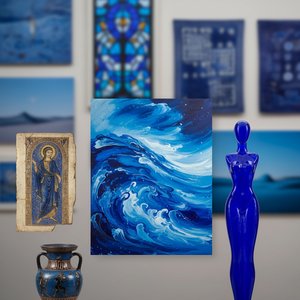
The Allure of Azure: Exploring the Symbolic & Aesthetic Depths of Blue in Art History
Explore the rich history of blue in art! Discover its symbolism, from ancient pigments to modern masterpieces by Kandinsky & Seurat. Uncover the psychological impact and cultural meanings behind this captivating hue.

Blancs Sublimes : Les 10 Chefs-d'œuvre de la Peinture Révélés par
Plongez dans l'univers fascinant des 10 plus beaux tableaux blancs de l'histoire de l'art ! Découvrez Monet, Whistler, Kandinsky et d'autres maîtres. Inspirez votre décoration intérieure avec : reproductions de qualité muséale en ligne.

Capturer la Lumière : Les 25 Chefs-d'œuvre Iconiques de Claude Monet
Explorez les 25 chefs-d'œuvre de Claude Monet et l'éclat de l'impressionnisme. Découvrez toute la collection sur TopImpressionists.com.
Explorez des œuvres d'art classées par thèmes, styles et caractéristiques.


