


 Aperçu en situation
 Partager
 Partager
 Détails
 Guide imprimable

 Télécharger
 Articles similaires
 Radiographie
 Voir le diaporama
 Statistiques
Three Top Sergeants


George Luks's 'Three Top Sergeants' (1925) captures camaraderie among musicians in a dynamic, realist style reflecting the Ashcan School. A vibrant depiction of urban life and musical passion.
 Afficher la suite
Découvrez George Luks (1867-1933), figure clé de l'Ashcan School ! Ses peintures réalistes captivent la vie urbaine et les défis de l'Amérique du début XXe siècle.
Giclées et impressions d'art
Impressions giclées ou sur toile de qualité musée, avec une production rapide et des finitions au choix. ( Acheter la peinture faite à la main Passer au format image numérique)




P118B €10

P118H €10

P118W €10

P438Z €10

P508JH €12

P508YH €12

P805H €10

P805Z €10

P919BZ €10

P919G €10

P919XJ €10

P959ZH €10

P968JZ €12

W106C €8

W218G €10

W218JH €8

W218Y €10

W307PJ €10

W316G €10

W316PJ €8

W316Y €10

W398PJ €8

W4111J €10

W500HY €15

W500JH €15

W692G €12

W849H €8

W940BG €15

W953PJ €8




Format standard
personnalisé
CM
INCH
Choisissez parmi nos formats prédéfinis qui respectent les proportions originales de l’œuvre.
Loading sizes...

largeur
hauteur
Saisissez la largeur et la hauteur souhaitées pour qu'elles s'adaptent à votre cadre ou à votre mur. Une impression ne peut être que découpée, elle ne peut jamais être agrandie au-delà de l'image originale ; ainsi, un format de forme différente entraînera la perte d'une partie de l'image. Nous vous envoyons une maquette numérique pour approbation avant toute impression. L'image présentée sur cette page ne montre pas le recadrage réel — seule la maquette le permet.
Livraison dans le monde entier () en 2 semaines au lieu des 4/5 semaines habituelles. (22 octobre)

Livraison express gratuite dans le monde entier

Toile de lin de haute qualité

Assurance transport complète

Garantie de remboursement des droits de douane

Garantie de fidélité des couleurs

Garantie de retour de 100 jours (uniquement en cas de défaut)

Garantie de remboursement à 100%

Tarifs dégressifs sur quantité
 L'option verre n'est disponible que pour les dimensions inférieures à 110 cm.

Three Top Sergeants
Giclées et impressions d'art
Format de la reproduction
-


Prix total final
€ 61
A Snapshot of Urban Grit: George Benjamin Luks’s “Three Top Sergeants”
George Benjamin Luks's "Three Top Sergeants," painted in 1925, isn’t merely a depiction of three men playing musical instruments; it’s a vibrant distillation of early 20th-century American life—a raw, honest portrayal of camaraderie and the shared pursuit of joy amidst the often-grim realities of urban existence. The painting immediately draws the eye with its dynamic composition and bold use of color, a hallmark of Luks's distinctive style within the Ashcan School movement. It’s a scene brimming with energy, capturing a fleeting moment of connection against a backdrop of shadowed intimacy.
Luks, born in Williamsport, Pennsylvania, to Polish and German immigrant parents, brought a deeply rooted empathy for the working class to his art. His early life, shaped by witnessing poverty and hardship, instilled within him an acute awareness of human resilience and the importance of community. This background profoundly influenced his artistic vision, leading him to eschew idealized representations in favor of gritty realism that exposed the complexities and struggles of everyday people. His time as a vaudeville performer further honed his observational skills and understanding of human behavior – elements he expertly translated onto canvas.
The Ashcan School and Luks’s Distinctive Style
“Three Top Sergeants” firmly places itself within the context of the Ashcan School, an American art movement that emerged in New York City around the turn of the 20th century. Rejecting the academic traditions of the time, Ashcan artists sought to depict contemporary urban life with unflinching honesty and a rejection of romanticized notions. Luks’s work is characterized by its loose brushwork, vibrant color palette, and focus on ordinary subjects—street musicians, dockworkers, and immigrants—often rendered in dynamic poses and engaging compositions. He deliberately avoided polished surfaces, opting for a more immediate and visceral impact.
Notice the artist's masterful use of light and shadow. The scene is bathed in a muted, almost theatrical darkness, drawing attention to the figures illuminated by the warm glow emanating from their instruments. This strategic lighting not only creates visual interest but also subtly suggests a sense of intimacy and shared experience—a private moment of connection within the bustling city.
A Symphony of Instruments and Human Connection
The composition itself is meticulously crafted to convey a feeling of lively interaction. The three men – one playing a pipe organ, another a guitar, and the third a violin – are clustered closely together, their faces animated with concentration and enjoyment. Each instrument contributes to the overall musical narrative, while simultaneously symbolizing different facets of human expression. The pipe organ represents authority and tradition, the guitar embodies spontaneity and passion, and the violin evokes elegance and refinement.
The painting’s title, “Three Top Sergeants,” hints at a deeper layer of meaning. Sergeants were often associated with military precision and order, yet here they are relaxed, unbuttoned, and engaged in a shared activity—a deliberate subversion of expectations that underscores Luks's broader critique of societal norms. It’s a subtle commentary on the potential for harmony and connection to exist even within seemingly rigid structures.
Symbolism and Emotional Resonance
Beyond its immediate depiction, “Three Top Sergeants” resonates with themes of community, shared passion, and the enduring power of human connection. The act of playing music together transcends social barriers and creates a space for mutual understanding and appreciation. The painting’s raw energy and emotional intensity invite viewers to contemplate their own experiences of belonging and the importance of finding joy amidst adversity.
Reproductions of this powerful work offer a remarkable opportunity to bring Luks's evocative vision into any setting, adding a touch of urban grit and soulful warmth. It’s a testament to the artist’s ability to capture the essence of human experience with both honesty and grace—a timeless reminder that even in the midst of chaos, moments of connection can illuminate our lives.
Questions et réponses
Quel est le format de « Three Top Sergeants » ?
«Three Top Sergeants» de George Benjamin Luks est une composition en Landscape. Il convient de vérifier les proportions avant de choisir un format d'impression.
L'œuvre « Three Top Sergeants » est-elle disponible en tirage d'art ?
« Three Top Sergeants » est disponible en tant que une impression d'art sur toile de coton ou sur papier canvas d'archive. Les commandes s'effectuent sur sa page Impression d'art fine, dans le format de votre choix.
Puis-je visionner « Three Top Sergeants » sous forme de diaporama en plein écran ?
Le diaporama de « Three Top Sergeants » peut être visionné sur la page Diaporama de l'œuvre.
Œuvres similaires


Biographie de l'artiste
Une vie d'expression vigoureuse
George Benjamin Luks, un artiste réaliste américain et illustrateur, a laissé une marque indélébile sur le monde de l'art grâce à ses peintures de genre représentant des sujets urbains, incarnant l'école Ashcan de l'art américain. Né à Williamsport, en Pennsylvanie, de parents immigrants d'Europe centrale, la vie de Luks témoigne du creuset américain.Jeunesse et influences
Luks a commencé sa carrière dans le vaudeville, se produisant avec son jeune frère au début des années 1880. Cependant, il s’est rapidement tourné vers une carrière artistique. Ses études brèves à la Pennsylvania Academy of the Fine Arts et ses voyages ultérieurs en Europe, où il a fréquenté plusieurs écoles d'art, ont jeté les bases de son succès futur.Style artistique et œuvres notables
Le style artistique de Luks se caractérisait par des coups de pinceau vigoureux et un accent mis sur la capture de l’essence de la vie urbaine. Parmi ses œuvres les plus remarquables, on peut citer :- Le chauffeur de taxi (huile), un témoignage de sa capacité à capturer les aspects banals mais vibrants de la vie urbaine.
- Le garçon sulky (huile), qui met en valeur sa compétence à représenter la figure humaine avec profondeur et émotion.
- Ville minière de charbon (aquarelle), un reflet de sa vie précoce près des villes minières de charbon, qui a influencé son choix de sujets.
Héritage et influence
En tant que membre du groupe "The Eight", Luks a joué un rôle essentiel dans la formation du modernisme américain. Son influence peut être observée dans les œuvres d'artistes ultérieurs qui cherchaient à capturer l’expérience urbaine. Pour en savoir plus sur les contributions de Luks à l'art américain, visitez la collection de TopImpressionists.Lectures et ressources complémentaires
Pour approfondir votre compréhension de la place de Luks dans le contexte plus large de l'art américain, explorez :- Le musée d’art Maier de Randolph College, qui présente des œuvres d'art américaines de la fin du XIXe et du début du XXe siècle.
- La page Wikipédia sur le réalisme américain, qui donne un aperçu du mouvement qui a défini le travail de Luks.

George Benjamin Luks
1867 - 1933 , États-Unis d'Amérique
En bref
- Artistic Movement Or Style: Réalisme américain, Ashcan School
- Date Of Birth: 1867
- Date Of Death: 1933
- Full Name: George Benjamin Luks
- Nationality: Américain
- Notable Artworks:
- The Cabby
- Sulky Boy
- Coal Mining Town
- Place Of Birth (City And Country): Williamsport, États-Unis
Articles connexes

Capturing the Grey Light: A Journey Through the Soulful Atmosphere of the Hague School
Explore the evocative beauty of the Hague School. Discover how Dutch masters captured the soulful 'grey light' through atmospheric realism and tonalism, paving the way for Impressionism. A deep dive into the misty landscapes and emotional depth of this legendary art movement.
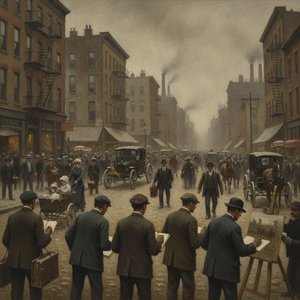
The Ashcan School: Capturing the Raw, Unfiltered Soul of Urban Life through American Realism
Discover the raw beauty of the Ashcan School. Explore how masters like Bellows and Henri captured the gritty, vibrant soul of early 20th-century New York through profound American Realism and evocative urban landscapes.
Explorez des œuvres d'art classées par thèmes, styles et caractéristiques.


