


 Aperçu en situation
 Partager
 Partager
 Détails
 Guide imprimable

 Télécharger
 Articles similaires
 Radiographie
 Voir le diaporama
 Statistiques
Shooting for the Beef


George Caleb Bingham (1811-1879), known as "the Missouri Artist," was a pivotal figure in American art. Born in Virginia and later settling in Missouri, Bingham dedicated his career to portraying scenes of life along the Missouri River. His work is c
 Afficher la suite
Découvrez George Caleb Bingham (1811-1879), maître du Luminisme et du Réalisme américain. Ses œuvres captivent par leur représentation de la vie sur le fleuve Missouri, comme 'L'Élection du Comté'. Un artiste majeur du 19e siècle !
Reproduction à l'huile faite à la main
Huile sur toile peinte à la main, avec cadre et dimensions personnalisés, réalisée sur commande par nos artistes. ( Passer au format impression Passer au format image numérique)




P118B $10

P118H $10

P118W $10

P438Z $10

P508JH $12

P508YH $12

P805H $10

P805Z $10

P919BZ $10

P919G $10

P919XJ $10

P959ZH $10

P968JZ $12

W106C $8

W218G $10

W218JH $8

W218Y $10

W307PJ $10

W316G $10

W316PJ $8

W316Y $10

W398PJ $8

W4111J $10

W500HY $15

W500JH $15

W692G $12

W849H $8

W940BG $15

W953PJ $8




Format standard
personnalisé
CM
INCH
Choisissez parmi nos formats prédéfinis qui respectent les proportions originales de l’œuvre.
Loading sizes...

largeur
hauteur
Vous pouvez saisir vos propres dimensions pour l'adapter à un cadre ou à un espace spécifique. Si la taille sélectionnée ne correspond pas aux proportions de l'image d'origine, nous recadrerons l'œuvre ou prolongerons la peinture avec des éléments peints à la main supplémentaires. Une maquette numérique vous sera envoyée pour approbation avant le début de la production.
Veuillez noter que l'aperçu à l'écran ne reflète pas le recadrage ou l'extension réels. Seule la maquette montrera fidèlement la composition finale.
Bien que des tailles personnalisées soient disponibles, nous vous recommandons de sélectionner une dimension dans la liste prédéfinie afin de préserver les proportions d'origine.
Exemples de personnalisation possibles : remplacer un visage par la photo du client ; ajouter un animal de compagnie (par exemple, remplacer un chat par un chien) ; inclure un message caché en arrière-plan ; modifier le paysage ou les éléments de l'arrière-plan.
Après la commande, l’équipe TopImpressionists.com contactera le client par e-mail pour recueillir ses instructions et lui fournira une maquette d’aperçu
Après la commande, l’équipe TopImpressionists.com contactera le client par e-mail pour recueillir ses instructions et lui fournira une maquette d’aperçu
Livraison dans le monde entier () en 3 à 4 semaines au lieu des 5 semaines habituelles. (27 septembre). Aucun compromis sur la qualité.

Livraison express gratuite dans le monde entier

Toile de lin de haute qualité

Assurance transport complète

Garantie de remboursement des droits de douane

Garantie de fidélité des couleurs

Garantie de retour de 100 jours (uniquement en cas de défaut)

Garantie de remboursement à 100%

Tarifs dégressifs sur quantité
 L'option verre n'est disponible que pour les dimensions inférieures à 110 cm.

Shooting for the Beef
Technique de reproduction
Format de la reproduction
-


Prix total final
$ 444
A Snapshot of the American West
George Caleb Bingham’s “Shooting for the Beef,” painted around 1850, isn't merely a hunting scene; it’s a vibrant tableau vivant—a captured moment brimming with the spirit and complexities of mid-19th century Missouri. Bingham, deeply rooted in the American Regionalist tradition, eschewed the polished formality of European art to instead immerse himself in the lives of his neighbors along the mighty Missouri River. This painting offers an intimate glimpse into a world where survival, community, and the pursuit of sustenance intertwined with a rugged individualism that would define the frontier experience.
The Composition: A Dynamic Dance
The canvas explodes with activity, yet possesses a remarkable sense of balance. Bingham masterfully employs a horizontal format, emphasizing the vastness of the landscape—a rolling expanse of prairie punctuated by the distant silhouette of a building, likely a hunting lodge or trading post. The central figure, a man poised to fire his rifle, isn’t rigidly posed but rather caught in a fleeting moment of action, lending an immediacy and realism to the scene. Notice how he's slightly off-center, drawing the eye naturally across the composition, while other figures—observers, loaders, and those preparing for their turn—are arranged with deliberate care, creating a visual narrative that unfolds before us.
Color and Texture: Earthy Echoes of the Frontier
Bingham’s palette is dominated by the muted tones of the American heartland – browns, ochres, greens, and yellows. These earthy hues evoke the soil, timber, and hides that formed the foundation of life on the frontier. The warm sunset glow bathing the sky—streaks of pink and orange—adds a touch of romanticism to the scene, suggesting both the beauty and the inherent dangers of this untamed landscape. Furthermore, observe how Bingham utilizes visible brushstrokes; they aren’t meticulously blended but rather applied with a confident hand, creating a palpable sense of texture – rough bark on the building, the worn leather of the rifles, and the slightly weathered faces of the men themselves. This technique contributes significantly to the painting's feeling of authenticity.
Symbolism and Narrative
“Shooting for the Beef” is more than just a depiction of hunting; it’s a meditation on masculinity, community, and the relationship between humans and nature. The act of shooting itself represents both skill and necessity—a means of providing sustenance in a challenging environment. The men aren't portrayed as bloodthirsty hunters but rather as fellow members of a tight-knit community, sharing a common purpose and a shared experience. The inclusion of observers suggests the importance of social interaction and camaraderie within this rugged setting. It’s a scene that speaks to the values of self-reliance, resourcefulness, and the enduring spirit of the American West.
A Legacy in American Art
George Caleb Bingham remains a pivotal figure in American art history, celebrated for his ability to capture the essence of everyday life along the Missouri River. “Shooting for the Beef” stands as one of his most iconic works, offering a timeless portrait of frontier America—a world of hardship and beauty, community and solitude. Reproductions of this captivating painting continue to resonate with viewers today, transporting us back to a time when the American West was being forged in the fires of exploration, settlement, and self-discovery.
Biographie de l'artiste
Premières années et débuts artistiques
George Caleb Bingham, un artiste américain, est né dans le comté d'Augusta, en Virginie, en 1811. Il était le deuxième de sept enfants de Mary Amend et Henry Vest Bingham. Après la perte financière de sa famille, ils déménagèrent à Franklin, Missouri, où commença le parcours artistique de Bingham. À l’âge de neuf ans, il aida Chester Harding, un célèbre portraitiste américain, pendant son bref séjour à Franklin.Développement artistique et style
Bingham était largement autodidacte, ses premières œuvres étant influencées par ses apprentissages auprès des fabricants d'armoires Jesse Green et Justinian Williams. À dix-neuf ans, il peignait des portraits pour 20 dollars chacun, les terminant souvent en une seule journée. Son talent de dessinateur et sa capacité à capturer les traits reconnaissables ont impressionné les mécènes, ce qui l'a conduit à se rendre à St. Louis pour perfectionner son art.Œuvres notables et redécouverte
Les œuvres de Bingham incarnent le style luministe, capturant la vie américaine le long du fleuve Missouri. Parmi ses œuvres notables figurent :- Ordre à la frontière (1850), qui met en valeur son mélange unique de réalisme et de luminisme.
- L'élection du comté (1844), une représentation emblématique de la vie pionnière américaine.
- Le jockey de St. Louis, sur le champ de bataille (1862), soulignant sa capacité à capturer l’essence de la culture américaine.
Héritage et influence
L’influence de Bingham sur l’art américain est indéniable. Son style luministe a inspiré des générations d’artistes, y compris ceux présentés sur la plateforme populaire de TopImpressionists. Explorez davantage les œuvres de Bingham et le mouvement luministe sur la plateforme TopImpressionists. Découvrez la vaste collection de George Caleb Bingham sur la page dédiée de TopImpressionists. Apprenez-en davantage sur le style luministe et son influence sur l’art américain. Découvrez les chefs-d'œuvre de George Caleb Bingham et d'autres artistes renommés sur TopImpressionists.Engagement politique et contexte historique
Bien que principalement reconnu pour ses peintures, Bingham a également été activement impliqué dans la politique de Missouri. Il s’est présenté à l’élection législative en 1846, mais a perdu suite à un contestation des résultats. Il fut réélu en 1848. Son engagement politique était profondément ancré dans ses convictions concernant l'expansion de l'esclavage et la préservation de l'Union. Pendant la guerre civile américaine, Bingham a servi comme capitaine d’une compagnie de volontaires, contribuant à maintenir le Missouri dans l'Union. Il a ensuite occupé divers postes gouvernementaux, notamment celui de trésorier de l'État du Missouri, témoignant de son dévouement au service public et de sa conviction en la préservation de l'unité nationale. Ses peintures, telles que Stump Speaking, offrent un aperçu précieux des dynamiques politiques et sociales de l’époque, reflétant ses propres convictions et son engagement envers les idéaux américains.
George Caleb Bingham
1811 - 1879 , États-Unis d'Amérique
En bref
- Artistic Movement Or Style: Luminisme, Réalisme américain
- Artists Or Movements Influenced By This Artist: ['Artistes de WahooArt']
- Artists Who Influenced This Artist: ['Chester Harding']
- Date Of Birth: 20 mars 1811
- Date Of Death: 7 juillet 1879
- Full Name: George Caleb Bingham
- Nationality: Américain
- Notable Artworks:
- Order at the Border
- The County Election
- St. Louis Jockey, on the Battlefield
- Place Of Birth (City And Country): Comté d'Augusta, États-Unis
Articles similaires
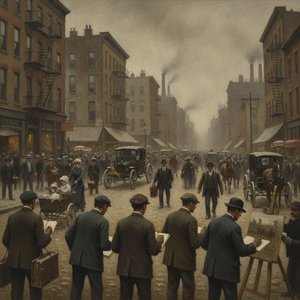
The Ashcan School: Capturing the Raw, Unfiltered Soul of Urban Life through American Realism
Discover the raw beauty of the Ashcan School. Explore how masters like Bellows and Henri captured the gritty, vibrant soul of early 20th-century New York through profound American Realism and evocative urban landscapes.

The Unvarnished Truth: A Cultural Journey Through the Soul of American Realism
Explore the profound beauty of American Realism. From the Ashcan School's urban grit to intimate portraits, discover how artists captured the authentic soul of a nation through unvarnished truth and masterful observation.
Explorez des œuvres d'art classées par thèmes, styles et caractéristiques.


