


 Aperçu en situation
 Partager
 Partager
 Détails
 Guide imprimable

 Télécharger
 Articles similaires
 Radiographie
 Voir le diaporama
 Statistiques
The Trappers


Capture the camaraderie of nature with George Caleb Bingham's evocative scene of trappers on the frontier; discover this American masterpiece today.
 Afficher la suite
Découvrez George Caleb Bingham (1811-1879), maître du Luminisme et du Réalisme américain. Ses œuvres captivent par leur représentation de la vie sur le fleuve Missouri, comme 'L'Élection du Comté'. Un artiste majeur du 19e siècle !
Reproduction à l'huile faite à la main
Huile sur toile peinte à la main, avec cadre et dimensions personnalisés, réalisée sur commande par nos artistes. ( Passer au format impression Passer au format image numérique)




P118B €10

P118H €10

P118W €10

P438Z €10

P508JH €12

P508YH €12

P805H €10

P805Z €10

P919BZ €10

P919G €10

P919XJ €10

P959ZH €10

P968JZ €12

W106C €8

W218G €10

W218JH €8

W218Y €10

W307PJ €10

W316G €10

W316PJ €8

W316Y €10

W398PJ €8

W4111J €10

W500HY €15

W500JH €15

W692G €12

W849H €8

W940BG €15

W953PJ €8




Format standard
personnalisé
CM
INCH
Choisissez parmi nos formats prédéfinis qui respectent les proportions originales de l’œuvre.
Loading sizes...

largeur
hauteur
Saisissez la largeur et la hauteur souhaitées, pour s'adapter à votre cadre ou à votre mur. Cette œuvre est peinte à la main ; ainsi, pour un format de forme différente, l'artiste peut peindre un peu plus autour du tableau ou réduire légèrement les bords — c'est vous qui choisissez. Nous vous envoyons une maquette numérique pour approbation avant que la peinture ne commence. L'image présentée sur cette page ne reflète pas le résultat réel — seule la maquette le fait.
Exemples de personnalisation possibles : remplacer un visage par la photo du client ; ajouter un animal de compagnie (par exemple, remplacer un chat par un chien) ; inclure un message caché en arrière-plan ; modifier le paysage ou les éléments de l'arrière-plan.
Après la commande, l’équipe TopImpressionists.com contactera le client par e-mail pour recueillir ses instructions et lui fournira une maquette d’aperçu
Après la commande, l’équipe TopImpressionists.com contactera le client par e-mail pour recueillir ses instructions et lui fournira une maquette d’aperçu
Livraison dans le monde entier () en 3 à 4 semaines au lieu des 5 semaines habituelles. (20 octobre). Aucun compromis sur la qualité.

Livraison express gratuite dans le monde entier

Toile de lin de haute qualité

Assurance transport complète

Garantie de remboursement des droits de douane

Garantie de fidélité des couleurs

Garantie de retour de 100 jours (uniquement en cas de défaut)

Garantie de remboursement à 100%

Tarifs dégressifs sur quantité
 L'option verre n'est disponible que pour les dimensions inférieures à 110 cm.

The Trappers
Technique de reproduction
Format de la reproduction
-


Prix total final
€ 234
A Portrait of Frontier Camaraderie
To gaze upon George Caleb Bingham's depiction, The Trappers, is to be instantly transported to a bygone era—a time when the American frontier was not merely a location, but an experience etched into the very soul of its inhabitants. This painting captures more than just two men in a boat; it encapsulates a profound sense of shared endeavor and quiet companionship against the vast, untamed backdrop of nature. The scene unfolds with remarkable naturalism, suggesting a moment stolen from the rhythm of daily life—a pause for reflection amidst the journey.
Bingham masterfully renders the interplay between man and environment. The boat itself becomes a microcosm of their shared existence, while the surrounding water, trees, and sky breathe with palpable energy. Notice the delicate inclusion of the birds, some soaring overhead as if guiding the men's passage, others perched nearby like silent witnesses to their adventure. And accompanying them all, the dog adds a touch of loyal warmth, grounding the narrative in the tangible bonds of friendship and partnership.
The Brushwork of American Life
George Caleb Bingham’s technique is inseparable from his subject matter. His style possesses an immediacy that belies its technical sophistication. He painted with an almost journalistic eye, yet imbued it with a romantic sensibility. The handling of the water, for instance, suggests movement and depth without becoming chaotic; it flows with a believable grace. Similarly, the figures are rendered not just in outline, but in character. You can almost feel the damp air on their skin and hear the gentle dip of the oars. This commitment to capturing authentic human interaction within a grand landscape is what elevates this work from mere depiction to genuine narrative art.
Historical Echoes of the Missouri Frontier
Understanding Bingham’s life—a life shaped by movement across the American West—is key to appreciating this canvas. For men like those portrayed here, life was an act of constant negotiation with the wilderness. The trappers were pioneers, figures embodying resilience and self-reliance. This painting speaks directly to that spirit: the triumph of human ingenuity and camaraderie over the vast indifference of nature. It is a visual testament to the early American spirit—adventurous, hardworking, and deeply connected to the land they sought to master.
Symbolism and Emotional Resonance
The symbolism within The Trappers is rich and layered. The boat itself can be seen as a metaphor for life's journey, requiring teamwork and steady effort to navigate the currents of fortune. The natural elements—the sturdy trees symbolizing enduring roots, the open water representing possibility—all converge around the central human bond. Emotionally, the painting resonates with a deep sense of nostalgia; it evokes the feeling of belonging found in shared struggle and mutual respect. For collectors and designers alike, this piece offers more than decoration; it offers an emotional anchor to themes of enduring partnership and the sublime beauty of exploration.
Bringing the Frontier Home
Reproducing such a powerful work requires sensitivity to Bingham's original intent. A high-quality reproduction allows one to bring the spirit of the American frontier into a modern setting. Imagine this scene gracing your walls, inviting contemplation during quiet moments. It serves as a magnificent focal point, whispering tales of adventure and steadfast friendship across the centuries.
ARTWORK_CLASSIFICATION: 1Questions et réponses
Quelle émotion l'œuvre Contemporary Realism «The Trappers» dégage-t-elle ?
L'émotion Nostalgic de « The Trappers » accompagne son style Contemporary Realism.
Comment puis-je obtenir un fichier numérique de «The Trappers» de George Caleb Bingham ?
Une image numérique de «The Trappers» de George Caleb Bingham peut être achetée sur sa page Image numérique : un téléchargement d'image numérique haute résolution.
Où puis-je trouver des statistiques concernant «The Trappers» de George Caleb Bingham ?
La page Statistiques de «The Trappers» de George Caleb Bingham présente les statistiques de visites publiques : le nombre de visites mensuelles de cette œuvre, une comparaison avec les œuvres les plus consultées de l'artiste, ainsi que la provenance des visiteurs.
Biographie de l'artiste
Premières années et débuts artistiques
George Caleb Bingham, un artiste américain, est né dans le comté d'Augusta, en Virginie, en 1811. Il était le deuxième de sept enfants de Mary Amend et Henry Vest Bingham. Après la perte financière de sa famille, ils déménagèrent à Franklin, Missouri, où commença le parcours artistique de Bingham. À l’âge de neuf ans, il aida Chester Harding, un célèbre portraitiste américain, pendant son bref séjour à Franklin.Développement artistique et style
Bingham était largement autodidacte, ses premières œuvres étant influencées par ses apprentissages auprès des fabricants d'armoires Jesse Green et Justinian Williams. À dix-neuf ans, il peignait des portraits pour 20 dollars chacun, les terminant souvent en une seule journée. Son talent de dessinateur et sa capacité à capturer les traits reconnaissables ont impressionné les mécènes, ce qui l'a conduit à se rendre à St. Louis pour perfectionner son art.Œuvres notables et redécouverte
Les œuvres de Bingham incarnent le style luministe, capturant la vie américaine le long du fleuve Missouri. Parmi ses œuvres notables figurent :- Ordre à la frontière (1850), qui met en valeur son mélange unique de réalisme et de luminisme.
- L'élection du comté (1844), une représentation emblématique de la vie pionnière américaine.
- Le jockey de St. Louis, sur le champ de bataille (1862), soulignant sa capacité à capturer l’essence de la culture américaine.
Héritage et influence
L’influence de Bingham sur l’art américain est indéniable. Son style luministe a inspiré des générations d’artistes, y compris ceux présentés sur la plateforme populaire de TopImpressionists. Explorez davantage les œuvres de Bingham et le mouvement luministe sur la plateforme TopImpressionists. Découvrez la vaste collection de George Caleb Bingham sur la page dédiée de TopImpressionists. Apprenez-en davantage sur le style luministe et son influence sur l’art américain. Découvrez les chefs-d'œuvre de George Caleb Bingham et d'autres artistes renommés sur TopImpressionists.Engagement politique et contexte historique
Bien que principalement reconnu pour ses peintures, Bingham a également été activement impliqué dans la politique de Missouri. Il s’est présenté à l’élection législative en 1846, mais a perdu suite à un contestation des résultats. Il fut réélu en 1848. Son engagement politique était profondément ancré dans ses convictions concernant l'expansion de l'esclavage et la préservation de l'Union. Pendant la guerre civile américaine, Bingham a servi comme capitaine d’une compagnie de volontaires, contribuant à maintenir le Missouri dans l'Union. Il a ensuite occupé divers postes gouvernementaux, notamment celui de trésorier de l'État du Missouri, témoignant de son dévouement au service public et de sa conviction en la préservation de l'unité nationale. Ses peintures, telles que Stump Speaking, offrent un aperçu précieux des dynamiques politiques et sociales de l’époque, reflétant ses propres convictions et son engagement envers les idéaux américains.
George Caleb Bingham
1811 - 1879 , États-Unis d'Amérique
En bref
- Artistic Movement Or Style: Luminisme, Réalisme américain
- Artists Or Movements Influenced By This Artist: ['Artistes de WahooArt']
- Artists Who Influenced This Artist: ['Chester Harding']
- Date Of Birth: 20 mars 1811
- Date Of Death: 7 juillet 1879
- Full Name: George Caleb Bingham
- Nationality: Américain
- Notable Artworks:
- Order at the Border
- The County Election
- St. Louis Jockey, on the Battlefield
- Place Of Birth (City And Country): Comté d'Augusta, États-Unis
Articles connexes

Georges Braque : Les 25 Œuvres Maîtresses du Cubisme et de la Modernité | TopImpressionists
Plongez dans l'univers de Georges Braque avec les 25 œuvres incontournables du cubisme. Découvrez l'histoire, les techniques et l'impact de ce maître de l'art moderne. Reproductions d'art exceptionnelles sur TopImpressionists.com.

Thomas George Webster: Navigating Genre Boundaries & American Identity in 19th-Century Landscape Painting
Explore the captivating genre scenes of Thomas George Webster, a Victorian painter bridging British traditions with American themes. Discover his style, influences & legacy in 19th-century art history.
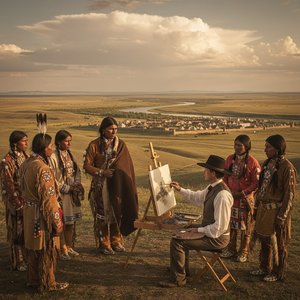
George Catlin: Witnessing & Representing Indigenous Life on the American Frontier
Explore the captivating art of George Catlin, renowned for his vivid portraits & landscapes documenting Native American life on the frontier. Discover a vanishing world through stunning paintings and historical context.

John George Brown: Capturing American Life & Sentiment in 19th-Century Genre Painting
Explore the captivating genre paintings of John George Brown, celebrated for his realistic depictions of 19th-century American life. Discover his legacy & find museum-quality reproductions at TopImpressionists.

Georges Seurat : Les 25 Œuvres Maîtresses du Pointillisme | TopImpressionists
Plongez dans l'univers lumineux de Georges Seurat ! Découvrez les 25 œuvres majeures du pointillisme, de 'Un dimanche après-midi à l'Île de la Grande Jatte' aux 'Poseuses'. Reproductions d'art exceptionnelles et inspiration déco sur TopImpressionists.com.
Explorez des œuvres d'art classées par thèmes, styles et caractéristiques.


