


 Aperçu en situation
 Partager
 Partager
 Détails
 Guide imprimable

 Télécharger
 Articles similaires
 Radiographie
 Voir le diaporama
 Statistiques
Model from the Back
 Pointillist Precision
 1886
1886 24.0 x 15.0 cm
Experience the serene beauty of Georges Seurat’s Pointillist masterpiece – ‘Model from the Back,’ capturing a tranquil moment with its luminous blues and greens. Explore this iconic Impressionist work and bring artistic elegance into your home.
 Afficher la suite
Découvrez Georges Seurat (1859-1891), pionnier du Pointillisme ! Explorez 'Un dimanche à La Grande Jatte' et sa théorie révolutionnaire des couleurs. Achetez des reproductions peintes à la main !
Giclées et impressions d'art
Impressions giclées ou sur toile de qualité musée, avec une production rapide et des finitions au choix. ( Acheter la peinture faite à la main Passer au format image numérique)




P118B €10

P118H €10

P118W €10

P438Z €10

P508JH €12

P508YH €12

P805H €10

P805Z €10

P919BZ €10

P919G €10

P919XJ €10

P959ZH €10

P968JZ €12

W106C €8

W218G €10

W218JH €8

W218Y €10

W307PJ €10

W316G €10

W316PJ €8

W316Y €10

W398PJ €8

W4111J €10

W500HY €15

W500JH €15

W692G €12

W849H €8

W940BG €15

W953PJ €8




Format standard
personnalisé
CM
INCH
Choisissez parmi nos formats prédéfinis qui respectent les proportions originales de l’œuvre.
Loading sizes...

largeur
hauteur
Saisissez la largeur et la hauteur souhaitées pour qu'elles s'adaptent à votre cadre ou à votre mur. Une impression ne peut être que découpée, elle ne peut jamais être agrandie au-delà de l'image originale ; ainsi, un format de forme différente entraînera la perte d'une partie de l'image. Nous vous envoyons une maquette numérique pour approbation avant toute impression. L'image présentée sur cette page ne montre pas le recadrage réel — seule la maquette le permet.
Livraison dans le monde entier () en 2 semaines au lieu des 4/5 semaines habituelles. (23 octobre)

Livraison express gratuite dans le monde entier

Toile de lin de haute qualité

Assurance transport complète

Garantie de remboursement des droits de douane

Garantie de fidélité des couleurs

Garantie de retour de 100 jours (uniquement en cas de défaut)

Garantie de remboursement à 100%

Tarifs dégressifs sur quantité
 L'option verre n'est disponible que pour les dimensions inférieures à 110 cm.

Model from the Back
Giclées et impressions d'art
Format de la reproduction
-


Prix total final
€ 61
A Moment Frozen in Light: Exploring Georges Seurat’s “Model from the Back”
The painting "Model from the Back" by Georges Pierre Seurat, completed in 1886, stands as a testament to the revolutionary fervor of Impressionism's final years and embodies the groundbreaking principles of Pointillism. More than just a depiction of a seated man against a wall, it’s an exercise in scientific observation transformed into breathtaking artistic expression—a feat that cemented Seurat’s place among the titans of modern art.The Science Behind Beauty: Understanding Pointillism
Seurat didn't simply dabble in color; he meticulously applied his knowledge of optics to achieve a luminous effect previously unattainable by Impressionists. Influenced by Eugène Chevreuil and Henri Matisse, Seurat championed Pointillism—a technique where pigment is applied in tiny dots rather than blended strokes. This seemingly simple method was underpinned by rigorous mathematical calculations designed to maximize color perception. Researchers like Michel Eugène Chevretuil had begun exploring the science of color perception, demonstrating that the human eye perceives color as a combination of wavelengths, and Seurat sought to recreate this phenomenon on canvas. By layering minuscule dots of complementary colors—primarily blues and greens—he created an illusion of shimmering light and depth, bypassing the traditional mixing process altogether. This approach prioritized scientific accuracy while simultaneously elevating painting to new heights of aesthetic sophistication.A Portrait of Quiet Contemplation: Contextualizing the Artwork
Painted during the Belle Époque, “Model from the Back” reflects the prevailing mood of intellectual curiosity and artistic experimentation that characterized Parisian society at the time. Seurat’s work aligns with the broader movement toward abstraction, albeit subtly achieved through meticulous detail. The subject matter itself—a solitary figure—suggests introspection and stillness—themes prevalent in Symbolist art alongside Impressionism. However, unlike many Symbolists who aimed to convey emotion directly, Seurat prioritized visual precision, believing that color alone could evoke profound feelings. Consider the deliberate positioning of the model’s head turned away; this gesture invites contemplation and subtly emphasizes the importance of observation – mirroring Seurat's own artistic philosophy.Color as Emotion: Decoding the Palette
The dominant hues—blues and greens—are not merely decorative choices but carefully considered elements contributing to the painting’s emotional impact. Blue, often associated with serenity and stability, anchors the composition while simultaneously conveying a sense of coolness. Green, symbolizing growth and renewal, introduces an element of vibrancy that balances the blues' calmness. The subtle gradations achieved through dot placement create an astonishingly realistic rendering of light and shadow—a remarkable feat considering the technique’s inherent limitations. Seurat’s masterful manipulation of color demonstrates his profound understanding of how visual stimuli can influence perception and evoke emotional responses.A Legacy of Precision: Why “Model from the Back” Remains Relevant Today
“Model from the Back” continues to resonate with art lovers and collectors alike, not only for its stunning visual beauty but also for its pioneering spirit. It represents a pivotal moment in artistic history—a decisive step away from Impressionism’s fleeting impressions toward a more durable form of representation rooted in scientific principles. Reproductions offer an exceptional opportunity to experience this masterpiece firsthand, allowing viewers to appreciate the intricate detail and luminous quality that define Seurat's enduring legacy.Questions et réponses
Les couleurs de «Model from the Back» de Georges Pierre Seurat sont-elles vives ou feutrées ?
«Model from the Back» de Georges Pierre Seurat est représenté avec une saturation de Subtle Color et une intensité de Balanced.
Quel âge avait Georges Pierre Seurat lors de la création de « Model from the Back » ?
Georges Pierre Seurat a réalisé « Model from the Back » à l'âge de 27. L'artiste est né en 1859 et l'œuvre date de 1886.
«Model from the Back» de Georges Pierre Seurat est-il une composition en portrait, en paysage ou carrée ?
«Model from the Back» de Georges Pierre Seurat est une composition en Tall. Il convient de vérifier les proportions avant de choisir un format d'impression.


Biographie de l'artiste
Georges Seurat : Pionnier du Néo-Impressionnisme
Jeunesse et Formation
- Né le: 2 décembre 1859 à Paris, en France.
- La famille de Seurat s'est installée sur le Boulevard de Magenta peu après sa naissance.
- Son père, Antoine Chrysostome Seurat, était un ancien fonctionnaire juridique devenu riche grâce à la spéculation immobilière.
- Il a commencé ses études artistiques à l’École Municipale de Sculpture et Dessin, près de chez lui, sous la direction du sculpteur Justin Lequien.
- En 1878, il s'est inscrit à l’illustre École des Beaux-Arts, où il a étudié auprès d'Henri Lehmann.
Développement Artistique et Influences
- La personnalité artistique de Seurat était un mélange unique de sensibilité et d’abstraction logique. Il combinait une délicate sensibilité avec une précision mathématique.
- Influences: Bien que les influences spécifiques soient débattues, il a étudié les théories des couleurs de scientifiques tels que Michel Eugène Chevreul et Ogden Rood.
- Il a initialement expérimenté avec des techniques de dessin traditionnelles avant de développer son style caractéristique.
- Ses premières œuvres montrent un intérêt pour la peinture académique, mais se sont progressivement orientées vers une approche plus innovante.
Chromoluminarisme et Pointillisme
- Seurat a inventé les techniques du chromoluminarisme (la science de la couleur) et du pointillisme, appliquant de petites touches distinctes de couleurs pures à une toile.
- Il utilisait le crayon Conté pour des dessins détaillés sur papier à surface rugueuse dans le cadre de son processus.
- Objectif du Pointillisme: L'idée était que l’œil du spectateur mélangerait ces couleurs optiquement, créant un effet vibrant et lumineux.
Réalisations Majeures et Œuvres Notables
- Un Dimanche après-midi à l’Île de la Grande Jatte (1884-1886): Son œuvre la plus célèbre, marquant le début du Néo-Impressionnisme. Elle illustre sa technique pointilliste et son approche méticuleuse.
- Alfalfa, Saint-Denis (1886-1887): Démontre son application de la théorie des couleurs à un paysage rural.
- Paysage à Saint-Ouen (1882-1883): Un exemple précoce montrant son style évolutif et son intérêt pour la lumière et l’atmosphère.
- La Tour Eiffel (1889): Une représentation du célèbre monument parisien, réalisée à l'aide de techniques pointillistes.
- Les Baigneurs d’Asnières (1884): Une autre œuvre significative explorant le loisir et la vie moderne avec son style distinctif.
Signification Historique et Héritage
- Le travail de Seurat a profondément influencé le développement de l’art moderne, en particulier par son accent sur l’expression subjective et l’exploration de nouvelles techniques.
- A ouvert la voie: Il a ouvert la voie aux mouvements tels que le Fauvisme, le Cubisme et l’Expressionnisme abstrait.
- Son approche scientifique de la peinture a défié les conventions artistiques traditionnelles.
- Malgré sa courte vie (il est décédé à l'âge de 31 ans), Seurat a laissé une marque indélébile sur l’histoire de l’art, inspirant des générations d'artistes avec sa vision novatrice.

Georges Pierre Seurat
1859 - 1891 , France
En bref
- Artistic Movement Or Style: Néo-impressionnisme, Pointillisme
- Artists Or Movements Influenced By This Artist:
- Fauvisme
- Cubisme
- Expressionnisme abstrait
- Artists Who Influenced This Artist:
- Michel Eugène Chevreul
- Ogden Rood
- Date Of Birth: 2 décembre 1859
- Full Name: Georges Pierre Seurat
- Nationality: Français
- Notable Artworks:
- Un dimanche à La Grande Jatte
- Baigneurs d'Asnières
- La Tour Eiffel
- Place Of Birth (City And Country): Paris, France
Articles connexes

Claude Monet : Les 25 Chefs-d'Œuvre Impressionnistes à Redécouvrir | TopImpressionists
Plongez dans l'univers impressionniste de Claude Monet ! Découvrez les 25 œuvres les plus célèbres du maître, de 'Impression soleil levant' aux 'Nymphéas'. Inspirez votre décoration intérieure avec TopImpressionists.com et trouvez la reproduction parfaite.

Verdant Visions: Exploring the Symbolism & Aesthetic Impact of Green in Art History
Explore the rich history & symbolism of green in art! Discover iconic paintings, techniques, and how to bring verdant harmony into your home with TopImpressionists's expert guide.

Georges Seurat : Les 25 Œuvres Maîtresses du Pointillisme | TopImpressionists
Plongez dans l'univers lumineux de Georges Seurat ! Découvrez les 25 œuvres majeures du pointillisme, de 'Un dimanche après-midi à l'Île de la Grande Jatte' aux 'Poseuses'. Reproductions d'art exceptionnelles et inspiration déco sur TopImpressionists.com.
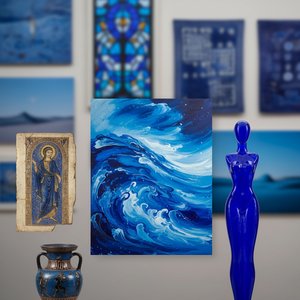
The Allure of Azure: Exploring the Symbolic & Aesthetic Depths of Blue in Art History
Explore the rich history of blue in art! Discover its symbolism, from ancient pigments to modern masterpieces by Kandinsky & Seurat. Uncover the psychological impact and cultural meanings behind this captivating hue.

Les 10 Chefs-d'œuvre Dominés par le Bleu Ardoise : Art, Histoire & Décor
Plongez dans l'univers fascinant des 10 plus beaux tableaux dominés par le bleu ardoise. Découvrez l'histoire, les artistes et les techniques de ces chefs-d'œuvre impressionnistes et contemporains. Inspirez votre décoration intérieure avec !
Explorez des œuvres d'art classées par thèmes, styles et caractéristiques.


