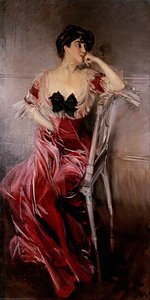
Aperçu en situation
 Envoyer
 Partager
 Détails de l'œuvre
 Guide
Guide

 Télécharger l'image
 Articles similaires
 Radiographie
 Diaporama
 Statistiques
Leda with Swan


Giovanni Boldini’s ‘Leda with Swan,’ an Impressionistic masterpiece depicting the myth of Zeus and Leda, showcases a nude woman embraced by a swan – a captivating portrait from the Belle Époque. Discover this iconic artwork and bring its timeless beauty into your space.
 Lire la suite
Découvrez Giovanni Boldini (1842-1931), peintre impressionniste italien célèbre pour ses portraits élégants de la société parisienne. Maître du mouvement, explorez son style fluide et ses paysages.
Giclées et impressions d'art
Impressions giclées ou sur toile de qualité musée, avec une production rapide et des finitions au choix. ( Commander la reproduction peinte à la main Passer au format numérique)




P118B €10

P118H €10

P118W €10

P438Z €10

P508JH €12

P508YH €12

P805H €10

P805Z €10

P919BZ €10

P919G €10

P919XJ €10

P959ZH €10

P968JZ €12

W106C €8

W218G €10

W218JH €8

W218Y €10

W307PJ €10

W316G €10

W316PJ €8

W316Y €10

W398PJ €8

W4111J €10

W500HY €15

W500JH €15

W692G €12

W849H €8

W940BG €15

W953PJ €8




Format standard
sur mesure
CM
INCH
Choisissez parmi nos formats prédéfinis qui respectent les proportions originales de l’œuvre.
Loading sizes...

largeur
hauteur
Saisissez la largeur et la hauteur souhaitées pour qu'elles s'adaptent à votre cadre ou à votre mur. Une impression peut être recadrée, mais jamais agrandie au-delà de l'image originale ; ainsi, un format de forme différente entraînera la perte d'une partie de l'image. Nous vous envoyons une maquette numérique pour approbation avant toute impression. L'image présentée sur cette page ne montre pas le recadrage réel — seule la maquette le permet.
Livraison dans le monde entier () en 2 semaines au lieu des 4/5 semaines habituelles. (26 octobre)

Livraison express gratuite dans le monde entier

Toile de lin de qualité supérieure

Assurance transport complète

Garantie de remboursement des droits de douane

Garantie de fidélité des couleurs

Politique de retour de 100 jours (uniquement en cas de défaut)

Garantie de remboursement à 100%

Offre de tarifs dégressifs
 L'option verre n'est disponible que pour les dimensions inférieures à 110 cm.

Leda with Swan
Giclées et impressions d'art
Format de la reproduction
-


Prix total
€ 61
Giovanni Boldini’s *Leda with Swan*: A Vision of Mythic Desire
Giovanni Boldini's 1884 painting, *Leda with Swan*, is more than just a depiction of a classical myth; it’s an exquisitely rendered exploration of desire, power, and the unsettling beauty of divine intervention. Executed in the Impressionistic style, a movement Boldini embraced after his formative years amongst the Macchiaioli, this work exemplifies his mastery of capturing fleeting moments and luminous color – hallmarks that secured his place as one of the leading portraitists of the Belle Époque. The scene unfolds with a captivating immediacy, drawing the viewer into the intimate tableau of Leda’s vulnerability and Zeus's audacious transformation.
- Subject Matter: The painting portrays the legendary story of Leda, Queen of Sparta, seduced by Zeus in the guise of a swan. This narrative, rich with symbolism, has been interpreted across centuries as an allegory for creative inspiration, the allure of forbidden knowledge, and the capricious nature of the gods.
- Style & Technique: Boldini’s brushwork is characterized by rapid, loose strokes that capture the movement and texture of the scene. He employs a vibrant palette – predominantly cool blues and whites contrasted with warm flesh tones – to create an atmosphere of ethereal beauty and heightened emotion. The use of *alla prima* painting (painting directly onto the canvas without underdrawing) contributes to the immediacy and spontaneity of the composition.
Symbolism and Interpretation
The central image—Leda reclining with a swan perched upon her chest—is laden with symbolic weight. The swan itself, traditionally associated with purity and transformation, becomes an emblem of Zeus’s deceptive power. The inclusion of two swords adds another layer to the interpretation. One sword, positioned near Leda's right shoulder, suggests a potential defense against this divine assault, while the other, closer to her left, could represent the disruption of order and the intrusion of the supernatural into the realm of human experience. The nudity of Leda is not merely a display of physical beauty; it’s a deliberate choice that emphasizes her vulnerability and the profound intimacy of the encounter.
- Divine Intervention: The painting powerfully conveys the theme of divine intervention, a common subject in art history, representing the unpredictable nature of fate and the influence of gods on human affairs.
- Allegory of Creativity: The swan’s presence can be seen as an allegory for artistic inspiration – a sudden, transformative force that ignites creative genius.
Historical Context & Boldini's Legacy
*Leda with Swan* was created during a period of immense social and artistic change in Paris. Boldini’s work reflects the spirit of the Belle Époque—a time of optimism, technological advancement, and a renewed interest in classical mythology. Boldini’s ability to capture the elegance and sophistication of his subjects made him immensely popular with Parisian society's elite, commissioning portraits from royalty, aristocracy, and prominent figures of the era. His influence extended beyond portraiture; he helped shape the direction of Impressionism through his innovative use of color and brushwork. This painting stands as a testament to Boldini’s artistic genius and his enduring contribution to the canon of 19th-century art.
Related Information: This artwork was created in 1884 by Giovanni Boldini, an Italian artist who worked primarily in Impressionistic style. Further research can be found at WikiArt.Questions et réponses
L'œuvre « Leda with Swan » est-elle dans le domaine public ?
Statut des droits d'auteur pour «Leda with Swan» de Giovanni Boldini : l'œuvre est dans le dans le domaine public - ses droits d'auteur sont tombés dans le domaine public. Cela détermine si les reproductions de l'image peuvent être réalisées librement.
De quelle époque date « Leda with Swan » ?
«Leda with Swan» de Giovanni Boldini appartient à la période 19th Century. Cette classification situe l'œuvre dans l'histoire de l'art.
Quelles couleurs dominent «Leda with Swan» de Giovanni Boldini ?
« Leda with Swan » se définit par une palette Earthy dominée par le Putty (#cfccd6).
Biographie de l'artiste
Premières années et formation
Giovanni Boldini, peintre italien de genre et de portraits, est né le 31 décembre 1842 à Ferrare, en Italie. Son père, un peintre de sujets religieux, encouragea son intérêt précoce pour l'art. En 1862, Boldini déménagea à Florence pendant six ans pour étudier et se consacrer à la peinture. C’est là qu’il rencontra les Macchiaioli, un groupe de peintres réalistes italiens qui furent des précurseurs de l'impressionnisme.L'évolution artistique
Le style artistique de Boldini était caractérisé par sa réponse spontanée et fluide à la nature, comme on peut le voir dans ses paysages. Cependant, ce sont ses portraits qui lui ont valu une large reconnaissance. Il devint connu sous le nom de "Maître du traîné", un surnom inventé par le magazine Time en 1933, faisant référence à son style pictural vif et dynamique. Son œuvre évolua au fil des ans, passant d'une influence macchiaioli initiale à une approche plus impressionniste et finalement à un style unique caractérisé par des coups de pinceau rapides et expressifs, capturant l'essence du mouvement et de la lumière. Il s’inspira également des techniques photographiques de son époque, cherchant à saisir la spontanéité et le dynamisme de ses sujets.Œuvres notables et expositions
- Le portrait de la Comtesse de Rasty allongée (impressionnisme) est un exemple notable de son travail, démontrant sa capacité à capturer l'essence de ses sujets avec une élégance et une vivacité exceptionnelles.
- En 1897, il organisa une exposition personnelle à New York, consolidant ainsi sa réputation de peintre portraitiste.
- Il participa à la Biennale de Venise en 1895, 1903, 1905 et 1912, témoignant de son engagement envers le monde artistique.
L'influence et l'importance historique
Boldini fut un acteur majeur de la scène artistique parisienne à la fin du XIXe siècle et au début du XXe siècle. Il fréquenta les cercles artistiques et littéraires de l’époque, se liant d'amitié avec des figures telles que Édouard Manet, Auguste Renoir et Claude Monet. Son style unique et son talent pour capturer la beauté et le glamour de la société parisienne en firent un peintre très recherché par les aristocrates et les personnalités influentes. Il contribua à définir l'esthétique de la Belle Époque, une période marquée par l'optimisme, l'élégance et l'innovation artistique. Son influence se ressent dans le développement du portrait moderne, où la spontanéité et l’expression personnelle sont privilégiées.Héritage
Giovanni Boldini est décédé le 11 juillet 1931 à Paris, laissant derrière lui un héritage en tant que l'un des peintres portraitistes les plus élégants de son époque. Son travail continue d'inspirer les artistes et les amateurs d’art aujourd’hui.- Explorez davantage les œuvres de Giovanni Boldini sur [https://TopImpressionists.com/@/giovanni-boldini](https://TopImpressionists.com/@/giovanni-boldini).
- Découvrez le Musée Giovanni Boldini (Italie) et son importance dans l'art italien sur [https://TopImpressionists.com/@@/a@d3astr-museo-giovanni-boldini-(italy)-a-hidden-gem-of-italian-art](https://TopImpressionists.com/@@/a@d3astr-museo-giovanni-boldini-(italy)-a-hidden-gem-of-italian-art).

Giovanni Boldini
1842 - 1931 , Italie
L'essentiel de l'artiste
- Artistic Movement Or Style: Impressionnisme
- Artists Who Influenced This Artist: ['Macchiaioli']
- Date Of Birth: 31 décembre 1842
- Date Of Death: 11 juillet 1931
- Full Name: Giovanni Boldini
- Nationality: Italien
- Notable Artworks: ['La Comtesse de Rasty allongée']
- Place Of Birth (City And Country): Ferrara, Italie
Articles connexes

Capturing the Soul: The Most Emotionally Moving Impressionist and Post-Impressionist Masterpieces
Discover the profound emotional depth of Impressionist and Post-Impressionist masterpieces. Explore how legends like Monet, Van Gogh, and Gauguin captured light and soul through evocative landscapes and vibrant brushwork for a timeless connection to art history.

L'Élégance Impressionniste à Petit Prix : Guide pour Décorer vos Intérieurs avec des Toiles d'Exception
Sublimez votre intérieur avec l'élégance de l'impressionnisme. Découvrez nos reproductions artisanales à l'huile, peintes à la main par des maîtres pour créer un héritage intemporel dans votre foyer. Qualité musée et expertise artistique au service de votre décoration.

The Magic of Lithography: Capturing Light and Texture in Every Impressionist Print
Discover the enchanting world of lithography through an Impressionist lens. Explore how this timeless technique captures the luminous light and delicate textures of masters like Monet and Renoir, offering a profound way to bring art history into your home with elegance and soul.

The Magic of Giclée: Bringing Impressionist Masterpieces to Your Walls with Vivid Detail
Discover the breathtaking beauty of Impressionist masterpieces with our museum-quality Giclée prints. Experience vivid detail, archival pigments, and the luminous light of Monet and Van Gogh, expertly preserved to bring timeless elegance and sophisticated artistry into your home.

TopImpressionists.com F.A.Q.: Discover the Vibrant Beauty of Our Premium Art Poster Prints
Explore the technical excellence of TopImpressionists.com's premium art poster prints. Discover how our 12-color pigment system and archival inks capture the luminous beauty of Impressionist masterpieces with unmatched color fidelity and museum-grade durability for the discerning collector.
Explorez des œuvres d'art classées par thèmes, styles et caractéristiques.