


 Aperçu en situation
 Partager
 Partager
 Détails
 Guide imprimable

 Télécharger
 Articles similaires
 Radiographie
 Voir le diaporama
 Statistiques
Winter Landscape


Experience the serene solitude of De Nittis' Impressionistic Winter Landscape from c.1880, capturing muted tones and snowy stillness; discover this masterpiece today.
 Afficher la suite
Giuseppe De Nittis : peintre italien majeur de l’impressionnisme italien et fondateur de l’École d’Athènes ! Ses œuvres emblématiques captivent la lumière et les couleurs pour une esthétique innovante et pleine de sensibilité. Découvrez ses paysages volcaniques et ses portraits raffinés.
Reproduction à l'huile faite à la main
Huile sur toile peinte à la main, avec cadre et dimensions personnalisés, réalisée sur commande par nos artistes. ( Passer au format impression Passer au format image numérique)




P118B €10

P118H €10

P118W €10

P438Z €10

P508JH €12

P508YH €12

P805H €10

P805Z €10

P919BZ €10

P919G €10

P919XJ €10

P959ZH €10

P968JZ €12

W106C €8

W218G €10

W218JH €8

W218Y €10

W307PJ €10

W316G €10

W316PJ €8

W316Y €10

W398PJ €8

W4111J €10

W500HY €15

W500JH €15

W692G €12

W849H €8

W940BG €15

W953PJ €8




Format standard
personnalisé
CM
INCH
Choisissez parmi nos formats prédéfinis qui respectent les proportions originales de l’œuvre.
Loading sizes...

largeur
hauteur
Saisissez la largeur et la hauteur souhaitées, pour s'adapter à votre cadre ou à votre mur. Cette œuvre est peinte à la main ; ainsi, pour un format de forme différente, l'artiste peut peindre un peu plus autour du tableau ou réduire légèrement les bords — c'est vous qui choisissez. Nous vous envoyons une maquette numérique pour approbation avant que la peinture ne commence. L'image présentée sur cette page ne reflète pas le résultat réel — seule la maquette le fait.
Exemples de personnalisation possibles : remplacer un visage par la photo du client ; ajouter un animal de compagnie (par exemple, remplacer un chat par un chien) ; inclure un message caché en arrière-plan ; modifier le paysage ou les éléments de l'arrière-plan.
Après la commande, l’équipe TopImpressionists.com contactera le client par e-mail pour recueillir ses instructions et lui fournira une maquette d’aperçu
Après la commande, l’équipe TopImpressionists.com contactera le client par e-mail pour recueillir ses instructions et lui fournira une maquette d’aperçu
Livraison dans le monde entier () en 3 à 4 semaines au lieu des 5 semaines habituelles. (24 octobre). Aucun compromis sur la qualité.

Livraison express gratuite dans le monde entier

Toile de lin de haute qualité

Assurance transport complète

Garantie de remboursement des droits de douane

Garantie de fidélité des couleurs

Garantie de retour de 100 jours (uniquement en cas de défaut)

Garantie de remboursement à 100%

Tarifs dégressifs sur quantité
 L'option verre n'est disponible que pour les dimensions inférieures à 110 cm.

Winter Landscape
Technique de reproduction
Format de la reproduction
-


Prix total final
€ 236
Winter Landscape with Skaters
Giuseppe De Nittis’ “Winter Landscape,” painted circa 1880, stands as a testament to the enduring fascination of Impressionism with capturing fleeting moments of natural beauty and conveying profound emotional resonance. This artwork embodies the spirit of its time—a period marked by significant artistic experimentation and a desire to move beyond academic conventions toward a more subjective representation of experience.
Subject Matter & Composition: The scene depicts a serene winter landscape dominated by snow-covered terrain, punctuated by buildings and a prominent train track receding into the distance. A solitary figure walks along a snowy field towards the right side of the frame, creating a focal point that draws the viewer’s eye and invites contemplation. De Nittis skillfully employs horizontal lines—evident in the wall and the train tracks—to establish a sense of stillness and stability, while organic shapes—the undulating snowdrifts and textured trees—introduce dynamism and visual interest.
Style & Technique: “Winter Landscape” exemplifies Impressionistic tendencies through its loose brushwork and emphasis on atmospheric perspective. De Nittis eschews meticulous detail in favor of capturing the overall mood and sensation of the winter day, prioritizing color and texture over precise representation. The painting utilizes oil paint on canvas—a medium known for its ability to achieve rich hues and luminous effects—and employs layering techniques to build up depth and create a palpable sense of surface materiality.
Color Palette & Lighting: The artwork’s palette is muted yet harmonious, dominated by whites, grays, browns, and subtle oranges/reds. Snow covers much of the landscape, establishing a predominantly white and gray tonal scheme that reflects the subdued light conditions characteristic of winter mornings. Warm hues—found in the buildings—provide visual contrast against the cool tones of the snow and trees, enhancing the painting’s expressive power.
Symbolic Significance & Emotional Impact: Beyond its aesthetic qualities, “Winter Landscape” carries symbolic weight, evoking feelings of solitude, contemplation, and perhaps even melancholy. The lone figure traversing the snowy field serves as a poignant reminder of human vulnerability against the vastness of nature—a motif that resonates deeply with viewers seeking solace or inspiration.
Historical Context: De Nittis’ work aligns itself with the broader artistic currents of the late 19th century, particularly the influence of Impressionism. Artists like Monet and Renoir were actively exploring new ways to depict light and color—challenging traditional academic standards—and prioritizing emotional expression over idealized realism. “Winter Landscape” embodies this spirit of innovation, securing its place as a cornerstone of Italian Impressionist art.
Further Research: For more detailed information on Giuseppe De Nittis and his artistic legacy, consult Wikipedia (https://en.wikipedia.org/wiki/Giuseppe_De_Nittis) and explore reproductions of “Winter Landscape” at the Tokyo National Museum (/media/artworks/images/thumbnails/5e/e5/5ee5f2e533434462a492d5e13cde511f.jpg).
Questions et réponses
Puis-je prévisualiser «Winter Landscape» de Giuseppe De Nittis avant de commander ?
Pour prévisualiser une reproduction de «Winter Landscape» de Giuseppe De Nittis, ouvrez la page Aperçu de l'œuvre.
Quelle technique a été utilisée pour «Winter Landscape» de Giuseppe De Nittis ?
Le médium de «Winter Landscape» de Giuseppe De Nittis est Oil On Canvas. Les reproductions visent à restituer l'aspect de cette technique.
Où puis-je acheter une impression de «Winter Landscape» de Giuseppe De Nittis ?
Pour obtenir une impression de «Winter Landscape» de Giuseppe De Nittis, il vous suffit de la commander sur sa page Impression d'art fine : une impression d'art sur toile de coton ou sur papier canvas d'archive.
Biographie de l'artiste
Giuseppe De Nittis : Bridging Salon Art and Impressionism
Giuseppe De Nittis (1846-1884) stands as a pivotal figure in Italian art history, embodying the confluence of traditional salon painting techniques with the burgeoning spirit of Impressionism. Born in Barletta, Puglia, on February 25th, 1846, he navigated a turbulent era marked by political upheaval and artistic experimentation—a period that profoundly shaped his distinctive oeuvre. His early life instilled in him a rebellious streak, mirroring the sentiments of his father, Raffaele De Nittis, who championed republican ideals during the Bourbon reign and endured imprisonment for his outspoken convictions. This formative experience undoubtedly fueled De Nittis’s unwavering commitment to artistic freedom and authenticity.- Early Artistic Training: Giuseppe began his artistic journey under Giovanni Battista Calò in Barletta, absorbing foundational principles of Neapolitan painting. However, his expulsion from the Instituto di Belle Arti in Naples for insubordination proved to be a catalyst for intellectual independence and propelled him toward a path diverging from academic conventions.
- The Macchiaioli Influence: Recognizing the limitations of formal instruction, De Nittis embraced the vibrant aesthetic championed by the Macchiaioli—a movement that prioritized direct observation of nature and spontaneous brushstrokes. This affiliation cemented his connection to Signorini and Discanno, fostering a collaborative spirit that would characterize much of his artistic output.
Parisian Engagement and Artistic Evolution
In 1867, De Nittis embarked on a transformative journey to Paris, where he encountered influential figures like Gustave Caillebotte and Edgar Degas—artists who actively challenged established artistic norms. His association with Adolphe Goupil secured him a lucrative contract focused on producing commercially viable genre paintings, yet simultaneously exposed him to the avant-garde currents circulating within the Parisian art world. This period witnessed a significant maturation of his style, marked by an increasing preoccupation with capturing fleeting moments of light and color—a hallmark of Impressionist technique.- The Salon Years: De Nittis’s debut at the Salon in 1863 garnered considerable acclaim, establishing him as a rising talent within the Parisian artistic landscape. Subsequent exhibitions solidified his reputation, attracting the patronage of discerning collectors and propelling him to international recognition.
- Impressionist Breakthrough: His participation in the inaugural Impressionist exhibition of 1874 represented a watershed moment—a decisive endorsement of Impressionism’s revolutionary approach to painting. Notably, he befriended Degas, fostering a dialogue that enriched his artistic vision and broadened his stylistic horizons.
Vesuvius and Beyond: Exploring Landscape and Emotion
De Nittis's fascination with Vesuvius—the imposing volcano dominating the Campania region—became an enduring motif in his paintings. He meticulously documented its eruptions, capturing not merely geological formations but also conveying palpable emotion through expressive brushwork and tonal modulation. This preoccupation with landscape mirrored broader trends within Impressionism, where artists sought to depict the sublime beauty of nature while simultaneously probing the depths of human experience.- Pastel Mastery: Recognizing the potential of pastel as a medium for conveying nuanced textures and luminous effects, De Nittis embraced it wholeheartedly—a practice that would define his artistic legacy. His pastel portraits are celebrated for their sensitivity and psychological insight, reflecting his profound understanding of human character.
- Legacy and Influence: Giuseppe De Nittis’s work continues to inspire artists today, demonstrating the enduring power of Impressionist principles combined with a distinctive stylistic vision. Museums worldwide showcase his paintings—a testament to his artistic achievement and an indelible mark on Italian art history.
Notable Exhibitions and Recognition
De Nittis’s artistic endeavors were recognized by prestigious institutions throughout Europe: The Exposition Universelle of 1878 awarded him a gold medal, acknowledging his contribution to the advancement of Impressionist art. Furthermore, he received the Légion d’honneur—a symbol of French honor—affirming his stature as an artist and intellectual figure.- Museum Collections: His paintings reside in prominent museums across Italy and internationally, including the Musée d'Orsay in Paris, the British Museum in London, and The Metropolitan Museum of Art in New York.

Giuseppe De Nittis
1846 - 1884 , Italie
En bref
- Artistic Movement Or Style: Impressionnisme et Macchiaioli
- Artists Who Influenced This Artist:
- Giovanni Battista Calò
- Telemaco Signorini
- Date Of Birth: 25 février 1846
- Date Of Death: 21 août 1884
- Full Name: Giuseppe De Nittis
- Nationality: Italien
- Notable Artworks:
- Che freddo!
- Races at Auteuil
- Place Of Birth: Barletta, Italie
Articles connexes

The Beauty of Impermanence: Capturing Decay through Impressionist Eyes
Explore the profound beauty of impermanence through Impressionist and Post-Impressionist eyes. Discover how masters like Monet and Van Gogh captured fleeting light and the poetic essence of nature's transitions in our deep dive into art history and emotional landscapes.

Capturing the Soul: The Most Emotionally Moving Impressionist and Post-Impressionist Masterpieces
Discover the profound emotional depth of Impressionist and Post-Impressionist masterpieces. Explore how legends like Monet, Van Gogh, and Gauguin captured light and soul through evocative landscapes and vibrant brushwork for a timeless connection to art history.

The Timeless Charm of Oil on Board: Reimagining Texture and Light through the Impressionist Lens
Discover the profound intimacy of oil on panel. Explore how Impressionist masters used rigid supports to capture light, texture, and impasto depth through exquisite, handmade oil reproductions for discerning collectors.

Beyond the Light: Capturing Raw Emotion and Subjective Vision in Post-Impressionist Landscapes
Explore the profound emotional depth of Post-Impressionist landscapes. Discover how masters like Van Gogh moved beyond light to capture raw human feeling through vibrant color and expressive texture in this expert art history retrospective.
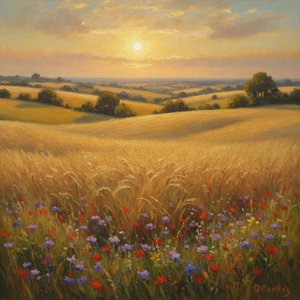
Golden Fields & Sun-Drenched Meadows: Capturing the Soul of Impressionist Landscapes
Immerse yourself in the luminous world of Impressionist landscapes. Discover how masters like Monet and Gauguin captured ephemeral light through plein air painting, and learn to bring the soul of sun-drenched meadows into your home with exquisite, hand-painted oil reproductions.
Explorez des œuvres d'art classées par thèmes, styles et caractéristiques.


