

 Aperçu en situation
 Envoyer
 Partager
 Détails de l'œuvre
 Guide
Guide

 Télécharger l'image
 Articles similaires
 Radiographie
 Diaporama
 Questions et réponses
 Statistiques
Alexander Keith

- 240.0 x 148.0 cm


Admire Henry Raeburn's iconic portrait of Alexander Keith! This stunning reproduction captures the artist’s masterful use of light and detail, bringing Scottish art history to life. Order yours today!
 Lire la suite
Découvrez Sir Henry Raeburn (1756-1823), portraitiste écossais pionnier ! Ses œuvres réalistes captivent par leur finesse et révèlent le caractère de ses sujets. Explorez son héritage sur TopImpressionists !
Giclées et impressions d'art
Impressions giclées ou sur toile de qualité musée, avec une production rapide et des finitions au choix. ( Commander la reproduction peinte à la main Passer au format numérique)




P118B €10

P118H €10

P118W €10

P438Z €10

P508JH €12

P508YH €12

P805H €10

P805Z €10

P919BZ €10

P919G €10

P919XJ €10

P959ZH €10

P968JZ €12

W106C €8

W218G €10

W218JH €8

W218Y €10

W307PJ €10

W316G €10

W316PJ €8

W316Y €10

W398PJ €8

W4111J €10

W500HY €15

W500JH €15

W692G €12

W849H €8

W940BG €15

W953PJ €8




Format standard
sur mesure
CM
INCH
Choisissez parmi nos formats prédéfinis qui respectent les proportions originales de l’œuvre.
Loading sizes...

largeur
hauteur
Saisissez la largeur et la hauteur souhaitées pour qu'elles s'adaptent à votre cadre ou à votre mur. Une impression peut être recadrée, mais jamais agrandie au-delà de l'image originale ; ainsi, un format de forme différente entraînera la perte d'une partie de l'image. Nous vous envoyons une maquette numérique pour approbation avant toute impression. L'image présentée sur cette page ne montre pas le recadrage réel — seule la maquette le permet.
Livraison dans le monde entier () en 2 semaines au lieu des 4/5 semaines habituelles. (7 novembre)

Livraison express gratuite dans le monde entier

Toile de lin de qualité supérieure

Assurance transport complète

Garantie de remboursement des droits de douane

Garantie de fidélité des couleurs

Politique de retour de 100 jours (uniquement en cas de défaut)

Garantie de remboursement à 100%

Offre de tarifs dégressifs
 L'option verre n'est disponible que pour les dimensions inférieures à 110 cm.

Alexander Keith
Giclées et impressions d'art
Format de la reproduction
-


Prix total
€ 62
A Study in Character: The Commanding Presence of Alexander Keith
In the sweeping landscape of British portraiture, few works capture the intersection of individual dignity and natural ruggedness as profoundly as Henry Raeburn’s 1810 masterpiece, Alexander Keith. This commanding portrait presents a man of unmistakable stature, poised against a backdrop of wild, rocky terrain that mirrors the strength of his character. Dressed in a sophisticated black coat that contrasts sharply with his crisp white trousers, the subject stands as a pillar of elegance amidst the untamed elements. The inclusion of a cane serves not merely as an accessory, but as a symbol of authority and seasoned wisdom, grounding the figure within a setting that feels both intimate and expansive. As one gazes upon this work, the eye is immediately drawn to the meticulous interplay of light and shadow, which breathes life into the textures of his attire and the weathered features of his face.
Raebument’s technique, rooted in his early mastery of miniature painting and goldsmithing, manifests here through an extraordinary attention to detail. Every fold of the heavy black fabric and every subtle nuance of the subject's expression has been rendered with a precision that transcends mere likeness. The artist employs a masterful use of chiaroscuro, allowing light to dance across the rocky hillside and illuminate the subject’s countenance, creating a sense of three-dimensional depth that pulls the viewer into his world. This painterly approach—characterized by bold, confident brushstrokes that coalesce into breathtaking realism—is what defines Raeburn as a titan of the Scottish Enlightenment. The background, filled with the soft, atmospheric presence of distant trees, provides a lush, organic counterpoint to the structured formality of the man’s attire, creating a harmonious balance between civilization and nature.
For the discerning collector or interior designer, Alexander Keith offers more than just visual splendor; it offers an emotional resonance that can transform the atmosphere of any space. The painting evokes a sense of timelessness and enduring legacy, making it an ideal centerpiece for a library, a formal study, or a grand hallway. Its large-scale presence (240 x 148 cm) allows the narrative of the piece to unfold, inviting long periods of contemplation. Whether one is drawn to the historical weight of the early 19th century or the sheer technical brilliance of Raeburn’s hand, this reproduction serves as a profound statement of taste. It is an invitation to surround oneself with the spirit of the Scottish masters, bringing a touch of classical grandeur and a deep, soulful narrative into the modern home.
Questions et réponses
Quelle taille de reproduction est suggérée pour «Alexander Keith» de Henry Raeburn ?
Pour «Alexander Keith», un format d'impression de Large est recommandé. D'autres tailles sont disponibles avec les mêmes proportions.
«Alexander Keith» de Henry Raeburn est-il une peinture, un dessin ou une estampe ?
« Alexander Keith » est une œuvre de type WallArt.
Dans quel mouvement et à quelle époque s'inscrit «Alexander Keith» de Henry Raeburn ?
«Alexander Keith» de Henry Raeburn s'inscrit dans le mouvement Realism, au sein de l'époque L'époque moderne de son créateur.
Biographie de l'artiste
Un Pionnier de la Peinture Ecossaise : Henry Raeburn
- Nom Complet: Sir Henry Raeburn FRSE RA
- Né(e): 4 mars 1756, Stockbridge, Écosse
- Décédé(e): 8 juillet 1823, Édimbourg, Écosse
Jeunesse et Formation
Henry Raeburn a connu une enfance difficile, orphelin à un jeune âge. Il fut pris en charge par son frère William et placé à l'Heriot's Hospital, où il reçut une éducation de base. À 15 ans, il devint apprenti chez James Gilliland, un joaillier et orfèvre d'Édimbourg. Cette expérience lui permit de développer ses compétences en dessin précis et en gravure sur ivoire, des techniques essentielles pour la réalisation de miniatures.
Evolution Artistique et Style
Raeburn a progressivement évolué vers la peinture à l'huile, abandonnant les miniatures pour se consacrer au portrait. Son style est caractérisé par une approche directe du sujet, sans esquisses préparatoires, ce qui confère à ses œuvres une spontanéité et une vitalité remarquables. Il utilisait une technique de "touché carré", un terme désignant sa manière distinctive d'appliquer la peinture en touches visibles et angulaires, créant ainsi des textures riches et dynamiques. Son utilisation innovante de la lumière et de l’ombre contribue à donner du volume et de la profondeur à ses portraits.
Œuvres Majeures et Reconnaissance
- Les Archers: Un portrait écossais captivant illustrant l'élégance et la précision de la noblesse du XVIIIe siècle.
- Alexander Allan: Une représentation saisissante d’une figure importante de l’art écossais, témoignant de sa capacité à saisir l’essence de ses sujets.
- Le Skating Minister (Révérend Robert Walker): Un portrait emblématique qui capture un moment de loisir et de dynamisme.
Raeburn a rapidement acquis une grande renommée en Écosse, devenant le peintre officiel des principaux personnages de la société écossaise. Ses portraits ornent les galeries nationales et les demeures nobles à travers le pays.
Héritage et Influence
Sir Henry Raeburn a laissé une empreinte durable sur l'art écossais. Son approche novatrice du portrait, son style unique et sa capacité à capturer la personnalité de ses sujets en font un artiste majeur du XVIIIe siècle. Il est considéré comme un pionnier dans le domaine de la peinture de portraits en Écosse et a influencé de nombreux artistes qui l'ont suivi. Son œuvre continue d’être admirée pour sa qualité artistique, son réalisme et sa contribution à la documentation visuelle de l’histoire écossaise.
- Collections: Ses œuvres sont visibles à la Scottish National Gallery (Édimbourg), au Frick Collection (New York) et dans diverses autres collections publiques et privées.

Henry Raeburn
1756 - 1823 , Royaume-Uni
L'essentiel de l'artiste
- Artistes Influents: ['George Chalmers']
- Date De Décès: 8 juillet 1823
- Date De Naissance: 4 mars 1756
- Lieu De Naissance: Stockbridge, Royaume-Uni
- Mouvement Artistique: Portraiture réaliste
- Nationalité: Écossais
- Nom Complet: Henry Raeburn
- Oeuvres Notables:
- Les Archers
- Patrick Moir
- Robert Walker (Le ministre patineur)
Articles connexes

Epic Drama & Dark Vibes: The Ultimate Collector's Guide to Baroque Landscapes
Master the art of drama with our ultimate guide to Baroque landscapes. Discover the power of chiaroscuro, explore legendary masters, and learn how to curate epic, dark-vibe masterpieces for your collection with expert insights from TopImpressionists.
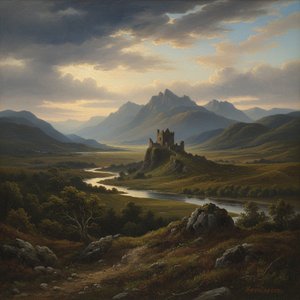
Alexander Nasmyth: Picturing Scotland's Romantic Landscape – Innovation & Identity
Explore the life & art of Alexander Nasmyth, a pivotal figure in Scottish Romantic landscape painting. Discover his iconic works, including portraits of Robert Burns, and learn about his lasting influence on national identity. Fine art reproductions available.

Henry Raeburn: A Scottish Portraitist's Mastery of Light, Character & National Identity
Explore the life & work of Henry Raeburn, a master Scottish portraitist. Discover his innovative techniques, captivating portraits of the Enlightenment era, and lasting legacy in art history. Learn more at TopImpressionists.

L'explosion de couleur : les 25 chefs-d'œuvre incontournables d'Henri Matisse
Explorez les 25 chefs-d'œuvre du Fauvisme d'Henri Matisse. Découvrez ces icônes de la couleur sur TopImpressionists.com.

Henry Raeburn Dobson: A Scottish Colourist Bridging Tradition & Modernity
Explore the life & work of Henry Raeburn Dobson, a key figure bridging Scottish tradition & modern art. Discover his neoclassical portraits, landscapes, and connection to the Colourists. Learn about collecting his works.
Explorez des œuvres d'art classées par thèmes, styles et caractéristiques.


