

 Aperçu en situation
 Envoyer
 Partager
 Détails de l'œuvre
 Guide
Guide

 Télécharger l'image
 Articles similaires
 Radiographie
 Diaporama
 Statistiques
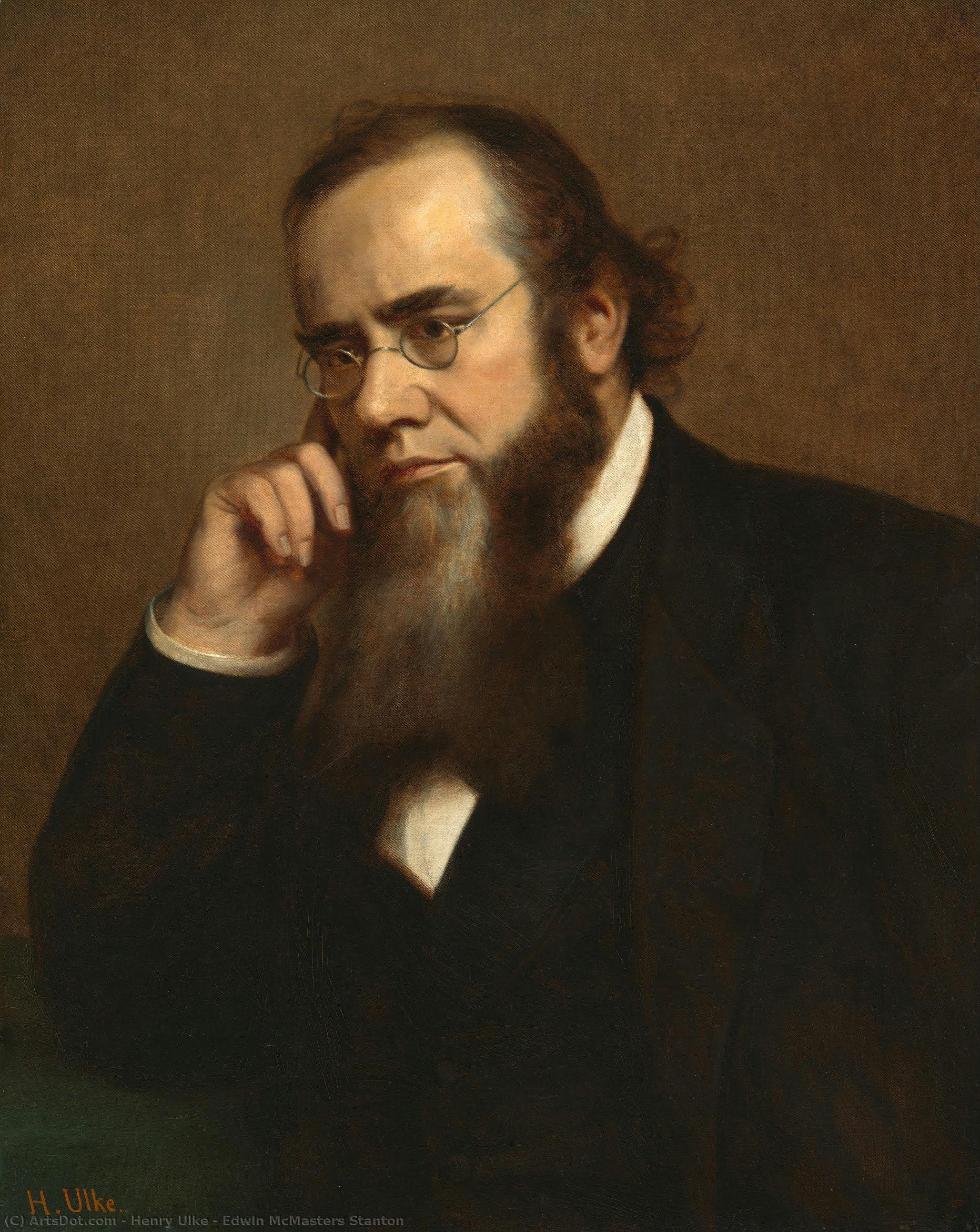
Edwin McMasters Stanton


A distinguished portrait of Edwin McMasters Stanton by Henry Ulke captures the commanding presence of Lincoln's Secretary of War through masterful 19th-century realism, inviting you to bring this piece of history home.
 Lire la suite
Henry Ulke (1821-1910) was a German-American portrait painter known as the 'Painter of Presidents.' He captured prominent figures like Lincoln & Stanton, blending realism with historical significance. Also an avid entomologist.
Reproduction à l'huile faite à la main
Huile sur toile peinte à la main, avec cadre et dimensions personnalisés, réalisée sur commande par nos artistes. ( Passer au format impression Passer au format numérique)




P118B €10

P118H €10

P118W €10

P438Z €10

P508JH €12

P508YH €12

P805H €10

P805Z €10

P919BZ €10

P919G €10

P919XJ €10

P959ZH €10

P968JZ €12

W106C €8

W218G €10

W218JH €8

W218Y €10

W307PJ €10

W316G €10

W316PJ €8

W316Y €10

W398PJ €8

W4111J €10

W500HY €15

W500JH €15

W692G €12

W849H €8

W940BG €15

W953PJ €8




Format standard
sur mesure
CM
INCH
Choisissez parmi nos formats prédéfinis qui respectent les proportions originales de l’œuvre.
Loading sizes...

largeur
hauteur
Saisissez la largeur et la hauteur souhaitées, pour s'adapter à votre cadre ou à votre mur. Cette œuvre est peinte à la main ; ainsi, pour un format de forme différente, l'artiste peut peindre un peu plus autour du tableau ou réduire légèrement les bords — c'est vous qui choisissez. Nous vous envoyons une maquette numérique pour approbation avant que la peinture ne commence. L'image présentée sur cette page ne reflète pas le résultat réel — seule la maquette le fait.
Exemples de personnalisation possibles : remplacer un visage par la photo du client ; ajouter un animal de compagnie (par exemple, remplacer un chat par un chien) ; inclure un message caché en arrière-plan ; modifier le paysage ou les éléments de l'arrière-plan.
Après la commande, l’équipe TopImpressionists.com contactera le client par e-mail pour recueillir ses instructions et lui fournira une maquette d’aperçu
Après la commande, l’équipe TopImpressionists.com contactera le client par e-mail pour recueillir ses instructions et lui fournira une maquette d’aperçu
Livraison dans le monde entier () en 3 à 4 semaines au lieu des 5 semaines habituelles. (26 octobre). Aucun compromis sur la qualité.

Livraison express gratuite dans le monde entier

Toile de lin de qualité supérieure

Assurance transport complète

Garantie de remboursement des droits de douane

Garantie de fidélité des couleurs

Politique de retour de 100 jours (uniquement en cas de défaut)

Garantie de remboursement à 100%

Offre de tarifs dégressifs
 L'option verre n'est disponible que pour les dimensions inférieures à 110 cm.

Edwin McMasters Stanton
Technique de reproduction
Format de la reproduction
-


Prix total
€ 236
A Portrait of Authority: The Legacy of Edwin McMasters Stanton
In the grand tapestry of American history, few figures loom as large or as formidable as Edwin McMasters Stanton. Captured in this 1872 masterpiece by the esteemed portraitist Henry Ulke, Stanton emerges not merely as a man, but as an institution of iron will and administrative brilliance. As the Secretary of War under President Abraham Lincoln, Stanton was the architect of Union logistics, a man whose rigorous reorganization of the war department helped steer the nation through its darkest hour. Through Ulke’s masterful brush, we encounter the statesman in his twilight years, possessing a gaze that reflects both the heavy burden of command and the unyielding intellect of a brilliant lawyer.
The painting serves as a profound psychological study, inviting the viewer to peer into the soul of a man who was instrumental in the fight against slavery and the preservation of the Union. There is an undeniable gravity in his expression; the fine lines around his eyes and the meticulous rendering of his facial hair speak to a life lived amidst the high-stakes tension of the Civil War era. For the collector, this piece offers more than just a historical record; it provides a window into the very essence of 19th-century leadership, making it an evocative centerpiece for any collection dedicated to American heritage.
Mastery of Light and Character
Henry Ulke, often celebrated as "The Painter of Presidents," employs a sophisticated technique that breathes life into this formal portrait. The artist utilizes a subtle interplay of light and shadow to sculpt the features of Stanton, creating a three-dimensional presence that commands the room. The texture of the subject's suit jacket, the crispness of his white collar, and the reflective glint on his spectacles are rendered with an exquisite attention to detail that speaks to Ulke’s academic precision. This meticulous approach ensures that every fold in the fabric and every nuance of skin tone contributes to a sense of palpable reality.
The background is intentionally understated, a muted wall that provides depth without distracting from the subject's commanding presence. This compositional choice directs all emotional energy toward Stanton himself, allowing his dignified posture and distinguished attire to resonate. The use of a darker palette in the periphery serves to push the figure forward, creating an intimate connection between the sitter and the observer. It is this technical mastery that makes a high-quality reproduction of this work so impactful; the depth of color and the richness of the shadows are preserved to inspire awe in any setting.
An Elegant Addition to Sophisticated Interiors
For interior designers and connoisseurs of fine art, this portrait offers an unparalleled opportunity to introduce a sense of timelessness and intellectual weight to a space. The somber yet dignified tones of the painting harmonize beautifully with classic decor, such as dark wood libraries, executive studies, or traditional dining rooms. It acts as a conversational anchor, sparking discussions about history, law, and the resilience of the human spirit. The artwork does not merely decorate a wall; it curates an atmosphere of prestige and historical reverence.
Whether placed in a private gallery or a grand residential hall, the portrait of Edwin McMasters Stanton brings with it an aura of stability and wisdom. It is a piece designed for those who appreciate the intersection of fine art and historical narrative—a choice for the discerning individual who seeks to surround themselves with works that possess both aesthetic beauty and profound cultural significance. To possess this reproduction is to hold a fragment of the American story, rendered with the grace and dignity that only a master like Ulke could provide.
Questions et réponses
L'œuvre «Edwin McMasters Stanton» de Henry Ulke, conservée au National Portrait Gallery, peut-elle faire l'objet de reproductions légales ?
L'original « Edwin McMasters Stanton » se trouve au National Portrait Gallery, et l'œuvre est dans le domaine public - ses droits d'auteur sont tombés dans le domaine public.
Où puis-je acheter une reproduction peinte à la main de «Edwin McMasters Stanton» de Henry Ulke ?
Les reproductions peintes à la main de «Edwin McMasters Stanton» de Henry Ulke sont disponibles sur ce site : une reproduction à l'huile peinte à la main sur toile de lin, via sa page Reproduction peinte à la main.
À quel courant artistique «Edwin McMasters Stanton» de Henry Ulke appartient-il ?
Le mouvement associé à «Edwin McMasters Stanton» de Henry Ulke est Realism. Cette classification situe l'œuvre parmi des artistes et des œuvres d'art apparentés.
Articles connexes

The Unvarnished Truth: A Cultural Journey Through the Soul of American Realism
Explore the profound beauty of American Realism. From the Ashcan School's urban grit to intimate portraits, discover how artists captured the authentic soul of a nation through unvarnished truth and masterful observation.

Capturing the Soul: A Journey Through the Emotion of Romantic Realism
Explore the profound emotion of Romantic Realism. Discover how 19th-century masters blended meticulous observation with raw human feeling to capture the soul through breathtaking oil paintings and timeless artistic legacies.