


 Aperçu en situation
 Partager
 Partager
 Détails
 Guide imprimable

 Télécharger
 Articles similaires
 Radiographie
 Voir le diaporama
 Statistiques
Roman Ruins


Discover "Roman Ruins" by Hubert Robert (1760). A Romantic masterpiece showcasing crumbling architecture & pastoral life. Oil on canvas, dramatic lighting & serene beauty. Perfect for art lovers!
 Afficher la suite
Hubert Robert (1733-1808) : peintre français des ruines et paysages, capturant la beauté de la décomposition & l'imagination créatrice. Découvrez son art sur TopImpressionists !
Reproduction à l'huile faite à la main
Huile sur toile peinte à la main, avec cadre et dimensions personnalisés, réalisée sur commande par nos artistes. ( Passer au format impression Passer au format image numérique)




P118B $10

P118H $10

P118W $10

P438Z $10

P508JH $12

P508YH $12

P805H $10

P805Z $10

P919BZ $10

P919G $10

P919XJ $10

P959ZH $10

P968JZ $12

W106C $8

W218G $10

W218JH $8

W218Y $10

W307PJ $10

W316G $10

W316PJ $8

W316Y $10

W398PJ $8

W4111J $10

W500HY $15

W500JH $15

W692G $12

W849H $8

W940BG $15

W953PJ $8




Format standard
personnalisé
CM
INCH
Choisissez parmi nos formats prédéfinis qui respectent les proportions originales de l’œuvre.
Loading sizes...

largeur
hauteur
Vous pouvez saisir vos propres dimensions pour l'adapter à un cadre ou à un espace spécifique. Si la taille sélectionnée ne correspond pas aux proportions de l'image d'origine, nous recadrerons l'œuvre ou prolongerons la peinture avec des éléments peints à la main supplémentaires. Une maquette numérique vous sera envoyée pour approbation avant le début de la production.
Veuillez noter que l'aperçu à l'écran ne reflète pas le recadrage ou l'extension réels. Seule la maquette montrera fidèlement la composition finale.
Bien que des tailles personnalisées soient disponibles, nous vous recommandons de sélectionner une dimension dans la liste prédéfinie afin de préserver les proportions d'origine.
Exemples de personnalisation possibles : remplacer un visage par la photo du client ; ajouter un animal de compagnie (par exemple, remplacer un chat par un chien) ; inclure un message caché en arrière-plan ; modifier le paysage ou les éléments de l'arrière-plan.
Après la commande, l’équipe TopImpressionists.com contactera le client par e-mail pour recueillir ses instructions et lui fournira une maquette d’aperçu
Après la commande, l’équipe TopImpressionists.com contactera le client par e-mail pour recueillir ses instructions et lui fournira une maquette d’aperçu
Livraison dans le monde entier () en 3 à 4 semaines au lieu des 5 semaines habituelles. (26 septembre). Aucun compromis sur la qualité.

Livraison express gratuite dans le monde entier

Toile de lin de haute qualité

Assurance transport complète

Garantie de remboursement des droits de douane

Garantie de fidélité des couleurs

Garantie de retour de 100 jours (uniquement en cas de défaut)

Garantie de remboursement à 100%

Tarifs dégressifs sur quantité
 L'option verre n'est disponible que pour les dimensions inférieures à 110 cm.

Roman Ruins
Technique de reproduction
Format de la reproduction
-


Prix total final
$ 269
A Symphony of Decay and Eternal Beauty
In the quietude of Hubert Robert’s Roman Ruins, one finds more than a mere depiction of crumbling stone; one encounters a profound meditation on the relentless passage of time. Created around 1760, this masterpiece serves as a window into the heart of the Romantic imagination, where the grandeur of antiquity meets the soft, persistent embrace of nature. The canvas invites the viewer to wander through a landscape where monumental architecture—once the pride of an empire—now yields to the slow, rhythmic pulse of vegetation and light. It is a scene that captures a fleeting moment of ethereal beauty, frozen in the amber of oil on canvas, offering a sense of pastoral tranquility that resonates deeply with the modern soul seeking refuge from the frenetic pace of contemporary life.
The composition is masterfully orchestrated to draw the eye deep into a world of architectural wonder and quiet human drama. A majestic, weathered archway stands as the central protagonist, its heavy columns and fractured masonry framing a vista that stretches toward an infinite horizon. Through this portal, the viewer perceives a vast, open space where the boundaries between man-made structures and the wild landscape begin to blur. The foreground is alive with the gentle rhythms of everyday existence: figures engaged in quiet contemplation, a woman tending to livestock, and children playing amidst the rocky outcrops. This juxtaposition—the monumental scale of the ruins against the intimate, humble activities of life—establishes a poignant dialogue between historical glory and the enduring continuity of the human spirit.
The Artistry of the Romantic Capriccio
Robert’s technical prowess is most evident in his command of light and texture, elements that elevate this work from a topographical study to a capriccio—a genre of imaginative fantasy. Utilizing the rich, versatile medium of oil paint, the artist achieves a remarkable tonal range that breathes life into the scene. Warm ochres, deep browns, and radiant golds dominate the palette, bathing the ruins in a sun-drenched glow that evokes a sense of nostalgic warmth. His brushwork is both deliberate and expressive; while the architectural elements are defined by structured lines, the foliage and distant clouds are rendered with a looser, more spontaneous touch. This interplay of precision and fluidity creates a dynamic atmosphere, where the light seems to dance across the textured surfaces of stone and leaf alike.
For the discerning collector or interior designer, Roman Ruins offers an unparalleled emotional depth that transcends mere decoration. The painting functions as a symbolic vessel, carrying themes of memory, loss, and the sublime power of nature. It evokes a sense of "melancholic grandeur"—a feeling of being moved by the beauty of what has passed while finding peace in the persistence of life. Integrating such a high-quality reproduction into a curated space provides more than just a visual focal point; it introduces a narrative of timelessness and sophistication. Whether placed in a sunlit library or a grand salon, Robert’s vision of the Roman past serves as an enduring inspiration, reminding us that even amidst decay, there is a profound and lasting splendor to be found.
Biographie de l'artiste
Hubert Robert : Peintre des Ruines et Visionnaire
- Né: 22 mai 1733, Paris, France
- Décédé: 15 avril 1808, Paris, France
Hubert Robert fut un peintre français célébré pour ses paysages évocateurs et ses peintures de *capriccio* – des représentations pittoresques semi-fictives de ruines en Italie et en France. Il est considéré comme une figure essentielle reliant les périodes rococo et néoclassique, anticipant des aspects du romantisme avec sa fascination pour la décomposition, l'histoire et les reconstructions imaginatives.
Jeunesse et Formation Artistique
Nicolas Robert, le père de Hubert, était au service de François-Joseph de Choiseul, marquis de Stainville. Robert reçut une éducation jésuite au Collège de Navarre en 1751. Il étudia ensuite la sculpture avec Michel-Ange Slodtz, qui l'encouragea à se consacrer à la peinture. Cette formation précoce lui inculqua une solide base en dessin et en perspective, des éléments cruciaux qui définiraient plus tard son style artistique.
Les Années Romaines et Développement Artistique (1754-1765)
- Départ pour Rome: En 1754, Robert se rendit à Rome avec Étienne-François de Choiseul, fils de l'employeur de son père.
- Onze Ans en Italie: Il passa onze ans à Rome, une période formatrice pour son développement artistique.
- Soutien et Patronage: Il se maintint en créant des œuvres pour les connaisseurs visitant la ville, comme l'abbé de Saint-Non.
- Influence de Giovanni Paolo Panini: Robert travailla aux côtés de Giovanni Paolo Panini, dont l’influence est visible dans ses premières compositions de *capriccio*.
- Croquis et Observations: Il esquissa méticuleusement les ruines romaines et les paysages, documentant des sites tels que la Villa d'Este et Caprarola, démontrant un sens aigu du détail et de la perspective atmosphérique.
Son séjour à Rome façonna profondément sa vision artistique. La juxtaposition des ruines antiques romaines avec la vie contemporaine suscita son intérêt pour représenter la décomposition aux côtés de la vitalité, un thème récurrent tout au long de sa carrière.
Retour à Paris et Reconnaissance (1765-1790)
- Succès Rapide: À son retour à Paris en 1765, Robert gagna rapidement une reconnaissance.
- Admission à l'Académie Royale de Peinture et de Sculpture: Il fut admis à l'Académie Royale de Peinture et de Sculpture avec un *capriccio* romain, "Le Port de Rome, Orné de Différents Monuments d'Architecture, Anciens et Modernes".
- Expositions au Salon: Ses expositions au Salon (à partir de 1767) attirèrent une attention considérable. Denis Diderot remarqua notamment la grandeur évoquée par ses représentations de ruines.
- Œuvres Notables: Parmi les œuvres clés de cette période figurent "Paysage avec les Ruines du Temple Rond, avec une Statue de Vénus et un Monument à Marc Aurèle", témoignant de sa maîtrise de la peinture de *capriccio*.
Le succès parisien de Robert provenait de sa capacité à capturer à la fois la grandeur de l'Antiquité classique et la vitalité de la vie contemporaine. Ses œuvres résonnaient auprès d’un public fasciné par l’histoire, l’archéologie et le pittoresque.
Les Dernières Années, la Révolution et l'Héritage (1790-1808)
- Révolution Française: Robert fut témoin et documenta la Révolution française, y compris la démolition de monuments historiques.
- Conservateur du Muséum Central des Arts: Il servit de conservateur du Muséum Central des Arts nouvellement établi (plus tard le Louvre), démontrant son engagement à préserver le patrimoine culturel.
- Production Artistique Continue: Malgré le climat politique tumultueux, Robert continua à peindre et à dessiner avec une grande productivité.
- Reproduction et Influence: Ses œuvres furent fréquemment reproduites par des artistes tels que l'abbé de Saint-Non, Châtelain, Linard et Le Veau, témoignant de son influence généralisée.
L’héritage de Hubert Robert réside dans sa capacité unique à mélanger la rigueur historique avec une vision imaginative. Il a ouvert un genre de peinture qui célébrait à la fois la beauté de la décomposition et le pouvoir durable de la créativité humaine. Son œuvre continue d'inspirer les artistes et de captiver le public, consolidant ainsi sa place en tant que figure significative dans l’art du XVIIIe siècle.

Hubert Robert
1733 - 1808 , France
En bref
- Artistes Influents: ['Giovanni Paolo Panini']
- Date De Décès: 15 avril 1808
- Date De Naissance: 22 mai 1733
- Lieu De Naissance: Paris, France
- Mouvement Artistique: Romantisme
- Nationalité: Française
- Nom Complet: Hubert Robert
- Oeuvres Notables:
- Le port de Ripetta
- Ruines du temple rond
- Arc de triomphe en ruines
Articles similaires

Capturing Eternal Glory: Impressionist Visions of the Roman Empire's Timeless Grandeur
Explore the breathtaking intersection of Roman grandeur and Impressionist light. Discover how masters like Monet reimagined classical ruins through vibrant, emotive brushstrokes. A cultural journey for true art lovers seeking to bring eternal glory into their homes.
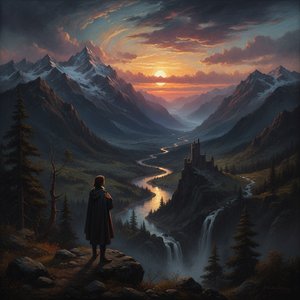
Capturing the Soul: The Emotional Majesty and Sublime Power of Romantic Landscape Painting
Explore the profound emotional depth of Romantic landscape painting. Discover how masters like Turner and Friedrich captured the sublime power of nature through intuition and imagination in this expert art history retrospective.

Capturing the Soul: The Emotional Magic and Sublime Grandeur of Romantic Landscape Painting
Explore the profound emotional depth of Romantic landscape painting. Discover how masters like Friedrich and Turner captured the sublime through light, shadow, and nature's power in this expert art history retrospective for discerning collectors.
Explorez des œuvres d'art classées par thèmes, styles et caractéristiques.


