


 Aperçu en situation
 Envoyer
 Partager
 Détails de l'œuvre
 Guide
Guide

 Télécharger l'image
 Articles similaires
 Radiographie
 Diaporama
 Statistiques
Rocky Cliffs


Discover 'Rocky Cliffs' by Ivan Aivazovsky – a dramatic 19th-century Romantic seascape showcasing turbulent seas & towering cliffs. Explore this masterpiece of light & texture!
 Lire la suite
Découvrez Aïvazovski (1817-1900), maître russe de la marine ! Ses paysages marins romantiques, comme "La Neuvième Vague", captivent par leur puissance et émotion.
Reproduction à l'huile faite à la main
Huile sur toile peinte à la main, avec cadre et dimensions personnalisés, réalisée sur commande par nos artistes. ( Passer au format impression Passer au format numérique)




P118B €10

P118H €10

P118W €10

P438Z €10

P508JH €12

P508YH €12

P805H €10

P805Z €10

P919BZ €10

P919G €10

P919XJ €10

P959ZH €10

P968JZ €12

W106C €8

W218G €10

W218JH €8

W218Y €10

W307PJ €10

W316G €10

W316PJ €8

W316Y €10

W398PJ €8

W4111J €10

W500HY €15

W500JH €15

W692G €12

W849H €8

W940BG €15

W953PJ €8




Format standard
sur mesure
CM
INCH
Choisissez parmi nos formats prédéfinis qui respectent les proportions originales de l’œuvre.
Loading sizes...

largeur
hauteur
Saisissez la largeur et la hauteur souhaitées, pour s'adapter à votre cadre ou à votre mur. Cette œuvre est peinte à la main ; ainsi, pour un format de forme différente, l'artiste peut peindre un peu plus autour du tableau ou réduire légèrement les bords — c'est vous qui choisissez. Nous vous envoyons une maquette numérique pour approbation avant que la peinture ne commence. L'image présentée sur cette page ne reflète pas le résultat réel — seule la maquette le fait.
Exemples de personnalisation possibles : remplacer un visage par la photo du client ; ajouter un animal de compagnie (par exemple, remplacer un chat par un chien) ; inclure un message caché en arrière-plan ; modifier le paysage ou les éléments de l'arrière-plan.
Après la commande, l’équipe TopImpressionists.com contactera le client par e-mail pour recueillir ses instructions et lui fournira une maquette d’aperçu
Après la commande, l’équipe TopImpressionists.com contactera le client par e-mail pour recueillir ses instructions et lui fournira une maquette d’aperçu
Livraison dans le monde entier () en 3 à 4 semaines au lieu des 5 semaines habituelles. (26 octobre). Aucun compromis sur la qualité.

Livraison express gratuite dans le monde entier

Toile de lin de qualité supérieure

Assurance transport complète

Garantie de remboursement des droits de douane

Garantie de fidélité des couleurs

Politique de retour de 100 jours (uniquement en cas de défaut)

Garantie de remboursement à 100%

Offre de tarifs dégressifs
 L'option verre n'est disponible que pour les dimensions inférieures à 110 cm.

Rocky Cliffs
Technique de reproduction
Format de la reproduction
-


Prix total
€ 236
A Vision of Turbulent Majesty
“Rocky Cliffs,” painted by Ivan Konstantinovich Aivazovsky in 1891, isn’t merely a landscape; it’s an immersive experience. The canvas explodes with the raw energy of the Black Sea, capturing a moment where nature and humanity collide with breathtaking drama. Aivazovsky, a titan of marine art, masterfully renders the relentless power of the ocean, transforming a simple coastal scene into a profound meditation on human resilience and the sublime indifference of the natural world.
The Painter's Technique: Layers of Light and Texture
Aivazovsky’s genius lies not just in his subject matter but also in his extraordinary technical skill. He employed a technique known as “alla prima,” working directly onto the wet surface of the canvas, layering paint with astonishing speed and precision. Thick impasto—heavy applications of pigment—dominates the cliffs, creating a palpable sense of roughness and solidity that contrasts sharply with the fluid movement of the waves. Notice how he builds up the texture of the rocks, using short, broken brushstrokes to suggest their jagged edges and weathered surfaces. The sky, rendered in delicate washes of blue and gray, subtly shifts in tone, conveying the ever-changing light conditions of a turbulent day. The use of complementary colors—the cool blues and grays of the sea against the warmer browns and ochres of the cliffs—further enhances the visual drama.
A Historical Echo: Romanticism at its Finest
“Rocky Cliffs” is firmly rooted in the Romantic movement, a period characterized by an intense fascination with nature’s power and the individual's emotional response to it. Aivazovsky, deeply influenced by this aesthetic, sought not just to depict the sea but to evoke a feeling—a sense of awe, wonder, and perhaps even a touch of fear in the face of its immensity. The painting reflects the era’s fascination with dramatic landscapes and heroic themes, mirroring the spirit of exploration and adventure that defined the 19th century. It's important to note Aivazovsky’s close relationship with the Russian Navy; his work often served as a visual record of naval exercises and battles, lending it an added layer of historical significance.
Symbolism in Motion: The Ship and the Sea
The small sailing vessel navigating the treacherous waves is more than just a compositional element. It represents humanity’s persistent, yet ultimately fragile, attempts to conquer nature's forces. The towering cliffs symbolize both grandeur and potential danger—a reminder of our own vulnerability in the face of overwhelming power. The turbulent sea itself embodies chaos, unpredictability, and the relentless passage of time. Aivazovsky masterfully uses these symbols to explore themes of human ambition, mortality, and the enduring relationship between humankind and the natural world. The painting invites contemplation on the balance between control and surrender.
A Legacy in Reproduction: Bringing the Sea Home
Reproductions of “Rocky Cliffs” capture a significant portion of Aivazovsky’s artistic vision, offering a window into this powerful seascape. When selecting a reproduction, consider the quality of materials used—a fine canvas and archival inks will ensure that the colors remain vibrant for years to come. Whether adorning a grand salon or a cozy study, “Rocky Cliffs” continues to inspire with its dramatic intensity and timeless beauty, reminding us of the enduring allure of the sea.
Questions et réponses
À quel point la palette de "Rocky Cliffs" est-elle saturée ?
«Rocky Cliffs» de Ivan Aïvazovski présente une saturation Désaturé.
Quelle ambiance "Rocky Cliffs" apporterait-elle à une pièce ?
Avec son atmosphère Dramatique, « Rocky Cliffs » est idéal pour une Salon.
Existe-t-il une fiche informative sur «Rocky Cliffs» de Ivan Aïvazovski destinée aux étudiants ?
Le guide de « Rocky Cliffs » est la page Fiche pédagogique de l'œuvre — une fiche informative imprimable présentant l'œuvre accompagnée de sa légende, de sa mention de crédit et de son tableau d'identification (artiste, dates, technique, dimensions originales, collection).
Biographie de l'artiste
Ivan Konstantinovich Aivazovsky : Une Vie au Service de la Mer
- Né : Feodosia, Russie (1817)
- Décédé : 1900
- Origine : TopImpressionists
- Style : Peintre romantique russe, Art marin
Jeunesse et Formation
- Ivan Konstantinovich Aivazovsky, baptisé Hovhannes Aivazian, est né le 29 juillet 1817 à Feodosia, en Crimée, dans une famille arménienne.
- Il a reçu sa première éducation à l'église arménienne St. Sargis de Feodosia.
- Son talent artistique fut reconnu très tôt ; il étudia le dessin sous la direction de Jacob Koch, un architecte local.
- En 1833, Aivazovsky déménagea à Saint-Pétersbourg pour étudier à l'Académie impériale des arts sous Maxim Vorobiev.
Carrière et Évolution Artistique
- Aivazovsky voyagea abondamment dans toute l'Europe au début des années 1840, passant du temps en Italie.
- Après son retour en Russie, il fut nommé peintre principal de la marine russe, un poste qui influença considérablement sa carrière.
- Il développa un style distinctif caractérisé par des représentations dramatiques et évocatrices de paysages marins, souvent mettant en scène des eaux turbulentes et des tempêtes puissantes.
- Les œuvres d'Aivazovsky représentaient fréquemment des batailles navales et des scènes de la vie maritime, reflétant ses liens étroits avec l'élite militaire russe.
- Sa production prolifique comprenait environ 6 000 peintures tout au long de sa carrière.
Œuvres Majeures et Influences Artistiques
- Paysage marin à clair de lune : Un exemple essentiel de la maîtrise d'Aivazovsky de la lumière et de l'atmosphère dans le but de représenter la mer.
- Un navire dans une mer orageuse : Démontre sa capacité à transmettre la puissance et le danger de la nature.
- Le gondolier sur mer, la nuit : Met en valeur son talent pour capturer des scènes nocturnes avec un détail remarquable.
- Chaos (La Création) : Une œuvre précoce acquise par le pape Grégoire XVI, représentant un acte divin de création.
- La Neuvième Vague : Probablement son tableau le plus célèbre, dépeignant une scène dramatique de survivants d'un naufrage s'agrippant aux épaves.
Signification Historique et Héritage
- Aivazovsky est considéré comme l'un des plus grands maîtres de l'art marin dans l'histoire russe.
- Ses œuvres sont célébrées pour leur romantisme, leur compétence technique et leur capacité à évoquer de puissantes émotions.
- Il a contribué de manière significative au développement de la peinture de paysage russe et a influencé des générations d'artistes.
- Les peintures d'Aivazovsky restent populaires et sont largement exposées dans les musées et les galeries du monde entier.
- Son héritage continue d'inspirer les amateurs d'art et les artistes, consolidant sa place en tant que figure de proue de l'art du XIXe siècle.

Ivan Aïvazovski
1817 - 1900 , Russie
L'essentiel de l'artiste
- Artistes Influents:
- Maxim Vorobiev
- J.M.W. Turner
- Date De Décès: May 2, 1900
- Date De Naissance: 29 juillet 1817
- Lieu De Naissance: Feodosia, Russie
- Mouvement Artistique: Romantisme, Marine
- Nationalité: Russe, Arménien
- Nom Complet: Ivan Konstantinovich Aivazovsky
- Oeuvres Notables:
- La Neuvième Vague
- Un navire dans la tempête
- Le gondolier sur mer
- Chaos (La Création)
- Paysage marin avec pleine lune
Articles connexes
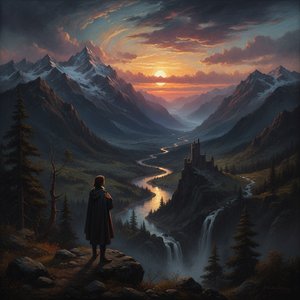
Capturing the Soul: The Emotional Majesty and Sublime Power of Romantic Landscape Painting
Explore the profound emotional depth of Romantic landscape painting. Discover how masters like Turner and Friedrich captured the sublime power of nature through intuition and imagination in this expert art history retrospective.

Capturing the Soul: The Emotional Magic and Sublime Grandeur of Romantic Landscape Painting
Explore the profound emotional depth of Romantic landscape painting. Discover how masters like Friedrich and Turner captured the sublime through light, shadow, and nature's power in this expert art history retrospective for discerning collectors.
Explorez des œuvres d'art classées par thèmes, styles et caractéristiques.


