Atelier — Livraison mondiale offerte — Livraison sous 2 à 6 semaines
Liste de souhaits Panier
Commander l'impression Commander l'impressionAcheter l'image haute résolution Acheter l'image haute résolution PartagerPartager
Détails de l'œuvreDétails de l'œuvre Ajouter aux favoris Ajouter aux favoris TéléchargerTélécharger Articles similairesArticles similaires RadiographieRadiographie DiaporamaDiaporama

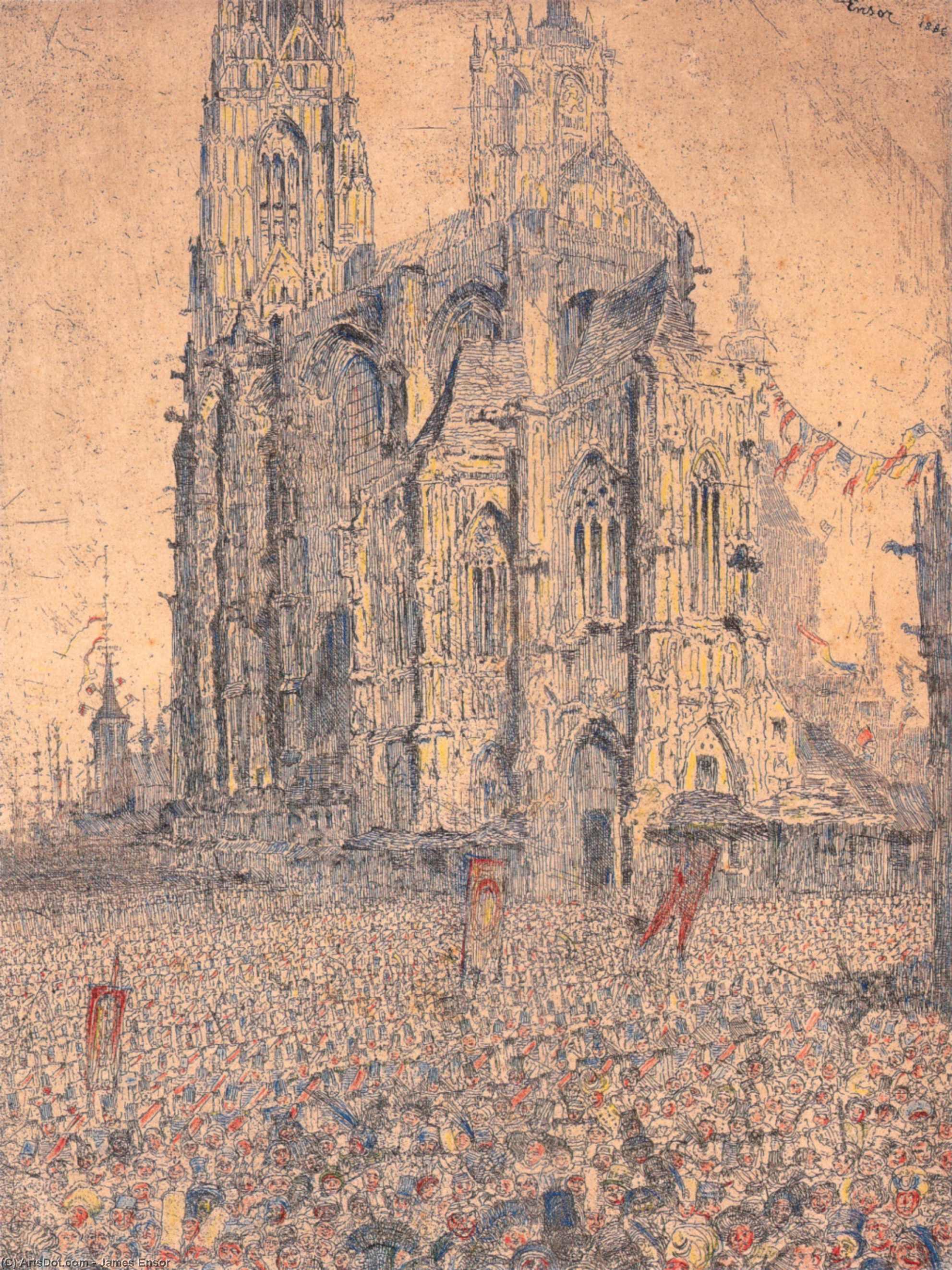
The Cathedral

James Ensor’s haunting Cathedral captures a dramatic Belgian Gothic scene brimming with figures amidst towering towers—a masterful depiction of solemn grandeur and unsettling observation characteristic of the Symbolist movement.

Découvrez James Ensor (1860-1949), un peintre et graveur belge pionnier. Explorez ses scènes troublantes et oniriques de masques, de carnavals et de squelettes qui ont profondément influencé l'Expressionnisme et le Surréalisme. #JamesEnsor #Expressionnisme #Surréalisme #Bel

Reproduction à l'huile faite à la main

Huile sur toile peinte à la main, avec cadre et dimensions personnalisés, réalisée sur commande par nos artistes.

P118B $10
P118H $10
P118W $10
P438Z $10
P508JH $12
P508YH $12
P805H $10
P805Z $10
P919BZ $10
P919G $10
P919XJ $10
P959ZH $10
P968JZ $12
W106C $8
W218G $10
W218JH $8
W218Y $10
W307PJ $10
W316G $10
W316PJ $8
W316Y $10
W398PJ $8
W4111J $10
W500HY $15
W500JH $15
W692G $12
W849H $8
W940BG $15
W953PJ $8

Standard
custom
CM
INCH

Choisissez parmi nos formats prédéfinis qui respectent les proportions originales de l’œuvre.

largeur
hauteur

Vous pouvez saisir vos propres dimensions pour l'adapter à un cadre ou à un espace spécifique. Si la taille sélectionnée ne correspond pas aux proportions de l'image d'origine, nous recadrerons l'œuvre ou prolongerons la peinture avec des éléments peints à la main supplémentaires. Une maquette numérique vous sera envoyée pour approbation avant le début de la production.
Veuillez noter que l'aperçu à l'écran ne reflète pas le recadrage ou l'extension réels. Seule la maquette montrera fidèlement la composition finale.
Bien que des tailles personnalisées soient disponibles, nous vous recommandons de sélectionner une dimension dans la liste prédéfinie afin de préserver les proportions d'origine.

Exemples de personnalisation : remplacer un visage par la photo du client ; ajouter un animal de compagnie (par exemple, remplacer un chat par un chien) ; inclure un message caché en arrière-plan ; modifier le paysage ou les éléments de l'arrière-plan.
Après la commande, l’équipe TopImpressionists.com contactera le client par e-mail pour obtenir ses instructions et lui fournira une maquette d’aperçu.

Livraison dans le monde entier () en 3 à 4 semaines au lieu des 5 semaines habituelles. (20 juillet). Aucune concession sur la qualité.

why_choose_icon
Livraison express gratuite dans le monde entier
why_choose_icon
Toile de lin de haute qualité
why_choose_icon
Assurance transport complète
why_choose_icon
Garantie de remboursement des frais de douane
why_choose_icon
Garantie de fidélité des couleurs
why_choose_icon
Politique de retour de 60 jours (uniquement en cas de défaut)
why_choose_icon
Garantie de remboursement à 100%
why_choose_icon
Réduction sur les achats groupés

Prix total

-

reproduction

The Cathedral

Technique de reproduction

Format de reproduction

-

Prix total final

-

En bref

  • Location: Private Collection
  • Medium: Oil on canvas
  • Notable elements or techniques: Detailed architectural rendering
  • Artist: James Ensor
  • Influences: Romanticism
  • Subject or theme: Religious ceremony

Description de l'œuvre

James Ensor’s Cathedral: A Portrait of Belgian Identity

  • Subject Matter & Composition:
  • Style & Technique:
  • Historical Context & Influences:
  • Symbolism & Interpretation:
  • Emotional Resonance & Legacy:
James Ensor’s “The Cathedral” stands as a monumental testament to Belgian artistic ambition and a profound meditation on the anxieties of modernity. Painted in 1924, shortly before his death, this large oil on canvas captures a scene brimming with palpable energy—a congregation gathered before a towering cathedral dominated by two imposing towers. The photograph reveals a meticulously rendered depiction of human presence amidst architectural grandeur, inviting viewers to contemplate not just the building itself but also the complexities of collective experience.

Style & Technique

Ensor’s distinctive style is immediately recognizable as Symbolist and Expressionist, blending elements of both traditions into a powerfully emotive visual language. He eschewed academic conventions, prioritizing subjective feeling over objective representation. The artist employed thick impasto—a technique characterized by heavily textured paint—to convey the physicality of the cathedral walls and the solemn faces of the worshippers. Color palettes are muted yet deliberate, favoring earthy tones punctuated by splashes of crimson and gold, colors that heighten the dramatic impact of the scene. Ensor’s meticulous attention to detail is balanced by a disconcerting disregard for perspective, creating an unsettling atmosphere that reflects his preoccupation with psychological states.

Historical Context & Influences

“The Cathedral” emerged from a period marked by significant social and intellectual upheaval in Belgium—the aftermath of World War I and the burgeoning influence of psychoanalysis. Ensor’s artistic sensibilities were profoundly shaped by thinkers like Sigmund Freud, whose theories explored the unconscious mind and challenged traditional notions of rationality. The cathedral itself represents a symbol of faith and tradition, juxtaposed against the anxieties of a rapidly changing world. Ensor's fascination with masks—a recurring motif in his oeuvre—finds expression here, perhaps suggesting that appearances conceal deeper truths and that individuals are often confronted by hidden emotions and desires.

Symbolism & Interpretation

Beyond its formal elements, “The Cathedral” is laden with symbolic significance. The towering towers symbolize authority and permanence, yet they also cast long shadows over the congregation below, hinting at doubt and uncertainty. The crowd’s faces are rendered with unflinching honesty, conveying a spectrum of emotions—prayerful devotion mingled with apprehension and melancholy. Ensor deliberately disrupts conventional compositional conventions to heighten psychological tension, inviting viewers to confront uncomfortable realities about human nature and societal anxieties.

Emotional Resonance & Legacy

“The Cathedral” continues to resonate powerfully with audiences today due to its masterful depiction of human emotion and its exploration of existential themes. It captures a moment of collective vulnerability—a confrontation with the sublime grandeur of faith alongside the pervasive sense of unease that characterizes modern life. Ensor’s uncompromising artistic vision cemented his place as one of Belgium's most important artists, inspiring generations of subsequent painters and cementing “The Cathedral” as an enduring emblem of Symbolist Expressionism and a poignant reflection on the human condition. Its reproductions offer a captivating glimpse into Ensor’s distinctive aesthetic and invite contemplation on themes of identity, faith, and psychological complexity.

Biographie de l'artiste

jeunesse et parcours artistique

James Sidney Edouard, Baron Ensor, peintre et graveur belge de premier plan, est né le 13 avril 1860 à Ostende, en Belgique. Sa jeunesse fut marquée par un milieu culturel diversifié, avec un père anglais, James Frederic Ensor, et une mère belge, Maria Cathérine Haegheman. Manquant d'intérêt pour les études académiques traditionnelles, Ensor quitta l'école à quinze ans pour poursuivre sa passion pour l'art, se formant auprès de peintres locaux et étudiant ensuite à l’Académie Royale des Beaux-Arts de Bruxelles.

style et thèmes artistiques

Le style artistique d'Ensor se caractérisait par son exploration de l'inconscient et d'images oniriques, ce qui a influencé considérablement l'expressionnisme et le surréalisme. Ses peintures mettaient souvent en scène des sujets bizarres, notamment des carnavals, des masques, la marionnetterie, des squelettes et des allégories fantastiques. Parmi ses œuvres notables figurent Les Masques Scandalisés (1883) et Les Squelettes se Battant au Sur un Pendu (1891), qui témoignent de son mélange unique de grotesque et de fantastique.

reconnaissance et héritage

Malgré un rejet initial, l'œuvre d'Ensor a progressivement gagné acceptation et reconnaissance. En 1920, il était le sujet de grandes expositions ; en 1929, il fut nommé baron par le roi Albert, et en 1933, il reçut la Légion d’honneur. Son héritage en tant que figure pionnière de l'art moderne est évident dans son influence sur les mouvements artistiques ultérieurs, notamment l'expressionnisme et le surréalisme.

Œuvres clés et expositions

* L’Intrigue (90 x 150 cm, Koninklijk Museum voor Schone Kunsten, Anvers, Belgique) * Les Tribulations de Saint Antoine (1887, conservé au Museum of Modern Art, New York) Le style innovant et l’approche audacieuse d’Ensor ont laissé une marque indélébile sur le monde de l'art moderne.
James Ensor

James Ensor

1860 - 1949 , Belgique

En bref

  • Artistes Influencés:
    • Expressionnisme
    • Surréalisme
  • Artistes Influents:
    • Pieter Bruegel l'Ancien
    • Francisco Goya
    • James Abbott McNeill Whistler
  • Date De Naissance: 13 avril 1860
  • Lieu De Naissance: Ostende, Belgique
  • Mouvement Artistique: Expressionnisme, Surréalisme
  • Nationalité: Belge
  • Nom Complet: James Sidney Edouard Ensor
  • Oeuvres Notables:
    • Les Masques Scandalisés
    • Les Tribulations de Saint Antoine
    • Squelettes se battant sur un pendu
    • Christ entrant à Bruxelles
Explorez des œuvres d'art classées par thèmes, styles et caractéristiques.
© TopImpressionists.com — Tous droits réservés  ·  100% Peint à la main · Satisfaction garantie · Livraison gratuite dans le monde entier

VISA MASTERCARD