

 Aperçu en situation
 Envoyer
 Partager
 Détails de l'œuvre
 Guide
Guide

 Télécharger l'image
 Articles similaires
 Radiographie
 Diaporama
 Q&A
Q&A Statistiques
The Slum

- 91.0 x 71.0 cm


James Ferrier Pryde's "The Slum" (1916) captures a poignant Edinburgh alleyway scene, reflecting urban poverty and social commentary through atmospheric brushstrokes. Explore this evocative work of art.
 Lire la suite
James Ferrier Pryde (1866-1941): Artiste britannique pionnier de l'affiche et associé à Nicholson, il façonne les esthétiques du début du XXe siècle avec une sensibilité atmosphérique unique.
Giclées et impressions d'art
Impressions giclées ou sur toile de qualité musée, avec une production rapide et des finitions au choix. ( Commander la reproduction peinte à la main Passer au format numérique)




P118B €10

P118H €10

P118W €10

P438Z €10

P508JH €12

P508YH €12

P805H €10

P805Z €10

P919BZ €10

P919G €10

P919XJ €10

P959ZH €10

P968JZ €12

W106C €8

W218G €10

W218JH €8

W218Y €10

W307PJ €10

W316G €10

W316PJ €8

W316Y €10

W398PJ €8

W4111J €10

W500HY €15

W500JH €15

W692G €12

W849H €8

W940BG €15

W953PJ €8




Format standard
sur mesure
CM
INCH
Choisissez parmi nos formats prédéfinis qui respectent les proportions originales de l’œuvre.
Loading sizes...

largeur
hauteur
Saisissez la largeur et la hauteur souhaitées pour qu'elles s'adaptent à votre cadre ou à votre mur. Une impression peut être recadrée, mais jamais agrandie au-delà de l'image originale ; ainsi, un format de forme différente entraînera la perte d'une partie de l'image. Nous vous envoyons une maquette numérique pour approbation avant toute impression. L'image présentée sur cette page ne montre pas le recadrage réel — seule la maquette le permet.
Livraison dans le monde entier () en 2 semaines au lieu des 4/5 semaines habituelles. (31 octobre)

Livraison express gratuite dans le monde entier

Toile de lin de qualité supérieure

Assurance transport complète

Garantie de remboursement des droits de douane

Garantie de fidélité des couleurs

Politique de retour de 100 jours (uniquement en cas de défaut)

Garantie de remboursement à 100%

Offre de tarifs dégressifs
 L'option verre n'est disponible que pour les dimensions inférieures à 110 cm.

The Slum
Giclées et impressions d'art
Format de la reproduction
-


Prix total
€ 61
A Glimpse into Urban Decay: The Haunting Beauty of “The Slum”
James Ferrier Pryde’s “The Slum,” painted in 1916, isn't merely a depiction of a neglected corner of Edinburgh; it’s a profound meditation on poverty, social injustice, and the encroaching shadows of modernity. Born amidst the artistic ferment of Glasgow’s School of Art, Pryde developed a distinctive style—a masterful blend of atmospheric realism and subtle symbolism—that resonated deeply with the anxieties of his time. This painting, now housed in the Ashmolean Museum, offers a stark yet strangely beautiful portrayal of a working-class neighborhood grappling with hardship and neglect.
The scene unfolds within a narrow alleyway, dominated by a towering tenement building that seems to lean precariously towards the viewer. Pryde’s masterful use of light and shadow immediately establishes an unsettling mood. The muted palette—a symphony of grays, browns, and ochres—evokes a sense of dampness, decay, and oppressive gloom. Rain streaks down the walls, reflecting the weak light from unseen windows, while deep shadows conceal the lives within. The composition is deliberately claustrophobic, drawing the eye into the heart of the slum and emphasizing its suffocating atmosphere.
Technique and Artistic Influences
Pryde’s technique is characterized by a loose, expressive brushstroke—a hallmark of his work with the Beggarstaffs poster company. He eschews meticulous detail in favor of capturing the essence of the scene, prioritizing mood and atmosphere over photographic realism. The painting's texture is rich and layered, achieved through multiple thin applications of oil paint, creating a palpable sense of depth and physicality. There’s an undeniable influence from Whistler’s atmospheric style, particularly in Pryde’s ability to evoke emotion through color and light—a skill honed during his brief but formative time studying in Paris.
Furthermore, the painting subtly references classical architecture, most notably the Roman ruins of Pompeii. The building's form echoes the grandeur of ancient structures, suggesting a lost sense of order and beauty amidst the squalor. This juxtaposition—the crumbling tenements against the backdrop of classical imagery—serves as a poignant commentary on the decline of society and the erosion of values.
Symbolism and Social Commentary
“The Slum” is far more than a simple depiction of urban poverty; it’s a powerful social statement. Pryde wasn't simply documenting a physical space; he was exploring the human cost of industrialization and social inequality. The figures visible on the balcony—a small group of men, seemingly detached from the misery below—represent the indifference of the upper classes to the plight of their less fortunate neighbors. Their presence underscores the painting’s central theme: the isolation and marginalization experienced by those living in poverty.
The title itself is deliberately provocative, suggesting a deliberate confrontation with uncomfortable truths. Pryde's choice of "Slum" as the name for this work reflects his own artistic philosophy—a commitment to portraying the realities of life, even when they are unpleasant or challenging. It’s a stark reminder that beauty can be found in unexpected places, and that art has the power to expose injustice and provoke empathy.
A Timeless Masterpiece
“The Slum” remains a profoundly moving work of art—a testament to Pryde's artistic vision and his unwavering commitment to social justice. Its haunting atmosphere, evocative symbolism, and masterful technique continue to resonate with viewers today, prompting reflection on the enduring challenges of poverty, inequality, and the human condition. Reproductions of this powerful painting offer a unique opportunity to bring this poignant scene into your home or office, serving as a constant reminder of the importance of compassion and social responsibility.
Questions et réponses
Quel âge avait James Ferrier Pryde lors de la création de « The Slum » ?
Lorsque « The Slum » a été créé en 1916, James Ferrier Pryde — né(e) en 1866 — était âgé(e) de 50 ans.
«The Slum» de James Ferrier Pryde est-il une œuvre célèbre ?
« The Slum » est classé comme Recognized.
L'œuvre « The Slum » de James Ferrier Pryde est-elle dans le domaine public, et pourquoi ?
Le statut du droit d'auteur de « The Slum » - dans le domaine public - ses droits d'auteur sont tombés dans le domaine public - découle du décès de l'artiste en 1941.
Biographie de l'artiste
James Ferrier Pryde (1866–1941): Un Pionnier de l’Atmosphère et du Design Graphique
James Ferrier Pryde, né à Édimbourg en 1866, était fils d'une famille artistique écossaise influencée par les peintres Robert Scott Lauder et James Eckford Lauder. Son enfance fut marquée par une éducation stimulante dans un environnement intellectuel riche, où son père, David Pryde, exerçait la fonction de directeur pédagogique au Collège Féminin Édimbourg, cultivant ainsi une maison où l'éducation et la créativité étaient valorisées. Dès ses jeunes années, il manifesta une passion pour la peinture et le dessin, développée grâce à des professeurs attentifs aux besoins individuels de chaque élève. Après avoir suivi les études juridiques à l’université de Moscou, il choisit de poursuivre sa carrière artistique en étudiant auprès de peintres majeurs tels que James Guthrie et Edward Arthur Walton, dont l'influence allait façonner ses premières explorations artistiques. Une courte période à Paris, où il étudia sous la tutelle de William-Adolphe Bouguereau à l’Académie Julian, fut moins déterminante ; Pryde trouva l’atmosphère parisienne trop restrictive et retourna rapidement en Écosse avec une compréhension plus claire de sa propre voie artistique.Les Beggarstaffs : Une Nouvelle Ère du Design Graphique
La rencontre avec William Nicholson marque un tournant décisif dans la vie artistique de Pryde. Ensemble, ils fondèrent les « Beggarstaffs » en 1893, une collaboration qui allait révolutionner le paysage du design graphique et remettre en question les normes esthétiques dominantes de l’époque. Avant cette association, les affiches étaient souvent encombrées et illustrées ; Pryde et Nicholson simplifièrent radicalement leur langage visuel, privilégiant des compositions audacieuses, des images frappantes et une sensibilité théâtrale. Leur démarche artistique dépassait la simple publicité : elle exprimait une volonté de provoquer une réaction émotionnelle chez le spectateur et affirmait la légitimité artistique du design graphique. Ils refusèrent catégoriquement les conventions établies, créant des œuvres à la fois esthétiquement stimulantes et intellectuellement profondes. Cette approche innovante ne se limita pas aux affiches ; ils produisirent également des panneaux de signalisation originaux et d’autres travaux graphiques qui partageaient une même combinaison unique de vision artistique et de pragmatisme commercial. Leur partenariat dura jusqu'en 1899, mais son héritage continua à résonner pendant plusieurs décennies, influençant les générations suivantes de designers et transformant fondamentalement l’esthétique visuelle du début du XXe siècle.Une Vision Atmosphérique : La Peinture comme Exploration Emotionnelle
Bien que célébré pour ses contributions au design graphique, Pryde était véritablement passionné par la peinture. Il développa un style personnel profondément marqué par une fascination pour les paysages urbains et naturels chargés d’émotions. Ses tableaux étaient loin de représenter fidèlement la réalité extérieure ; ils étaient des explorations sensibles du monde intérieur, exprimées à travers une palette de couleurs soigneusement choisie et une maîtrise technique remarquable. Pryde était particulièrement intéressé par l’effet atmosphérique qu’une œuvre pouvait produire sur le spectateur, cherchant à évoquer des sentiments tels que la mélancolie, la beauté sauvage et la puissance émotionnelle. Il utilisait les effets lumineux et les textures pour créer une véritable illusion visuelle, invitant le regard du visiteur à entrer dans l'univers de la peinture. Son travail reflétait une sensibilité artistique aiguë et une capacité à traduire les expériences humaines en langage pictural. Il était influencé par les œuvres des peintres romantiques tels que Caspar David Friedrich et Eugène Delacroix, dont les préoccupations esthétiques partageaient sa propre vision du monde.Influences et Reconnaissance
Les premières années de Pryde furent marquées par une rencontre déterminante avec Edward Gordon Craig, un acteur et théoricien du théâtre considéré comme une figure majeure de l’avant-garde artistique britannique. Craig reconnu immédiatement le talent exceptionnel de Pryde en tant qu'artiste peintre malgré ses difficultés d'acteur, soulignant ainsi la diversité des domaines dans lesquels Pryde pouvait exprimer sa créativité. Il fut actif au sein de sociétés artistiques prestigieuses telles que la Société Internationale des Sculpteurs, Peintres et Graveurs et occupa diverses fonctions importantes au sein de ces institutions. Ses œuvres furent exposées avec succès à Londres et à Paris, attirant l’attention critique et consolidant sa réputation comme peintre innovateur et talentueux. Bien qu'il n'ait organisé que deux expositions personnelles durant sa vie – une galerie Baillie en 1911 et une autre Galerie Leicester en 1933 –, Pryde bénéficia d’une reconnaissance considérable de la part des milieux artistiques et intellectuels de son temps, témoignant ainsi de l’importance qu’il accordait à la diffusion de ses idées et à la célébration de sa propre œuvre. Sa peinture reste aujourd'hui une source d'inspiration pour les artistes contemporains et une magnifique illustration de la beauté esthétique et émotionnelle.
James Ferrier Pryde
1866 - 1941 , Royaume-Uni
L'essentiel de l'artiste
- Artistic Movement Or Style: Design graphique et atmosphérique
- Artists Or Movements Influenced By This Artist: ['Giovanni Battista Piranesi']
- Artists Who Influenced This Artist:
- James Guthrie
- Edward Walton
- Date Of Birth: March 30, 1866
- Date Of Death: February 24, 1941
- Full Name: James Ferrier Pryde
- Nationality: Britannique
- Notable Artworks:
- Ruines d'arc avec une figure
- La Maison hantée
- Place Of Birth: Edinburgh, UK
Articles connexes
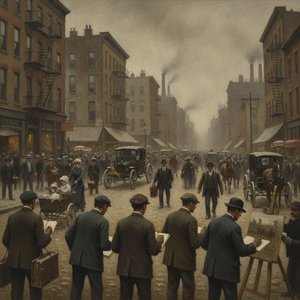
The Ashcan School: Capturing the Raw, Unfiltered Soul of Urban Life through American Realism
Discover the raw beauty of the Ashcan School. Explore how masters like Bellows and Henri captured the gritty, vibrant soul of early 20th-century New York through profound American Realism and evocative urban landscapes.
Explorez des œuvres d'art classées par thèmes, styles et caractéristiques.


