Aperçu en situation
 Envoyer
 Partager
 Détails de l'œuvre
 Guide
Guide

 Télécharger l'image
 Articles similaires
 Radiographie
 Diaporama
 Questions et réponses
 Statistiques
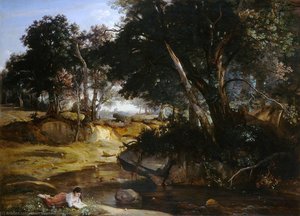
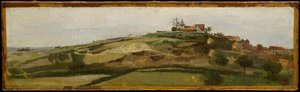
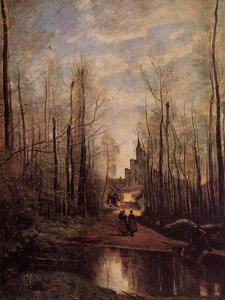
A Rising Path


Discover "A Rising Path" by Jean-Baptiste Corot (1845). This Impressionistic landscape painting captures serene rural beauty with loose brushstrokes & atmospheric light. A timeless piece for art lovers.
 Lire la suite
Découvrez Jean-Baptiste-Camille Corot (1796-1875), peintre français majeur entre Néoclassicisme et Impressionnisme. Paysages sereins, portraits réalistes & son influence durable sur l'art!
Giclées et impressions d'art
Impressions giclées ou sur toile de qualité musée, avec une production rapide et des finitions au choix. ( Commander la reproduction peinte à la main Passer au format numérique)




P118B €10

P118H €10

P118W €10

P438Z €10

P508JH €12

P508YH €12

P805H €10

P805Z €10

P919BZ €10

P919G €10

P919XJ €10

P959ZH €10

P968JZ €12

W106C €8

W218G €10

W218JH €8

W218Y €10

W307PJ €10

W316G €10

W316PJ €8

W316Y €10

W398PJ €8

W4111J €10

W500HY €15

W500JH €15

W692G €12

W849H €8

W940BG €15

W953PJ €8




Format standard
sur mesure
CM
INCH
Choisissez parmi nos formats prédéfinis qui respectent les proportions originales de l’œuvre.
Loading sizes...

largeur
hauteur
Saisissez la largeur et la hauteur souhaitées pour qu'elles s'adaptent à votre cadre ou à votre mur. Une impression peut être recadrée, mais jamais agrandie au-delà de l'image originale ; ainsi, un format de forme différente entraînera la perte d'une partie de l'image. Nous vous envoyons une maquette numérique pour approbation avant toute impression. L'image présentée sur cette page ne montre pas le recadrage réel — seule la maquette le permet.
Livraison dans le monde entier () en 2 semaines au lieu des 4/5 semaines habituelles. (4 novembre)

Livraison express gratuite dans le monde entier

Toile de lin de qualité supérieure

Assurance transport complète

Garantie de remboursement des droits de douane

Garantie de fidélité des couleurs

Politique de retour de 100 jours (uniquement en cas de défaut)

Garantie de remboursement à 100%

Offre de tarifs dégressifs
 L'option verre n'est disponible que pour les dimensions inférieures à 110 cm.

A Rising Path
Giclées et impressions d'art
Format de la reproduction
-


Prix total
€ 62
A Symphony of Light and Rural Grace: "A Rising Path" by Jean-Baptiste-Camille Corot
Jean-Baptiste-Camille Corot’s “A Rising Path” is more than just a depiction of a rural landscape; it's an immersion into the very soul of 19th-century French painting. Completed in 1845, this work embodies Corot’s profound dedication to capturing fleeting moments of natural beauty – a philosophy that would profoundly influence generations of artists to come. The scene unfolds with a quiet dignity: rolling hills draped in verdant hues, punctuated by the warm ochre of a sandy path leading the eye into the distance, and a sky painted with the softest blues and whites. It’s a landscape imbued with a sense of tranquility, inviting contemplation and a deep connection to the natural world.
Impressionistic Technique: Layering Light and Texture
Corot's mastery lies in his masterful application of technique. The painting is built upon layers of oil paint, meticulously applied with short, broken brushstrokes – a hallmark of the Impressionist movement, though predating its formal emergence. These strokes aren’t blended to create smooth transitions; instead, they retain their individual character, resulting in a rich, textured surface that seems to vibrate with light. Notice how the artist has used thick impasto in areas like the sandy path and the darker foreground, creating a tactile quality that draws you into the scene. The loose brushwork isn’t haphazard; it's deliberately employed to capture the ephemeral qualities of light – the way it dances across the hillsides, the subtle shifts in color as shadows lengthen, and the hazy atmosphere characteristic of rural landscapes. This technique wasn’t simply about representation; it was about conveying an *experience* of being present within that landscape.
Historical Context: Corot and the Rise of Plein Air Painting
“A Rising Path” emerged during a pivotal moment in art history. Prior to the mid-19th century, most landscape painters worked from studio studies, meticulously copying classical models or relying on sketches made *en plein air* (outdoors). Corot, however, championed the idea of directly observing and painting nature – a revolutionary concept at the time. He was part of a movement that sought to break away from academic conventions and embrace a more subjective approach to art. His work, alongside those of artists like Théodore Rousseau and François Millet, helped establish the foundation for Impressionism, paving the way for artists like Monet and Renoir to explore light and color in unprecedented ways. The painting’s date – 1845 – places it squarely within this period of artistic experimentation and a growing appreciation for the beauty of the natural world.
Symbolic Resonance: The Path as a Journey
Beyond its technical brilliance, “A Rising Path” possesses a subtle symbolic depth. The prominent sandy path isn’t merely a compositional element; it represents a journey – both literal and metaphorical. It invites the viewer to contemplate their own place within the landscape, suggesting themes of exploration, discovery, and perhaps even spiritual seeking. The gentle slope of the path leads the eye upwards, symbolizing aspiration and progress. The overall composition evokes a sense of peace and serenity, reinforcing the timeless appeal of Corot’s landscapes – scenes that resonate with our innate desire for connection to nature and a quiet escape from the complexities of modern life.
A Timeless Masterpiece: Reproduction Possibilities
Reproductions of “A Rising Path” offer an exceptional opportunity to bring this iconic work into your home or office. High-quality hand-painted reproductions meticulously recreate Corot’s technique and color palette, ensuring that you experience the full emotional impact of the original. These reproductions are not simply prints; they are works of art in their own right, capturing the essence of Corot's vision and offering a lasting tribute to one of France’s greatest landscape painters.
Questions et réponses
Quelle est la luminance de «A Rising Path» de Jean-Baptiste-Camille Corot ?
La luminance enregistrée pour «A Rising Path» de Jean-Baptiste-Camille Corot est de Gentle Luminance.
Quelle est l'orientation de «A Rising Path» de Jean-Baptiste-Camille Corot ?
«A Rising Path» de Jean-Baptiste-Camille Corot est une composition en Panoramic. Il convient de vérifier les proportions avant de choisir un format d'impression.
L'œuvre « A Rising Path » de Jean-Baptiste-Camille Corot est-elle dans le domaine public, et pourquoi ?
«A Rising Path» de Jean-Baptiste-Camille Corot est dans le dans le domaine public - ses droits d'auteur sont tombés dans le domaine public. Les droits d'auteur sont calculés à partir de l'année du décès de l'artiste, et Jean-Baptiste-Camille Corot est décédé en 1875.
Œuvres similaires


Biographie de l'artiste
Jeunesse et Formation
Jean-Baptiste-Camille Corot, peintre français renommé des paysages et des portraits, est né le 16 juillet 1796 à Paris. Issu d'une famille de la bourgeoisie parisienne, il a bénéficié d'un environnement favorable au développement de ses talents artistiques. Initialement intéressé par d’autres domaines, Corot découvre sa passion pour la peinture vers 1821, marquant le début d'une carrière prolifique qui influencera grandement l'Impressionnisme.Carrière Artistique et Œuvres Notables
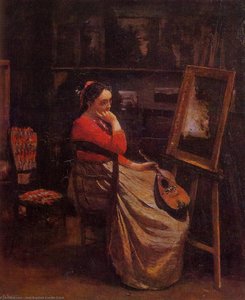
Le parcours artistique de Corot se caractérise par une fusion du classicisme néo-classique et des innovations en plein air. Son œuvre est vaste et variée, témoignant d’une constante évolution stylistique. Parmi ses œuvres les plus notables figurent :- Le Repos (huile sur toile, vers les années 1860), une œuvre captivante illustrant la maîtrise de Corot dans la capture de l'essence de la sérénité.
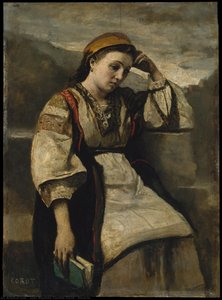
- Lecture interrompue (réalisme, huile, vers les années 1850), un exemple poignant de la capacité de Corot à représenter la vie quotidienne avec profondeur et émotion.
- Agostina (réalisme, huile, vers les années 1860), un portrait saisissant qui témoigne de son habileté à saisir l'essence de ses sujets.
Influences et Développement Artistique
Corot a été influencé par plusieurs artistes et courants artistiques. Il admire les maîtres anciens comme Nicolas Poussin et Claude Lorrain, dont il s'inspire pour la composition et l’atmosphère de ses paysages idéalisés. Son travail en plein air le rapproche des peintres du Barbizon, qui privilégient l'observation directe de la nature. Il est considéré comme un précurseur de l'Impressionnisme grâce à son approche novatrice de la lumière et de la couleur, ainsi qu’à sa volonté de capturer l'instant présent. Son style évolue au fil du temps, passant d'une phase plus classique à une approche plus libre et spontanée, caractérisée par des touches plus rapides et une palette de couleurs plus vibrante.Héritage et Importance Historique
La production abondante de Corot a eu un impact durable sur le développement de la peinture de paysage. Son approche innovante, combinant les techniques traditionnelles avec l'innovation du plein air, a ouvert la voie aux générations futures d’artistes. Il est reconnu comme une figure clé de l'art français et son œuvre continue d'inspirer et d'influencer les artistes du monde entier. Corot a contribué à légitimer le paysage comme genre artistique majeur et a influencé des peintres tels que Monet, Renoir et Pissarro. Découvrez davantage sur les peintures de Jean-Baptiste-Camille Corot sur TopImpressionists.com : https://TopImpressionists.com/@/jean-baptiste-camille-corot Pour en savoir plus sur le musée Courbet, consultez Wikipedia : https://en.wikipedia.org/wiki/mus%c3%a9e_courbet_(ornans,_france)
Jean-Baptiste-Camille Corot
1796 - 1875 , France
L'essentiel de l'artiste
- Artistes Influents: ['École classique']
- Date De Naissance: 16 juillet 1796
- Influence Sur Les Artistes: ['Impressionnisme']
- Lieu De Naissance: Paris, France
- Mouvement Artistique: Réalisme, Paysage
- Nationalité: Française
- Nom Complet: Jean-Baptiste-Camille Corot
- Oeuvres Notables:
- La Repose
- Lecture interrompue
- Agostina
Articles connexes

L'Éclat de l'Huile sur Panneau : Capturer la Lumière et la Texture Impressionniste
Découvrez l'expertise des maîtres sur la texture et la lumière de l'huile. Explorez la magie du relief impressionniste dès maintenant.
Capturing Emotion: A Journey Through the Soul of Expressionist Landscapes
Explore the profound emotional depth of Expressionist landscapes. Discover how Post-Impressionist masters moved beyond light to capture the soul through vibrant color and form. A curated journey for true art lovers seeking the beauty of expressive mastery.

Beyond the Light: Capturing Raw Emotion and Subjective Vision in Post-Impressionist Landscapes
Explore the profound emotional depth of Post-Impressionist landscapes. Discover how masters like Van Gogh moved beyond light to capture raw human feeling through vibrant color and expressive texture in this expert art history retrospective.
Explorez des œuvres d'art classées par thèmes, styles et caractéristiques.