Aperçu en situation
 Envoyer
 Partager
 Détails de l'œuvre
 Guide
Guide

 Télécharger l'image
 Articles similaires
 Radiographie
 Diaporama
 Q&A
Q&A Statistiques
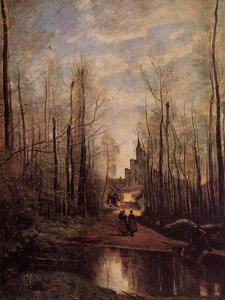
Smugglers


Jean-Baptiste Camille Corot
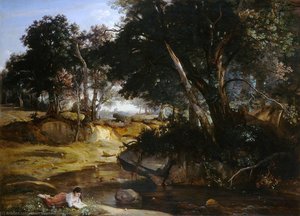
A serene depiction of a rural landscape featuring cows grazing peacefully under a vast sky. A solitary man stands observing the animals, capturing the quiet beauty of the countryside.
landscape
Landscape with Figures
1871
 Lire la suite
Découvrez Jean-Baptiste-Camille Corot (1796-1875), peintre français majeur entre Néoclassicisme et Impressionnisme. Paysages sereins, portraits réalistes & son influence durable sur l'art!
Giclées et impressions d'art
Impressions giclées ou sur toile de qualité musée, avec une production rapide et des finitions au choix. ( Commander la reproduction peinte à la main Passer au format numérique)




P118B €10

P118H €10

P118W €10

P438Z €10

P508JH €12

P508YH €12

P805H €10

P805Z €10

P919BZ €10

P919G €10

P919XJ €10

P959ZH €10

P968JZ €12

W106C €8

W218G €10

W218JH €8

W218Y €10

W307PJ €10

W316G €10

W316PJ €8

W316Y €10

W398PJ €8

W4111J €10

W500HY €15

W500JH €15

W692G €12

W849H €8

W940BG €15

W953PJ €8




Format standard
sur mesure
CM
INCH
Choisissez parmi nos formats prédéfinis qui respectent les proportions originales de l’œuvre.
Loading sizes...

largeur
hauteur
Saisissez la largeur et la hauteur souhaitées pour qu'elles s'adaptent à votre cadre ou à votre mur. Une impression peut être recadrée, mais jamais agrandie au-delà de l'image originale ; ainsi, un format de forme différente entraînera la perte d'une partie de l'image. Nous vous envoyons une maquette numérique pour approbation avant toute impression. L'image présentée sur cette page ne montre pas le recadrage réel — seule la maquette le permet.
Livraison dans le monde entier () en 2 semaines au lieu des 4/5 semaines habituelles. (31 octobre)

Livraison express gratuite dans le monde entier

Toile de lin de qualité supérieure

Assurance transport complète

Garantie de remboursement des droits de douane

Garantie de fidélité des couleurs

Politique de retour de 100 jours (uniquement en cas de défaut)

Garantie de remboursement à 100%

Offre de tarifs dégressifs
 L'option verre n'est disponible que pour les dimensions inférieures à 110 cm.

Smugglers
Giclées et impressions d'art
Format de la reproduction
-


Prix total
€ 61
A Symphony in Ochre and Shadow – Exploring Jean Baptiste Camille Corot’s Landscape Vision
Jean Baptiste Camille Corot (1796–1875), considered one of the foremost landscape painters of his era, possessed an unparalleled ability to capture the subtle beauty of the natural world. His canvases rarely depict grand vistas or dramatic storms; instead, they offer intimate glimpses into rural landscapes bathed in soft light and imbued with a profound sense of tranquility.
The Style: Impressionistic Reverence for Atmosphere
Corot’s style aligns closely with the burgeoning Impressionist movement, though he resisted categorization. Unlike Monet or Renoir who prioritized capturing fleeting moments of color and luminosity, Corot focused on conveying the overall mood and atmosphere of a scene—a technique known as atmospherism. He achieved this remarkable feat through meticulous observation and layering of thin glazes of oil paint, allowing light to penetrate through the pigment and creating an ethereal effect.
Technique: Delicate Brushstrokes and Layered Glazing
Corot’s distinctive brushwork is characterized by loose, horizontal strokes that mimic the contours of hillsides and valleys. These strokes are blended seamlessly together, blurring edges and merging colors to create a hazy, dreamlike quality. Crucially, he employed a technique of glazing—applying thin layers of translucent paint over previously applied layers—to build up tonal depth and luminosity gradually. This painstaking process resulted in surfaces that shimmer with reflected light and evoke the feeling of observing a landscape through mist.
Historical Context: Romanticism’s Legacy
Corot emerged from the Romantic movement, which championed emotion and imagination as responses to the grandeur of nature. However, he distanced himself from the overtly sentimental tendencies of his contemporaries, prioritizing accuracy and restraint. His landscapes reflect a deep appreciation for the sublime—the awe-inspiring beauty that simultaneously inspires terror and reverence—but tempered with a humanist sensibility rooted in observation and empathy.
Symbolism: Quiet Contemplation and Connection to Earth
While Corot’s paintings rarely bear explicit symbolic references, they resonate with themes of solitude, contemplation, and communion with the natural world. The muted palette – dominated by ochre yellows, earthy browns, and subtle greens – reflects the colors of the soil and vegetation, grounding the viewer in a tangible connection to the landscape. These canvases invite viewers to pause, breathe deeply, and experience the restorative power of unspoiled beauty—a timeless message that continues to captivate audiences today.
Emotional Impact: A Balm for the Soul
Ultimately, Corot’s landscapes transcend mere representation; they evoke a profound emotional response. They convey a sense of peace, serenity, and melancholy – capturing the fleeting moments of beauty found in everyday rural life. Viewing his paintings is akin to stepping into a tranquil sanctuary where worries fade away and one finds solace in the enduring presence of nature.
Questions et réponses
Quelle place occupe « Smugglers » parmi les thèmes récurrents de Jean-Baptiste-Camille Corot ?
«Smugglers» dépeint landscape, impressionism, cows, pastoral, tranquility, sunlight, rural scene, tandis que les thèmes récurrents de Jean-Baptiste-Camille Corot sont rural impressionism, pastoral tranquility, light atmosphere, landscape tradition, calm rural life. La comparaison des deux montre comment l'œuvre s'inscrit dans la lignée des sujets habituels de l'artiste.
Quelle taille d'impression est recommandée pour « Smugglers » ?
Une reproduction en Large est suggérée pour «Smugglers» de Jean-Baptiste-Camille Corot. Le format peut être ajusté tout en conservant les proportions.
Où puis-je voir un aperçu de « Smugglers » ?
La page Aperçu en situation de « Smugglers » vous permet de prévisualiser l'œuvre avant de passer commande.
Œuvres similaires


Biographie de l'artiste
Jeunesse et Formation
Jean-Baptiste-Camille Corot, peintre français renommé des paysages et des portraits, est né le 16 juillet 1796 à Paris. Issu d'une famille de la bourgeoisie parisienne, il a bénéficié d'un environnement favorable au développement de ses talents artistiques. Initialement intéressé par d’autres domaines, Corot découvre sa passion pour la peinture vers 1821, marquant le début d'une carrière prolifique qui influencera grandement l'Impressionnisme.Carrière Artistique et Œuvres Notables
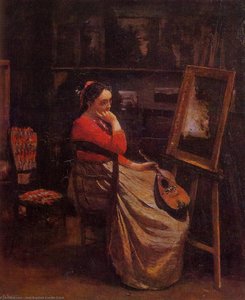
Le parcours artistique de Corot se caractérise par une fusion du classicisme néo-classique et des innovations en plein air. Son œuvre est vaste et variée, témoignant d’une constante évolution stylistique. Parmi ses œuvres les plus notables figurent :- Le Repos (huile sur toile, vers les années 1860), une œuvre captivante illustrant la maîtrise de Corot dans la capture de l'essence de la sérénité.
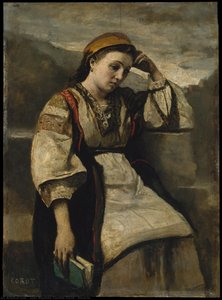
- Lecture interrompue (réalisme, huile, vers les années 1850), un exemple poignant de la capacité de Corot à représenter la vie quotidienne avec profondeur et émotion.
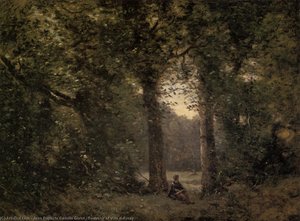
- Agostina (réalisme, huile, vers les années 1860), un portrait saisissant qui témoigne de son habileté à saisir l'essence de ses sujets.
Influences et Développement Artistique
Corot a été influencé par plusieurs artistes et courants artistiques. Il admire les maîtres anciens comme Nicolas Poussin et Claude Lorrain, dont il s'inspire pour la composition et l’atmosphère de ses paysages idéalisés. Son travail en plein air le rapproche des peintres du Barbizon, qui privilégient l'observation directe de la nature. Il est considéré comme un précurseur de l'Impressionnisme grâce à son approche novatrice de la lumière et de la couleur, ainsi qu’à sa volonté de capturer l'instant présent. Son style évolue au fil du temps, passant d'une phase plus classique à une approche plus libre et spontanée, caractérisée par des touches plus rapides et une palette de couleurs plus vibrante.Héritage et Importance Historique
La production abondante de Corot a eu un impact durable sur le développement de la peinture de paysage. Son approche innovante, combinant les techniques traditionnelles avec l'innovation du plein air, a ouvert la voie aux générations futures d’artistes. Il est reconnu comme une figure clé de l'art français et son œuvre continue d'inspirer et d'influencer les artistes du monde entier. Corot a contribué à légitimer le paysage comme genre artistique majeur et a influencé des peintres tels que Monet, Renoir et Pissarro. Découvrez davantage sur les peintures de Jean-Baptiste-Camille Corot sur TopImpressionists.com : https://TopImpressionists.com/@/jean-baptiste-camille-corot Pour en savoir plus sur le musée Courbet, consultez Wikipedia : https://en.wikipedia.org/wiki/mus%c3%a9e_courbet_(ornans,_france)
Jean-Baptiste-Camille Corot
1796 - 1875 , France
L'essentiel de l'artiste
- Artistes Influents: ['École classique']
- Date De Naissance: 16 juillet 1796
- Influence Sur Les Artistes: ['Impressionnisme']
- Lieu De Naissance: Paris, France
- Mouvement Artistique: Réalisme, Paysage
- Nationalité: Française
- Nom Complet: Jean-Baptiste-Camille Corot
- Oeuvres Notables:
- La Repose
- Lecture interrompue
- Agostina
Articles connexes

Evoking Arcadia: A Historical & Aesthetic Exploration of Rural Landscape Art
Explore the rich history of pastoral landscape art, from classical Arcadia to Impressionism & beyond. Discover key artists, movements, and how to collect serene rural scenes for your home. Expert insights at TopImpressionists.

Cultivating Visions: A Historical Journey Through Rural Landscapes in Art
Explore the rich history of rural landscape painting with TopImpressionists. Discover Impressionist masterpieces, key artists & movements. Find your perfect serene artwork and bring nature's beauty home.

Jean-Baptiste-Camille Corot: A Poetic Realism – Bridging the Barbizon School and Early Impressionism
Explore the life & art of Camille Corot, a pivotal figure bridging the Barbizon School & Impressionism. Discover his poetic realism, signature style, and lasting influence on landscape painting. Learn more at TopImpressionists.

Idyllic Visions: Exploring the Pastoral Scene in Art History – From Arcadia to Modern Interpretations
Explore the captivating history of pastoral art from classical Arcadia to modern masterpieces. Discover key artists like Millet & Cole at TopImpressionists. Find serene landscape paintings for your home.

Les 25 chefs-d'œuvre de John Constable : l'âme du paysage anglais
Explorez les 25 chefs-d'œuvre de John Constable et l'âme du romantisme anglais. Découvrez toute la collection sur TopImpressionists.com.
Explorez des œuvres d'art classées par thèmes, styles et caractéristiques.