Aperçu en situation
 Partager
 Partager
 Détails
 Guide imprimable

 Télécharger
 Articles similaires
 Radiographie
 Voir le diaporama
 Statistiques
Breakfast
 Oil On Canvas
- WallArt
- Les Nabis
 1894
1894- 19th Century
 26.0 x 22.0 cm
Vibrant early 20th-century scene of a social meal by Jean-Édouard Vuillard; explore the rich color and intimate atmosphere of this masterpiece today.
 Afficher la suite
Jean-Édouard Vuillard (1868-1940) était un peintre français et membre des Nabis reconnu pour ses scènes intérieures intimistes, son style décoratif et son influence sur l'art moderne comme le cubisme. Découvrez son œuvre !
Reproduction à l'huile faite à la main
Huile sur toile peinte à la main, avec cadre et dimensions personnalisés, réalisée sur commande par nos artistes. ( Passer au format impression Passer au format image numérique)




P118B €10

P118H €10

P118W €10

P438Z €10

P508JH €12

P508YH €12

P805H €10

P805Z €10

P919BZ €10

P919G €10

P919XJ €10

P959ZH €10

P968JZ €12

W106C €8

W218G €10

W218JH €8

W218Y €10

W307PJ €10

W316G €10

W316PJ €8

W316Y €10

W398PJ €8

W4111J €10

W500HY €15

W500JH €15

W692G €12

W849H €8

W940BG €15

W953PJ €8




Format standard
personnalisé
CM
INCH
Choisissez parmi nos formats prédéfinis qui respectent les proportions originales de l’œuvre.
Loading sizes...

largeur
hauteur
Saisissez la largeur et la hauteur souhaitées, pour s'adapter à votre cadre ou à votre mur. Cette œuvre est peinte à la main ; ainsi, pour un format de forme différente, l'artiste peut peindre un peu plus autour du tableau ou réduire légèrement les bords — c'est vous qui choisissez. Nous vous envoyons une maquette numérique pour approbation avant que la peinture ne commence. L'image présentée sur cette page ne reflète pas le résultat réel — seule la maquette le fait.
Exemples de personnalisation possibles : remplacer un visage par la photo du client ; ajouter un animal de compagnie (par exemple, remplacer un chat par un chien) ; inclure un message caché en arrière-plan ; modifier le paysage ou les éléments de l'arrière-plan.
Après la commande, l’équipe TopImpressionists.com contactera le client par e-mail pour recueillir ses instructions et lui fournira une maquette d’aperçu
Après la commande, l’équipe TopImpressionists.com contactera le client par e-mail pour recueillir ses instructions et lui fournira une maquette d’aperçu
Livraison dans le monde entier () en 3 à 4 semaines au lieu des 5 semaines habituelles. (24 octobre). Aucun compromis sur la qualité.

Livraison express gratuite dans le monde entier

Toile de lin de haute qualité

Assurance transport complète

Garantie de remboursement des droits de douane

Garantie de fidélité des couleurs

Garantie de retour de 100 jours (uniquement en cas de défaut)

Garantie de remboursement à 100%

Tarifs dégressifs sur quantité
 L'option verre n'est disponible que pour les dimensions inférieures à 110 cm.

Breakfast
Technique de reproduction
Format de la reproduction
-


Prix total final
€ 236
A Moment Captured at the Table
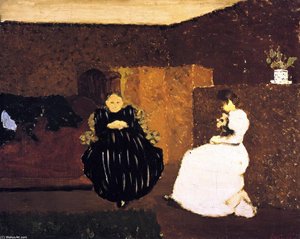
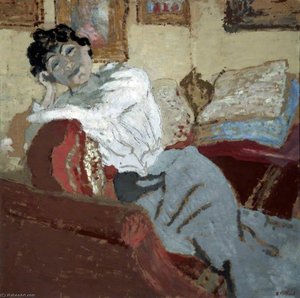
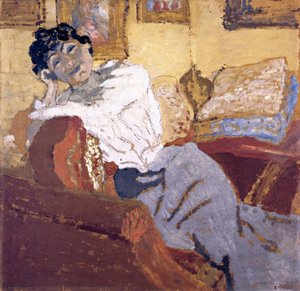
Jean-Édouard Vuillard’s Breakfast, dating from 1894, invites us into an intimate tableau of domestic life. It is more than just a depiction of a meal; it is a carefully composed study in human connection and quiet afternoon ritual. The scene unfolds around a richly appointed dining table, laden with the artifacts of conviviality—cups, bowls, and two inviting cakes rest upon its surface. At the heart of this gathering sits the central female figure, her presence anchoring the composition while surrounding figures complete the sense of shared experience. The arrangement suggests a pause in time, a moment suspended between conversation and consumption.
The Influence of Les Nabis
To understand Breakfast, one must appreciate its context within the vibrant artistic ferment of late 19th-century Paris. Vuillard was a key member of Les Nabis, a group whose vision sought to infuse everyday subjects with spiritual resonance and decorative pattern. This movement steered art away from grand historical narratives toward the intimate, the domestic, and the subjective experience. In this painting, we see the Nabis influence manifest not through overt symbolism alone, but through the very structure of the space. Vuillard masterfully flattens planes of color and form, giving the interior a decorative rhythm that is both modern and deeply personal.
Technique and Atmosphere
Vuillard’s technique here is characterized by an almost tapestry-like richness. His application of paint emphasizes pattern—the patterns on the chairs, the textiles, and even the interplay of light across the table suggest a meticulous attention to surface detail. While the subject matter appears straightforward—a family or group enjoying breakfast—the emotional resonance comes from the way he handles shadow and light. The atmosphere is one of warm enclosure; the viewer feels as if they have slipped through an unseen doorway into this private gathering. It speaks to the quiet luxury of shared time, a feeling that transcends mere depiction.
A Touch for the Modern Collector
For those who appreciate art that whispers rather than shouts, Breakfast offers profound depth. Whether adorning a formal drawing-room or lending an intellectual patina to a contemporary space, this piece brings with it the sophisticated elegance of early modernism. It appeals equally to the collector seeking a tangible link to the avant-garde spirit and the designer who values art that enhances lived experience. Reproducing this work allows one to bring home not just paint on canvas, but a carefully curated echo of Parisian intellectual life at the turn of the century.
Questions et réponses
Dans quelle pièce de la maison une reproduction de « Breakfast » s'intégrerait-elle bien ?
Une reproduction de « Breakfast » s'intègre parfaitement dans une Dining Room.
Quelle est la luminance de «Breakfast» de Jean-Édouard Vuillard ?
Les couleurs de « Breakfast » présentent une luminance Gentle Luminance.
Quelle place occupe «Breakfast» de Jean-Édouard Vuillard dans l'histoire de l'art ?
La classification historico-artistique de «Breakfast» de Jean-Édouard Vuillard est Les Nabis, durant la période 19th Century.
Œuvres similaires


Biographie de l'artiste
**early life and artistic beginnings**
Jean-Édouard Vuillard, né à Cuiseaux en Bourgogne le 11 novembre 1868, fut l’enfant d'un couple atypique : son père, un ancien officier de marine retraité, et sa mère, une couturière. Cette famille modeste, après le décès du père en 1877, s'installa à Paris, ouvrant la voie à une vie artistique riche en découvertes. Dès son plus jeune âge, Jean-Édouard manifesta un intérêt certain pour l’art, fréquentant notamment le lycée Fontaine, où il développa sa sensibilité aux œuvres de Michel-Ange et aux sculptures classiques. C'est là qu'il rencontra des figures clés qui allaient influencer son parcours, dont Maurice Denis et Pierre Véber, futurs compagnons d'art. En 1885, après avoir abandonné ses ambitions militaires initiales, il se lança dans la voie de l’artiste, rejoignant le studio du peintre Diogène Maillart, un lieu de rencontres et d'expérimentations crucial pour sa formation.**les nabis : une révolution artistique**
L'année 1889 marqua un tournant décisif dans la vie de Vuillard : il se joignit à Maurice Denis, Paul Sérusier, et d’autres artistes audacieux pour fonder le groupe *Les Nabis*. Ce collectif, dont le nom évoque le prophète, s'inspirait des peintres allemands du XVIIe siècle, notamment Rembrandt et Vermeer, mais surtout de l'art japonais, avec ses compositions équilibrées, ses couleurs vives et son utilisation ingénieuse de la perspective. Les Nabis cherchaient à transcender la simple reproduction de la réalité, en explorant les possibilités expressives de la couleur et de la forme. Vuillard, initialement hésitant face à cette approche symbolique, finit par s'abandonner à l’expérimentation, intégrant progressivement les principes du groupe dans son œuvre. Cette période fut marquée par une recherche constante de nouvelles techniques et d'une esthétique personnelle, influencée par les théâtres symbolistes qui fleurissaient à Paris.**l'intimité des lieux et la figure féminine**
L’œuvre de Vuillard est profondément ancrée dans l’observation attentive du quotidien, en particulier des intérieurs domestiques. Il peignait avec une sensibilité particulière les appartements bourgeois, les salons, les chambres, transformant ces espaces ordinaires en microcosmes chargés d'émotions et de mélancolie. La présence féminine occupe une place centrale dans ses tableaux : sa mère, sa grand-mère, et plus tard, Lucy Hessel, sa compagne et mécène, sont souvent représentées dans des scènes intimes, capturant leur essence avec une subtilité remarquable. Ces portraits ne se limitent pas à la simple représentation physique ; ils cherchent à saisir l'âme de ces femmes, leurs gestes, leurs expressions, leurs émotions. Il est important de noter que Vuillard a toujours été un artiste solitaire, préférant le travail en studio à la vie sociale, ce qui contribue à l’atmosphère particulière et introspective de son œuvre.**l'évolution stylistique et l'héritage**
Après 1900, lorsque *Les Nabis* se dispersent, Vuillard connaît une évolution stylistique notable. Il abandonne progressivement les expérimentations formelles audacieuses du groupe pour adopter un style plus réaliste, mettant au premier plan la précision des détails et la richesse des couleurs. Cette période est marquée par des portraits de personnalités influentes de l'industrie et des arts français, réalisés dans des contextes familiers et reconnaissables. Vuillard continue à explorer les thèmes de l’intimité et du quotidien, mais avec une approche plus mature et maîtrisée. Son œuvre, riche en nuances et en subtilités, a exercé une influence considérable sur les générations d'artistes qui lui ont succédé, notamment dans le développement du cubisme et de l'abstraction. Jean-Édouard Vuillard est aujourd’hui reconnu comme l'un des artistes français les plus importants du XXe siècle, dont les tableaux continuent de fasciner par leur beauté singulière et leur profondeur émotionnelle.**conclusion**
L'œuvre de Jean-Édouard Vuillard représente une véritable révolution dans le monde de l'art. Son approche novatrice de la couleur, de la forme et de la représentation a ouvert de nouvelles perspectives pour les artistes du XXe siècle. Il est un artiste qui a su capturer l’essence de la vie quotidienne, en particulier l’intimité des lieux et la beauté des figures féminines. Vuillard reste une figure incontournable de l'art moderne, dont l'héritage continue d'inspirer les artistes du monde entier.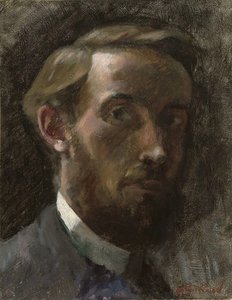
Jean-Édouard Vuillard
1868 - 1940 , France
En bref
- Artistic Movement Or Style: Nabis
- Artists Or Movements Influenced By This Artist:
- Cubism
- Fauvism
- Artists Who Influenced This Artist: ['Paul Gauguin']
- Date Of Birth: November 11, 1868
- Date Of Death: June 21, 1940
- Full Name: Jean Édouard Vuillard
- Nationality: French
- Notable Artworks:
- Woman Sweeping
- Sunlit Interior
- Place Of Birth: Cuiseaux, France
Articles connexes

TopImpressionists.com F.A.Q.: Masterful Oil Painting Techniques & Authentic Textures
Discover the technical mastery behind TopImpressionists.com's hand-painted oil reproductions. From authentic impasto textures to bespoke commissions, explore our expert techniques in preserving the legacy of the Old Masters for elite collectors worldwide.
Explorez des œuvres d'art classées par thèmes, styles et caractéristiques.