


 Aperçu en situation
 Partager
 Partager
 Détails
 Guide imprimable

 Télécharger
 Articles similaires
 Radiographie
 Voir le diaporama
 Statistiques
Odalisque


Experience Jean-Joseph Benjamin-Constant’s ‘Odalisque,’ a captivating 1880 Orientalist painting featuring a reclining woman in opulent blue and red. This Romantic masterpiece, inspired by Morocco, offers an exquisite glimpse into a world of sensual beauty – discover or own this timeless artwork.
 Afficher la suite
Découvrez Jean-Joseph Benjamin-Constant (1845-1902) ! Peintre orientaliste & portraitiste français, alliant l'art académique à un romantisme captivant.
Giclées et impressions d'art
Impressions giclées ou sur toile de qualité musée, avec une production rapide et des finitions au choix. ( Acheter la peinture faite à la main Passer au format image numérique)




P118B €10

P118H €10

P118W €10

P438Z €10

P508JH €12

P508YH €12

P805H €10

P805Z €10

P919BZ €10

P919G €10

P919XJ €10

P959ZH €10

P968JZ €12

W106C €8

W218G €10

W218JH €8

W218Y €10

W307PJ €10

W316G €10

W316PJ €8

W316Y €10

W398PJ €8

W4111J €10

W500HY €15

W500JH €15

W692G €12

W849H €8

W940BG €15

W953PJ €8




Format standard
personnalisé
CM
INCH
Choisissez parmi nos formats prédéfinis qui respectent les proportions originales de l’œuvre.
Loading sizes...

largeur
hauteur
Saisissez la largeur et la hauteur souhaitées pour qu'elles s'adaptent à votre cadre ou à votre mur. Une impression ne peut être que découpée, elle ne peut jamais être agrandie au-delà de l'image originale ; ainsi, un format de forme différente entraînera la perte d'une partie de l'image. Nous vous envoyons une maquette numérique pour approbation avant toute impression. L'image présentée sur cette page ne montre pas le recadrage réel — seule la maquette le permet.
Livraison dans le monde entier () en 2 semaines au lieu des 4/5 semaines habituelles. (21 octobre)

Livraison express gratuite dans le monde entier

Toile de lin de haute qualité

Assurance transport complète

Garantie de remboursement des droits de douane

Garantie de fidélité des couleurs

Garantie de retour de 100 jours (uniquement en cas de défaut)

Garantie de remboursement à 100%

Tarifs dégressifs sur quantité
 L'option verre n'est disponible que pour les dimensions inférieures à 110 cm.

Odalisque
Giclées et impressions d'art
Format de la reproduction
-


Prix total final
€ 60
A Vision of Exotic Grace: Jean-Joseph Benjamin Constant’s Odalisque
The painting “Odalisque” by Jean-Joseph Benjamin-Constant stands as a quintessential emblem of Orientalism—a movement that captivated European artists and intellectuals throughout the late 19th century. More than just a depiction of beauty, it embodies a complex interplay of artistic convention and Romantic fascination with the sensual allure of Ottoman culture. Created in 1880, this masterpiece resides within the Baltimore Museum of Art’s collection, offering visitors an opportunity to immerse themselves in Constant's masterful execution and profound artistic vision.- Artist’s Background: Jean-Joseph Benjamin-Constant (1845–1902) emerged from the École des Beaux-Arts in Toulouse, where he honed his skills under Alexandre Cabanel—a lineage steeped in classical tradition. However, Constant's artistic trajectory took an extraordinary turn during his voyage to Morocco in 1872, sparking a lifelong devotion to capturing the exotic splendor of the Orient.
- Style and Technique: Employing oil on canvas, Constant skillfully blended academic precision with Romantic sensibilities. His brushstrokes are deliberate yet fluid, conveying both textural detail and an ethereal quality that elevates the scene beyond mere representation. The artist’s meticulous attention to light and shadow creates a palpable atmosphere of intimacy and contemplation.
- Subject Matter: At its core, “Odalisque” portrays a woman reclining gracefully on a bed or couch—a motif prevalent in Orientalist art. This pose harkens back to depictions of Venus and Aphrodite in classical sculpture, symbolizing feminine beauty and idealized repose. The woman is adorned in a sumptuous blue dress accented by a vibrant red scarf, reflecting the opulent fabrics favored in Ottoman harems.
- Symbolism: Beyond its aesthetic appeal, “Odalisque” carries symbolic weight. The gold necklace encircling her neck represents wealth and status—a visual shorthand for the privileged lifestyle enjoyed by women within the harem. Furthermore, the subtle gaze of the woman suggests a quiet confidence and awareness, hinting at themes of desire and contemplation.
- Historical Context: Produced during a period of intense European interest in Ottoman culture, “Odalisque” reflects broader anxieties about sexuality and exoticism. It exemplifies the Romantic movement’s preoccupation with emotion and imagination—transforming historical observation into evocative artistic expression.
TopImpressionists.’s Reproduction Expertise
Recognizing the enduring allure of Constant's “Odalisque,” TopImpressionists.com specializes in crafting exceptional handmade oil paintings that faithfully reproduce this iconic artwork. Utilizing premium pigments and meticulous techniques—inherited from a tradition spanning centuries—our artisans meticulously recreate the painting’s luminous colors and intricate details, ensuring that collectors and enthusiasts alike experience its original splendor.Discover More About Jean-Joseph Benjamin Constant
To delve deeper into the life and artistic legacy of Jean-Joseph Benjamin-Constant, visit TopImpressionists.com. Explore his broader oeuvre—spanning portraits, landscapes, and genre scenes—to appreciate the breadth of his creative vision. Furthermore, explore the Baltimore Museum of Art’s collection on TopImpressionists.com to gain invaluable insight into “Odalisque” within its artistic context.A Timeless Masterpiece
“Odalisque” transcends mere visual representation; it embodies a profound exploration of beauty, desire, and the transformative power of art. Its captivating composition—combined with Constant’s masterful command of technique—continues to inspire admiration and provoke contemplation decades after its creation. Experience the artistry of Jean-Joseph Benjamin Constant through TopImpressionists.’s exquisite reproductions—a testament to enduring artistic excellence.Questions et réponses
L'œuvre « Odalisque » est-elle restée dans le pays d'origine de son artiste ?
Non - l'œuvre est conservée à l'étranger. « Odalisque » est conservée en États-Unis d'Amérique, tandis que Jean-Joseph Benjamin-Constant est né(e) en France.
Quelle est la luminance de «Odalisque» de Jean-Joseph Benjamin-Constant ?
La luminance enregistrée pour «Odalisque» de Jean-Joseph Benjamin-Constant est de Bright Balance.
Pour quelle pièce «Odalisque» de Jean-Joseph Benjamin-Constant est-il recommandé ?
Une reproduction de « Odalisque » s'intègre parfaitement dans une Living Room.
Biographie de l'artiste
Jean-Joseph Benjamin-Constant : Une Vie Entre Orientalisme et Art Académique
- Né: 10 juin 1845, Paris, France
- Décédé: 26 mai 1902, Paris, France
- Nationalité: Français
- Mouvement: Orientalisme, Art Académique
Jeunesse et Formation
- Benjamin-Constant reçoit sa première formation artistique à l'École des Beaux-Arts de Toulouse sous la direction d'Alexandre Cabanel. Cette éducation fondamentale lui inculque une solide compréhension des techniques classiques et des principes académiques.
- Ses premières œuvres reflètent les influences de la peinture historique, démontrant une aptitude pour la composition dramatique et le rendu détaillé.
- Un moment décisif survient avec son voyage au Maroc en 1872. Cette expérience façonne profondément sa direction artistique, le menant vers le domaine captivant de l'Orientalisme.
L’Adoption de l’Orientalisme
- Inspiré par ses voyages, Benjamin-Constant commence à produire des scènes romantiques représentant la vie et la culture marocaines. Parmi les œuvres notables de cette période figurent "Les Derniers Rebelles", "Justice dans le Harem" et "Prisonniers Marocains". Ces peintures témoignent d'une fascination pour les lieux exotiques et d'un talent pour capturer les détails atmosphériques.
- Il crée également des toiles monumentales comme « L’Entrée de Mahomet II à Constantinople », qui lui vaut une médaille en 1876, démontrant sa capacité à traiter des récits historiques grandioses.
- Ses œuvres orientalistes se caractérisent par des couleurs vibrantes, un éclairage dramatique et une représentation romancée de la vie nord-africaine.
Tournant Vers les Décorations Murales et les Portraits
- Après 1880, l'orientation artistique de Benjamin-Constant change considérablement. Il se consacre aux décorations murales et au portrait, démontrant sa polyvalence et s’adaptant aux exigences des commandes publiques.
- Il est reconnu pour ses peintures à grande échelle, telles que "Paris Convoitant le Monde", exposée au Musée de la Ville. Cette œuvre exemplifie sa compétence dans la représentation de scènes complexes avec de nombreuses figures.
- Ses portraits de personnalités importantes comme le pape Léon XIII, la reine Alexandra du Royaume-Uni et Lord John Lumley-Savile consolident davantage sa réputation d'habile portraitiste.
Reconnaissance et Héritage
- Benjamin-Constant reçoit de nombreux prix tout au long de sa carrière, dont une médaille d’honneur au Salon en 1896 pour "Mon Fils André". Il est élu à l'Institut en 1893 et devient Commandeur de la Légion d'Honneur.
- Son œuvre est représentée dans des collections prestigieuses du monde entier, notamment le Metropolitan Museum of Art (avec sa fresque « Justinien au Conseil »), le Musée des Augustins à Toulouse et la National Gallery of Art aux États-Unis à Washington D.C.
- L'héritage de Benjamin-Constant repose sur sa capacité à synthétiser une formation académique avec une sensibilité romantique, créant des œuvres convaincantes qui captent à la fois la grandeur historique et l’attrait des terres lointaines. Il reste une figure importante dans l'art français du XIXe siècle, célébré pour son habileté technique et ses représentations évocatrices de thèmes orientalistes.

Jean-Joseph Benjamin-Constant
1845 - 1902 , France
En bref
- Artistes Influents:
- Alexandre Cabanel
- Delacroix
- Rubens
- Watteau
- Date De Décès: 26 mai 1902
- Date De Naissance: 10 juin 1845
- Lieu De Naissance: Paris, France
- Mouvement Artistique: Orientalisme, Academicisme
- Nationalité: Française
- Nom Complet: Jean-Joseph Benjamin-Constant
- Oeuvres Notables:
- Derniers rebelles
- Justice dans l'harem
- Prisionniers marocains
- Entrée de Mahomet II
- Paris convoque le monde
Articles connexes

Les 10 Chefs-d'œuvre du XIXe Siècle : Artistes et Décor Intemporels
Plongez au cœur du XIXe siècle avec les 10 œuvres incontournables de Manet, Monet et Renoir. Découvrez l'histoire, les techniques et l'émotion derrière ces chefs-d'œuvre impressionnistes et réalistes. Trouvez votre reproduction idéale sur TopImpressionists.com !

Les 10 Chefs-d'œuvre Dominés par le Bleu Ardoise : Art, Histoire & Décor
Plongez dans l'univers fascinant des 10 plus beaux tableaux dominés par le bleu ardoise. Découvrez l'histoire, les artistes et les techniques de ces chefs-d'œuvre impressionnistes et contemporains. Inspirez votre décoration intérieure avec !
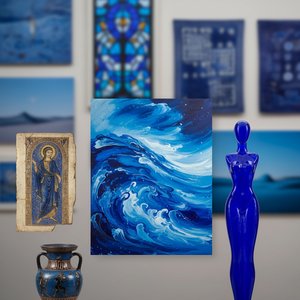
The Allure of Azure: Exploring the Symbolic & Aesthetic Depths of Blue in Art History
Explore the rich history of blue in art! Discover its symbolism, from ancient pigments to modern masterpieces by Kandinsky & Seurat. Uncover the psychological impact and cultural meanings behind this captivating hue.

Crimson Threads of Narrative: Exploring Symbolism & Representation in Artworks Featuring the Red Dress
Explore the rich symbolism of the red dress in art history! From ancient power displays to iconic portraits like Cézanne’s 'Madame Cezanne', discover the cultural and artistic significance behind this captivating color. Expert analysis & insights.

Azure Visions: Exploring Representations of the Blue Dress in Western Art History
Explore the rich history of the blue dress in Western art! Discover its symbolism, from Renaissance masterpieces to modern interpretations by artists like Martin & Schiele. Uncover cultural meanings and artistic techniques.
Explorez des œuvres d'art classées par thèmes, styles et caractéristiques.
