Aperçu en situation
 Envoyer
 Partager
 Détails de l'œuvre
 Guide
Guide

 Télécharger l'image
 Articles similaires
 Radiographie
 Diaporama
 Q&A
Q&A Statistiques
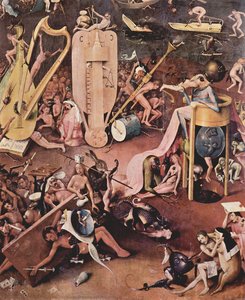
Triptych de Jardin des Délices


«Le jardin des délices» de Bosch : Une œuvre emblématique du gothique flamand qui explore les plaisirs terrestres et les dangers du péché avec une richesse symbolique inégalée. Découvrez cette incroyable peinture!
 Lire la suite
Explorez le monde surréaliste et symbolique de Jérôme Bosch (c. 1450-1516), un maître de la Renaissance néerlandaise. Découvrez ses tableaux emblématiques, ses visions cauchemardesques du paradis perdu, ses thèmes religieux et son influence durable sur l'histoire de l'art.
Giclées et impressions d'art
Impressions giclées ou sur toile de qualité musée, avec une production rapide et des finitions au choix. ( Commander la reproduction peinte à la main Passer au format numérique)




P118B €10

P118H €10

P118W €10

P438Z €10

P508JH €12

P508YH €12

P805H €10

P805Z €10

P919BZ €10

P919G €10

P919XJ €10

P959ZH €10

P968JZ €12

W106C €8

W218G €10

W218JH €8

W218Y €10

W307PJ €10

W316G €10

W316PJ €8

W316Y €10

W398PJ €8

W4111J €10

W500HY €15

W500JH €15

W692G €12

W849H €8

W940BG €15

W953PJ €8




Format standard
sur mesure
CM
INCH
Choisissez parmi nos formats prédéfinis qui respectent les proportions originales de l’œuvre.
Loading sizes...

largeur
hauteur
Saisissez la largeur et la hauteur souhaitées pour qu'elles s'adaptent à votre cadre ou à votre mur. Une impression peut être recadrée, mais jamais agrandie au-delà de l'image originale ; ainsi, un format de forme différente entraînera la perte d'une partie de l'image. Nous vous envoyons une maquette numérique pour approbation avant toute impression. L'image présentée sur cette page ne montre pas le recadrage réel — seule la maquette le permet.
Livraison dans le monde entier () en 2 semaines au lieu des 4/5 semaines habituelles. (2 novembre)

Livraison express gratuite dans le monde entier

Toile de lin de qualité supérieure

Assurance transport complète

Garantie de remboursement des droits de douane

Garantie de fidélité des couleurs

Politique de retour de 100 jours (uniquement en cas de défaut)

Garantie de remboursement à 100%

Offre de tarifs dégressifs
 L'option verre n'est disponible que pour les dimensions inférieures à 110 cm.

Triptych de Jardin des Délices
Giclées et impressions d'art
Format de la reproduction
-


Prix total
€ 61
Triptych of Garden of Earthly Delights (detail) (48): Decoding Bosch’s Vision
Hieronymus Bosch's *Triptych of the Garden of Earthly Delights* isn't merely a painting; it’s an immersive experience rendered in astonishing detail and brimming with unsettling symbolism. Completed around 1500, this masterpiece transcends categorization, existing as a singular fusion of late medieval and early Renaissance artistic sensibilities—a testament to Bosch’s unparalleled genius. The work unfolds sequentially through three hinged panels, presenting a narrative journey from the innocence of Eden on the left wing, traversing a central panel pulsating with earthly pleasures (and their inherent dangers), culminating in a harrowing depiction of Hell on the right. Even focusing on a single fragment – like this exquisite detail – reveals Bosch’s extraordinary ability to populate his world with fantastical creatures and symbolic imagery that continues to captivate and provoke debate centuries later. This particular section delves into the intricate symbolism woven throughout the central panel, offering insights into Bosch's profound meditation on morality and human nature.The Language of Symbolism: A Bestiary of Moral Allegory
Bosch’s garden is far from idyllic. It isn’t a celebration of natural beauty; rather, it serves as a cautionary tale about humanity’s susceptibility to temptation—a deliberate rejection of the idealized landscapes favored by many Renaissance artists. The scene before us showcases this powerfully. Birds – frequently interpreted as emblems of the soul or aspirations toward spiritual enlightenment – mingle with more earthly beings: cats, turtles, and snakes. These aren't simply depictions of wildlife; each animal carries weighty symbolic significance. For instance, the cat embodies lust or deceit, while the snake—a classic symbol of temptation since the Genesis narrative—coils ominously amongst lush foliage. The abundance of fruit – often interpreted as representing sensual indulgence – is presented not as bounty but as an invitation to excess. Even seemingly innocuous figures like fish and frogs hint at hidden perils lurking beneath the surface. Bosch’s meticulous attention to detail isn't about achieving photographic realism; it’s about constructing a complex visual allegory where every element contributes to a larger moral message—a deliberate provocation of the viewer’s conscience.Technique and Innovation: Mastering Oil Paint for Unparalleled Depth
Bosch was undeniably a pioneer in his utilization of oil paint, demonstrating mastery that surpassed conventional techniques of his time. He painstakingly built up layers of translucent glazes, creating an astonishing level of depth and luminosity—a revolutionary departure from tempera painting, which relied on opaque pigments. The smoothness of the surfaces combined with the intricate rendering of textures – feathers, scales, fur – is breathtaking. Bosch eschewed traditional perspective and anatomical accuracy; instead, he prioritized expressive form and symbolic representation. This conscious distortion enhances the painting’s dreamlike quality, drawing the viewer into a realm that feels simultaneously familiar and utterly alien—a deliberate artistic choice designed to unsettle and provoke contemplation. The vibrant hues—particularly those evident in this detail—are remarkably well-preserved, testament to Bosch's skill and the enduring qualities of his materials.A Lasting Legacy: Influence Beyond Time
Bosch’s *Triptych* has resonated with artists and audiences across generations. Its influence can be discerned prominently in the works of Surrealists like Salvador Dalí, who admired Bosch’s ability to tap into the subconscious mind—a recognition of his profound understanding of human psychology. Beyond its artistic impact, the triptych continues to captivate because it confronts universal themes: temptation, sin, pleasure, and damnation. It remains a work that demands sustained contemplation, inviting us to confront our own desires and vulnerabilities. A reproduction of this detail – or indeed, any portion of the larger masterpiece – offers not merely an aesthetically pleasing addition to interior décor but also a potent reminder of the complexities inherent in human existence and the enduring power of art to inspire emotion and provoke intellectual inquiry.Photo Description: Capturing Bosch’s Vision
The painting depicts a garden scene populated by fantastical creatures and insects, bathed in vibrant colors that convey an atmosphere of both beauty and unease. Numerous birds soar above the water's surface, some perched on branches or rocks—symbols often associated with spiritual aspiration. A swan gracefully floats upon the pond, surrounded by aquatic animals such as fish. Alongside the birds are cats, turtles, and snakes, each imbued with symbolic significance reflecting moral allegories. The scene’s meticulous detail showcases Bosch’s masterful rendering of textures – feathers, scales, fur – contributing to the painting's dreamlike quality. The central panel portrays a chaotic landscape teeming with naked figures engaged in sensual activities—a deliberate challenge to conventional artistic conventions and a profound meditation on human morality. The overall impression is one of unsettling grandeur, capturing Bosch’s singular vision of paradise lost and its inevitable descent into darkness.Size: Unknown
## Date: 1500Questions et réponses
Quelle est la couleur dominante de «Triptych de Jardin des Délices» de Jérôme Bosch ?
La couleur dominante de «Triptych de Jardin des Délices» de Jérôme Bosch est le Gris moyen (#928a77).
Dans quelle pièce de la maison une reproduction de « Triptych de Jardin des Délices » s'intégrerait-elle bien ?
L'espace recommandé pour «Triptych de Jardin des Délices» de Jérôme Bosch est un Lobby d'hôtel. Cette suggestion peut bien entendu être adaptée à votre intérieur.
Quelle est la place historique de « Triptych de Jardin des Délices » ?
«Triptych de Jardin des Délices» de Jérôme Bosch appartient au mouvement Surrealism, durant la période Bas Moyen Âge. Ensemble, ils confèrent à l'œuvre sa place dans l'histoire de l'art.
Biographie de l'artiste
vie et carrière
Hieronymus Bosch, un peintre néerlandais/flandrien renommé du Brabant, est né vers 1450 à ‘s-Hertogenbosch, aux Pays-Bas. Sa vie reste enveloppée de mystère, avec seulement quelques traces de son existence. Malgré le manque d'informations biographiques, l’art de Bosch a eu un impact profond sur l’art européen du nord, en particulier au XVIe siècle.style artistique et influences
Le style unique de Bosch, caractérisé par des représentations surréalistes et imaginatives de thèmes religieux, est largement influent. Ses peintures à l'huile sur bois, souvent représentant des visions étranges et cauchemardesques de l’enfer, ont fait l’objet de nombreuses interprétations. Le Triptyque du Jugement Dernier (c. 1480-1490) et le Jardin du Paradis Terrestre (c. 1490-1510) sont deux de ses œuvres les plus célèbres, mettant en valeur sa maîtrise du médium.Œuvres notables et collections
* L’Ascension des Bienheureux (renaissance du nord, huile sur panneau) : un exemple rare de l'œuvre de Bosch, présentant une scène onirique et étrange. * Épiphanie (c. 1495, Musée du Prado, Madrid) : Un triptyque qui démontre l’utilisation innovante de l’huile sur bois par Bosch. * Tête d'un Halberdiers (Musée du Prado, Madrid) : Un bel exemple de la peinture à portrait de Bosch, mettant en valeur son souci du détail.Musées et collections présentant l’œuvre de Bosch
* Le Musée du Prado, Madrid : abrite certaines des œuvres les plus célèbres de Bosch, notamment l’Épiphanie et le Triptyque du Jugement Dernier. * Le Musée d'Art de Philadelphie, Philadelphie : présente une version de l’Épiphanie, offrant une perspective unique sur le style artistique de Bosch.- Découvrez davantage des œuvres de Hieronymus Bosch à https://TopImpressionists.com/@/hieronymus-bosch
- Découvrez le mouvement de l'art néerlandais du début et ses figures clés, dont Jan van Eyck et Pieter Bruegel le Vieux, à https://TopImpressionists.com/@@/a@d3cpaf-the-erly-netherlandish-art-movement
- Apprenez-en davantage sur la vie et l'œuvre de Pieter Bruegel le Vieux à https://en.wikipedia.org/wiki/pieter_bruegel_the_elder
Héritage
Le style énigmatique de Hieronymus Bosch captive les amateurs d'art depuis des siècles, et son influence peut encore être observée dans l'œuvre de nombreux artistes. Son mélange unique de surréalisme et d’intuitions profondes sur la condition humaine a solidifié sa place en tant que maître de la peinture néerlandaise.
Jérôme Bosch
1450 - 1516 , Pays-Bas
L'essentiel de l'artiste
- Artistes Influencés: ['Pieter Bruegel le Vieux']
- Artistes Influents:
- Jan van Eyck
- Pieter Bruegel l'Ancien
- Date De Décès: 1516
- Date De Naissance: c. 1450
- Lieu De Naissance: 's-Hertogenbosch, Pays-Bas
- Mouvement Artistique: Renaissance nordique
- Nationalité: Néerlandais/Flamand
- Nom Complet: Jérôme Bosch
- Œuvres Notables:
- Le Jardin des délices terrestres
- Triptyque du Jugement Dernier
- L'Ascension des Bienheureux
- Épiphanie
Articles connexes

The Alchemy of Light: Discovering the Luminous Realism of Early Netherlandish Masters
Embark on a journey through the Northern Renaissance. Discover how Early Netherlandish masters revolutionized art through oil innovation, luminous realism, and profound symbolic depth. Explore the breathtaking technical brilliance of the Flemish masters.
Explorez des œuvres d'art classées par thèmes, styles et caractéristiques.