Aperçu en situation
 Envoyer
 Partager
 Détails de l'œuvre
 Guide
Guide

 Télécharger l'image
 Articles similaires
 Radiographie
 Diaporama
 Statistiques
Taking tea


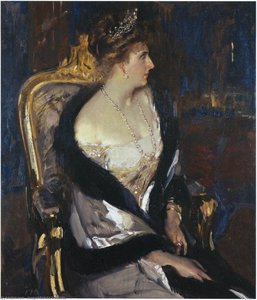
Bathed in Valencian sunlight, Joaquín Sorolla’s ‘Taking Tea’ captures the serene intimacy of two women enjoying a leisurely afternoon gathering—a masterful Impressionist depiction reflecting Spain's golden age.
 Lire la suite
Découvrez Joaquín Sorolla (1863-1923), maître du réalisme et luminisme espagnol ! Ses peintures vibrantes capturent la lumière méditerranéenne, les plages & portraits.
Giclées et impressions d'art
Impressions giclées ou sur toile de qualité musée, avec une production rapide et des finitions au choix. ( Commander la reproduction peinte à la main Passer au format numérique)




P118B €10

P118H €10

P118W €10

P438Z €10

P508JH €12

P508YH €12

P805H €10

P805Z €10

P919BZ €10

P919G €10

P919XJ €10

P959ZH €10

P968JZ €12

W106C €8

W218G €10

W218JH €8

W218Y €10

W307PJ €10

W316G €10

W316PJ €8

W316Y €10

W398PJ €8

W4111J €10

W500HY €15

W500JH €15

W692G €12

W849H €8

W940BG €15

W953PJ €8




Format standard
sur mesure
CM
INCH
Choisissez parmi nos formats prédéfinis qui respectent les proportions originales de l’œuvre.
Loading sizes...

largeur
hauteur
Saisissez la largeur et la hauteur souhaitées pour qu'elles s'adaptent à votre cadre ou à votre mur. Une impression peut être recadrée, mais jamais agrandie au-delà de l'image originale ; ainsi, un format de forme différente entraînera la perte d'une partie de l'image. Nous vous envoyons une maquette numérique pour approbation avant toute impression. L'image présentée sur cette page ne montre pas le recadrage réel — seule la maquette le permet.
Livraison dans le monde entier () en 2 semaines au lieu des 4/5 semaines habituelles. (26 octobre)

Livraison express gratuite dans le monde entier

Toile de lin de qualité supérieure

Assurance transport complète

Garantie de remboursement des droits de douane

Garantie de fidélité des couleurs

Politique de retour de 100 jours (uniquement en cas de défaut)

Garantie de remboursement à 100%

Offre de tarifs dégressifs
 L'option verre n'est disponible que pour les dimensions inférieures à 110 cm.

Taking tea
Giclées et impressions d'art
Format de la reproduction
-


Prix total
€ 61
A Moment Captured in Valencia’s Golden Light
Joaquín Sorolla's "Taking Tea" isn’t merely a depiction of two women enjoying afternoon refreshments; it’s an exquisite distillation of Valencian life and artistic sensibility at the cusp of the roaring twenties. Painted in 1918, this portrait transcends its subject matter to become a testament to Sorolla’s masterful command of light – a hallmark that defines his entire oeuvre and cemented his reputation as one of Spain's foremost Impressionists.The Painter’s Technique: Embracing Luminosity
Sorolla’s technique is instantly recognizable. He eschewed the meticulous detail favored by many of his contemporaries, opting instead for loose brushstrokes that capture the ephemeral quality of sunlight filtering through a Valencian window. Layers upon layers of thin washes of pigment create an illusion of depth and vibrancy, mimicking the way light dances across surfaces. Notice how he skillfully renders the translucence of the vase’s glass – not with hard edges but with soft gradations that convey its luminous interior. This deliberate disregard for precise representation prioritizes feeling over factual accuracy, aligning perfectly with Sorolla's artistic philosophy.Historical Context: Valencia and Modernity
Valencia in 1918 was experiencing a period of significant cultural renewal. The city’s burgeoning bourgeoisie embraced the ideals of modernity, fostering an environment conducive to artistic experimentation. Sorolla himself benefited from patronage – notably from wealthy Valencian families – allowing him to dedicate himself fully to his craft. “Taking Tea” reflects this spirit of optimism and engagement with contemporary life, portraying women engaged in conversation amidst a scene of domestic comfort. It’s a snapshot of a society striving for beauty and refinement, mirroring Sorolla's own belief that art should illuminate the human experience.Symbolism Within Light
The pervasive use of light isn’t accidental; it carries profound symbolic weight. Sorolla was deeply influenced by Japanese Impressionism, particularly Hiroshige’s landscapes, which emphasized atmospheric perspective and a focus on capturing fleeting moments. Just as Hiroshige sought to convey the essence of Japan's natural beauty, Sorolla aimed to encapsulate the warmth and vitality of Valencian culture. The light itself symbolizes joy, serenity, and connection – qualities that permeate the painting’s composition and contribute to its emotional resonance.Emotional Impact: A Gentle Radiance
Ultimately, “Taking Tea” succeeds in conveying a palpable sense of tranquility and intimacy. The figures are rendered with understated grace, their expressions subtly hinting at shared companionship. Sorolla's masterful manipulation of light imbues the scene with an ethereal glow, transporting the viewer to a sunlit Valencian terrace. It’s a painting that invites contemplation – prompting us to savor the simple pleasures of life and appreciate the beauty found in everyday moments. This reproduction captures not just an image but an atmosphere—a feeling of warmth, connection, and timeless elegance.Questions et réponses
Quelle palette de couleurs utilise "Taking tea" ?
La palette de «Taking tea» de Joaquín Sorolla est décrite comme étant Earthy. Il s'agit d'une description concise des couleurs de l'œuvre.
Les couleurs de "Taking tea" sont-elles vives ou plutôt atténuées ?
Les couleurs de «Taking tea» de Joaquín Sorolla présentent une saturation Muted et une intensité Monochromatic.
Comment intégrer «Taking tea» de Joaquín Sorolla dans votre décoration intérieure ?
L'utilisation (Accent) et l'espace (Living Room) sont les deux recommandations enregistrées pour «Taking tea» de Joaquín Sorolla.
Œuvres similaires


Biographie de l'artiste
Jeunesse et Formation
Joaquín Sorolla y Bastida, peintre espagnol renommé, est né le 27 février 1863 à Valence, en Espagne. Fils de Joaquín Sorolla, commerçant, et Concepción Bastida, il fut orphelin dès l'âge de deux ans et élevé par sa tante maternelle et son oncle. Son parcours artistique a débuté dans sa ville natale où il reçut une première formation artistique à l’âge de neuf ans. Il étudia ensuite sous la direction de Cayetano Capuz, Salustiano Asenjo et José Benlliure à Rome. Une bourse d'études de quatre ans lui permit de se perfectionner en peinture à Rome, en Italie, où il fut influencé par Francisco Pradilla.Développement Artistique et Style
Sorolla est surtout connu pour son impressionnisme espagnol, caractérisé par une luminosité exceptionnelle et un sens aigu du mouvement. Son style évolua au fil des ans, passant d'une phase plus académique à une approche plus libre et spontanée, capturant la lumière méditerranéenne avec une maestria inégalée. Il s’est distingué par sa capacité à saisir les effets de la lumière sur l'eau, le sable et la peau, créant des scènes vibrantes et pleines de vie. Son œuvre est marquée par un réalisme poétique, combinant observation attentive et interprétation personnelle.Œuvres Majeures et Réalisations
Sorolla a produit une œuvre prolifique couvrant divers sujets, mais il est particulièrement célèbre pour ses scènes de plage, ses portraits et ses représentations de la vie quotidienne en Espagne. Parmi ses œuvres les plus notables figurent :- Italian Girl with Flowers (fille italienne aux fleurs), témoignant de sa capacité à capturer l'essence de ses sujets.
- Bathing Time (temps de baignage), illustrant son équilibre entre lumière et couleur.
- White Slave Trade (trafic des blanches), une œuvre rare dans son répertoire, abordant un thème social important.
Influences et Héritage
Sorolla fut influencé par l'impressionnisme français, mais il développa un style distinctement espagnol, imprégné de la lumière et des couleurs du sud. Son œuvre a contribué à définir le paysage artistique espagnol de son époque et a inspiré de nombreux artistes ultérieurs. Il est considéré comme l’un des plus grands peintres réalistes et impressionnistes espagnols. Son héritage se perpétue à travers les collections de musées prestigieux du monde entier, notamment au musée Sorolla à Madrid, qui lui est entièrement dédié.Signification Historique
Joaquín Sorolla y Bastida a laissé une empreinte indélébile sur l'histoire de l'art espagnol et international. Son œuvre témoigne d’une époque de transformation sociale et culturelle en Espagne, tout en célébrant la beauté du paysage méditerranéen et la vitalité de son peuple. Il est reconnu pour sa contribution significative au réalisme et à l'impressionnisme, et ses peintures continuent d'inspirer et de captiver les spectateurs du monde entier.
Joaquín Sorolla
1863 - 1923 , Espagne
L'essentiel de l'artiste
- Artistes Influents:
- Francisco Pradilla
- Claude Monet
- John Singer Sargent
- Date De Décès: 10 août 1923
- Date De Naissance: 27 février 1863
- Influences Artistiques:
- Réalisme espagnol
- Luminisme
- Lieu De Naissance: Valence, Espagne
- Mouvement Artistique: Impressionnisme espagnol
- Nationalité: Espagnole
- Nom Complet: Joaquín Sorolla y Bastida
- Œuvres Notables:
- Fille italienne aux fleurs
- Temps de baignade
- Commerce des blanches
- Vision d'Espagne
Articles connexes

Capturing the Light: A Journey Through the Ethereal Magic of Impressionism and Post-Impressionism
Embark on a cultural journey through the luminous world of Impressionism. Discover the profound beauty of Monet, Van Gogh, and Cézanne through expert art history insights and explore how to bring these timeless masterpieces into your home with museum-quality hand-painted reproductions.
Explorez des œuvres d'art classées par thèmes, styles et caractéristiques.