
 Aperçu en situation
 Envoyer
 Partager
 Détails de l'œuvre
 Guide
Guide

 Télécharger l'image
 Articles similaires
 Radiographie
 Diaporama
 Questions et réponses
 Statistiques
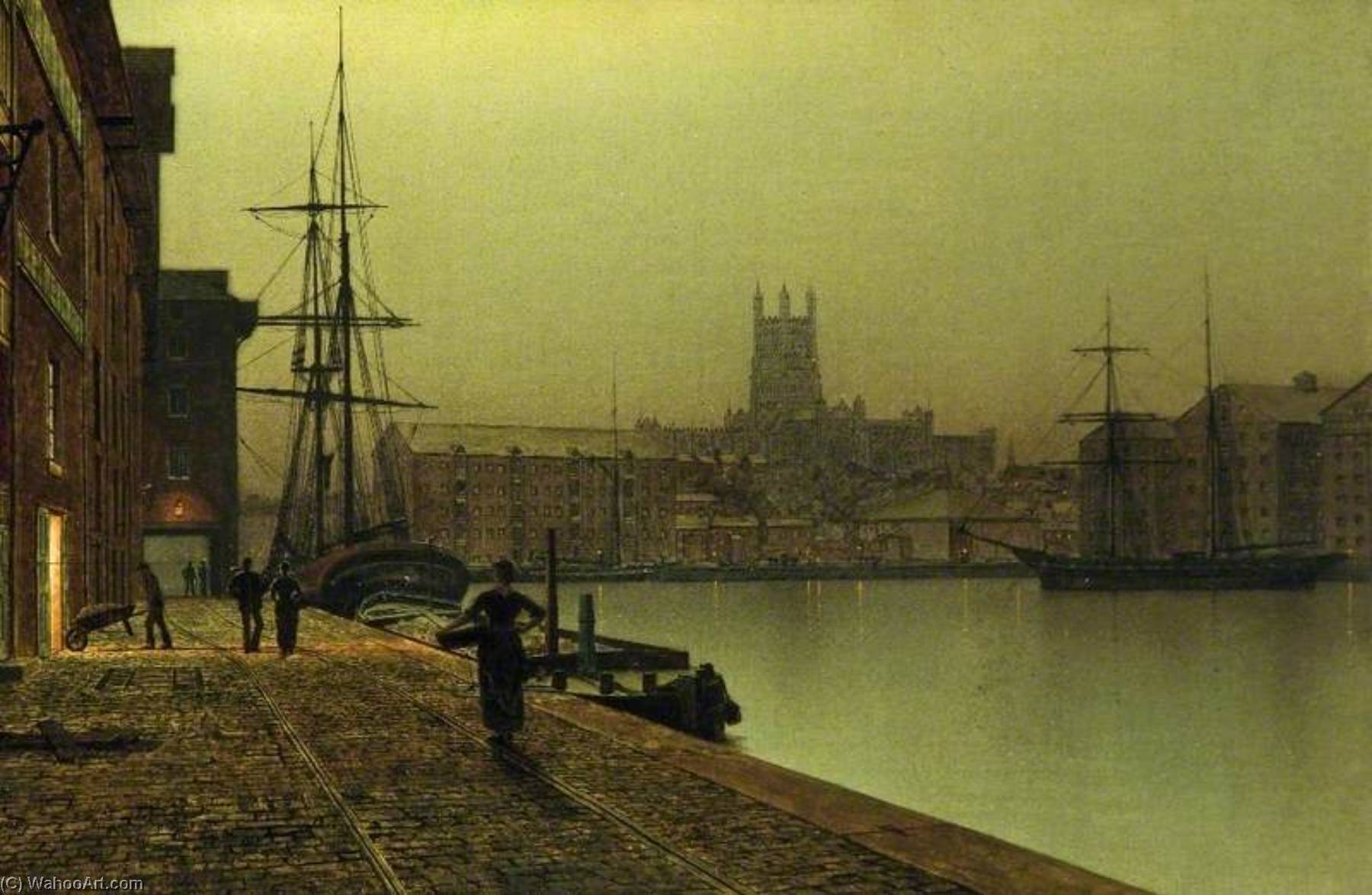
Gloucester Docks

- 44.0 x 68.0 cm


A serene and atmospheric realism masterpiece by John Atkinson Grimshaw capturing the tranquil docks of Gloucester in 1890 with misty light and detailed maritime life, perfect for adding Victorian elegance to your collection.
 Lire la suite
Découvrez John Atkinson Grimshaw (1836-1893), maître des paysages nocturnes ! Atmosphère, clair de lune et détails préraphaélites vous attendent.
Giclées et impressions d'art
Impressions giclées ou sur toile de qualité musée, avec une production rapide et des finitions au choix. ( Commander la reproduction peinte à la main Passer au format numérique)




P118B €10

P118H €10

P118W €10

P438Z €10

P508JH €12

P508YH €12

P805H €10

P805Z €10

P919BZ €10

P919G €10

P919XJ €10

P959ZH €10

P968JZ €12

W106C €8

W218G €10

W218JH €8

W218Y €10

W307PJ €10

W316G €10

W316PJ €8

W316Y €10

W398PJ €8

W4111J €10

W500HY €15

W500JH €15

W692G €12

W849H €8

W940BG €15

W953PJ €8




Format standard
sur mesure
CM
INCH
Choisissez parmi nos formats prédéfinis qui respectent les proportions originales de l’œuvre.
Loading sizes...

largeur
hauteur
Saisissez la largeur et la hauteur souhaitées pour qu'elles s'adaptent à votre cadre ou à votre mur. Une impression peut être recadrée, mais jamais agrandie au-delà de l'image originale ; ainsi, un format de forme différente entraînera la perte d'une partie de l'image. Nous vous envoyons une maquette numérique pour approbation avant toute impression. L'image présentée sur cette page ne montre pas le recadrage réel — seule la maquette le permet.
Livraison dans le monde entier () en 2 semaines au lieu des 4/5 semaines habituelles. (8 novembre)

Livraison express gratuite dans le monde entier

Toile de lin de qualité supérieure

Assurance transport complète

Garantie de remboursement des droits de douane

Garantie de fidélité des couleurs

Politique de retour de 100 jours (uniquement en cas de défaut)

Garantie de remboursement à 100%

Offre de tarifs dégressifs
 L'option verre n'est disponible que pour les dimensions inférieures à 110 cm.

Gloucester Docks
Giclées et impressions d'art
Format de la reproduction
-


Prix total
€ 62
A Symphony of Mist and Moonlight
In the quietude of the late nineteenth century, few artists possessed the ability to capture the ephemeral soul of the English landscape as profoundly as John Atkinson Grimshaw. His masterpiece, Gloucester Docks, serves as a breathtaking window into a bygone era, where the industrial pulse of the docks meets the poetic stillness of nature. The painting invites the viewer into a world of muted tones and soft transitions, where the water acts as a dark, liquid mirror reflecting the sturdy architecture of the harbor. There is a profound sense of peace found within this composition, a moment frozen in time where the heavy masts of sailing ships reach toward an overcast sky, and the very air seems thick with the damp, cool breath of a maritime evening.
The technical mastery displayed in this work is nothing short of extraordinary. Grimshaw, often celebrated as a master of moonlight and nocturnal atmosphere, employs a sophisticated palette of earth tones, slate grays, and pale blues to construct a scene that feels both tangible and dreamlike. Through meticulous brushwork, he achieves a remarkable variety of textures; one can almost feel the rough grain of the wooden docks, the smooth, cold surface of the stone buildings, and the subtle, rhythmic ripples that disturb the water's surface. The lighting is intentionally subdued, eschewing harsh highlights in favor of a soft, diffused glow that permeates the scene, creating a melancholic yet tranquil mood that lingers in the mind long after the first viewing.
The Poetics of the Industrial Landscape
Beyond its aesthetic beauty, Gloucester Docks carries a deep historical resonance. Created around 1890, the painting captures the intersection of Victorian commerce and the romanticized landscape. While the docks represent the burgeoning industrial strength of the United Kingdom, Grimshaw chooses to depict them not with the clamor of progress, but with a sense of dignified repose. The ships, with their intricate rigging and imposing silhouettes, stand as silent sentinels of trade, while the surrounding architecture tells a story of a community built upon the rhythms of the water. This duality—the strength of man-made structures set against the soft, unpredictable elements of weather and light—is what gives the piece its enduring emotional depth.
For the discerning collector or interior designer, this artwork offers more than mere decoration; it provides an atmospheric anchor for a room. The balanced composition, with its horizon line placed near the center, creates a sense of stability and calm that is perfect for creating a sophisticated sanctuary within a home. Whether placed in a sunlit gallery or a dimly lit study, the painting’s subtle interplay of shadow and light brings a layer of intellectual and emotional complexity to any space. It is an invitation to slow down, to observe the fine details of the masts and chimneys, and to lose oneself in the quiet, evocative beauty of a misty morning at the docks.
Questions et réponses
L'œuvre « Gloucester Docks » est-elle restée dans le pays d'origine de son artiste ?
Oui — l'œuvre est conservée dans le pays d'origine de l'artiste. « Gloucester Docks » est conservée en Royaume-Uni, tandis que John Atkinson Grimshaw est né(e) en Royaume-Uni.
Quelle est la date de création et le mouvement artistique de «Gloucester Docks» de John Atkinson Grimshaw ?
«Gloucester Docks» a été réalisé en 1890, au sein du mouvement Realism.
Quel artiste et quel style se cachent derrière « Gloucester Docks » ?
« Gloucester Docks » a été créé par John Atkinson Grimshaw dans le style Realism. L'artiste et le mouvement définissent la tradition de l'œuvre.
Biographie de l'artiste
John Atkinson Grimshaw : Un Maître Victorien des Paysages Nocturnes
Né à Leeds en 1836, John Atkinson Grimshaw occupe une place singulière et évocatrice au sein du panthéon des artistes victoriens. Il ne se contentait pas de peindre des paysages ; il était un chroniqueur d’atmosphères, un poète de la lumière et de l'ombre, et un observateur attentif du monde industriel en pleine effervescence qui l’entourait. Son parcours, passant de simple employé de chemin de fer à artiste célébré, témoigne d’une dévotion inébranlable et d’une vision artistique unique – une histoire souvent racontée comme un exemple inspirant de poursuite de la passion malgré les attentes sociétales. Initialement accueilli avec désapprobation par sa famille lorsqu'il abandonna à vingt-quatre ans un emploi stable pour se consacrer à la peinture, Grimshaw persévéra, animé par un talent inné qui allait finalement définir son héritage. Ses premières expositions présentèrent des natures mortes modestes – oiseaux, fruits, fleurs – sous le patronage de la Leeds Philosophical and Literary Society en 1862, mais c’est son exploration ultérieure des scènes nocturnes qui le distingua véritablement, établissant un style immédiatement reconnaissable et profondément émouvant.Influences Artistiques et Évolution d'un Style
Les fondations artistiques de Grimshaw étaient solidement ancrées dans les courants esthétiques de son époque, mais il synthétisa ces influences pour créer quelque chose de distinctement sien. Le mouvement préraphaélite exerça une influence significative, évidente dans son attention méticuleuse aux détails, son réalisme et ses palettes de couleurs vibrantes. Il partageait leur engagement à capturer la beauté du monde naturel avec une précision implacable, mais Grimshaw n’était pas un simple imitateur. Il traça sa propre voie en adoptant des techniques innovantes, notamment son utilisation ouverte d'outils tels que la caméra obscura ou des lentilles pour projeter des scènes sur la toile. Cette pratique, considérée comme controversée par certains contemporains qui remettaient en question sa valeur artistique, lui permit d’atteindre une précision remarquable dans la perspective et les détails, créant des images dotées d'une qualité presque photographique. James McNeill Whistler lui-même reconnut la maîtrise de Grimshaw dans les effets nocturnes, concédant avec éloquence qu'il s'était considéré comme l'"inventeur des nocturnes" jusqu’à ce qu’il découvre les peintures éclairées par la lune de Grimshaw. Au-delà des idéaux préraphaélites, des influences d'artistes tels que James Tissot et du mouvement esthétique plus large se manifestent dans ses scènes intérieures, mettant en valeur des pièces richement décorées et une focalisation sur la capture de l’humeur et de l’émotion à travers la lumière et l’ombre. Il n'avait pas peur d'expérimenter, mélangeant les techniques traditionnelles aux outils modernes pour obtenir les effets désirés – une audace qui le distinguait de nombreux de ses pairs.Réalisations Majeures et Œuvres Remarquables
Les années 1870 marquèrent une période de succès significatif pour Grimshaw. Il établit des résidences à la fois à Leeds et à Scarborough, cette dernière devenant un sujet fréquent de son art. C’est durant cette époque qu'il développa son style signature – des scènes urbaines atmosphériques rendues sous le crépuscule ou la chaude lueur du gaz. Liverpool from Wapping (1875) illustre parfaitement cette période, présentant l’énergie industrielle du port avec un mélange de réalisme et de touches impressionnistes. La peinture capture non seulement les structures physiques des docks, mais aussi l'activité trépidante et le sentiment de mouvement constant qui caractérisaient Liverpool à l'époque victorienne. Endymion on Mount Latmus (1879), inspiré du poème de Keats, démontre sa capacité à traduire des thèmes littéraires en paysages oniriques visuellement époustouflants – un témoignage de sa curiosité intellectuelle et de sa polyvalence artistique. Dulce Domum (1885) est un exemple particulièrement convaincant de ses scènes intérieures, invitant le spectateur dans un monde d'intimité tranquille et d'élégance raffinée. On Hampstead Hill, une autre œuvre célébrée, capture parfaitement la transition du crépuscule à la nuit, mettant en valeur l’habileté exceptionnelle de Grimshaw à manipuler la lumière et l’ombre. Ses peintures furent régulièrement exposées à la Royal Academy entre 1874 et 1885, consolidant sa réputation au sein du monde artistique établi. Ces œuvres n'étaient pas simplement des représentations de lieux ; elles étaient des paysages émotionnels, imprégnés d’un sentiment de mystère et de contemplation silencieuse.Héritage et Importance Historique
Malgré une période relative d'obscurité après sa mort en 1893, l'œuvre de John Atkinson Grimshaw connut un regain d'intérêt significatif au cours de la seconde moitié du XXe siècle. Une exposition rétrospective, « Atkinson Grimshaw – Peintre de Lune », organisée à la Mercer Art Gallery de Harrogate et à la Guildhall Art Gallery de Londres en 2011, attira une nouvelle attention sur ses paysages captivants. L’héritage durable de Grimshaw réside dans sa capacité à évoquer un sentiment puissant d'atmosphère et d'humeur grâce à son utilisation magistrale de la lumière et des détails. Il ne se contentait pas de documenter des scènes ; il capturait des émotions – la solitude tranquille d’une rue éclairée par la lune, l’énergie trépidante d’un port, la chaleur douillette d’un intérieur domestique. Son œuvre offre une fenêtre unique sur la vie victorienne, révélant à la fois sa grandeur et son sentiment sous-jacent d'aliénation. Il demeure une figure importante de l'histoire de l'art victorien, célébré pour son style distinctif et sa capacité à transformer des scènes ordinaires en œuvres extraordinaires. L’influence de ses techniques atmosphériques se retrouve chez les artistes ultérieurs qui ont cherché à capturer l’humeur et l’émotion d’une scène plutôt que simplement sa réalité physique. Sa volonté d'adopter de nouvelles technologies, comme la caméra obscura, a également ouvert la voie à une future expérimentation artistique. Les peintures de Grimshaw continuent de résonner auprès du public aujourd'hui, nous rappelant la beauté qui peut être trouvée dans le quotidien et le pouvoir de l’art pour nous transporter dans un autre temps et en un autre lieu.
John Atkinson Grimshaw
1836 - 1893 , Royaume-Uni
L'essentiel de l'artiste
- Artistes Influents:
- Préraphaélites
- James Tissot
- Whistler
- Date De Décès: 13 octobre 1893
- Date De Naissance: 6 septembre 1836
- Influencé Par: ['Mouvement esthétique']
- Lieu De Naissance: Leeds, Royaume-Uni
- Mouvement Artistique: Victorien, Préraphaélite
- Nationalité: Britannique
- Nom Complet: John Atkinson Grimshaw
- Œuvres Notables:
- Liverpool de Wapping
- Endymion sur le Mont Latme
- Dulce Domum
- On Hampstead Hill
Articles connexes

Les 25 chefs-d'œuvre de John Constable : l'âme du paysage anglais
Explorez les 25 chefs-d'œuvre de John Constable et l'âme du romantisme anglais. Découvrez toute la collection sur TopImpressionists.com.

John Singer Sargent : Les 25 Œuvres Maîtresses d'un Portraitiste Éminent | TopImpressionists
Plongez dans l'univers de John Singer Sargent : découvrez les 25 œuvres qui ont marqué l'histoire de l'art. Portraits impressionnants, réalisme exquis et couleurs vibrantes. Retrouvez ces chefs-d'œuvre en reproduction haute définition sur TopImpressionists.com.

John Collier: Pre-Raphaelite Realism & Victorian Psychological Portraiture
Explore the captivating world of John Collier, a leading Pre-Raphaelite painter renowned for his psychologically insightful Victorian portraits. Discover his masterpieces and lasting artistic legacy.

10 chefs-d'œuvre du Réalisme Romantique qui capturent l'âme humaine
Plongez dans l'émotion du Réalisme Romantique. Explorez 10 chefs-d'œuvre iconiques, de Constable à Homer, mêlant vérité et passion. Trouvez l'inspiration pour votre décor avec nos reproductions de qualité musée sur TopImpressionists.com. Découvrez toute la collection en ligne.

John Atkinson Grimshaw: Atmospheric Realism & the Victorian Nocturne
Explore the captivating world of John Atkinson Grimshaw, Victorian master of atmospheric nightscapes. Discover his iconic paintings, unique techniques & enduring legacy. Learn about collecting Grimshaw's art today!
Explorez des œuvres d'art classées par thèmes, styles et caractéristiques.


