


 Aperçu en situation
 Partager
 Partager
 Détails
 Guide imprimable

 Télécharger
 Articles similaires
 Radiographie
 Voir le diaporama
 Statistiques
Orange Branch
 Oil On Canvas
- WallArt
- American Colorism & Japonisme
 1883
1883- 19th Century
 138.0 x 30.0 cm
 Metropolitan Museum of Art
Experience the vibrant Japonisme of John La Farge's 1883 Orange Branch, a luminous study of color and light you will adore.
 Afficher la suite
Découvrez John La Farge (1835-1910), artiste américain pionnier du vitrail opalescent et des murals lumineux, influencé par l'art japonais. Un maître de la couleur !
Reproduction à l'huile faite à la main
Huile sur toile peinte à la main, avec cadre et dimensions personnalisés, réalisée sur commande par nos artistes. ( Passer au format impression Passer au format image numérique)




P118B €10

P118H €10

P118W €10

P438Z €10

P508JH €12

P508YH €12

P805H €10

P805Z €10

P919BZ €10

P919G €10

P919XJ €10

P959ZH €10

P968JZ €12

W106C €8

W218G €10

W218JH €8

W218Y €10

W307PJ €10

W316G €10

W316PJ €8

W316Y €10

W398PJ €8

W4111J €10

W500HY €15

W500JH €15

W692G €12

W849H €8

W940BG €15

W953PJ €8




Format standard
personnalisé
CM
INCH
Choisissez parmi nos formats prédéfinis qui respectent les proportions originales de l’œuvre.
Loading sizes...

largeur
hauteur
Saisissez la largeur et la hauteur souhaitées, pour s'adapter à votre cadre ou à votre mur. Cette œuvre est peinte à la main ; ainsi, pour un format de forme différente, l'artiste peut peindre un peu plus autour du tableau ou réduire légèrement les bords — c'est vous qui choisissez. Nous vous envoyons une maquette numérique pour approbation avant que la peinture ne commence. L'image présentée sur cette page ne reflète pas le résultat réel — seule la maquette le fait.
Exemples de personnalisation possibles : remplacer un visage par la photo du client ; ajouter un animal de compagnie (par exemple, remplacer un chat par un chien) ; inclure un message caché en arrière-plan ; modifier le paysage ou les éléments de l'arrière-plan.
Après la commande, l’équipe TopImpressionists.com contactera le client par e-mail pour recueillir ses instructions et lui fournira une maquette d’aperçu
Après la commande, l’équipe TopImpressionists.com contactera le client par e-mail pour recueillir ses instructions et lui fournira une maquette d’aperçu
Livraison dans le monde entier () en 3 à 4 semaines au lieu des 5 semaines habituelles. (24 octobre). Aucun compromis sur la qualité.

Livraison express gratuite dans le monde entier

Toile de lin de haute qualité

Assurance transport complète

Garantie de remboursement des droits de douane

Garantie de fidélité des couleurs

Garantie de retour de 100 jours (uniquement en cas de défaut)

Garantie de remboursement à 100%

Tarifs dégressifs sur quantité
 L'option verre n'est disponible que pour les dimensions inférieures à 110 cm.

Orange Branch
Technique de reproduction
Format de la reproduction
-


Prix total final
€ 236
A Symphony of Color and Japonisme
In the quiet brilliance of John La Farge’s 1883 masterpiece, "Orange Branch," viewers are invited into a world where nature and artistry converge in perfect harmony. This exquisite work is far more than a mere botanical study; it is a profound exploration of light, texture, and the delicate dance between Eastern influence and Western Impressionism. At first glance, the eye is immediately drawn to the vibrant, sun-drenched oranges that cling to a slender branch, their golden hues radiating a warmth that seems to pulse from within the canvas itself. La Farge captures not just the fruit, but the very essence of ripeness, inviting a sense of serene contemplation that transcends the boundaries of a simple landscape.
The painting serves as a breathtaking testament to Japonisme, the late 19th-century fascination with Japanese aesthetics that swept through the American art scene. Following the opening of Japan to Western trade, artists like La Farge found profound inspiration in the flattened perspectives and organic compositions of sumi-e ink paintings. In "Orange Branch," this influence is palpable in the way the branch extends diagonally across the frame, creating a balanced yet dynamic movement that guides the viewer’s gaze through the composition. The soft, ethereal blue background acts as a tranquil stage, providing an understated counterpoint to the vivid warmth of the fruit and ensuring that every leaf and citrus orb commands the spotlight.
Mastery of Light and Luminous Technique
To behold "Orange Branch" is to witness the technical virtuosity of a true master of color. La Farge employed a sophisticated technique of layering glazes—applying thin, translucent washes of oil paint over successive layers—to achieve a depth and luminosity that few could replicate. This meticulous process allows light to penetrate the surface of the paint, reflecting back with a brilliance that mimics the natural glow of sunlight filtering through foliage. The oranges possess a tactile quality, their skins rendered with such precision that one can almost sense the subtle variations in texture and the weight of the fruit.
Complementing this luminous fruit is La Farge’s masterful depiction of the surrounding greenery. Through delicate, rhythmic brushstrokes, he creates a textured surface that breathes life into the leaves, capturing the fleeting effects of light and shadow with an Impressionist sensibility. This focus on the ephemeral—the way a leaf catches a glint of sun or how a shadow softens at the edge of a branch—imbues the work with a sense of living, breathing reality. For the discerning collector or interior designer, this painting offers a sophisticated interplay of color and form that can anchor a room, providing both a focal point of intense energy and a source of quiet, natural grace.
An Enduring Legacy for the Modern Collector
Beyond its technical brilliance, "Orange Branch" carries an emotional resonance that remains deeply relevant in our modern, fast-paced world. It offers a moment of stillness, a window into a period of intense cultural exchange and artistic innovation. The painting’s ability to evoke both the vitality of nature and the sophisticated intellect of the Gilded Age makes it a timeless piece of art history. Whether displayed in a sunlit gallery or as a centerpiece in a curated residential space, this work continues to inspire awe through its harmonious balance of color, light, and historical depth.
For those seeking to bring the prestige of American Impressionism into their personal collections, a high-quality reproduction of this work provides an unparalleled opportunity. It allows the rich textures and radiant golds of La Farge’s vision to transform an environment, offering a touch of 19th-century elegance and a profound connection to the enduring beauty of the natural world.
Questions et réponses
Est-ce que « Orange Branch » est représentatif de ce que John La Farge créait habituellement ?
«Orange Branch» dépeint orange blossoms, floral painting, american art, john la farge, japanese influence, late 19th century, landscape detail, tandis que les thèmes récurrents de John La Farge sont japanese aesthetic vision, coloristic exploration, symbolism, american landscape tradition, floral imagery & beauty, la farge’s artistic legacy. La comparaison des deux montre comment l'œuvre s'inscrit dans la lignée des sujets habituels de l'artiste.
Puis-je voir «Orange Branch» de John La Farge sous différents éclairages ?
La vue X de «Orange Branch» de John La Farge se trouve sur la page Rayons X de l'œuvre : une exploration interactive de l'image à travers onze couches optiques.
Où et pour quel usage l'œuvre "Orange Branch" est-elle recommandée ?
« Orange Branch » est suggéré pour Accent, et l'espace recommandé est un(e) Living Room.
Œuvres similaires


Biographie de l'artiste
Premières années et formation
John La Farge, peintre américain renommé, créateur de vitraux, décorateur et écrivain, est né le 31 mars 1835 à New York City, issu d'une famille française aisée. Élevé dans un environnement bilingue, son intérêt pour l’art s’est manifesté durant ses études au Mount St. Mary’s University dans le Maryland et au St. John’s College (aujourd’hui Fordham University) à New York.Carrière artistique
Les premiers dessins et paysages de La Farge, réalisés lors de ses études à Newport, témoignent d'une originalité marquée, notamment dans la gestion des valeurs chromatiques. De nombreuses peintures mythologiques et religieuses, dont *Virgil*, ont été réalisées dans une zone du Rhode Island appelée « le Paradis », une forêt que La Farge nommait « le bosquet sacré » en référence à Virgile.- Œuvres notables :
- Le bosquet sacré (Rhode Island)
- Trinity Church, Boston (1873) – premier mural de La Farge
- Église de l'Ascension (New York) – présentant un grand retable
Innovations et héritage
La Farge fut un pionnier dans l’étude de l’art japonais, ce qui se reflète dans son œuvre. Il a maintenu un atelier au 51 West 10th Street à Greenwich Village, aujourd'hui faisant partie du site de l'Eugene Lang College de la New School University.- Contributions clés :
- Introduction du verre opalescent dans les vitraux
- Travaux pionniers en peinture murale pour les bâtiments publics et les églises
- Voyages extensifs en Asie et dans le Pacifique Sud, inspirant sa peinture
Vie ultérieure et décès
La Farge est décédé le 14 novembre 1910 à l'hôpital Butler à Providence, Rhode Island. Il a été inhumé au cimetière de Green-Wood à Brooklyn, New York.- Ressources pertinentes :
Conclusion
Les approches innovantes de La Farge en matière d’art, notamment dans les vitraux et la peinture murale, ont eu un impact durable sur l'art américain. Son travail continue d'inspirer les artistes et les amateurs d'art, faisant de lui une figure essentielle de l'histoire de l'art américain. *Le bosquet sacré*, *Trinity Church* à Boston et *l’Église de l'Ascension* ne sont que quelques exemples des œuvres notables de La Farge, témoignant de sa maîtrise de la couleur et de la composition. En tant qu'artiste, écrivain et décorateur, l'héritage de John La Farge perdure comme un témoignage de sa créativité sans limites.
John La Farge
1835 - 1910 , États-Unis d'Amérique
En bref
- Artistes Influents:
- William Morris Hunt
- Thomas Couture
- Date De Décès: 14 novembre 1910
- Date De Naissance: 31 mars 1835
- Lieu De Naissance: New York, États-Unis
- Mouvement Artistique: Symbolisme, Impressionnisme
- Nationalité: Américaine
- Nom Complet: John La Farge
- Notable Artworks:
- The Sacred Grove
- Trinity Church, Boston
- Church of the Ascension
Articles connexes

Eternal Bonds in Dappled Light: Capturing the Tender Warmth of Family Gatherings in Impressionist Masterpieces
Step into a world of dappled sunlight and tender connections. Explore how Impressionist masters like Renoir captured the warmth of family life. At TopImpressionists.com, we transform your cherished memories into exquisite, hand-painted oil masterpieces that celebrate eternal bonds.

Capturing the Soul: The Most Emotionally Moving Impressionist and Post-Impressionist Masterpieces
Discover the profound emotional depth of Impressionist and Post-Impressionist masterpieces. Explore how legends like Monet, Van Gogh, and Gauguin captured light and soul through evocative landscapes and vibrant brushwork for a timeless connection to art history.
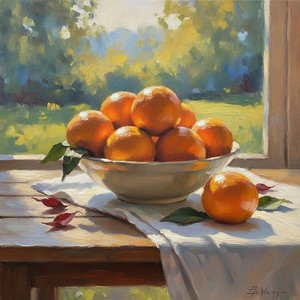
Sun-Drenched Citrus: The Vibrant Beauty of Oranges in Impressionist Masterpieces
Embark on a sensory journey through Impressionist masterpieces. Discover how Renoir and Cézanne captured the vibrant light and luscious textures of sun-drenched oranges in exquisite still life paintings designed to inspire and transform your home.

Modern Soul, Timeless Light: Bringing the Magic of Impressionist Masterpieces into Contemporary Interiors
Discover how to infuse contemporary spaces with the luminous magic of Impressionism. From Monet's light to Renoir's warmth, learn expert tips for styling hand-painted masterpieces and custom art reproductions in your modern home.

The Luminous Hallway: Transforming Your Home with the Ethereal Magic of Impressionist Masterpieces
Transform your hallways with the luminous beauty of Impressionist masterpieces. Discover expert tips on selecting Monet-inspired palettes and multi-panel landscapes to create a breathtaking, light-filled gallery walk in your home. Elevate your space with timeless, hand-painted elegance.
Explorez des œuvres d'art classées par thèmes, styles et caractéristiques.


