


 Aperçu en situation
 Partager
 Partager
 Détails
 Guide imprimable

 Télécharger
 Articles similaires
 Radiographie
 Voir le diaporama
 Statistiques
Chamouni, Rocks and Vegetation


John Ruskin's 'Chamouni, Rocks and Vegetation' (1854) is a breathtaking watercolor depicting a mountainous alpine scene dominated by rocky cliffs and lush plant life. Executed in the style of Millais’ portrait of Ruskin, it exemplifies Ruskin’s championing of naturalism and represents a pivotal piece within his artistic legacy.
 Afficher la suite
Découvrez John Ruskin (1819-1900), polymathe victorien, critique d'art & penseur social ! Explorez ses paysages, analyses architecturales et essais influents sur la nature, la beauté & la société.
Giclées et impressions d'art
Impressions giclées ou sur toile de qualité musée, avec une production rapide et des finitions au choix. ( Acheter la peinture faite à la main Passer au format image numérique)




P118B €10

P118H €10

P118W €10

P438Z €10

P508JH €12

P508YH €12

P805H €10

P805Z €10

P919BZ €10

P919G €10

P919XJ €10

P959ZH €10

P968JZ €12

W106C €8

W218G €10

W218JH €8

W218Y €10

W307PJ €10

W316G €10

W316PJ €8

W316Y €10

W398PJ €8

W4111J €10

W500HY €15

W500JH €15

W692G €12

W849H €8

W940BG €15

W953PJ €8




Format standard
personnalisé
CM
INCH
Choisissez parmi nos formats prédéfinis qui respectent les proportions originales de l’œuvre.
Loading sizes...

largeur
hauteur
Saisissez la largeur et la hauteur souhaitées pour qu'elles s'adaptent à votre cadre ou à votre mur. Une impression ne peut être que découpée, elle ne peut jamais être agrandie au-delà de l'image originale ; ainsi, un format de forme différente entraînera la perte d'une partie de l'image. Nous vous envoyons une maquette numérique pour approbation avant toute impression. L'image présentée sur cette page ne montre pas le recadrage réel — seule la maquette le permet.
Livraison dans le monde entier () en 2 semaines au lieu des 4/5 semaines habituelles. (22 octobre)

Livraison express gratuite dans le monde entier

Toile de lin de haute qualité

Assurance transport complète

Garantie de remboursement des droits de douane

Garantie de fidélité des couleurs

Garantie de retour de 100 jours (uniquement en cas de défaut)

Garantie de remboursement à 100%

Tarifs dégressifs sur quantité
 L'option verre n'est disponible que pour les dimensions inférieures à 110 cm.

Chamouni, Rocks and Vegetation
Giclées et impressions d'art
Format de la reproduction
-


Prix total final
€ 61
Ruskin’s Alpine Reverie: A Study in Texture and Moral Vision
John Ruskin's "Chamouni, Rocks and Vegetation," painted in 1854, stands as a testament to the Pre-Raphaelite movement’s fascination with capturing the sublime beauty of the natural world—a pursuit inextricably linked to ethical contemplation. More than just a landscape depiction, it embodies Ruskin’s profound belief that art should serve as a conduit for moral enlightenment, mirroring his broader philosophical stance on humanity's relationship with God and creation.- Subject Matter: The painting portrays the towering granite peaks of Mont Blanc (Chamouni), bathed in diffused sunlight—a quintessential Alpine vista meticulously rendered by Ruskin’s hand.
- Style & Technique: Ruskin championed a style characterized by painstaking detail and luminous color, prioritizing observation over idealized representation. He employed watercolor on paper, layering thin washes to build up texture and capturing the subtle nuances of light and shadow. The artist's deliberate brushstrokes convey a sense of immediacy and reverence for the grandeur of the mountain landscape.
- Historical Context: Created during Ruskin’s formative years as an art critic and intellectual, “Chamouni” reflects his burgeoning interest in geology and his conviction that understanding the physical world illuminates spiritual truths. It aligns perfectly with Millais's ambitious portrait of Ruskin at Glenfinlas, commissioned shortly after—a visual embodiment of Ruskin’s commitment to portraying nature with uncompromising honesty.
- Symbolism: The jagged rocks symbolize resilience and permanence against the relentless forces of time and decay – mirroring Ruskin’s broader moral concerns about confronting mortality and embracing virtue. The sparse vegetation represents the delicate balance between beauty and fragility, prompting viewers to consider humanity's responsibility for safeguarding the natural environment.
- Emotional Impact: Viewing “Chamouni” evokes a feeling of awe and contemplation—a desire to reconnect with the sublime grandeur of God’s creation. Ruskin aimed not merely to depict a mountain scene but to inspire a deeper appreciation for beauty, truth, and moral integrity—goals that continue to resonate powerfully with audiences today.
Detailed Examination: Texture and Color Palette
Ruskin's masterful watercolor technique is evident in the meticulous layering of washes that create an astonishingly realistic depiction of rock formations. The artist painstakingly captures the variations in tone and texture—from the rough granite surfaces to the smoother patches where lichen clings to the stone—demonstrating a dedication to observation unparalleled for his time. Furthermore, the color palette—dominated by muted blues, greens, and yellows—reflects the atmospheric conditions prevalent during Mont Blanc’s summers—a subtle yet crucial element in conveying Ruskin's vision of natural beauty.Connections to Millais’ Glenfinlas Portrait
The painting shares a striking stylistic kinship with Millais’ celebrated portrait of Ruskin at Glenfinlas, completed the following year. Both artists prioritized capturing the essence of their subject—Ruskin himself—within a landscape setting that served as a backdrop for intellectual and spiritual reflection. This deliberate juxtaposition underscores Ruskin's conviction that art should illuminate moral truths alongside aesthetic splendor—a principle that continues to inform artistic endeavors across disciplines.Legacy & Enduring Relevance
“Chamouni, Rocks and Vegetation” remains an influential work of art, anticipating the burgeoning interest in environmentalism and sustainability that would characterize the latter half of the 19th century. Ruskin’s insistence on portraying nature with uncompromising honesty—a stance rooted in his profound moral sensibility—continues to inspire artists and thinkers today—serving as a timeless reminder of the transformative power of beauty and contemplation.Questions et réponses
Quelle ambiance et quelle émotion «Chamouni, Rocks and Vegetation» de John Ruskin exprime-t-il ?
L'atmosphère qui se dégage de «Chamouni, Rocks and Vegetation» de John Ruskin est Serene, et sa tonalité émotionnelle est Tranquil.
Où puis-je acheter une image numérique de «Chamouni, Rocks and Vegetation» de John Ruskin ?
Pour obtenir un fichier numérique de «Chamouni, Rocks and Vegetation» de John Ruskin, commandez un téléchargement d'image numérique haute résolution sur sa page Image numérique.
Quelle est la taille d'impression recommandée pour «Chamouni, Rocks and Vegetation» de John Ruskin ?
La taille d'impression recommandée pour «Chamouni, Rocks and Vegetation» de John Ruskin est Large.
Biographie de l'artiste
Premières années et éducation
John Ruskin, un polymathe anglais renommé, est né le 8 février 1819 à Londres, au Royaume-Uni. Son enfance a été façonnée par les influences contrastées de son père, John James Ruskin, et de sa mère, Margaret Cock. Cette dualité se refléterait plus tard dans ses divers intérêts et styles d'écriture. L’éducation précoce de Ruskin a eu lieu à la maison, sous la direction de ses parents et de tuteurs privés. Il a ensuite fréquenté King's College, Londres, où il s'est préparé à l'université d'Oxford. Cette base académique a jeté les bases de ses futures entreprises.Poursuites artistiques et littéraires
Les styles d’écriture et les formes littéraires de John Ruskin étaient aussi variés que ses intérêts. Il a écrit des essais, des traités, de la poésie, des conférences, des guides de voyage et même un conte de fées. Ses croquis et peintures détaillés de roches, de plantes, d'oiseaux, de paysages et de structures architecturales ont mis en valeur sa prouesse artistique. Son premier ouvrage majeur, Modern Painters (1843), a défendu le travail de J. M. W. Turner, en soulignant l'importance de la « vérité à la nature ». Cela a marqué le début de sa reconnaissance et de son influence généralisées sur l’art et la littérature du XIXe siècle.Œuvres notables et héritage
- Dawn, Coniston (Abbot Hall Art Gallery, Kendal, Royaume-Uni) - une peinture à l'eau mettant en valeur la capacité de Ruskin à capturer la beauté de la nature.
- Fors Clavigera (1871-1884) - une série de lettres aux travailleurs et aux ouvriers de Grande-Bretagne, soulignant ses préoccupations sociales et politiques.
Influences et développement
John Ruskin a été influencé par une variété de sources intellectuelles et artistiques. Son intérêt pour la nature et l'architecture gothique est évident dans ses écrits et ses peintures. Il était un critique virulent de l’industrialisation et plaidait pour un retour à des formes d'art plus simples et plus naturelles. Ses idées ont été influencées par les penseurs romantiques tels que William Wordsworth et Samuel Taylor Coleridge, ainsi que par les théories esthétiques de Johann Wolfgang von Goethe. Ruskin a développé une philosophie complexe de l’art qui mettait l’accent sur la vérité, la beauté et le lien entre l'art et la moralité.Signification historique
John Ruskin a eu une influence profonde sur le monde de l’art et de la pensée victorienne. Il est considéré comme un des critiques d'art les plus importants du XIXe siècle, et ses idées ont influencé les mouvements préraphaélites et Arts and Crafts. Son plaidoyer pour la préservation architecturale a contribué à sauver de nombreux bâtiments historiques en Grande-Bretagne. Ruskin était également un social réformateur passionné qui s’est efforcé d’améliorer les conditions de vie des travailleurs et de promouvoir l’éducation.Liens utiles depuis TopImpressionists.com
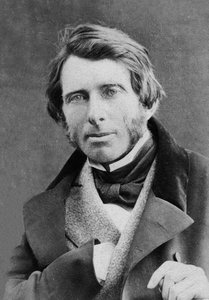
John Ruskin
1819 - 1900 , Royaume-Uni
En bref
- Artistic Movement Or Style: Préraphaélisme, critique d'art
- Artists Or Movements Influenced By This Artist: ['Préraphaélites']
- Artists Who Influenced This Artist: ['J. M. W. Turner']
- Date Of Birth: 8 février 1819
- Date Of Death: 1900
- Full Name: John Ruskin
- Nationality: Britannique
- Notable Artworks:
- Dawn, Coniston
- Fors Clavigera
- Place Of Birth (City And Country): Londres, Royaume-Uni
Articles connexes

The Pre-Raphaelite Brotherhood: Rediscovering Beauty, Romance, and Medieval Magic in Victorian Art
Embark on a journey through the Pre-Raphaelite Brotherhood. Discover the romantic symbolism, medieval magic, and radical beauty of Rossetti and Burne-Jones in this expert exploration of Victorian art history.