

 Aperçu en situation
 Envoyer
 Partager
 Détails de l'œuvre
 Guide
Guide

 Télécharger l'image
 Articles similaires
 Radiographie
 Diaporama
 Questions et réponses
 Statistiques
Trevi Fountain

- 35.0 x 50.0 cm


Capturing the grandeur of Rome's Baroque splendor, this 1841 painting by John Ruskin depicts the majestic Trevi Fountain with lifelike movement and light, inviting you to bring a piece of Italian history into your home.
 Lire la suite
Découvrez John Ruskin (1819-1900), polymathe victorien, critique d'art & penseur social ! Explorez ses paysages, analyses architecturales et essais influents sur la nature, la beauté & la société.
Giclées et impressions d'art
Impressions giclées ou sur toile de qualité musée, avec une production rapide et des finitions au choix. ( Commander la reproduction peinte à la main Passer au format numérique)




P118B €10

P118H €10

P118W €10

P438Z €10

P508JH €12

P508YH €12

P805H €10

P805Z €10

P919BZ €10

P919G €10

P919XJ €10

P959ZH €10

P968JZ €12

W106C €8

W218G €10

W218JH €8

W218Y €10

W307PJ €10

W316G €10

W316PJ €8

W316Y €10

W398PJ €8

W4111J €10

W500HY €15

W500JH €15

W692G €12

W849H €8

W940BG €15

W953PJ €8




Format standard
sur mesure
CM
INCH
Choisissez parmi nos formats prédéfinis qui respectent les proportions originales de l’œuvre.
Loading sizes...

largeur
hauteur
Saisissez la largeur et la hauteur souhaitées pour qu'elles s'adaptent à votre cadre ou à votre mur. Une impression peut être recadrée, mais jamais agrandie au-delà de l'image originale ; ainsi, un format de forme différente entraînera la perte d'une partie de l'image. Nous vous envoyons une maquette numérique pour approbation avant toute impression. L'image présentée sur cette page ne montre pas le recadrage réel — seule la maquette le permet.
Livraison dans le monde entier () en 2 semaines au lieu des 4/5 semaines habituelles. (6 novembre)

Livraison express gratuite dans le monde entier

Toile de lin de qualité supérieure

Assurance transport complète

Garantie de remboursement des droits de douane

Garantie de fidélité des couleurs

Politique de retour de 100 jours (uniquement en cas de défaut)

Garantie de remboursement à 100%

Offre de tarifs dégressifs
 L'option verre n'est disponible que pour les dimensions inférieures à 110 cm.

Trevi Fountain
Giclées et impressions d'art
Format de la reproduction
-


Prix total
€ 62
A Vision of Roman Grandeur
In this evocative depiction of the Trevi Fountain, we are transported to the heart of Rome during a pivotal moment in the nineteenth century. The painting captures the monumental Baroque masterpiece not merely as a static architectural feat, but as a living, breathing entity. Through John Ruskin’s observant eye, the fountain emerges from its stone surroundings with a sense of profound vitality. The composition is anchored by the majestic presence of Neptune and his companions, their sculpted forms rising triumphantly above the cascading waters. As light dances across the turbulent surfaces of the pools, the viewer is invited to witness the interplay between the permanence of classical sculpture and the fleeting, rhythmic motion of the gushing torrents. This work serves as a window into an era where the grandeur of antiquity met the romantic sensibilities of the Victorian age.
The artist’s technique breathes life into the very elements of water and stone. There is a remarkable fluidity in the way the spray is rendered, creating a sense of mist and movement that seems to drift off the canvas. The inclusion of scattered birds adds a layer of spontaneous naturalism, breaking the formal rigidity of the architecture with traces of life and motion. For the discerning collector or interior designer, this piece offers a sophisticated balance of structural strength and ethereal lightness. The way the light catches the ripples in the water suggests a depth that draws the eye inward, making it an ideal focal point for a room that seeks to evoke elegance, tranquility, and a sense of historical discovery.
Historical Resonance and Emotional Depth
To understand this work is to understand the journey of its creator. Painted during a period of personal reflection and physical frailty, Ruskin’s encounter with the Trevi Fountain was marked by a complex emotional duality. While he famously harbored a preference for the intricate details of Gothic architecture over the sweeping drama of the Baroque, his sketches of Rome reveal an undeniable fascination with the power of the elements. In this painting, one can sense the artist's personal connection to the scene; he describes feeling lost among the mimicked rocks and deep pools, almost as if transported back to the familiar, rugged landscapes of his native Cumberland. This subtle infusion of personal nostalgia into a Roman landscape lends the artwork an intimate, soulful quality that transcends mere architectural documentation.
Beyond its aesthetic beauty, the painting carries a profound symbolic weight. The Trevi Fountain, with its themes of abundance and the mastery of water, represents the eternal cycle of nature and human ingenuity. The presence of Neptune, the god of the sea, serves as a reminder of the untamable forces of the world, even when harnessed within the confines of a city square. For those looking to adorn a space with art that inspires contemplation, this reproduction offers more than just decoration; it provides a narrative of resilience and beauty. It is a piece that invites the viewer to pause, to listen to the imagined roar of the water, and to find a moment of sublime peace amidst the complexities of modern life.
Questions et réponses
L'œuvre « Trevi Fountain » est-elle dans le domaine public ?
Concernant les droits d'auteur, « Trevi Fountain » est dans le dans le domaine public - ses droits d'auteur sont tombés dans le domaine public.
«Trevi Fountain» est-il une œuvre célèbre du Romanticism ?
« Trevi Fountain » est répertorié comme étant Iconic parmi les œuvres du Romanticism dans le catalogue.
Combien de personnes consultent « Trevi Fountain » ?
Les statistiques concernant «Trevi Fountain» de John Ruskin sont disponibles sur la page Statistiques de l'œuvre : nombre de visites mensuelles, consultations des autres œuvres de l'artiste, ainsi que la répartition des visiteurs récents par pays et par langue.
Biographie de l'artiste
Premières années et éducation
John Ruskin, un polymathe anglais renommé, est né le 8 février 1819 à Londres, au Royaume-Uni. Son enfance a été façonnée par les influences contrastées de son père, John James Ruskin, et de sa mère, Margaret Cock. Cette dualité se refléterait plus tard dans ses divers intérêts et styles d'écriture. L’éducation précoce de Ruskin a eu lieu à la maison, sous la direction de ses parents et de tuteurs privés. Il a ensuite fréquenté King's College, Londres, où il s'est préparé à l'université d'Oxford. Cette base académique a jeté les bases de ses futures entreprises.Poursuites artistiques et littéraires
Les styles d’écriture et les formes littéraires de John Ruskin étaient aussi variés que ses intérêts. Il a écrit des essais, des traités, de la poésie, des conférences, des guides de voyage et même un conte de fées. Ses croquis et peintures détaillés de roches, de plantes, d'oiseaux, de paysages et de structures architecturales ont mis en valeur sa prouesse artistique. Son premier ouvrage majeur, Modern Painters (1843), a défendu le travail de J. M. W. Turner, en soulignant l'importance de la « vérité à la nature ». Cela a marqué le début de sa reconnaissance et de son influence généralisées sur l’art et la littérature du XIXe siècle.Œuvres notables et héritage
- Dawn, Coniston (Abbot Hall Art Gallery, Kendal, Royaume-Uni) - une peinture à l'eau mettant en valeur la capacité de Ruskin à capturer la beauté de la nature.
- Fors Clavigera (1871-1884) - une série de lettres aux travailleurs et aux ouvriers de Grande-Bretagne, soulignant ses préoccupations sociales et politiques.
Influences et développement
John Ruskin a été influencé par une variété de sources intellectuelles et artistiques. Son intérêt pour la nature et l'architecture gothique est évident dans ses écrits et ses peintures. Il était un critique virulent de l’industrialisation et plaidait pour un retour à des formes d'art plus simples et plus naturelles. Ses idées ont été influencées par les penseurs romantiques tels que William Wordsworth et Samuel Taylor Coleridge, ainsi que par les théories esthétiques de Johann Wolfgang von Goethe. Ruskin a développé une philosophie complexe de l’art qui mettait l’accent sur la vérité, la beauté et le lien entre l'art et la moralité.Signification historique
John Ruskin a eu une influence profonde sur le monde de l’art et de la pensée victorienne. Il est considéré comme un des critiques d'art les plus importants du XIXe siècle, et ses idées ont influencé les mouvements préraphaélites et Arts and Crafts. Son plaidoyer pour la préservation architecturale a contribué à sauver de nombreux bâtiments historiques en Grande-Bretagne. Ruskin était également un social réformateur passionné qui s’est efforcé d’améliorer les conditions de vie des travailleurs et de promouvoir l’éducation.Liens utiles depuis TopImpressionists.com
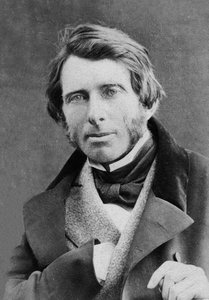
John Ruskin
1819 - 1900 , Royaume-Uni
L'essentiel de l'artiste
- Artistic Movement Or Style: Préraphaélisme, critique d'art
- Artists Or Movements Influenced By This Artist: ['Préraphaélites']
- Artists Who Influenced This Artist: ['J. M. W. Turner']
- Date Of Birth: 8 février 1819
- Date Of Death: 1900
- Full Name: John Ruskin
- Nationality: Britannique
- Notable Artworks:
- Dawn, Coniston
- Fors Clavigera
- Place Of Birth (City And Country): Londres, Royaume-Uni
Articles connexes

Drama and Light: Discover the Captivating Grandeur of Baroque Art
Immerse yourself in the dramatic splendor of Baroque art. Explore the profound impact of light, shadow, and the Counter-Reformation through an expert historical lens, celebrating the masters who defined an era of unparalleled grandeur and emotional intensity.
Explorez des œuvres d'art classées par thèmes, styles et caractéristiques.
