Aperçu en situation
 Partager
 Partager
 Détails
 Guide imprimable

 Télécharger
 Articles similaires
 Radiographie
 Voir le diaporama
 Statistiques
Abraham
 Huile sur panneau
- Early Renaissance
 1408
1408 66.0 x 43.0 cm
 Metropolitan Museum of Art
Explore Lorenzo Monaco’s ‘Abraham’ (1408) – a stunning Early Renaissance painting of faith & devotion. Tempera on wood, rich colors, and dramatic lighting await! #arthistory #renaissance
 Afficher la suite
Découvrez Lorenzo Monaco (1370-1425), peintre siennois mariant élégance gothique et innovation de la Renaissance. Manuscrits illuminés & art spirituel à explorer.
Reproduction à l'huile faite à la main
Huile sur toile peinte à la main, avec cadre et dimensions personnalisés, réalisée sur commande par nos artistes. ( Passer au format impression Passer au format image numérique)




P118B €10

P118H €10

P118W €10

P438Z €10

P508JH €12

P508YH €12

P805H €10

P805Z €10

P919BZ €10

P919G €10

P919XJ €10

P959ZH €10

P968JZ €12

W106C €8

W218G €10

W218JH €8

W218Y €10

W307PJ €10

W316G €10

W316PJ €8

W316Y €10

W398PJ €8

W4111J €10

W500HY €15

W500JH €15

W692G €12

W849H €8

W940BG €15

W953PJ €8




Format standard
personnalisé
CM
INCH
Choisissez parmi nos formats prédéfinis qui respectent les proportions originales de l’œuvre.
Loading sizes...

largeur
hauteur
Saisissez la largeur et la hauteur souhaitées, pour s'adapter à votre cadre ou à votre mur. Cette œuvre est peinte à la main ; ainsi, pour un format de forme différente, l'artiste peut peindre un peu plus autour du tableau ou réduire légèrement les bords — c'est vous qui choisissez. Nous vous envoyons une maquette numérique pour approbation avant que la peinture ne commence. L'image présentée sur cette page ne reflète pas le résultat réel — seule la maquette le fait.
Exemples de personnalisation possibles : remplacer un visage par la photo du client ; ajouter un animal de compagnie (par exemple, remplacer un chat par un chien) ; inclure un message caché en arrière-plan ; modifier le paysage ou les éléments de l'arrière-plan.
Après la commande, l’équipe TopImpressionists.com contactera le client par e-mail pour recueillir ses instructions et lui fournira une maquette d’aperçu
Après la commande, l’équipe TopImpressionists.com contactera le client par e-mail pour recueillir ses instructions et lui fournira une maquette d’aperçu
Livraison dans le monde entier () en 3 à 4 semaines au lieu des 5 semaines habituelles. (20 octobre). Aucun compromis sur la qualité.

Livraison express gratuite dans le monde entier

Toile de lin de haute qualité

Assurance transport complète

Garantie de remboursement des droits de douane

Garantie de fidélité des couleurs

Garantie de retour de 100 jours (uniquement en cas de défaut)

Garantie de remboursement à 100%

Tarifs dégressifs sur quantité
 L'option verre n'est disponible que pour les dimensions inférieures à 110 cm.

Abraham
Technique de reproduction
Format de la reproduction
-


Prix total final
€ 256
A Portrait of Faith: Lorenzo Monaco’s “Abraham”
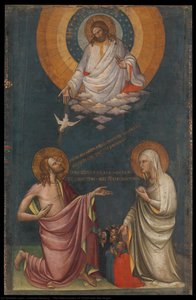
Lorenzo Monaco's "Abraham," painted in 1408, is more than just a depiction of a biblical scene; it’s a profound meditation on faith, devotion, and the enduring relationship between humanity and divinity. Executed during a pivotal moment in artistic history – bridging the Gothic sensibilities of the Trecento with the burgeoning optimism of the Quattrocento – this work offers a rare glimpse into the mind of a master who seamlessly blended monastic contemplation with unparalleled artistic skill. The painting’s immediate impact lies in its arresting composition: an elderly man, richly adorned and seated upon a throne, receives the reverence of a kneeling child. This pairing immediately evokes the iconic imagery of Saint Joseph with the infant Jesus, a central narrative within Christian iconography, yet Monaco elevates this familiar scene through his masterful execution and deeply considered symbolism.
- A Renaissance Vision: The work’s vertical orientation and dramatic lighting – emanating from above and behind the figures – firmly establish it within the stylistic trends of Early Italian Renaissance art.
- Technical Brilliance: Monaco's command of tempera on wood panel is evident in the textured surface, achieved through meticulous layering of paint and visible brushstrokes. This technique lends a remarkable sense of physicality to the drapery and figures, imbuing them with an almost tangible presence.
The Symbolism of Authority and Reverence
Lorenzo Monaco’s choice of subject matter is laden with symbolic weight. The elderly man, identified as Abraham, embodies authority and protection, symbolized by his elaborate pink robes, ornate crown, and the feather duster he holds – a gesture that speaks to both guardianship and divine favor. His posture, seated upon a throne, reinforces this sense of power and leadership. Conversely, the kneeling child represents reverence, humility, and the nascent faith being nurtured under Abraham’s guidance. The gold background, a recurring motif in Renaissance art, elevates the scene to a realm of sacred grandeur, highlighting the central figures and creating an atmosphere of profound spirituality.
A Monk's Artistic Legacy
Understanding Lorenzo Monaco requires acknowledging his unique position as a monk-artist. His commitment to the Camaldolese order profoundly shaped his artistic vision, imbuing his work with an introspective quality rarely found in secular art of the time. This spiritual devotion is palpable in the painting’s serene atmosphere and the carefully considered symbolism. Monaco's apprenticeship under masters like Giotto instilled a foundation of narrative clarity and emotional resonance, but it was his monastic life that truly defined his artistic identity, allowing him to translate his faith into a timeless masterpiece. The subtle details – the folds of drapery rendered with meticulous precision, the expressive quality of the figures’ faces – all contribute to a work that transcends mere representation, becoming a powerful testament to human spirituality.
Dimensions and Historical Context
This exceptional reproduction measures 66 x 43 cm, offering an intimate scale for contemplation. Painted in 1408, “Abraham” stands as a crucial link between the Gothic and Renaissance artistic traditions. It represents a moment of transition, where artists were beginning to embrace new techniques – such as linear perspective and chiaroscuro – while retaining the emotional depth and narrative richness that characterized earlier works. This piece is not simply a beautiful image; it’s a window into the soul of a master artist and a profound meditation on faith, humanity, and the enduring power of art.
Questions et réponses
Quelle est la luminance de «Abraham» de Lorenzo Monaco ?
La luminance enregistrée pour «Abraham» de Lorenzo Monaco est de Luminosité douce.
À quel âge Lorenzo Monaco a-t-il créé « Abraham » ?
Lorenzo Monaco avait 38 ans lors de la création de « Abraham » en 1408. L'âge est calculé à partir de l'année de naissance de l'artiste, 1370.
Où puis-je acheter une image numérique de «Abraham» de Lorenzo Monaco ?
Une image numérique de «Abraham» de Lorenzo Monaco peut être achetée sur sa page Image numérique : un téléchargement d'image numérique haute résolution.
Biographie de l'artiste
Première Vie et Formation
- Né: Sienne, Italie (c. 1370)
- Décédé: c. 1425
- On en sait peu sur la première vie de Lorenzo Monaco, à l'exception du fait qu'il a été apprenti à Florence.
- Il a été influencé par les œuvres de Giotto et de ses disciples, Spinello Aretino et Agnolo Gaddi. Cette exposition a façonné son développement artistique.
Carrière Artistique et Style
- En 1390, Lorenzo est entré au monastère camaldule de Santa Maria degli Angeli, devenant connu sous le nom de « Laurent l'ermite ».
- Ses premières œuvres (années 1390) montrent une forte influence du style gothique international, aux côtés d'influences provenant de Lorenzo Ghiberti et Gherardo Starnina.
- Le style de Monaco se caractérise par :
- Un linéaire tendu
- Une gamme chromatique froide initialement
- Plus tard, une adoption d'éléments gothiques internationaux
- Des figures allongées avec des draperies sinueuses
- Des bords nets et des couleurs vives (or et lapis-lazuli)
- Des gestes suggérés et un sentiment d'espace minimisé
- Il dépeint constamment des images avec une forte valeur spirituelle, souvent détachées du réalisme.
Œuvres Majeures
- Pietà : Exposée à la Galleria dell'Accademia, Florence – Démontre une ligne nerveuse et une tension émotionnelle.
- Coronation de la Vierge : Aujourd’hui à l’Uffizi – Présente un grand nombre de saints aux formes sinueuses et aux couleurs brillantes.
- Polyptyque de Monteoliveto : À la Galleria dell'Accademia – Expose une spiritualité qui préfigure Fra Angelico.
- Adoration des Mages (1420-1422) : Les raccourcis apparaissent surréalistes en raison de l’absence de perspective géométrique, mais maintiennent une grande qualité picturale.
- Histoires de la Vierge dans la chapelle Bartolini Salimbeni : L'une de ses rares fresques.
Influences et Héritage
- Le travail de Monaco a été influencé par Giotto, Spinello Aretino, Agnolo Gaddi, Lorenzo Ghiberti et Gherardo Starnina.
- Il est resté largement inaffecté par les innovations de Masaccio et Filippo Brunelleschi, maintenant son style distinctif.
- Giorgio Vasari a inclus une biographie de Monaco dans ses « Vies », notant sa mort d'une infection non identifiée.
- Malgré des informations biographiques limitées, les contributions de Lorenzo Monaco à l’art gothique tardif-renaissance précoce sont significatives. Son mélange unique de styles et son objectif spirituel ont laissé un impact durable sur les artistes ultérieurs.
Signification Historique
- Considéré comme le dernier important représentant du style Giotto avant la révolution de la Renaissance.
- A comblé le fossé entre les traditions gothiques tardives et les principes artistiques émergents de la Renaissance.
- Son insistance sur la spiritualité et les formes stylisées représentent une esthétique distincte dans la peinture florentine.

Lorenzo Monaco
1370 - 1425 , Italie
En bref
- Artistic Movement Or Style: Gothique tardif-Renaissance
- Artists Or Movements Influenced By This Artist:
- Masaccio
- Brunelleschi
- Artists Who Influenced This Artist:
- Giotto
- Spinello Aretino
- Agnolo Gaddi
- Date De Décès: c. 1425
- Date De Naissance: c. 1370
- Full Name: Lorenzo Monaco
- Lieu De Naissance: Sienne, Italie
- Nationalité: Italienne
- Notable Artworks:
- Pietà
- Coronation de la Vierge
- Adoration des Mages
Articles connexes

Mastering Devotion: The Most Iconic Depictions of Saint Jerome in Art History
Explore the profound iconography of Saint Jerome through art history's most iconic masterpieces. From Renaissance serenity to Baroque drama, discover how legendary painters captured divine devotion in breathtaking oil paintings and fine art reproductions.

Top 10 des Tableaux Célèbres Dominés par le Rose Pâle : Art & Décor Raffiné
Plongez dans la douceur des 10 tableaux les plus célèbres dominés par le rose pâle. Découvrez Monet, Renoir et d'autres maîtres de l'impressionnisme. Inspirez votre décoration intérieure avec ! Explorez notre collection en ligne.

Sacred Narratives Embodied: A Comprehensive Exploration of Religious Iconography in Art History
Explore the rich history of religious iconography in art! Discover symbolism, movements & masterpieces from Byzantine to Renaissance periods. Expert insights for collectors and enthusiasts at TopImpressionists.

Sacred Narratives on Canvas: Exploring Religious Painting Through History
Explore the rich history of religious painting with TopImpressionists.com! Discover iconic artworks, symbolism & techniques from antiquity to the Renaissance. Enhance your art appreciation today.

Divine Masterpieces: Exploring the Power and Beauty of Saint Artworks
Discover the profound beauty of Saint Artworks. Explore the history, symbolism, and luminous mastery of Renaissance religious masterpieces through an expert art-historical lens.
Explorez des œuvres d'art classées par thèmes, styles et caractéristiques.