Aperçu en situation
 Envoyer
 Partager
 Détails de l'œuvre
 Guide
Guide

 Télécharger l'image
 Articles similaires
 Radiographie
 Diaporama
 Questions et réponses
 Statistiques
Helene de Septeuil


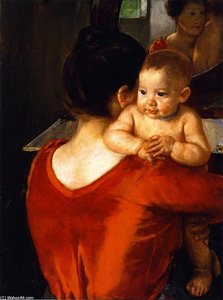
A tender moment of maternal love unfolds in this Impressionist portrait by Mary Cassatt featuring a mother cradling her child, inviting you to bring this warm and nurturing masterpiece into your private collection.
 Lire la suite
Découvrez Mary Cassatt (1844-1926), peintre impressionniste américaine ! Ses œuvres intimes célèbrent les femmes, la maternité et la vie moderne. Admirez ses chefs-d'œuvre !
Giclées et impressions d'art
Impressions giclées ou sur toile de qualité musée, avec une production rapide et des finitions au choix. ( Commander la reproduction peinte à la main Passer au format numérique)




P118B €10

P118H €10

P118W €10

P438Z €10

P508JH €12

P508YH €12

P805H €10

P805Z €10

P919BZ €10

P919G €10

P919XJ €10

P959ZH €10

P968JZ €12

W106C €8

W218G €10

W218JH €8

W218Y €10

W307PJ €10

W316G €10

W316PJ €8

W316Y €10

W398PJ €8

W4111J €10

W500HY €15

W500JH €15

W692G €12

W849H €8

W940BG €15

W953PJ €8




Format standard
sur mesure
CM
INCH
Choisissez parmi nos formats prédéfinis qui respectent les proportions originales de l’œuvre.
Loading sizes...

largeur
hauteur
Saisissez la largeur et la hauteur souhaitées pour qu'elles s'adaptent à votre cadre ou à votre mur. Une impression peut être recadrée, mais jamais agrandie au-delà de l'image originale ; ainsi, un format de forme différente entraînera la perte d'une partie de l'image. Nous vous envoyons une maquette numérique pour approbation avant toute impression. L'image présentée sur cette page ne montre pas le recadrage réel — seule la maquette le permet.
Livraison dans le monde entier () en 2 semaines au lieu des 4/5 semaines habituelles. (7 novembre)

Livraison express gratuite dans le monde entier

Toile de lin de qualité supérieure

Assurance transport complète

Garantie de remboursement des droits de douane

Garantie de fidélité des couleurs

Politique de retour de 100 jours (uniquement en cas de défaut)

Garantie de remboursement à 100%

Offre de tarifs dégressifs
 L'option verre n'est disponible que pour les dimensions inférieures à 110 cm.

Helene de Septeuil
Giclées et impressions d'art
Format de la reproduction
-


Prix total
€ 62
A Tender Encounter in Impressionist Light
In the quiet, luminous realm of Mary Cassatt’s Helene de Septeuil, we are invited into a moment of profound intimacy that transcends the mere depiction of figures. The painting serves as a breathtaking window into the private world of maternal affection, capturing a tender dialogue between a mother and her infant. As the woman cradles the child close to her chest, there is an unmistakable sense of sanctuary within the frame. The baby, positioned with a delicate curiosity, gazard up at his mother, eyes wide with the silent anticipation of discovery. This is not merely a portrait; it is a rhythmic dance of gaze and touch, rendered with the soft, breathing light that defined the Impressionist movement.
The composition is masterfully balanced, drawing the viewer’s eye through the elegant contours of the woman's silhouette. Her attire, rich in texture and understated elegance, speaks to a refined social standing, yet it is her posture—the protective curve of her arms and the gentle tilt of her head—that provides the painting's true emotional weight. A subtle necklace catches the light, adding a touch of sophisticated grace that complements the soft textures of her hat and dress. Through Cassatt’s expert use of color and form, the physical boundaries between mother and child seem to blur, creating a singular, unified essence of nurturing love.
The Mastery of the Impressionist Touch
Technically, Helene de Septeuil exemplifies the brilliance of Mary Cassatt’s approach to light and atmosphere. Eschewing the rigid, heavy outlines of traditional academic portraiture, Cassatt employs a more fluid, painterly technique that allows light to dance across the surfaces of fabric and skin. The brushwork is deliberate yet soft, creating a sense of movement and vitality that makes the scene feel as though it were captured in a fleeting, precious second of time. This mastery of texture—from the delicate smoothness of the infant's cheek to the structured elegance of the mother's hat—demonstrates why Cassatt was revered alongside legends like Degas and Morisot.
For the discerning collector or interior designer, this piece offers a unique opportunity to introduce a sense of warmth and historical depth into a living space. The painting does not demand attention through loud colors or jarring subjects; rather, it commands the room through its quiet dignity and emotional resonance. It possesses an enduring quality that complements both classical and contemporary decor, acting as a focal point of serenity. To possess a reproduction of such a work is to bring a piece of late 19th-century Parisian elegance into the modern home, offering a constant reminder of the beauty found in life's most intimate connections.
A Legacy of Domestic Grace
To understand the soul of this artwork, one must look to Cassatt’s place within the history of art. As an American expatriate who became a cornerstone of the French Impressionist circle, Cassatt revolutionized the way the domestic sphere was viewed by the art world. While her contemporaries often focused on landscapes or bustling city streets, Cassatt found the extraordinary within the ordinary. She elevated the private bonds of women and children to the level of high art, stripping away sentimentality to reveal the psychological depth and strength inherent in motherhood.
In Helene de Septeuil, we see the culmination of this lifelong dedication. The painting stands as a testament to her ability to capture the "modern" experience through the lens of domesticity—a modernism that is found not in machines or industry, but in the authentic, unadorned emotions of the human heart. For those seeking art that inspires empathy, peace, and a sense of timelessness, this work remains an incomparable masterpiece of the Impressionist era.
Questions et réponses
Quelle place occupe « Helene de Septeuil » parmi les thèmes récurrents de Mary Stevenson Cassatt ?
«Helene de Septeuil» dépeint woman, baby, child, hat, necklace, dress, tandis que les thèmes récurrents de Mary Stevenson Cassatt sont impressionist influences, motherhood and domesticity, intimate maternal bonds, women's private lives, french impressionist scene. La comparaison des deux montre comment l'œuvre s'inscrit dans la lignée des sujets habituels de l'artiste.
Puis-je visionner « Helene de Septeuil » sous forme de diaporama en plein écran ?
Un diaporama est disponible : la page Diaporama de «Helene de Septeuil» de Mary Stevenson Cassatt.
Où puis-je trouver des statistiques concernant «Helene de Septeuil» de Mary Stevenson Cassatt ?
La page Statistiques de «Helene de Septeuil» de Mary Stevenson Cassatt présente les statistiques de visites publiques : le nombre de visites mensuelles de cette œuvre, une comparaison avec les œuvres les plus consultées de l'artiste, ainsi que la provenance des visiteurs.
Biographie de l'artiste
Mary Stevenson Cassatt : Une Vie Dédiée à l'Impressionnisme et à la Représentation de la Féminité
- Née: 22 mai 1844, Allegheny City (aujourd’hui faisant partie de Pittsburgh), Pennsylvanie, États-Unis
- Décédée: 14 juin 1926, Château de Berneval, France
Mary Stevenson Cassatt fut une peintre et graveuse américaine majeure qui passa la plus grande partie de sa carrière en France. Née dans une famille aisée et culturellement ouverte d'origine huguenote française, elle reçut une éducation favorisant à la fois l'ambition artistique et les voyages internationaux – des expériences qui façonnèrent profondément son développement artistique. Sa mère, Katherine Kelso Johnston, joua un rôle important en encourageant le premier intérêt de Cassatt pour l’art.
Formation Précoce et Immersion Parisienne
- Premières Études: Cassatt commença à étudier la peinture à la Pennsylvania Academy of the Fine Arts à Philadelphie à l'âge de quinze ans. Malgré le scepticisme des instructeurs et des étudiants masculins, elle persévéra pendant plusieurs années d’études durant la guerre civile américaine (1861-1865).
- Déménagement à Paris (1866): Un moment décisif survint lorsque Cassatt déménagea à Paris en 1866. Elle étudia auprès de maîtres renommés de l'École des Beaux-Arts, dont Jean-Léon Gérôme. Cette immersion dans les cercles artistiques parisiens la conduisit vers le mouvement impressionniste naissant.
- Association avec Degas: Une relation cruciale se forma avec Edgar Degas, qui reconnut son talent et l'invita à exposer avec les Impressionnistes. Leur collaboration dépassa les expositions ; Degas l’encouragea à expérimenter des techniques de gravure, notamment la pointe sèche en couleur.
Style Artistique et Thèmes : Capturer la Vie Féminine Moderne
- Techniques Impressionnistes: Le style de Cassatt évolua pour adopter les caractéristiques de l'Impressionnisme – coups de pinceau visibles, emphase sur la lumière et la couleur, et une concentration sur la capture d’instants fugaces. Cependant, son travail conserva une clarté et une précision distinctes qui le différenciaient de certains de ses contemporains.
- Focus sur la Vie Domestique: Contrairement à de nombreux impressionnistes masculins qui représentaient la vie nocturne parisienne ou les paysages, Cassatt concentra son art sur la vie sociale et privée des femmes, en particulier des mères et des enfants. Elle dépeignit des scènes domestiques avec une intimité et une profondeur psychologique remarquable.
- Œuvres Notables: Parmi les œuvres clés illustrant son style figurent The Boating Party (1894), The Child's Bath (diverses versions), Little Girl in a Blue Armchair, et la série de gravures représentant des mères et des enfants.
- Influence du Japonisme: Cassatt fut profondément influencée par l’art japonais, en particulier les estampes *ukiyo-e*. Cette influence se manifeste dans ses compositions, son utilisation d'une perspective aplatie et ses choix de couleurs audacieuses.
Réalisations Majeures et Importance Historique
- "L'Une des Trois Grandes Dames": Cassatt est souvent reconnue comme l’une des « trois grandes dames » de l’Impressionnisme, aux côtés de Berthe Morisot et Marie Bracquemond.
- Impressionnisme Américain: Elle a joué un rôle essentiel dans le rapprochement entre l'art américain et européen, introduisant les idées impressionnistes auprès d'un public américain et contribuant de manière significative au développement de l’impressionnisme américain.
- Représentation des Femmes: Son travail offrait une représentation nuancée et compatissante de la vie des femmes à une époque où elles étaient souvent marginalisées ou stéréotypées dans l'art. Ses représentations de la maternité sont particulièrement célébrées pour leur honnêteté et leur profondeur émotionnelle.
- Présence Muséale: Ses œuvres se trouvent dans des musées prestigieux du monde entier, notamment l’Art Institute of Chicago (The Child’s Bath), la National Portrait Gallery à Londres (portrait par Degas) et de nombreux autres.
Pour Approfondir

Mary Stevenson Cassatt
1843 - 1926 , États-Unis d'Amérique
L'essentiel de l'artiste
- Artistes Influents: ['Jean-Léon Gérôme']
- Date De Naissance: 22 mai 1844
- Influence Sur Les Artistes: ['Henri-Edmond Cross']
- Lieu De Naissance: Allegheny City, États-Unis
- Mouvement Artistique: Impressionnisme
- Nationalité: Américaine
- Nom Complet: Mary Stevenson Cassatt
- Oeuvres Notables:
- Le Bateau", 1894
- Le Bain de l'enfant
- Petite fille au fauteuil bleu
- La Loge
- Dame à la table de thé
Articles connexes

10 chefs-d'œuvre impressionnistes qui ont révolutionné le paysage
Plongez dans l'éclat de l'impressionnisme. Explorez 10 chefs-d'œuvre de Monet, Van Gogh et Cézanne qui ont révolutionné la lumière et la couleur. Trouvez l'inspiration pour votre décor avec nos reproductions d'art de qualité musée. Découvrez tous les chefs-d'œuvre sur TopImpressionists.com.

10 chefs-d'œuvre impressionnistes qui ont révolutionné l'art
Plongez dans la lumière de l'impressionnisme. De Monet à Renoir, explorez 10 chefs-d'œuvre iconiques et trouvez l'inspiration pour votre décor avec nos reproductions d'art de qualité musée. Explorez la collection complète sur TopImpressionists.com.

Whimsical Wonders: Curating Impressionist Masterpieces for a Child's Sanctuary of Imagination
Transform your child's room into a sanctuary of wonder with hand-painted Impressionist reproductions. Discover how the soft light of Monet and Renoir can inspire imagination through bespoke, museum-quality oil paintings designed for the next generation of dreamers.

10 paysages impressionnistes iconiques qui ont révolutionné l'art
Explorez 10 chefs-d'œuvre de l'impressionnisme et la magie de Monet. Découvrez ces trésors sur TopImpressionists.com.

Eternal Bonds in Dappled Light: Capturing the Tender Warmth of Family Gatherings in Impressionist Masterpieces
Step into a world of dappled sunlight and tender connections. Explore how Impressionist masters like Renoir captured the warmth of family life. At TopImpressionists.com, we transform your cherished memories into exquisite, hand-painted oil masterpieces that celebrate eternal bonds.
Explorez des œuvres d'art classées par thèmes, styles et caractéristiques.