


 Aperçu en situation
 Partager
 Partager
 Détails
 Guide
Guide

 Télécharger
 Articles similaires
 Radiographie
 Voir le diaporama
 Statistiques
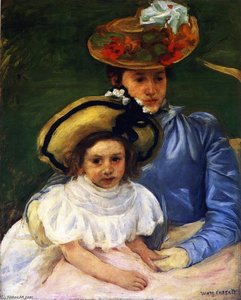
La Mère et l'Enfant dans la serre


Admirez « Mère et Enfant », une peinture poignante du XIXe siècle de Mary Cassatt illustrant l'amour maternel dans une serre. Explorez la beauté et les thèmes intemporels de l'impressionnisme.
 Afficher la suite
Découvrez Mary Cassatt (1844-1926), peintre impressionniste américaine ! Ses œuvres intimes célèbrent les femmes, la maternité et la vie moderne. Admirez ses chefs-d'œuvre !
Reproduction à l'huile faite à la main
Huile sur toile peinte à la main, avec cadre et dimensions personnalisés, réalisée sur commande par nos artistes. ( Passer au format impression Passer au format image numérique)




P118B $10

P118H $10

P118W $10

P438Z $10

P508JH $12

P508YH $12

P805H $10

P805Z $10

P919BZ $10

P919G $10

P919XJ $10

P959ZH $10

P968JZ $12

W106C $8

W218G $10

W218JH $8

W218Y $10

W307PJ $10

W316G $10

W316PJ $8

W316Y $10

W398PJ $8

W4111J $10

W500HY $15

W500JH $15

W692G $12

W849H $8

W940BG $15

W953PJ $8




Format standard
personnalisé
CM
INCH
Choisissez parmi nos formats prédéfinis qui respectent les proportions originales de l’œuvre.
Loading sizes...

largeur
hauteur
Vous pouvez saisir vos propres dimensions pour l'adapter à un cadre ou à un espace spécifique. Si la taille sélectionnée ne correspond pas aux proportions de l'image d'origine, nous recadrerons l'œuvre ou prolongerons la peinture avec des éléments peints à la main supplémentaires. Une maquette numérique vous sera envoyée pour approbation avant le début de la production.
Veuillez noter que l'aperçu à l'écran ne reflète pas le recadrage ou l'extension réels. Seule la maquette montrera fidèlement la composition finale.
Bien que des tailles personnalisées soient disponibles, nous vous recommandons de sélectionner une dimension dans la liste prédéfinie afin de préserver les proportions d'origine.
Exemples de personnalisation possibles : remplacer un visage par la photo du client ; ajouter un animal de compagnie (par exemple, remplacer un chat par un chien) ; inclure un message caché en arrière-plan ; modifier le paysage ou les éléments de l'arrière-plan.
Après la commande, l’équipe TopImpressionists.com contactera le client par e-mail pour recueillir ses instructions et lui fournira une maquette d’aperçu
Après la commande, l’équipe TopImpressionists.com contactera le client par e-mail pour recueillir ses instructions et lui fournira une maquette d’aperçu
Livraison dans le monde entier () en 3 à 4 semaines au lieu des 5 semaines habituelles. (23 septembre). Aucun compromis sur la qualité.

Livraison express gratuite dans le monde entier

Toile de lin de haute qualité

Assurance transport complète

Garantie de remboursement des droits de douane

Garantie de fidélité des couleurs

Garantie de retour de 100 jours (uniquement en cas de défaut)

Garantie de remboursement à 100%

Tarifs dégressifs sur quantité
 L'option verre n'est disponible que pour les dimensions inférieures à 110 cm.

La Mère et l'Enfant dans la serre
Technique de reproduction
Format de la reproduction
-


Prix total final
$ 269
A Moment of Intimacy: Exploring Mary Cassatt’s “Mother and Child in the Conservatory”
Mary Stevenson Cassatt's "Mother and Child in the Conservatory," painted in 1906, is more than just a portrait; it’s a tender distillation of maternal love and quiet domesticity—a cornerstone of American Impressionism. Within the dappled light filtering through the glass panes of a Victorian conservatory, Cassatt captures a fleeting, deeply personal scene: a woman, likely her sister Julia, cradling her infant daughter, nestled securely in her lap. The painting immediately draws the viewer into this intimate tableau, offering a rare glimpse into the private world of women and motherhood during a period often dominated by grand narratives of history and public life.
Cassatt’s artistic approach is distinctly Impressionistic, yet uniquely hers. She eschews the overtly dramatic poses and theatrical lighting favored by some of her contemporaries, opting instead for a subtle realism imbued with an atmospheric quality. The brushstrokes are loose and visible, creating a sense of movement and capturing the diffused light that streams through the conservatory’s windows. Notice how she employs broken color—small, distinct strokes of paint layered upon one another—to build up the forms and create a shimmering effect, particularly in the glass and foliage. This technique not only mimics the way light interacts with surfaces but also contributes to the painting's overall sense of luminosity and warmth.
The Conservatory as Symbol: A Sanctuary of Domesticity
The conservatory itself is crucial to understanding the work’s significance. It represents a carefully cultivated space—a refuge from the outside world, a microcosm of domestic tranquility. In the late 19th century, conservatories were symbols of wealth and refinement, offering a controlled environment for cultivating exotic plants and creating a miniature Eden within the home. Cassatt cleverly uses this architectural element to frame her subject, suggesting that motherhood itself is a kind of cultivation—a nurturing process that requires patience, care, and a deep connection to life’s most precious growth.
Furthermore, the conservatory's glass walls subtly reflect the figures within, creating an almost ethereal quality. This mirroring effect reinforces the sense of intimacy and highlights the bond between mother and child. The background, though slightly blurred, hints at other figures enjoying the space, suggesting a broader social context—a scene of domestic life unfolding amidst a backdrop of leisure and refinement.
Cassatt’s Focus on Women's Lives: A Revolutionary Perspective
Mary Cassatt was a pioneer in depicting women and children within the realm of fine art. At a time when artists primarily focused on historical events, mythological scenes, or portraits of wealthy men, she bravely turned her attention to the everyday lives of ordinary women—their relationships, their domestic routines, and their emotional experiences. “Mother and Child in the Conservatory” exemplifies this shift in perspective. It’s not a grand statement about heroism or national identity; it's simply a quiet observation of a mother’s love for her child – a subject rarely explored with such tenderness and honesty in art at the time.
Her work was often met with criticism, particularly from those who felt that depicting domestic scenes was beneath the dignity of fine art. However, Cassatt persisted, driven by a deep conviction that women’s experiences were worthy of artistic representation. She became an outspoken advocate for women's rights and used her art as a means of challenging societal norms and promoting greater understanding.
Emotional Resonance: A Timeless Portrait of Maternal Love
Despite its quiet simplicity, “Mother and Child in the Conservatory” possesses a profound emotional resonance. The woman’s gaze is directed slightly downward, suggesting a moment of absorption—a deep connection with her child. The baby's posture, nestled securely against her chest, conveys a sense of comfort, security, and complete trust. There’s no overt drama or sentimentality; instead, the painting communicates a feeling of serene contentment – a testament to the enduring power of maternal love.
Today, “Mother and Child in the Conservatory” continues to captivate viewers with its intimate portrayal of family life and its masterful use of light and color. It remains a poignant reminder of the beauty and significance of everyday moments—and a powerful symbol of Cassatt’s groundbreaking contribution to American art.
Œuvres similaires




Biographie de l'artiste
Mary Stevenson Cassatt : Une Vie Dédiée à l'Impressionnisme et à la Représentation de la Féminité
- Née: 22 mai 1844, Allegheny City (aujourd’hui faisant partie de Pittsburgh), Pennsylvanie, États-Unis
- Décédée: 14 juin 1926, Château de Berneval, France
Mary Stevenson Cassatt fut une peintre et graveuse américaine majeure qui passa la plus grande partie de sa carrière en France. Née dans une famille aisée et culturellement ouverte d'origine huguenote française, elle reçut une éducation favorisant à la fois l'ambition artistique et les voyages internationaux – des expériences qui façonnèrent profondément son développement artistique. Sa mère, Katherine Kelso Johnston, joua un rôle important en encourageant le premier intérêt de Cassatt pour l’art.
Formation Précoce et Immersion Parisienne
- Premières Études: Cassatt commença à étudier la peinture à la Pennsylvania Academy of the Fine Arts à Philadelphie à l'âge de quinze ans. Malgré le scepticisme des instructeurs et des étudiants masculins, elle persévéra pendant plusieurs années d’études durant la guerre civile américaine (1861-1865).
- Déménagement à Paris (1866): Un moment décisif survint lorsque Cassatt déménagea à Paris en 1866. Elle étudia auprès de maîtres renommés de l'École des Beaux-Arts, dont Jean-Léon Gérôme. Cette immersion dans les cercles artistiques parisiens la conduisit vers le mouvement impressionniste naissant.
- Association avec Degas: Une relation cruciale se forma avec Edgar Degas, qui reconnut son talent et l'invita à exposer avec les Impressionnistes. Leur collaboration dépassa les expositions ; Degas l’encouragea à expérimenter des techniques de gravure, notamment la pointe sèche en couleur.
Style Artistique et Thèmes : Capturer la Vie Féminine Moderne
- Techniques Impressionnistes: Le style de Cassatt évolua pour adopter les caractéristiques de l'Impressionnisme – coups de pinceau visibles, emphase sur la lumière et la couleur, et une concentration sur la capture d’instants fugaces. Cependant, son travail conserva une clarté et une précision distinctes qui le différenciaient de certains de ses contemporains.
- Focus sur la Vie Domestique: Contrairement à de nombreux impressionnistes masculins qui représentaient la vie nocturne parisienne ou les paysages, Cassatt concentra son art sur la vie sociale et privée des femmes, en particulier des mères et des enfants. Elle dépeignit des scènes domestiques avec une intimité et une profondeur psychologique remarquable.
- Œuvres Notables: Parmi les œuvres clés illustrant son style figurent The Boating Party (1894), The Child's Bath (diverses versions), Little Girl in a Blue Armchair, et la série de gravures représentant des mères et des enfants.
- Influence du Japonisme: Cassatt fut profondément influencée par l’art japonais, en particulier les estampes *ukiyo-e*. Cette influence se manifeste dans ses compositions, son utilisation d'une perspective aplatie et ses choix de couleurs audacieuses.
Réalisations Majeures et Importance Historique
- "L'Une des Trois Grandes Dames": Cassatt est souvent reconnue comme l’une des « trois grandes dames » de l’Impressionnisme, aux côtés de Berthe Morisot et Marie Bracquemond.
- Impressionnisme Américain: Elle a joué un rôle essentiel dans le rapprochement entre l'art américain et européen, introduisant les idées impressionnistes auprès d'un public américain et contribuant de manière significative au développement de l’impressionnisme américain.
- Représentation des Femmes: Son travail offrait une représentation nuancée et compatissante de la vie des femmes à une époque où elles étaient souvent marginalisées ou stéréotypées dans l'art. Ses représentations de la maternité sont particulièrement célébrées pour leur honnêteté et leur profondeur émotionnelle.
- Présence Muséale: Ses œuvres se trouvent dans des musées prestigieux du monde entier, notamment l’Art Institute of Chicago (The Child’s Bath), la National Portrait Gallery à Londres (portrait par Degas) et de nombreux autres.
Pour Approfondir

Mary Stevenson Cassatt
1843 - 1926 , États-Unis d'Amérique
En bref
- Artistes Influents: ['Jean-Léon Gérôme']
- Date De Naissance: 22 mai 1844
- Influence Sur Les Artistes: ['Henri-Edmond Cross']
- Lieu De Naissance: Allegheny City, États-Unis
- Mouvement Artistique: Impressionnisme
- Nationalité: Américaine
- Nom Complet: Mary Stevenson Cassatt
- Oeuvres Notables:
- Le Bateau", 1894
- Le Bain de l'enfant
- Petite fille au fauteuil bleu
- La Loge
- Dame à la table de thé
Articles similaires

Dining Room Elegance: Transforming Your Space with Impressionist Masterpieces
Elevate your dining room with the luminous beauty of Impressionist masterpieces. Discover how hand-painted Claude Monet and Renoir reproductions can transform your space into a sanctuary of light, color, and timeless elegance for your home.

Capturing the Light of Amsterdam: A Journey Through Impressionist Masterpieces of the Dutch Canals
Embark on a visual journey through the luminous Amsterdam canals. Discover how Impressionist masters captured the fleeting light of the Dutch landscape through evocative brushwork and color. Explore the timeless beauty of these masterpieces for your private art collection.

The Luminous Living Room: Curating Your Space with Timeless Impressionist Masterpieces
Transform your living room with the luminous beauty of Impressionist masterpieces. Discover museum-quality, hand-painted oil reproductions from Monet to Renoir, curated for the discerning collector seeking timeless elegance and soulful interior design.

Capturing the Drama: How Impressionist Light and Shadow Transform Your Living Space
Discover how the luminous light and dramatic shadows of Impressionist masterpieces can transform your home. Explore expert insights on using Renoir, Monet, and Cézanne to create a serene, culturally rich sanctuary through museum-quality, hand-painted oil reproductions.

Capturing the Soul: The Ethereal Magic and Timeless Technique of Impressionist Portraiture
Discover the ethereal beauty of Impressionist portraiture. Explore how masters like Monet and Renoir captured light and soul through brushwork, and learn how to bring this timeless magic into your home with exquisite, hand-painted oil reproductions from TopImpressionists.com.
Explorez des œuvres d'art classées par thèmes, styles et caractéristiques.


