


 Aperçu en situation
 Envoyer
 Partager
 Détails de l'œuvre
 Guide
Guide

 Télécharger l'image
 Articles similaires
 Radiographie
 Diaporama
 Q&A
Q&A Statistiques
Eustoma russelianum
 Acrylique sur toile
- Art mural
- Botanical Watercolor Painting
 1930
1930 25.0 x 17.0 cm
 Smithsonian American Art Museum
This artwork is available under CC0 license for unrestricted use.
 Lire la suite
Découvrez Mary Vaux Walcott (1860-1940), l'illustre aquarelliste botanique surnommée "l'Audubon de la botanique". Ses œuvres, exposées au Smithsonian, capturent la beauté de la flore nord-américaine avec une précision scientifique et artistique unique.
Giclées et impressions d'art
Impressions giclées ou sur toile de qualité musée, avec une production rapide et des finitions au choix. ( Commander la reproduction peinte à la main Passer au format numérique)




P118B €10

P118H €10

P118W €10

P438Z €10

P508JH €12

P508YH €12

P805H €10

P805Z €10

P919BZ €10

P919G €10

P919XJ €10

P959ZH €10

P968JZ €12

W106C €8

W218G €10

W218JH €8

W218Y €10

W307PJ €10

W316G €10

W316PJ €8

W316Y €10

W398PJ €8

W4111J €10

W500HY €15

W500JH €15

W692G €12

W849H €8

W940BG €15

W953PJ €8




Format standard
sur mesure
CM
INCH
Choisissez parmi nos formats prédéfinis qui respectent les proportions originales de l’œuvre.
Loading sizes...

largeur
hauteur
Saisissez la largeur et la hauteur souhaitées pour qu'elles s'adaptent à votre cadre ou à votre mur. Une impression peut être recadrée, mais jamais agrandie au-delà de l'image originale ; ainsi, un format de forme différente entraînera la perte d'une partie de l'image. Nous vous envoyons une maquette numérique pour approbation avant toute impression. L'image présentée sur cette page ne montre pas le recadrage réel — seule la maquette le permet.
Livraison dans le monde entier () en 2 semaines au lieu des 4/5 semaines habituelles. (29 octobre)

Livraison express gratuite dans le monde entier

Toile de lin de qualité supérieure

Assurance transport complète

Garantie de remboursement des droits de douane

Garantie de fidélité des couleurs

Politique de retour de 100 jours (uniquement en cas de défaut)

Garantie de remboursement à 100%

Offre de tarifs dégressifs
 L'option verre n'est disponible que pour les dimensions inférieures à 110 cm.

Eustoma russelianum
Giclées et impressions d'art
Format de la reproduction
-


Prix total
€ 61
Eustoma russelianum: A Watercolor Symphony of Resilience
Mary Vaux Walcott’s “Eustoma russelianum,” completed circa early 1930s, stands as a testament to the enduring power of observation and artistic dedication. More than just a depiction of purple flowers—specifically the Russian eustoma—it embodies Walcott's profound connection with the American landscape and her unwavering commitment to documenting its botanical treasures for the Smithsonian Institution.
Botanical Precision Meets Artistic Impression
Walcott’s meticulous technique is immediately apparent. Employing watercolor on paper, she achieved remarkable detail through layering translucent washes of pigment—a hallmark of her style—capturing the subtle variations in petal texture and leaf coloration with astonishing accuracy. Yet, this scientific precision never overshadows an underlying artistic impulse; instead, it serves as a foundation for conveying emotion and capturing the ethereal beauty characteristic of wildflower paintings.
A Window into Early 20th Century Botany
The painting emerged during a period of significant botanical exploration and conservation efforts in the United States. Walcott’s work aligns with the broader movement to catalog and preserve North American flora, reflecting the burgeoning interest in scientific inquiry alongside an appreciation for artistic representation. Her meticulous illustrations were invaluable in furthering understanding of plant species and their habitats—a legacy that continues to inspire botanists and artists alike.
Symbolism of Color and Form
The dominant purple hue speaks to themes of dignity, spirituality, and transformation – colors frequently associated with royalty and rebirth. The arrangement of the flowers—grouped together in a stylized bouquet—suggests harmony and interconnectedness within the natural world. Furthermore, the delicate rendering of individual petals emphasizes fragility and beauty—a poignant reminder of the ephemeral nature of life itself.
Emotional Resonance: Finding Beauty Amidst Change
"Eustoma russelianum" transcends mere botanical illustration; it evokes a sense of wonder and contemplation. Walcott’s masterful watercolor captures not only the visual splendor of the flower but also its inherent resilience—a quality mirrored in her own life journey as she navigated familial responsibilities while pursuing her artistic passions. The painting serves as an enduring symbol of perseverance, creativity, and the transformative potential of engaging with the natural world.
- Artist: Mary Vaux Walcott
- Year Created: Circa Early 1930s
- Medium: Watercolor on Paper
- Dimensions: 25 x 17 cm
- Collection: Smithsonian American Art Museum, Gift of the Artist
This stunning reproduction captures the essence of Walcott’s artistic vision—a celebration of botanical beauty and a testament to her unwavering dedication to documenting America's flora.
Questions et réponses
Quelle est l'intensité des couleurs dans «Eustoma russelianum» de Mary Vaux Walcott ?
L'intensité des couleurs de « Eustoma russelianum » est Équilibré. L'intensité décrit la force avec laquelle les couleurs apparaissent.
Puis-je voir une vue aux rayons X de «Eustoma russelianum» de Mary Vaux Walcott ?
« Eustoma russelianum » peut être examiné couche par couche sur la page Radiographie de l'œuvre, un visionneur inspiré d'un banc lumineux de restaurateur proposant onze lectures optiques de l'image.
Quel format choisir pour l'impression de "Eustoma russelianum" afin qu'il s'adapte à ma pièce ?
L'association recommandée pour «Eustoma russelianum» de Mary Vaux Walcott : une impression de Grand format dans un(e) Salon.
Biographie de l'artiste
Jeunesse et Formation
Mary Morris Vaux Walcott, née le 31 juillet 1860 à Philadelphie, en Pennsylvanie, est issue d'une famille quaker aisée. Son éducation initiale s’est déroulée à la Friends Select School de Philadelphie, où elle a obtenu son diplôme en 1879. C'est durant cette période qu'elle développe un intérêt marqué pour la peinture à l'aquarelle, qui allait devenir sa principale forme d'expression artistique.Carrière et Contributions Artistiques
Mary Vaux Walcott est surtout reconnue pour ses aquarelles de fleurs sauvages, ce qui lui a valu le surnom de "l’Audubon de la botanique". Son œuvre se distingue par une précision scientifique remarquable combinée à une sensibilité esthétique profonde. Elle s'est consacrée à documenter la flore nord-américaine avec un souci du détail exceptionnel. Parmi ses œuvres les plus notables, on peut citer :- Untitled (Feuilles d’Automne), une aquarelle capturant l'essence de la nature automnale, conservée au Smithsonian American Art Museum.
- Perennial Gaillardia (Gaillardia aristata), une illustration botanique détaillée également visible au Smithsonian American Art Museum.
- Bourgeau Rose (Rosa bourgeauiana), témoignant de son attention méticuleuse aux détails, également exposée au Smithsonian American Art Museum.
- Bushpoppy (Dendromecon rigidum), illustrant sa capacité à saisir la beauté des plantes, et conservée au Smithsonian American Art Museum.
- Mexican Fremontia (Fremontodendron mexicanum), une œuvre mettant en valeur son dévouement à l'art botanique, également exposée au Smithsonian American Art Museum.
Vie Personnelle et Évolution Artistique
En 1914, Mary Vaux Walcott a épousé Charles Doolittle Walcott, secrétaire de la Smithsonian Institution. Ce mariage a profondément influencé sa vie et son travail. Elle a continué à peindre des fleurs sauvages tout en participant activement aux projets de son mari. Après le décès de Charles en 1927, elle s'est consacrée plus pleinement à son art, continuant à explorer les subtilités du monde végétal.Héritage et Importance Historique
L’œuvre de Mary Vaux Walcott a laissé une marque indélébile dans le domaine de l'art botanique. Ses aquarelles sont non seulement des œuvres d'art esthétiquement plaisantes, mais aussi des documents scientifiques précieux pour les botanistes et les naturalistes. Son travail est aujourd'hui exposé dans diverses collections prestigieuses, notamment au Smithsonian American Art Museum. Elle a contribué à sensibiliser le public à la beauté et à l’importance de la flore nord-américaine, et son héritage continue d'inspirer les artistes et les scientifiques contemporains. Son approche rigoureuse et sa passion pour la nature en font une figure majeure de l'art du XIXe siècle.Influences et Développement Artistique
Bien que peu d’informations détaillées soient disponibles sur ses influences directes, il est clair que Mary Vaux Walcott a été influencée par le mouvement naturaliste du XIXe siècle et par les illustrateurs botaniques de son époque. Son travail témoigne d'une grande maîtrise technique de l'aquarelle et d'un sens aigu de l’observation scientifique. Elle s'est démarquée en combinant avec succès la rigueur scientifique et la sensibilité artistique, créant ainsi un corpus d'œuvres unique et précieux.
Mary Vaux Walcott
1860 - 1940 , États-Unis d'Amérique
L'essentiel de l'artiste
- Date De Décès: 22 août 1940
- Date De Naissance: 31 juillet 1860
- Influences Artistiques:
- Mouvement naturaliste
- Illustrateurs botaniques
- Lieu De Naissance: Philadelphie, États-Unis
- Nationalité: Américaine
- Nom Complet: Mary Vaux Walcott
- Oeuvres Notables:
- Feuilles d’Automne
- Gaillardia aristata
- Rosa bourgeauiana
- Dendromecon rigidum
- Fremontodendron mexicanum
- Style Artistique: Art botanique, Aquarelle
Articles connexes
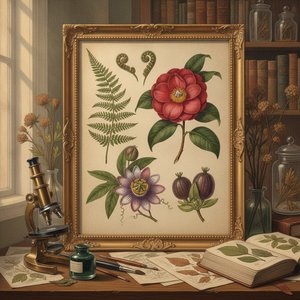
The Timeless Elegance of Victorian Botanical Painting: A Journey Through Nature's Intricate Detail and Scientific Artistry
Discover the exquisite world of Victorian botanical painting, where scientific precision meets profound aesthetic grace. Explore a journey through nature's intricate details, from legendary illustrators to the untamed beauty of Marianne North’s vibrant floral masterpieces.
Explorez des œuvres d'art classées par thèmes, styles et caractéristiques.


