Aperçu en situation
 Partager
 Partager
 Détails
 Guide
Guide

 Télécharger
 Articles similaires
 Radiographie
 Voir le diaporama
 Statistiques
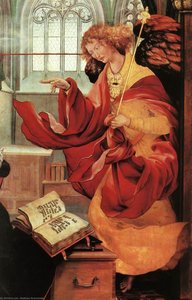
Nativité (détail)


Découvrez la beauté profonde de la « Nativité (détail) » de Matthias Grünewald – une représentation poignante du Retable d'Isenheim, illustrant un réalisme magistral et une profondeur émotionnelle. Un chef-d'œuvre intemporel.
 Afficher la suite
Explorez l'art dramatique de Matthias Grünewald de la Renaissance allemande ! Connu pour le Retable d'Issenheim et ses peintures religieuses chargées d'émotion. Découvrez son style unique chez TopImpressionists.
Reproduction à l'huile faite à la main
Huile sur toile peinte à la main, avec cadre et dimensions personnalisés, réalisée sur commande par nos artistes. ( Passer au format impression Passer au format image numérique)




P118B $10

P118H $10

P118W $10

P438Z $10

P508JH $12

P508YH $12

P805H $10

P805Z $10

P919BZ $10

P919G $10

P919XJ $10

P959ZH $10

P968JZ $12

W106C $8

W218G $10

W218JH $8

W218Y $10

W307PJ $10

W316G $10

W316PJ $8

W316Y $10

W398PJ $8

W4111J $10

W500HY $15

W500JH $15

W692G $12

W849H $8

W940BG $15

W953PJ $8




Format standard
personnalisé
CM
INCH
Choisissez parmi nos formats prédéfinis qui respectent les proportions originales de l’œuvre.
Loading sizes...

largeur
hauteur
Vous pouvez saisir vos propres dimensions pour l'adapter à un cadre ou à un espace spécifique. Si la taille sélectionnée ne correspond pas aux proportions de l'image d'origine, nous recadrerons l'œuvre ou prolongerons la peinture avec des éléments peints à la main supplémentaires. Une maquette numérique vous sera envoyée pour approbation avant le début de la production.
Veuillez noter que l'aperçu à l'écran ne reflète pas le recadrage ou l'extension réels. Seule la maquette montrera fidèlement la composition finale.
Bien que des tailles personnalisées soient disponibles, nous vous recommandons de sélectionner une dimension dans la liste prédéfinie afin de préserver les proportions d'origine.
Exemples de personnalisation possibles : remplacer un visage par la photo du client ; ajouter un animal de compagnie (par exemple, remplacer un chat par un chien) ; inclure un message caché en arrière-plan ; modifier le paysage ou les éléments de l'arrière-plan.
Après la commande, l’équipe TopImpressionists.com contactera le client par e-mail pour recueillir ses instructions et lui fournira une maquette d’aperçu
Après la commande, l’équipe TopImpressionists.com contactera le client par e-mail pour recueillir ses instructions et lui fournira une maquette d’aperçu
Livraison dans le monde entier () en 3 à 4 semaines au lieu des 5 semaines habituelles. (23 septembre). Aucun compromis sur la qualité.

Livraison express gratuite dans le monde entier

Toile de lin de haute qualité

Assurance transport complète

Garantie de remboursement des droits de douane

Garantie de fidélité des couleurs

Garantie de retour de 100 jours (uniquement en cas de défaut)

Garantie de remboursement à 100%

Tarifs dégressifs sur quantité
 L'option verre n'est disponible que pour les dimensions inférieures à 110 cm.

Nativité (détail)
Technique de reproduction
Format de la reproduction
-


Prix total final
$ 269
A Moment of Reverent Devotion: Unpacking the Majesty of Grünewald’s Nativity
Matthias Grünewald's "Nativity (detail)," a fragment from his monumental Isenheim Altarpiece, isn’t merely a depiction of a biblical scene; it’s a profound distillation of Northern Renaissance spirituality and emotional intensity. Completed around 1515, this panel offers a glimpse into the heart of Grünewald’s artistic vision – a world saturated with both earthly realism and divine grace. It's a work that transcends its small scale, radiating an almost overwhelming sense of solemnity and quiet contemplation.
The painting immediately draws the eye to Mary, rendered with remarkable tenderness and vulnerability. Her posture is subtly curved, conveying a deep inwardness as she cradles the infant Jesus. The rich crimson robe, a deliberate choice in this context, symbolizes her role as Mother of God – a vibrant hue against the cooler tones of the background landscape, creating a visual hierarchy that emphasizes her central importance. The delicate folds of the fabric, meticulously rendered with Grünewald’s signature attention to detail, speak volumes about his mastery of texture and form. The baby Jesus, swathed in simple white linens, embodies purity and innocence, while his gaze is fixed upward, suggesting an awareness of the divine presence.
The Language of Northern Renaissance Art
Grünewald’s style firmly anchors this scene within the traditions of late medieval German art. Unlike the idealized figures prevalent in Italian Renaissance painting, Grünewald embraced a more direct and emotionally charged approach. He eschewed smooth surfaces and polished finishes, opting instead for rougher textures and a dramatic use of light and shadow – *chiaroscuro* – to heighten the sense of realism and drama. This technique is particularly evident in the rendering of Mary’s face, where subtle shifts in tone create a palpable sense of emotion. The background landscape, though simplified, contributes significantly to the overall mood, evoking a sense of both serenity and foreboding.
The Isenheim Altarpiece, of which this detail is part, was originally intended for the Hospital of Saint Anthony in Unterlinden, Alsace – a hospital dedicated to treating tuberculosis patients. The altarpiece’s complex design and powerful imagery were specifically tailored to provide spiritual solace to those suffering from a debilitating illness. The inclusion of scenes depicting St. Anthony and St. Sebastian, both victims of disease, underscores the theme of human vulnerability and divine mercy. Grünewald's work reflects this context, imbuing the Nativity scene with an added layer of pathos – a reminder that even in moments of profound joy, suffering and mortality are ever-present realities.
Symbolism and Spiritual Depth
Beyond its immediate visual appeal, “Nativity (detail)” is rich in symbolic meaning. The halo above Mary’s head isn't merely decorative; it signifies her holiness and connection to the divine realm. The presence of the landscape – a stylized representation of the world – suggests that the birth of Jesus marks a new era, one of hope and redemption. The carefully chosen colors—the vibrant red of Mary’s robe, the cool blues and greens of the background—contribute to the painting's overall emotional impact. The scene is not simply illustrating a biblical story; it’s inviting viewers to contemplate fundamental questions about faith, suffering, and salvation.
A Legacy Enduring Through Reproduction
Today, reproductions of “Nativity (detail)” offer art lovers the opportunity to experience Grünewald's genius firsthand. Whether displayed in a private home or a public gallery, this powerful image continues to resonate with viewers across centuries. The emotional depth and technical mastery evident in this small panel serve as a testament to Grünewald’s enduring legacy as one of the most important artists of the Northern Renaissance.
Biographie de l'artiste
Matthias Grünewald : Vie et Héritage
Jeunesse et Débuts Artistiques
Matthias Grünewald, né Mathis Gothart Neithardt vers 1470-1475 à Würzburg, en Allemagne, est une figure centrale du Renouveau allemand. Bien qu'il ait vécu dans une période de plus en plus influencée par les idéaux du Renouveau italien, Grünewald est resté profondément ancré dans les traditions artistiques tardives de l’Europe centrale médiévale. Les détails sur sa jeunesse sont rares, mais il est connu qu'il a reçu une formation artistique, probablement au sein d'ateliers locaux.
Développement Artistique et Influences
Le développement artistique de Grünewald a été façonné par les traditions nordiques prévalentes de réalisme, d’intensité émotionnelle et d’observation détaillée. Son œuvre témoigne des influences d'artistes tels qu'Albrecht Dürer et Martin Schongauer, mais il a tracé un chemin unique caractérisé par une expression dramatique et des couleurs vives. Il n'a pas été directement impliqué dans les cercles humanistes prévalents en Italie ; à la place, son art servait principalement à des fins religieuses, reflétant les angoisses spirituelles de son temps.
Œuvres Majeures et Style Artistique
- L'Autel d’Issenheim (1512-1516) : Ce chef-d'œuvre, exposé au Musée d'Unterlinden à Colmar, est considéré comme l'apogée de Grünewald. Il dépeint des scènes de la vie du Christ avec un réalisme saisissant, en particulier en se concentrant sur la souffrance et le salut.
- La Crucifixation (c. 1502-1503) : Une œuvre précoce démontrant son style en développement, mettant en valeur une émotion intense et un détail anatomique.
- Vierge de l'Annonciation (1512-14) : Étude pour l’Autel d’Issenheim, révélant son processus de planification méticuleux.
- Moïse (1511) : Dessin mettant en évidence le talent de Grünewald pour capturer des figures expressives et des poses dramatiques.
Le style de Grünewald se distingue par:
- Composition Dramatique : Il a utilisé des arrangements dynamiques pour intensifier l'impact émotionnel.
- Palette de Couleurs Vives : Son utilisation de couleurs intenses, souvent contrastées, a créé une expérience visuelle puissante.
- Représentation Réaliste de la Souffrance : Grünewald n’a pas hésité à représenter la douleur physique et émotionnelle associée aux récits religieux.
- Figures Expressives : Ses figures sont imprégnées d'émotions fortes et de profondeur psychologique.
Signification Historique et Héritage
L’œuvre de Grünewald témoigne du pouvoir durable des traditions artistiques médiévales en Allemagne au cours du Renouveau. Il a comblé le fossé entre le style gothique tardif et l'émergence du Renouveau, créant une langue visuelle unique qui a résonné auprès de ses contemporains. Son influence peut être observée chez les artistes allemands ultérieurs qui ont continué à explorer des thèmes de ferveur religieuse et d’intensité émotionnelle. Bien qu'il ait été largement oublié après sa mort en 1528, Grünewald a connu un regain d'intérêt au XIXe siècle, et aujourd'hui il est reconnu comme l'un des peintres les plus importants du Renouveau allemand. Son art continue de captiver les spectateurs par son émotion brute, son génie technique et sa profondeur spirituelle profonde.
Exploration Complémentaire
Découvrez-en davantage sur la vie et l'œuvre de Matthias Grünewald à : TopImpressionists

Matthias Grünewald
1480 - 1528 , Allemagne
En bref
- Artistic Movement Or Style: Renaissance allemande
- Artists Or Movements Influenced By This Artist:
- Renaissance italienne
- Art gothique tardif
- Artists Who Influenced This Artist:
- Albrecht Dürer
- Martin Schongauer
- Date Of Birth: c. 1475/1480
- Date Of Death: 1528
- Full Name: Matthias Grünewald
- Nationality: Allemand
- Notable Artworks:
- Retable d'Issenheim
- La Crucifixion
- Vierge de l'Annonciation
- Moïse
- Place Of Birth: Würzburg, Allemagne
Articles similaires

Fra Angelico : Les 25 Chefs-d'œuvre Incontournables pour une Décoration Spirituelle
Plongez dans l'univers spirituel de Fra Angelico avec les 25 œuvres incontournables du maître italien. Découvrez l'histoire, la technique et la beauté intemporelle de ses fresques Renaissance. Reproductions d'art exceptionnelles sur TopImpressionists.com.

Expressionnisme Allemand : 10 Chefs-d'œuvre Révolutionnaires à Découvrir | TopImpressionists
Plongez au cœur de l'Expressionnisme Allemand avec TopImpressionists. Découvrez 10 chefs-d'œuvre de Kandinsky, Munch et Kirchner. Explorez l'histoire, les couleurs et l'émotion derrière ces tableaux iconiques. Reproductions de qualité muséale disponibles sur TopImpressionists.com

Illuminating Belief: A Visual Exploration of Faith Across Artistic Movements & Historical Contexts
Explore the rich history of faith through art! Discover Renaissance masterpieces, iconic artists & religious symbolism with expert analysis from TopImpressionists. Perfect for collectors and enthusiasts.

Matthias Grünewald : Dévotion, Distorsion et Tourments Spirituels dans l'Art de la Renaissance
Explorez l'œuvre poignante de Matthias Grünewald, figure majeure de la Renaissance allemande. Analyse approfondie de son iconographie expressive et du célèbre Retable d'Isenheim. Découvrez un art empreint de dévotion et de tourments spirituels.

Jacob Henricus Maris: A Master of Dutch Atmospheric Realism & the Intimate Landscape
Explore the captivating world of Jacob Henricus Maris, a leading figure of the Dutch Hague School. Discover his atmospheric landscapes, signature brushstrokes & lasting influence on 19th-century art. Learn more at TopImpressionists.
Explorez des œuvres d'art classées par thèmes, styles et caractéristiques.