Atelier — Livraison mondiale offerte — Livraison sous 2 à 6 semaines
Sell Your Art Liste de souhaits Panier
PreviewPreview Commander l'impression Commander l'impressionAcheter l'image haute résolution Acheter l'image haute résolution PartagerPartager
Détails de l'œuvreDétails de l'œuvre Ajouter aux favoris Ajouter aux favoris TéléchargerTélécharger Articles similairesArticles similaires RadiographieRadiographie DiaporamaDiaporama

untitled (7712)

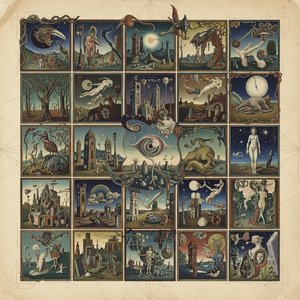
Max Ernst's surreal untitled (7712) presents a bizarre tableau of a frog with dual penises and an umbrella, embodying the artist’s provocative exploration of the subconscious during the 20th century. Discover this unique artwork and bring its unsettling beauty into your collection.

Explorez le monde surréaliste de Max Ernst (1891-1976), pionnier du Dadaïsme et du Surréalisme ! Découvrez ses techniques innovantes de frottage, ses collages et ses peintures oniriques mettant en scène des oiseaux, des paysages et des thèmes psychologiques. #MaxErnst #Surréalisme #Dada

Reproduction à l'huile faite à la main

Huile sur toile peinte à la main, avec cadre et dimensions personnalisés, réalisée sur commande par nos artistes.

P118B $10
P118H $10
P118W $10
P438Z $10
P508JH $12
P508YH $12
P805H $10
P805Z $10
P919BZ $10
P919G $10
P919XJ $10
P959ZH $10
P968JZ $12
W106C $8
W218G $10
W218JH $8
W218Y $10
W307PJ $10
W316G $10
W316PJ $8
W316Y $10
W398PJ $8
W4111J $10
W500HY $15
W500JH $15
W692G $12
W849H $8
W940BG $15
W953PJ $8

Standard
custom
CM
INCH

Choisissez parmi nos formats prédéfinis qui respectent les proportions originales de l’œuvre.

largeur
hauteur

Vous pouvez saisir vos propres dimensions pour l'adapter à un cadre ou à un espace spécifique. Si la taille sélectionnée ne correspond pas aux proportions de l'image d'origine, nous recadrerons l'œuvre ou prolongerons la peinture avec des éléments peints à la main supplémentaires. Une maquette numérique vous sera envoyée pour approbation avant le début de la production.
Veuillez noter que l'aperçu à l'écran ne reflète pas le recadrage ou l'extension réels. Seule la maquette montrera fidèlement la composition finale.
Bien que des tailles personnalisées soient disponibles, nous vous recommandons de sélectionner une dimension dans la liste prédéfinie afin de préserver les proportions d'origine.

Exemples de personnalisation : remplacer un visage par la photo du client ; ajouter un animal de compagnie (par exemple, remplacer un chat par un chien) ; inclure un message caché en arrière-plan ; modifier le paysage ou les éléments de l'arrière-plan.
Après la commande, l’équipe TopImpressionists.com contactera le client par e-mail pour obtenir ses instructions et lui fournira une maquette d’aperçu.

Livraison dans le monde entier () en 3 à 4 semaines au lieu des 5 semaines habituelles. (24 juillet). Aucune concession sur la qualité.

why_choose_icon
Livraison express gratuite dans le monde entier
why_choose_icon
Toile de lin de haute qualité
why_choose_icon
Assurance transport complète
why_choose_icon
Garantie de remboursement des frais de douane
why_choose_icon
Garantie de fidélité des couleurs
why_choose_icon
Politique de retour de 60 jours (uniquement en cas de défaut)
why_choose_icon
Garantie de remboursement à 100%
why_choose_icon
Réduction sur les achats groupés

Prix total

-

reproduction

untitled (7712)

Technique de reproduction

Format de reproduction

-

Prix total final

-

En bref

  • Notable elements: Frog, penises, umbrella
  • Artist: Max Ernst
  • Year: 1940s
  • Movement: Surrealism
  • Title: untitled (7712)
  • Location: Private Collection
  • Artistic style: Dreamlike, bizarre

Description de l'œuvre

Unveiling the Grotesque Beauty of "Untitled (7712)"

Max Ernst’s “Untitled (7712)” is not merely a painting; it's an unsettling plunge into the subconscious, a visual manifestation of anxieties and desires rendered with the meticulous precision characteristic of the artist. This surrealist masterpiece, depicting a frog burdened with an unnerving duality – two penises prominently displayed – immediately confronts the viewer with a jarring juxtaposition of the familiar and the profoundly disturbing. The image, presented on a wall as if in a gallery setting, invites contemplation not just of its subject matter but also of the very nature of representation and the anxieties simmering beneath the surface of Western art.

  • Subject Matter: The central figure – a frog – is deliberately chosen. Frogs, historically, have held diverse symbolic meanings across cultures, often representing fertility, transformation, and even deception. Ernst’s deliberate exaggeration of this symbolism elevates it to an almost grotesque level.
  • Style & Technique: Ernst's technique, honed over decades of experimentation, is evident in the painting’s textured surface and layered application of paint. The use of collage elements – though not explicitly detailed here – would have been typical of his approach, adding another layer of complexity to the image.
  • Historical Context: Created during the interwar period (1920s-30s), “Untitled (7712)” reflects the broader artistic currents of Surrealism, a movement born from the disillusionment following World War I and fueled by psychoanalytic theories – particularly those of Sigmund Freud. The exploration of dreams, the irrational, and the unconscious was a direct response to the perceived failures of reason and logic.

Decoding the Symbolism: Duality and Discomfort

The most striking element of “Untitled (7712)” is undoubtedly the frog’s anatomical anomaly – two penises. This isn't simply a depiction of physical abnormality; it’s a potent symbol of excess, uncontrolled desire, and perhaps even societal anxieties surrounding sexuality and power. The umbrella held in the frog’s mouth further complicates the interpretation, suggesting an attempt to shield itself from overwhelming sensation or perhaps representing a futile effort to control the uncontrollable. Ernst was deeply interested in exploring psychological states through his art, and this painting is a powerful example of that exploration.

  • Repressed Desires: The image can be interpreted as a visual representation of repressed desires and anxieties – those thoughts and feelings we consciously suppress but which nonetheless exert a powerful influence on our behavior.
  • Critique of Normality: By presenting this unsettling scene, Ernst challenges conventional notions of beauty and normalcy, forcing the viewer to confront uncomfortable truths about human nature.
  • The Role of the Viewer: The painting’s impact is profoundly dependent on the viewer's own psychological state. It’s a work that demands engagement and invites personal interpretation.

Max Ernst: A Life Dedicated to Surreal Exploration

Born in Brühl, Germany, in 1891, Max Ernst was a restless intellectual and artist who defied easy categorization. His academic background – encompassing philosophy, art history, literature, psychology, and psychiatry – profoundly shaped his artistic vision. He wasn't simply interested in replicating reality; he sought to unlock the hidden dimensions of the human psyche through experimentation with techniques like frottage (rubbing textures onto paper) and collage. Ernst’s work reflects a deep engagement with the ideas of Freud and Jung, exploring themes of dreams, memory, and the unconscious mind.

  • Early Influences: Ernst's early artistic development was influenced by Dadaism, another avant-garde movement that rejected traditional aesthetic values.
  • Technological Innovation: He was also a pioneer in the use of photographic techniques in art, further blurring the boundaries between reality and illusion.
  • Legacy: Max Ernst’s influence on 20th-century art is undeniable, and “Untitled (7712)” stands as a testament to his innovative spirit and profound artistic vision.

Bringing "Untitled (7712)" into Your Space

A hand-painted reproduction of Max Ernst’s “Untitled (7712)” offers a unique opportunity to bring this iconic surrealist work into your home or office. TopImpressionists.com meticulously recreates the painting's intricate details and textural qualities, ensuring that your reproduction captures the full emotional impact of the original. Whether you are an art collector seeking to expand your collection or an interior designer looking for a statement piece, this reproduction provides a captivating focal point – a conversation starter and a window into the depths of the human psyche.


Biographie de l'artiste

Max Ernst : Une Vie au Sein du Surréalisme

Jeunesse et Éducation

  • Né le: 1er avril 1891 à Brühl, en Allemagne.
  • Le père d'Ernst, Philipp Ernst, était enseignant des sourds et peintre amateur, encourageant ainsi l'intérêt précoce de Max pour l'art.
  • Il a étudié la philosophie, l'histoire de l'art, la littérature, la psychologie et la psychiatrie à l'Université de Bonn de 1909.
  • Ce parcours académique diversifié a profondément influencé ses explorations artistiques ultérieures.

Développement Artistique & Influences

  • Un moment décisif fut l'exposition Sonderbund à Cologne (1912), où il a découvert des œuvres de Pablo Picasso, Vincent van Gogh, et Paul Gauguin.
  • En 1914, il a rencontré Hans Arp, débutant une amitié qui a durablement façonné son parcours artistique.
  • La Première Guerre mondiale a profondément marqué Ernst ; ses expériences de soldat ont conduit à la déception et à une vision critique de la société.
  • Il s'est inspiré des écrits de Sigmund Freud, explorant les thèmes de l'inconscient dans son art.

Dadisme & Surréalisme

  • Ernst est devenu une figure clé du groupe Dadiste de Cologne après la Première Guerre mondiale, rejetant les conventions artistiques traditionnelles.
  • Il a pionné des techniques innovantes telles que frottage (frotter un crayon sur des surfaces texturées) et grattage (gratter la peinture pour révéler les couches sous-jacentes).
  • Dans les années 1920, il a rejoint le mouvement surréaliste à Paris, collaborant avec des artistes tels que Paul Éluard.
  • Son œuvre de cette période explorait des images oniriques et des thèmes psychologiques.

Œuvres Majeures & Techniques

  • Frottage : Une technique utilisée pour créer des textures et des images inattendues, exemplifiée dans de nombreuses œuvres.
  • Collage : Ernst a fréquemment utilisé le collage, combinant des éléments disparates pour créer des compositions surréalistes.
  • Œuvres Notables :
    • La Ville Entière
    • Euclides
    • De Ceci, Personne Ne Devrait Savoir
    • Forêt et Colombe
  • Ses peintures présentent souvent des images symboliques, notamment les oiseaux (en particulier son alter ego Loplop), les paysages et des juxtapositions troublantes.

Vie Tardive & Héritage

  • Ernst s'est installé aux États-Unis pendant la Seconde Guerre mondiale, continuant à peindre et à expérimenter de nouvelles techniques.
  • Il est revenu en France après la guerre et est resté actif jusqu'à sa mort le 1er avril 1976 à Paris.
  • Signification Historique : Les contributions d'Ernst au Dadisme et au Surréalisme ont été révolutionnaires. Il a défié les normes artistiques, exploré l’esprit inconscient et inventé des techniques innovantes qui continuent d’inspirer les artistes aujourd’hui.
  • Il reste l'un des figures les plus importantes et influentes de l'art du 20e siècle.
Max Ernst

Max Ernst

1891 - 1976 , Allemagne

En bref

  • Artistes Influents:
    • Pablo Picasso
    • Vincent van Gogh
    • Paul Gauguin
  • Date De Décès: 1er avril 1976
  • Date De Naissance: 1er avril 1891
  • Lieu De Naissance: Brühl, Allemagne
  • Mouvement Artistique: Dadaïsme et Surréalisme
  • Nationalité: Allemand/Américain/Français
  • Nom Complet: Max Ernst
  • Œuvres Notables:
    • La Ville Entière
    • Euclides
    • Forêt et Colombe
Explorez des œuvres d'art classées par thèmes, styles et caractéristiques.
© TopImpressionists.com — Tous droits réservés  ·  100% Peint à la main · Satisfaction garantie · Livraison gratuite dans le monde entier

VISA MASTERCARD