Description de l'œuvre
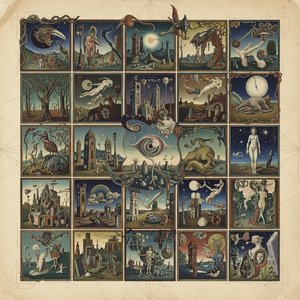
A Surrealist Dreamscape: Exploring Max Ernst’s ‘Untitled (4070)’
Max Ernst's 'Untitled (4070)' stands as a testament to the boundless imagination of the Surrealist movement, capturing a moment frozen in time—a fantastical vision born from philosophical contemplation and psychological exploration. Painted in 1943 during the Second World War, amidst the anxieties of occupation and the looming shadow of impending doom, this artwork transcends mere depiction; it delves into the subconscious realm, presenting an unsettling yet undeniably beautiful panorama of distorted forms and evocative symbolism.
The painting’s style is unmistakably Surrealist—characterized by illogical juxtapositions, dreamlike imagery, and a deliberate rejection of rational perspective. Ernst employs automatism, a technique championed by André Breton and fellow Surrealists, wherein he abandons conscious control over the creative process, allowing subconscious impulses to guide his brushstrokes. This method results in textures that appear almost organic—a chaotic tapestry of earthy browns, ochres, and muted greens interwoven with splashes of crimson and violet. The artist’s masterful manipulation of color contributes significantly to the artwork's emotional resonance, conveying both apprehension and wonder simultaneously.
Technically speaking, Ernst utilizes oil paints on canvas, applying them in thick impasto—a technique that builds up layers of pigment to create a palpable surface relief. This textural approach isn’t merely aesthetic; it serves as a conduit for conveying psychological depth. The swirling patterns and undulating lines mimic the rhythms of dreams, mirroring the fluidity and unpredictability inherent in the subconscious mind. Ernst's meticulous attention to detail—particularly evident in the rendering of plant forms—adds another layer of complexity to the composition.
Historically, ‘Untitled (4070)’ reflects the broader anxieties surrounding wartime Europe. Surrealism emerged as a reaction against the horrors of Verdun and the devastation wrought by industrial warfare, seeking refuge in the realm of fantasy as a means of confronting existential dread. Breton viewed Surrealist art as “a weapon,” arguing that it could liberate the mind from repressive societal constraints and unlock hidden truths. Ernst’s preoccupation with themes of decay, metamorphosis, and primal instinct aligns perfectly with the movement's core tenets—reflecting a profound awareness of humanity’s vulnerability in the face of overwhelming forces.
Symbolically, ‘Untitled (4070)’ is rife with evocative imagery. The dominant plant form—a grotesque hybrid resembling a horse’s head intertwined with floral elements—represents both fertility and death—a poignant reminder of the cyclical nature of existence. Its upward-reaching branches symbolize aspiration and resilience, battling against the oppressive darkness surrounding it. The scattered crimson splashes evoke blood—representing sacrifice and suffering—yet simultaneously hinting at vitality and renewal. Ernst's deliberate ambiguity invites viewers to interpret these symbols personally, fostering a dialogue between art and consciousness.
Ultimately, ‘Untitled (4070)’ commands attention not merely for its visual splendor but for its profound emotional impact. It compels us to confront uncomfortable truths about our own psychological landscape—to acknowledge the presence of fear alongside hope, darkness alongside illumination. The painting’s unsettling beauty lingers in the mind long after viewing, prompting contemplation on themes of mortality, transformation, and the enduring power of imagination. A reproduction of this masterpiece offers an opportunity to immerse oneself in a world where dreams hold sway and reality bends to the will of subconscious desire—a captivating addition to any discerning art collection.



 Preview
 Commander l'impression
 Partager
 Partager
 Détails de l'œuvre

 Télécharger
 Articles similaires
 Radiographie
 Diaporama
 Afficher la suite






































 L'option verre n'est disponible que pour les dimensions inférieures à 110 cm.