


 Aperçu en situation
 Envoyer
 Partager
 Détails de l'œuvre
 Guide
Guide

 Télécharger l'image
 Articles similaires
 Radiographie
 Diaporama
 Q&A
Q&A Statistiques
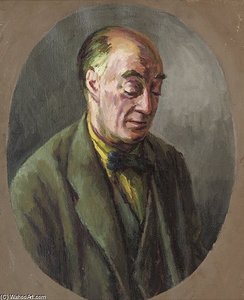
Bust Selfportrait in Paiting Overall


This artwork showcases Max Liebermann's self-portrait in 1922, executed in oil on canvas. It exemplifies Impressionism’s focus on capturing fleeting moments of light and color, featuring a contemplative gaze and attire reflecting the artist's era.
 Lire la suite
Découvrez Max Liebermann (1847-1935), peintre impressionniste allemand célèbre pour ses scènes de la vie moderne, portraits et vues de jardin. Figure clé de la Sécession berlinoise !
Giclées et impressions d'art
Impressions giclées ou sur toile de qualité musée, avec une production rapide et des finitions au choix. ( Commander la reproduction peinte à la main Passer au format numérique)




P118B €10

P118H €10

P118W €10

P438Z €10

P508JH €12

P508YH €12

P805H €10

P805Z €10

P919BZ €10

P919G €10

P919XJ €10

P959ZH €10

P968JZ €12

W106C €8

W218G €10

W218JH €8

W218Y €10

W307PJ €10

W316G €10

W316PJ €8

W316Y €10

W398PJ €8

W4111J €10

W500HY €15

W500JH €15

W692G €12

W849H €8

W940BG €15

W953PJ €8




Format standard
sur mesure
CM
INCH
Choisissez parmi nos formats prédéfinis qui respectent les proportions originales de l’œuvre.
Loading sizes...

largeur
hauteur
Saisissez la largeur et la hauteur souhaitées pour qu'elles s'adaptent à votre cadre ou à votre mur. Une impression peut être recadrée, mais jamais agrandie au-delà de l'image originale ; ainsi, un format de forme différente entraînera la perte d'une partie de l'image. Nous vous envoyons une maquette numérique pour approbation avant toute impression. L'image présentée sur cette page ne montre pas le recadrage réel — seule la maquette le permet.
Livraison dans le monde entier () en 2 semaines au lieu des 4/5 semaines habituelles. (29 octobre)

Livraison express gratuite dans le monde entier

Toile de lin de qualité supérieure

Assurance transport complète

Garantie de remboursement des droits de douane

Garantie de fidélité des couleurs

Politique de retour de 100 jours (uniquement en cas de défaut)

Garantie de remboursement à 100%

Offre de tarifs dégressifs
 L'option verre n'est disponible que pour les dimensions inférieures à 110 cm.

Bust Selfportrait in Paiting Overall
Giclées et impressions d'art
Format de la reproduction
-


Prix total
€ 61
A Gaze Into the Self: Max Liebermann's Bust Selfportrait
To stand before this selfportrait is to encounter not merely a likeness, but a carefully considered meditation on identity itself. Painted in 1922 by Max Liebermann, this bust portrait captures the artist at a moment of profound introspection. The subject gazes out from the canvas with an undeniable seriousness, his mustache and beard lending him an air of intellectual gravitas. Every element—from the precise knot of his bow tie to the thoughtful set of his glasses—contributes to a persona that is both intimately familiar and strikingly composed. It speaks volumes about the artist's self-perception during this pivotal time in his life, offering us a direct line into the mind of a master.
Technique and Tonal Drama
Liebermann’s handling of paint here showcases his mastery of tonal contrast. The deliberate use of a black and white color scheme is not a limitation, but rather a powerful artistic choice that heightens the drama and focuses all attention squarely on the nuances of the sitter's expression. Observe how the light seems to sculpt the planes of his face, giving dimension to the subtle contours around his eyes and mouth. The technique employed suggests an Impressionist foundation—a sensitivity to fleeting moments—but channeled through a more formal, almost psychological portraiture lens. This stark palette strips away the distractions of color, leaving only the essential architecture of character.
Historical Echoes in Berlin
Created in 1922, this work emerges from a period when Germany was navigating immense social and artistic upheaval. Liebermann, an artist deeply connected to the vibrant cultural pulse of Berlin, captured a moment that feels both timeless and acutely contemporary. While his earlier works celebrated everyday life with Impressionistic joy, this selfportrait suggests a more internalized dialogue—a necessary turning inward amidst the roaring changes of the early 20th century. It is a testament to an artist who remained keenly observant, even when looking at himself.
Symbolism and Emotional Resonance
The act of painting a selfportrait has always been fraught with symbolic weight; it is both documentation and declaration. Here, the direct address to the viewer creates an immediate, almost confrontational intimacy. The seriousness in his eyes invites us to question: what is being observed? Is it the artist, or the enduring spirit that survives the passage of time? For collectors and those seeking art for a sophisticated interior space, this piece offers depth. It doesn't merely decorate; it prompts conversation, encouraging contemplation on self-image, intellect, and the weight of experience.
Bringing Liebermann Home
Owning a reproduction of "Bust Selfportrait in Paiting" allows one to integrate a piece of this rich artistic dialogue into your own sanctuary. The dramatic contrast inherent in the original composition translates beautifully into any setting, providing a focal point that is both intellectually stimulating and visually arresting. It serves as a sophisticated anchor for a room, echoing the thoughtful elegance of early 20th-century European portraiture while maintaining a modern, stark power.
Questions et réponses
Quelle émotion les couleurs de «Bust Selfportrait in Paiting Overall» de Max Liebermann dégagent-elles ?
La palette Earthy de «Bust Selfportrait in Paiting Overall» de Max Liebermann s'harmonise avec son ton émotionnel Reflective. La couleur est l'un des moyens par lesquels une œuvre transmet une émotion.
Comment le médium et le mouvement se conjuguent-ils dans « Bust Selfportrait in Paiting Overall » ?
Dans « Bust Selfportrait in Paiting Overall », la technique du Oil On Canvas rencontre le mouvement Impressionism.
Qui est l'auteur de « Bust Selfportrait in Paiting Overall » et de quel mouvement artistique est-il issu ?
Max Liebermann a créé « Bust Selfportrait in Paiting Overall » au sein du mouvement Impressionism.
Œuvres similaires



Biographie de l'artiste
Première Vie et Formation
- Né: Berlin, Allemagne (1847)
- Décédé: 1935
Carrière Artistique et Style
- Impressionnisme: Liebermann est devenu un fervent défenseur de l'impressionnisme en Allemagne, capturant des instants fugaces de la vie moderne avec une attention particulière à la lumière et à la couleur.
- Influences: Son style a été notablement influencé par Édouard Manet, se reflétant dans son esprit et son approche picturale.
- Motifs: Il représentait fréquemment des scènes de la bourgeoisie et des aspects de son jardin près du lac Wannsee.
- Portraitiste: Liebermann a acquis une renommée en tant que portraitiste talentueux, créant plus de 200 portraits commandés, dont ceux d'Albert Einstein et de Paul von Hindenburg.
Œuvres Notables et Réalisations
- "Jésus de douze ans au temple": Une œuvre précoce qui a suscité des débats en raison de sa représentation d'un garçon Jésus sémitique.
- Élection à l’Académie prussienne des arts: Une reconnaissance significative de son mérite artistique et de sa contribution.
- Direction de la Sécession berlinoise (1899-1911): Il a dirigé cette formation d'avant-garde majeure en Allemagne, remettant en question les normes artistiques traditionnelles.
Vie Ulérieure et Importance Historique
- Démission de l’Académie prussienne des arts: En 1933, il a démissionné suite à la décision de l'académie d'exclure les artistes juifs.
- Décès et Héritage: Il est décédé à Berlin en 1935, laissant derrière lui un corpus important d’œuvres qui continuent d’être célébrées pour leur style impressionniste et leur portrait perspicace de la société allemande.

Max Liebermann
1847 - 1935 , Allemagne
L'essentiel de l'artiste
- Artistes Influents: ['Édouard Manet']
- Date De Décès: 8 février 1935
- Date De Naissance: 20 juillet 1847
- Lieu De Naissance: Berlin, Allemagne
- Mouvement Artistique: Impressionnisme
- Mouvements Influencés: ['Sécession berlinoise']
- Nationalité: Allemande
- Nom Complet: Max Liebermann
- Oeuvres Notables:
- Le Jésus de douze ans au temple
- La Meuleuse
- Portrait d'Albert Einstein
Articles connexes

Impressionnisme : Top 10 des Œuvres Incontournables pour une Décoration Raffinée
Plongez dans l'univers vibrant de l'impressionnisme avec notre sélection des 10 œuvres les plus emblématiques : Monet, Renoir, Degas… Découvrez l'histoire et la magie de ces chefs-d'œuvre. Reproductions d'art de qualité muséale sur TopImpressionists.com

Reflecting the Self: A History of Portraiture & Psychological Insight
Explore the fascinating history of self-portraiture from Renaissance masters like Dürer & Rembrandt to modern interpretations. Discover the psychological insights and artistic techniques behind these iconic works. Expert analysis for art enthusiasts.

Expressionnisme Allemand : 10 Chefs-d'œuvre Révolutionnaires à Découvrir | TopImpressionists
Plongez au cœur de l'Expressionnisme Allemand avec TopImpressionists. Découvrez 10 chefs-d'œuvre de Kandinsky, Munch et Kirchner. Explorez l'histoire, les couleurs et l'émotion derrière ces tableaux iconiques. Reproductions de qualité muséale disponibles sur TopImpressionists.com
Max Ernst : Les 25 Œuvres Maîtresses d'un Surréalisme Révolutionnaire | TopImpressionists
Plongez dans l'univers surréaliste de Max Ernst ! Découvrez les 25 œuvres les plus emblématiques du maître allemand, entre frottage, collage et rêves éveillés. Inspirez votre décoration intérieure avec TopImpressionists : reproductions de tableaux de qualité muséale et collection d'art unique. Explorez la co

Paul Cézanne : Les 25 Œuvres Maîtresses d'un Génie Révolutionnaire | TopImpressionists
Plongez dans l'univers de Paul Cézanne avec les 25 œuvres incontournables du maître post-impressionniste. Découvrez l'histoire, la technique et l'émotion derrière ses tableaux iconiques comme 'Les Baigneuses' ou 'Mont Sainte-Victoire'. Reproductions d'art haute qualité sur TopImpressionists.com.
Explorez des œuvres d'art classées par thèmes, styles et caractéristiques.


