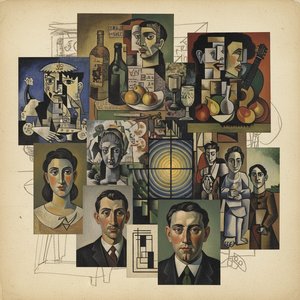
Pablo Picasso: A Revolutionary Artist
Pablo Picasso (1881-1973), born in Málaga, Spain, stands as one of the most influential figures in 20th-century art. From his formative years studying Velázquez and Goya independently to his groundbreaking embrace of Cubism and subsequent explorations into Surrealism and sculpture, Picasso relentlessly pursued innovation, reshaping artistic conventions and captivating audiences worldwide.
Early Life and Training (1881-1904)
- Born on October 25, 1881, Pablo Ruiz y Picasso demonstrated exceptional artistic talent early in life. His father, José Ruiz y Blasco, a respected art teacher, nurtured his son’s passion for drawing and painting.
- Picasso quickly surpassed his father's abilities, showcasing remarkable skill in naturalistic depictions—particularly portraits of family members.
- He attended the School of Fine Arts in Barcelona but often clashed with academic instructors who prioritized traditional methods over experimentation.
The Blue Period (1901-1906)
Picasso’s initial artistic output was marked by a profound melancholy, reflected in his distinctive use of monochromatic blue hues. This period captured the emotional turmoil experienced during his formative years—particularly following the tragic death of his sister.
The Rose Period (1904-1906)
A shift toward warmer tones—primarily pinks and oranges—characterized Picasso’s subsequent work, reflecting a newfound optimism and engagement with human relationships. Subjects like musicians and circus performers became recurring motifs during this transitional phase.
Cubism (1907-1914)
Picasso revolutionized art with Cubism alongside Georges Braque, dismantling traditional perspective and representing subjects from multiple viewpoints simultaneously. This radical approach challenged artistic conventions and paved the way for abstract expressionism.
Later Years & Surrealism (1914-1973)
Throughout his prolific career, Picasso continued to push boundaries—experimenting with collage techniques, exploring mythological themes, and delving into the subconscious realm of Surrealism. His final works displayed a masterful blend of stylistic influences and emotional depth.
“An Artist” by Pablo Picasso (1967): A Reflection on Creativity
Pablo Picasso's “An Artist,” created in 1967, is a captivating oil painting on canvas measuring 91 x 72 cm. This work represents a fascinating exploration of Naive Art (also known as Primitivism) within the artist’s expansive oeuvre. It offers a poignant glimpse into the mind and emotional state of an artist engaged in his craft.
Style and Technique: Embracing Naive Art
"An Artist" exemplifies Picasso’s foray into Naive Art, characterized by its simplicity, lack of formal training aesthetics, and focus on conveying essence over meticulous detail. Unlike the complex geometric deconstructions of Cubism, this piece adopts a more direct, almost childlike perspective. The brushstrokes are expressive yet controlled, contributing to a sense of immediacy and raw emotion. Picasso’s use of color is notable; the serene blue sky contrasts with the figure's attire and expression, drawing attention to his emotional state. The composition itself is intricate, featuring multiple figures observing or interacting within the scene, adding layers of narrative complexity.
Subject Matter and Symbolism
The central subject of the painting is a man, presumably an artist, depicted playing a violin. His long hair and hat contribute to a bohemian aesthetic. However, it's his facial expression that truly captivates – a palpable sense of sadness or distress emanates from him as he plays. The violin itself can be interpreted as a symbol of artistic expression, but the melancholic portrayal suggests a struggle or burden associated with creativity. The other figures in the background remain somewhat ambiguous, perhaps representing critics, patrons, or simply observers of the artist’s performance. Their presence adds to the painting’s narrative depth, hinting at the pressures and complexities inherent in an artistic life.
Historical Context and Picasso's Artistic Evolution
Created late in Picasso’s career, “An Artist” reflects his ongoing experimentation with different styles and techniques. Having revolutionized art through Cubism, Picasso continually sought new avenues for expression. His exploration of Naive Art demonstrates a desire to return to a more primal form of artistic communication, stripping away the complexities of academic training and embracing a simpler, more direct approach. This period also coincided with a time of personal reflection for Picasso, influencing his thematic choices and emotional depth in his work.
Emotional Impact and Lasting Legacy
"An Artist" is not merely a portrait; it's an exploration of the human condition through the lens of artistic creation. The painting evokes feelings of empathy and introspection, prompting viewers to contemplate the challenges and rewards of pursuing one’s passion. It stands as a testament to Picasso’s enduring legacy – his ability to transcend stylistic boundaries and create works that resonate with audiences across generations. This piece invites contemplation on the nature of art, creativity, and the emotional toll it can take.
Size: 91 x 72 cm
Date: 1967
PHOTO DESCRIPTION: The painting is a portrait of a man with long hair, wearing a hat and holding a violin. The man appears to be sad or distressed as he plays the instrument. The background features a blue sky, giving the impression that the scene takes place outdoors. In addition to the main subject, there are several other figures in the painting, including one person on the left side and another on the right side of the image. These figures appear to be engaged in various activities or simply observing the man playing his violin. The overall composition of the painting is quite intricate and captivating, showcasing the artist’s skill and creativity.



 Preview
 Switch to hand made Painting
 Partager
 Partager
 Détails de l'œuvre

 Télécharger
 Articles similaires
 Radiographie
 Diaporama


 Afficher la suite






































 L'option verre n'est disponible que pour les dimensions inférieures à 110 cm.