


 Aperçu en situation
 Envoyer
 Partager
 Détails de l'œuvre
 Guide
Guide

 Télécharger l'image
 Articles similaires
 Radiographie
 Diaporama
 Statistiques
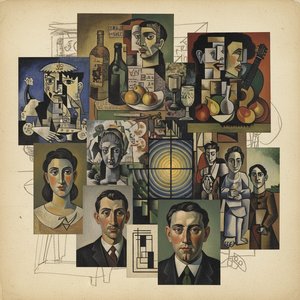
La Kiss


Pablo Picasso's "La Kiss" : Une œuvre emblématique du cubisme explorant l'intimité et la passion avec une maîtrise artistique exceptionnelle. Découvrez cette magnifique reproduction !
 Lire la suite
Explorez l'art révolutionnaire de Pablo Picasso ! Découvrez le Cubisme, les périodes Bleue et Rose, Guernica et son impact durable sur l'art moderne du 20e siècle. #Picasso #Cubisme
L’œuvre d'art présentée sur cette page est protégée par le droit d'auteur, ce qui signifie que nous ne pouvons légalement créer ou vendre de reproduction identique. Cette protection est appliquée en vertu d'accords internationaux tels que la Convention de Berne et par les lois nationales, notamment celles énoncées par le Loi américaine sur le droit d'auteur - Titre 17.
En tant qu'alternative respectueuse et légale, nous proposons des œuvres d'art personnalisées, peintes à la main et inspirées de l'original. Nos artistes talentueux et professionnels étudient avec soin le style, l'ambiance et l'essence artistique de l'œuvre originale pour créer une pièce nouvelle et unique qui évoque la même émotion — tout en restant une création originale en soi.
Cette méthode est pleinement conforme aux réglementations sur le droit d'auteur car elle ne repose pas sur la copie ou la duplication de l'œuvre protégée. Il s'agit plutôt d'une réinterprétation créative — une nouvelle peinture qui s'inspire de l'original sans pour autant lui être identique.
Reproduction à l'huile faite à la main
Huile sur toile peinte à la main, avec cadre et dimensions personnalisés, réalisée sur commande par nos artistes. ( Passer au format impression Passer au format numérique)




P118B €10

P118H €10

P118W €10

P438Z €10

P508JH €12

P508YH €12

P805H €10

P805Z €10

P919BZ €10

P919G €10

P919XJ €10

P959ZH €10

P968JZ €12

W106C €8

W218G €10

W218JH €8

W218Y €10

W307PJ €10

W316G €10

W316PJ €8

W316Y €10

W398PJ €8

W4111J €10

W500HY €15

W500JH €15

W692G €12

W849H €8

W940BG €15

W953PJ €8




Format standard
sur mesure
CM
INCH
Choisissez parmi nos formats prédéfinis qui respectent les proportions originales de l’œuvre.
Loading sizes...

largeur
hauteur
Saisissez la largeur et la hauteur souhaitées, pour s'adapter à votre cadre ou à votre mur. Cette œuvre est peinte à la main ; ainsi, pour un format de forme différente, l'artiste peut peindre un peu plus autour du tableau ou réduire légèrement les bords — c'est vous qui choisissez. Nous vous envoyons une maquette numérique pour approbation avant que la peinture ne commence. L'image présentée sur cette page ne reflète pas le résultat réel — seule la maquette le fait.
Exemples de personnalisation possibles : remplacer un visage par la photo du client ; ajouter un animal de compagnie (par exemple, remplacer un chat par un chien) ; inclure un message caché en arrière-plan ; modifier le paysage ou les éléments de l'arrière-plan.
Après la commande, l’équipe TopImpressionists.com contactera le client par e-mail pour recueillir ses instructions et lui fournira une maquette d’aperçu
Après la commande, l’équipe TopImpressionists.com contactera le client par e-mail pour recueillir ses instructions et lui fournira une maquette d’aperçu
Livraison dans le monde entier () en 3 à 4 semaines au lieu des 5 semaines habituelles. (26 octobre). Aucun compromis sur la qualité.

Livraison express gratuite dans le monde entier

Toile de lin de qualité supérieure

Assurance transport complète

Garantie de remboursement des droits de douane

Garantie de fidélité des couleurs

Politique de retour de 100 jours (uniquement en cas de défaut)

Garantie de remboursement à 100%

Offre de tarifs dégressifs
 L'option verre n'est disponible que pour les dimensions inférieures à 110 cm.

La Kiss
Technique de reproduction
Format de la reproduction
-


Prix total
€ 236
Pablo Picasso: A Revolutionary Spirit
Pablo Ruiz Picasso, a name that resonates through the annals of art history, was born in Málaga, Spain, in 1881—a nation poised on the cusp of profound change. His life, spanning nearly a century, became an extraordinary mirror reflecting this transformation, a relentless exploration of form, perspective, and the very essence of human experience. From his earliest artistic training under his father José Ruiz y Blasco, a painter himself, Picasso displayed a precocious talent that quickly surpassed even his mentor’s abilities. This early mastery wasn't merely technical; it hinted at an insatiable curiosity and a willingness to challenge convention—qualities destined to define his entire career. The family’s subsequent moves to A Coruña and then Barcelona proved pivotal, immersing the young artist in vibrant cultural environments where he honed his skills and began to forge hiThe Birth of Cubism: Fragmented Reality
Picasso's artistic journey commenced with a fascination for traditional academic painting—a path meticulously charted by his father. However, this foundational training quickly yielded to an irresistible impulse toward experimentation. Influenced by the burgeoning avant-garde movements of Paris, Picasso embraced revolutionary ideas that would reshape the landscape of art. The encounter with Cézanne’s geometric simplification profoundly impacted his thinking, prompting him to dismantle conventional representation and delve into a new visual language. This pivotal moment marked the genesis of Cubism—a groundbreaking artistic approach characterized by its deliberate fragmentation of objects and perspectives. Picasso collaborated closely with Georges Braque, forging an intellectual partnership that propelled this innovative movement forward. Together, they dissected subjects into geometric planes, presenting multiple viewpoints simultaneously—a radical departure from the illusionistic conventions of realism.Les Demoiselles d'Avignon: A Shock to Artistic Sensibilities
1907 witnessed Picasso’s creation of “Les Demoiselles d’Avignon,” arguably his most iconic work and a cornerstone of Cubist theory. This painting represents a dramatic rupture with artistic tradition, confronting viewers with an unsettling depiction of five nude female figures—a bold reimagining of biblical scenes inspired by African masks. The faces of the women are rendered in angular planes, mirroring the stylistic influences of Iberian sculpture and Proto-Cubism. Picasso’s audacious technique abandons naturalistic representation, prioritizing formal experimentation over accurate portrayal. The painting's jarring juxtaposition of perspectives and textures generates a palpable tension—a deliberate provocation designed to destabilize viewers’ expectations. “Les Demoiselles d’Avignon” stands as a testament to Picasso’s unwavering commitment to artistic innovation and his willingness to challenge established norms.Guernica: A Cry Against War
Executed in response to the bombing of Guernica during the Spanish Civil War, “Guernica” embodies Picasso's profound engagement with social and political issues. This monumental monochrome canvas—a searing indictment of violence and suffering—employs a masterful orchestration of symbolism and visual language. Picasso utilizes fragmented forms and distorted figures to convey the horror and trauma inflicted upon civilians by aerial bombardment. The painting’s palette is deliberately muted, mirroring the bleakness of wartime devastation. Recurring motifs—such as the bull, the horse, and the weeping woman—represent themes of brutality, pain, and resilience. “Guernica” transcends mere depiction; it aspires to evoke an emotional response in viewers—a visceral confrontation with the horrors of conflict. Picasso’s artistic vision serves as a timeless reminder of humanity's capacity for cruelty and compassion.The Legacy of Picasso: An Enduring Influence
Pablo Picasso’s impact on 20th-century art remains undeniable—his pioneering explorations of form, perspective, and emotion continue to inspire artists across disciplines. His unwavering dedication to experimentation solidified his position as a visionary innovator—a figure who fundamentally altered artistic conventions and broadened the scope of creative expression. From Surrealism to Pop Art, Picasso’s influence permeated diverse movements, shaping aesthetic sensibilities and challenging preconceived notions about representation. His enduring legacy resides not only in his celebrated masterpieces but also in his unwavering belief that art possesses the power to provoke thought, inspire empathy, and confront uncomfortable truths—a conviction that continues to resonate powerfully today. Picasso's work stands as a beacon of artistic courage—a testament to the transformative potential of creative vision."Questions et réponses
Quel format et quelle orientation sont recommandés pour l'impression de « La Kiss » ?
Format Grand format, orientation Format carré : voici la configuration d'impression suggérée pour «La Kiss» de Pablo Picasso.
Dans quel mouvement et à quelle époque s'inscrit «La Kiss» de Pablo Picasso ?
« La Kiss » appartient au mouvement Cubisme, et son créateur a œuvré à l'époque Époque moderne.
Qui est l'auteur de « La Kiss » et de quel mouvement artistique est-il issu ?
« La Kiss » a été créé par Pablo Picasso dans le style Cubisme. L'artiste et le mouvement définissent la tradition de l'œuvre.
Biographie de l'artiste
Pablo Picasso: Un Artiste Révolutionnaire
La Jeunesse et la Formation (1881-1904)
- Né le 25 octobre 1881 à Málaga, en Espagne, Pablo Ruiz y Picasso a démontré un talent artistique dès son plus jeune âge.
- Son père, José Ruiz y Blasco, était professeur d'art et lui a fourni une formation précoce. On raconte que les premiers mots de Picasso étaient “piz, piz” – tentant de dire ‘crayola’.
- Picasso a rapidement dépassé les capacités de son père, montrant un talent remarquable pour des représentations naturalistes.
- La famille a déménagé à A Coruña et plus tard à Barcelone après la tragique mort de sa sœur.
- À Barcelone, il a fréquenté l’École des Beaux-Arts mais s'est souvent heurté aux instructions académiques traditionnelles. Il a brièvement étudié à l’Académie Royale des Beaux-Arts de Saint-Ferdinand à Madrid, trouvant cela étouffant et préférant étudier les maîtres comme Velázquez et Goya indépendamment.
La Période Bleue et Rose (1901-1906)
- La Période Bleue (environ 1901-1904) se caractérise par des peintures sombres dominées par des teintes de bleu et turquoise.
- Ces œuvres dépeignent souvent des figures marginalisées – mendiants, aveugles, prostituées – reflétant la mélancolie et le commentaire social. Des exemples clés incluent La Vie (1903) et Le Vieux Guitariste (1903-1904).
- Après cela, la Période Rose (1904-1906) a émergé avec des tons plus chauds – roses, oranges et rouges.
- Cette période reflète une vision plus optimiste, représentant souvent des artistes de cirque, des harlequins et des acrobates. La Famille de Saltimbanques (1905) en est un exemple.
Les Années Révolutionnaires : Cubisme et au-delà (1907-1919)
- 1907 a marqué un moment décisif avec Les Demoiselles d'Avignon, influencé par la sculpture ibérique et les masques africains. Ce tableau a brisé la perspective traditionnelle, ouvrant la voie au Cubisme.
- Travaillant en étroite collaboration avec Georges Braque, Picasso a cofondé le Cubisme, modifiant fondamentalement la façon dont les artistes représentaient la réalité.
- Cubisme Analytique (1909-1912) présentait des formes fragmentées, des couleurs atténuées et une dissection des objets en formes géométriques.
- Cubisme Synthétique (1912-1919) incorporait des éléments de collage – clippings de journaux, chutes de tissu – pour créer des surfaces texturées et de nouvelles couches visuelles.
Néo-classicisme et Surréalisme (Années 1920 - Années 1930)
- Les années 1920 ont vu Picasso explorer des styles néoclassiques avec des figures monumentales soulignant les formes classiques.
- Il a également été impliqué dans le mouvement surréaliste, sans pour autant s'aligner pleinement sur ses principes. Son œuvre mélangeait des styles antérieurs à des images surréalistes et des perspectives déformées.
Années de la Fin et Héritage (1940-1973)
- Pendant la Seconde Guerre mondiale, Picasso est resté en France, produisant des déclarations anti-guerre puissantes comme Guernica (1937), une réponse viscérale au bombardement de Guernica pendant la guerre civile espagnole.
- Guernica est devenu un symbole durable des horreurs de la guerre et reste l'une de ses œuvres les plus célébrées.
- Tout au long des années 1950 et 1960, Picasso a continué à expérimenter avec divers médiums – céramique, sculpture, gravure – démontrant une versatilité remarquable.
- Il s'est marié à Jacqueline Roque en 1961. Il est décédé le 8 avril 1973 à Mougins, en France.
Influences et Importance Historique
- Le développement artistique de Picasso a été façonné par les maîtres espagnols comme Velázquez et Goya, la sculpture ibérique, l'art africain et Henri Matisse.
- Son impact sur l’art du XXe siècle est immeasurable. Il a cofondé le Cubisme, a pionnier le collage et la sculpture construite, et a constamment remis en question les conventions artistiques.
- L’expérimentation incessante de Picasso a redéfini l'art moderne et continue d'inspirer les artistes aujourd'hui.
- Sa production abondante – estimée à plus de 50 000 œuvres – consolide sa position en tant que l'un des artistes les plus importants et les plus influents de l’histoire.

Pablo Picasso
1881 - 1973 , Espagne
L'essentiel de l'artiste
- Artistes Influents:
- Velázquez
- Goya
- Henri Matisse
- Date De Décès: 8 avril 1973
- Date De Naissance: 25 octobre 1881
- Influences Artistiques:
- Cubisme
- Surréalisme
- Lieu De Naissance: Málaga, Espagne
- Nationalité: Espagnole
- Nom Complet: Pablo Ruiz y Picasso
- Oeuvres Notables:
- Les Demoiselles d'Avignon
- Guernica
- La Vie
- Le Vieux Guitariste
- Famille de Saltimbanques
- Style Artistique: Cubisme, Surréalisme
Articles connexes

Cubism Unveiled: How Picasso and Braque Redefined Modern Art through Geometric Revolution
Explore the revolutionary world of Cubism. Discover how Pablo Picasso and Georges Braque dismantled perspective to redefine modern art through geometric innovation and analytical mastery. An essential guide for art students, collectors, and history enthusiasts.
Les 10 Chefs-d'œuvre Cubistes Révolutionnaires : Art, Décor & Histoire
Plongez au cœur du cubisme avec les 10 œuvres révolutionnaires de Picasso, Braque et Gris. Découvrez l'histoire, les techniques et l'impact de ce mouvement artistique majeur. Reproductions d'art de qualité musée sur TopImpressionists.com !

Cubism Unveiled: How Picasso and Braque Redefined Reality Through Geometric Abstraction
Explore the revolutionary world of Cubism. Discover how masters Pablo Picasso and Georges Braque dismantled reality through geometric abstraction to redefine modern art history.

Pablo Picasso : Révolution cubiste, symbolisme et héritage durable
Explorez la révolution cubiste de Picasso et Braque avec TopImpressionists. Découvrez l'histoire, les techniques et l'impact durable de ce mouvement artistique majeur. Guide pour collectionneurs passionnés.

Cubism Explained: How Picasso and Braque Shattered Reality to Redefine Modern Art
Master the complexities of Cubism with our expert guide. Explore how Picasso and Braque revolutionized modern art through fragmentation, multiple perspectives, and geometric innovation. Perfect for art students and collectors seeking deep historical insight.
Explorez des œuvres d'art classées par thèmes, styles et caractéristiques.


