


 Aperçu en situation
 Partager
 Partager
 Détails
 Guide imprimable

 Télécharger
 Articles similaires
 Radiographie
 Voir le diaporama
 Statistiques
Chateau de Madan


Paul Cézanne’s ‘Château de Madan’ (1881) is a serene watercolor landscape showcasing Impressionistic brushwork & atmospheric perspective. Explore this tranquil scene of nature & rural France – a captivating piece for art lovers.
 Afficher la suite
Explorez l'art révolutionnaire de Paul Cézanne (1839-1906), un maître du post-impressionnisme qui a relié l'impressionnisme et le cubisme. Découvrez ses formes géométriques, ses coups de pinceau uniques, ses natures mortes et son impact durable sur l'art moderne. #Cézanne #PostImpressionnisme
Giclées et impressions d'art
Impressions giclées ou sur toile de qualité musée, avec une production rapide et des finitions au choix. ( Acheter la peinture faite à la main Passer au format image numérique)




P118B €10

P118H €10

P118W €10

P438Z €10

P508JH €12

P508YH €12

P805H €10

P805Z €10

P919BZ €10

P919G €10

P919XJ €10

P959ZH €10

P968JZ €12

W106C €8

W218G €10

W218JH €8

W218Y €10

W307PJ €10

W316G €10

W316PJ €8

W316Y €10

W398PJ €8

W4111J €10

W500HY €15

W500JH €15

W692G €12

W849H €8

W940BG €15

W953PJ €8




Format standard
personnalisé
CM
INCH
Choisissez parmi nos formats prédéfinis qui respectent les proportions originales de l’œuvre.
Loading sizes...

largeur
hauteur
Saisissez la largeur et la hauteur souhaitées pour qu'elles s'adaptent à votre cadre ou à votre mur. Une impression ne peut être que découpée, elle ne peut jamais être agrandie au-delà de l'image originale ; ainsi, un format de forme différente entraînera la perte d'une partie de l'image. Nous vous envoyons une maquette numérique pour approbation avant toute impression. L'image présentée sur cette page ne montre pas le recadrage réel — seule la maquette le permet.
Livraison dans le monde entier () en 2 semaines au lieu des 4/5 semaines habituelles. (25 octobre)

Livraison express gratuite dans le monde entier

Toile de lin de haute qualité

Assurance transport complète

Garantie de remboursement des droits de douane

Garantie de fidélité des couleurs

Garantie de retour de 100 jours (uniquement en cas de défaut)

Garantie de remboursement à 100%

Tarifs dégressifs sur quantité
 L'option verre n'est disponible que pour les dimensions inférieures à 110 cm.

Chateau de Madan
Giclées et impressions d'art
Format de la reproduction
-


Prix total final
€ 61
Chateau de Madan: A Glimpse into Cézanne’s Developing Vision
Painted in 1881, *Chateau de Madan* offers a captivating window into Paul Cézanne's artistic evolution during a pivotal period. This watercolor landscape isn’t merely a depiction of a rural scene; it’s a testament to the artist’s burgeoning exploration of form, light, and the very essence of perception – themes that would define his groundbreaking contributions to modern art.Subject & Composition: Rural Tranquility
The artwork presents a serene vista featuring trees dominating the foreground, with the distant silhouette of Chateau de Madan and other buildings hinting at human presence within the landscape. The composition is deliberately asymmetrical, guiding the viewer’s eye towards the horizon line where the verticality of the trees contrasts beautifully with the expansive sky. This creates a sense of depth while simultaneously flattening perspective – a characteristic Cézanne would refine throughout his career. It's an intimate observation of the Provençal countryside, a region deeply ingrained in Cézanne’s artistic identity.Style & Technique: Impressionistic Roots, Post-Impressionist Seeds
While demonstrably rooted in Impressionism, *Chateau de Madan* already reveals the seeds of Cézanne's unique style that would blossom into Post-Impressionism. The loose brushstrokes and focus on capturing atmospheric effects are hallmarks of the Impressionist movement. However, unlike his contemporaries who prioritized fleeting moments of light, Cézanne begins to emphasize underlying structure. The watercolor technique itself – employing wet-on-wet application – allows for a beautiful blending of colors, creating soft washes and a grainy texture that evokes a sense of atmosphere. The muted color palette further enhances the feeling of tranquility and observation.Historical Context: A Bridge Between Movements
1881 was a crucial year in Cézanne’s development. He had recently connected with Émile Zola, who encouraged him to exhibit his work, and was absorbing influences from artists like Paul Gauguin and Georges Seurat. This period saw him moving away from the purely optical concerns of Impressionism towards a more analytical approach – an attempt to understand and represent the fundamental geometric forms that underpin reality. *Chateau de Madan* stands as evidence of this transition; it’s not simply what Cézanne sees, but how he begins to construct what he sees.Symbolism & Emotional Impact: Peaceful Contemplation
The symbolism within *Chateau de Madan* is subtle yet profound. The landscape itself represents a connection to nature, offering a respite from the burgeoning industrialization of the era. The distant chateau suggests human civilization existing in harmony with its surroundings. More broadly, the artwork evokes feelings of peaceful contemplation and quiet observation. It invites viewers to pause, breathe, and appreciate the beauty of the natural world – a sentiment that resonates deeply even today.Cézanne’s Legacy
Paul Cézanne (1839-1906) is now recognized as a pivotal figure in the development of modern art. His exploration of form and structure paved the way for Cubism and profoundly influenced generations of artists. *Chateau de Madan*, while an early work, provides valuable insight into the genesis of his revolutionary vision – a vision that continues to inspire and captivate audiences worldwide. This piece is not just a beautiful landscape; it’s a foundational step towards the artistic language of the 20th century.Questions et réponses
Quelle est la teinte dominante de «Chateau de Madan» de Paul Cézanne ?
Une nuance Ochre to Sepia traverse «Chateau de Madan» de Paul Cézanne.
Un téléchargement est-il disponible pour « Chateau de Madan » ?
«Chateau de Madan» de Paul Cézanne peut être téléchargé depuis la page Télécharger de l'œuvre, en tant que un téléchargement d'image numérique haute résolution.
À quel âge Paul Cézanne a-t-il créé « Chateau de Madan » ?
Paul Cézanne avait 42 ans lors de la création de « Chateau de Madan » en 1881. L'âge est calculé à partir de l'année de naissance de l'artiste, 1839.
Œuvres similaires


Biographie de l'artiste
jeune vie et influences
paul cézanne, peintre français post-impressionniste, est né le 19 janvier 1839 à Aix-en-Provence, en France. Sa jeune vie a été marquée par un fort attachement à sa famille, dont l'entreprise bancaire lui assurait une sécurité financière. Cela lui a permis de se consacrer à ses aspirations artistiques sans être entravé par des soucis financiers. les nabis, néo-impressionnisme et symbolisme ont influencé le travail de Cézanne au début, qui se caractérisait par son accent sur les formes géométriques et une palette de couleurs limitée. Son intérêt pour les œuvres de paul gauguin et georges seurat a renforcé son style post-impressionniste.style artistique et techniques
L'utilisation innovante de Cézanne des plans de couleurs et de petits coups de pinceau répétitifs a créé des champs complexes qui exprimaient son étude approfondie des sujets. Son approche souvent exploratoire de l'art a conduit au développement d'une nouvelle langue picturale, mettant l'accent sur la structure sous-jacente des objets dans une composition.- caractéristiques principales :
- formes géométriques et façonnage
- palette de couleurs réduite
- importance de l'essence constructive du monde physique
- perspective multiple et simultanéité
- œuvres influentes :
- le plan d'eau de Jas de Bouffan (1880)
- portrait d’Émile Zola (1866)
- forêt (1892)
- musées présentant l'œuvre de Cézanne :
- le musée Marmottan Monet à Paris, en France
- le musée des beaux-arts à Houston, aux États-Unis
héritage et impact
Le travail pionnier de Cézanne en post-impressionnisme a ouvert la voie à divers mouvements avant-gardistes, notamment le cubisme, le fauvisme et le surréalisme. Son influence se retrouve dans les œuvres de pablo picasso, henri matisse et georges braque. L'héritage de Cézanne continue d’inspirer les artistes et les amateurs d’art, consolidant ainsi sa place en tant que figure centrale de l’histoire de l’art moderne.- mouvements artistiques connexes :
- consultez les œuvres de Cézanne :

Paul Cézanne
1839 - 1906 , France
En bref
- Artistes Influents:
- Paul Gauguin
- Georges Seurat
- Date De Décès: 22 octobre 1906
- Date De Naissance: 19 janvier 1839
- Influences Artistiques:
- Pablo Picasso
- Henri Matisse
- Georges Braque
- Lieu De Naissance: Aix-en-Provence, France
- Mouvement Artistique: Post-impressionnisme
- Nationalité: Français
- Nom Complet: Paul Cézanne
- Œuvres Notables:
- Le Plan d'eau à Jas de Bouffan
- Portrait d’Émile Zola
- Forêt
- Mont Sainte-Victoire
Articles connexes

Capturing the Soul: The Most Emotionally Moving Impressionist and Post-Impressionist Masterpieces
Discover the profound emotional depth of Impressionist and Post-Impressionist masterpieces. Explore how legends like Monet, Van Gogh, and Gauguin captured light and soul through evocative landscapes and vibrant brushwork for a timeless connection to art history.

The Beauty of Impermanence: Capturing Decay through Impressionist Eyes
Explore the profound beauty of impermanence through Impressionist and Post-Impressionist eyes. Discover how masters like Monet and Van Gogh captured fleeting light and the poetic essence of nature's transitions in our deep dive into art history and emotional landscapes.

Capturing Light: The Ethereal Beauty and Timeless Legacy of Watercolor Landscapes
Embark on a visual journey through the ethereal beauty of watercolor landscapes. Discover how Impressionist masters captured light and emotion, and learn to bring this timeless, luminous elegance into your home with expert art curation and hand-painted reproductions.

Beyond the Light: Capturing Raw Emotion and Subjective Vision in Post-Impressionist Landscapes
Explore the profound emotional depth of Post-Impressionist landscapes. Discover how masters like Van Gogh moved beyond light to capture raw human feeling through vibrant color and expressive texture in this expert art history retrospective.
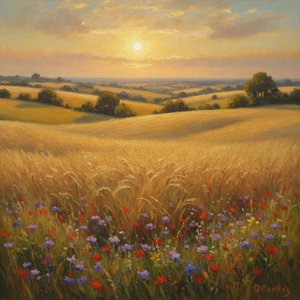
Golden Fields & Sun-Drenched Meadows: Capturing the Soul of Impressionist Landscapes
Immerse yourself in the luminous world of Impressionist landscapes. Discover how masters like Monet and Gauguin captured ephemeral light through plein air painting, and learn to bring the soul of sun-drenched meadows into your home with exquisite, hand-painted oil reproductions.
Explorez des œuvres d'art classées par thèmes, styles et caractéristiques.


