


 Aperçu en situation
 Envoyer
 Partager
 Détails de l'œuvre
 Guide
Guide

 Télécharger l'image
 Articles similaires
 Radiographie
 Diaporama
 Statistiques
Flowers in a Blue Vase


Admirez « Fleurs dans un vase bleu » de Paul Cézanne : une œuvre emblématique du mouvement post-impressionniste, caractérisée par des couleurs vives et des coups de pinceau expressifs.
 Lire la suite
Explorez l'art révolutionnaire de Paul Cézanne (1839-1906), un maître du post-impressionnisme qui a relié l'impressionnisme et le cubisme. Découvrez ses formes géométriques, ses coups de pinceau uniques, ses natures mortes et son impact durable sur l'art moderne. #Cézanne #PostImpressionnisme
Giclées et impressions d'art
Impressions giclées ou sur toile de qualité musée, avec une production rapide et des finitions au choix. ( Commander la reproduction peinte à la main Passer au format numérique)




P118B €10

P118H €10

P118W €10

P438Z €10

P508JH €12

P508YH €12

P805H €10

P805Z €10

P919BZ €10

P919G €10

P919XJ €10

P959ZH €10

P968JZ €12

W106C €8

W218G €10

W218JH €8

W218Y €10

W307PJ €10

W316G €10

W316PJ €8

W316Y €10

W398PJ €8

W4111J €10

W500HY €15

W500JH €15

W692G €12

W849H €8

W940BG €15

W953PJ €8




Format standard
sur mesure
CM
INCH
Choisissez parmi nos formats prédéfinis qui respectent les proportions originales de l’œuvre.
Loading sizes...

largeur
hauteur
Saisissez la largeur et la hauteur souhaitées pour qu'elles s'adaptent à votre cadre ou à votre mur. Une impression peut être recadrée, mais jamais agrandie au-delà de l'image originale ; ainsi, un format de forme différente entraînera la perte d'une partie de l'image. Nous vous envoyons une maquette numérique pour approbation avant toute impression. L'image présentée sur cette page ne montre pas le recadrage réel — seule la maquette le permet.
Livraison dans le monde entier () en 2 semaines au lieu des 4/5 semaines habituelles. (25 octobre)

Livraison express gratuite dans le monde entier

Toile de lin de qualité supérieure

Assurance transport complète

Garantie de remboursement des droits de douane

Garantie de fidélité des couleurs

Politique de retour de 100 jours (uniquement en cas de défaut)

Garantie de remboursement à 100%

Offre de tarifs dégressifs
 L'option verre n'est disponible que pour les dimensions inférieures à 110 cm.

Flowers in a Blue Vase
Giclées et impressions d'art
Format de la reproduction
-


Prix total
€ 61
The Painting and Its Artist
Paul Cézanne, a French painter, is renowned for his pivotal role in the transition from 19th-century Impressionism to early 20th-century Cubism. His work, characterized by repetitive brushstrokes and an emphasis on structure, laid the groundwork for avant-garde movements. “Flowers in a Blue Vase,” created in 1875, is one of his notable works that exemplify his unique style. It’s considered a cornerstone of Post-Impressionism—a movement born from dissatisfaction with Impressionist aesthetics and seeking to explore deeper artistic concepts. Cézanne's fascination with capturing the essence of nature rather than merely its fleeting appearance profoundly influenced subsequent generations of artists.Artistic Style and Technique
This painting is a quintessential example of Post-Impressionism, a movement that emerged as a reaction against the naturalistic depiction of light and color in Impressionist art. Cézanne’s use of planes of color and small brushstrokes creates complex fields, giving the painting a dynamic and expressive quality. Unlike Impressionists who aimed to reproduce visual sensations, Cézanne prioritized conveying underlying forms and spatial relationships—a technique that anticipates Cubism's fragmentation of perspective. The artist meticulously builds up layers of pigment, creating textured surfaces that invite contemplation and revealing the sculptor’s influence on his approach to painting. Notice how Cézanne renders the vase and flowers not as they appear to the eye but as he perceives them structurally—a deliberate departure from Impressionistic conventions.Historical Context
In 1875, when “Flowers in a Blue Vase” was painted, Cézanne was still developing his style. His early works were influenced by Romanticism and Realism, but he soon moved towards a more innovative approach. He spent considerable time studying the effects of light on surfaces—particularly in Aix-en-Provence—and experimenting with different compositional arrangements. This painting reflects his intense study of subjects and his emphasis on the underlying structure of objects. Cézanne’s artistic vision coincided with a period of intellectual ferment, marked by discussions about art history and aesthetics. He was part of a circle of artists who debated the merits of traditional versus experimental approaches to representation—a dialogue that would shape the course of modern art.Reception and Legacy
Initially, Cézanne's work was met with incomprehension and ridicule. Critics dismissed it as clumsy and lacking in finesse, arguing that it betrayed Cézanne’s ambition to transcend Impressionism. However, fellow artists like Camille Pissarro and art dealer Ambroise Vollard recognized his genius. They championed Cézanne’s vision of art—one rooted in observation and structural analysis—and defended him against the prevailing critical opinion. The first solo exhibition of his works in 1895 at Vollard's gallery marked a turning point in his career, attracting considerable attention from collectors and establishing Cézanne as a significant figure in the artistic landscape. Henri Matisse and Pablo Picasso acknowledged Cézanne as “the father of us all,” recognizing his profound influence on their own stylistic developments. His legacy continues to inspire artists today who strive for originality and depth—a testament to Cézanne’s enduring contribution to art history.Current Location and Significance
“Flowers in a Blue Vase” is housed at the The State Hermitage Museum in Russia, a testament to its enduring importance. This painting—along with others by Cézanne—represents a pivotal moment in the evolution of Western art and embodies the spirit of experimentation that characterizes the transition from Impressionism to Cubism. For those interested in exploring more of Cézanne’s works, Paul Cézanne: Flowers in a Blue Vase and Paul Cézanne: Still Life with Curtain and Flowered Pitcher are available at TopImpressionists. These hand-made oil painting reproductions offer a unique opportunity to own a piece of art history.- Post-Impressionism Art Movement: A predominantly French movement that developed roughly between 1886 and 1905, characterized by a reaction against Impressionists’ concern for the naturalistic depiction of light and color. Learn more about Post-Impressionism.
- Paul Cézanne's Biography: A French painter who introduced new modes of representation and influenced avant-garde artistic movements. Read more about Paul Cézanne on Wikipedia.
- History of Art: The history of art focuses on objects made by humans for various purposes, with a primary emphasis on their aesthetic visual form. Explore the History of Art on Wikipedia.
This article provides an in-depth look at “Flowers in a Blue Vase” by Paul Cézanne, highlighting its significance within the Post-Impressionist movement and its enduring influence on modern art. Photo Description: The image is a painting of a vase filled with flowers in various colors. The vase is blue and sits on a table. There are several different types of flowers in the vase, including red ones. The painting is done in an impressionistic style, which gives it a lively and colorful appearance. The artist's name is Paul Cezanne, who was known for his Post-Impressionist paintings. This particular painting is titled “Flowers in a Blue Vase” and was created in 1875. It is currently housed at the State Hermitage Museum in Russia. Size: Unknown Date: 1875
Questions et réponses
Existe-t-il une fiche informative sur «Flowers in a Blue Vase» de Paul Cézanne destinée aux étudiants ?
Une page Fiche pédagogique est disponible pour «Flowers in a Blue Vase» de Paul Cézanne : une fiche pédagogique imprimable sur l'œuvre, conçue pour les étudiants et un usage en classe.
Quelle palette et quelle couleur dominante définissent "Flowers in a Blue Vase" ?
«Flowers in a Blue Vase» de Paul Cézanne arbore une palette Sombre et profond, avec le Brun espresso (#363619) comme couleur dominante.
En quelle année et dans quel mouvement "Flowers in a Blue Vase" a-t-elle été réalisée ?
«Flowers in a Blue Vase» a été réalisé en 1875, au sein du mouvement Post-Impressionism.
Œuvres similaires


Biographie de l'artiste
jeune vie et influences
paul cézanne, peintre français post-impressionniste, est né le 19 janvier 1839 à Aix-en-Provence, en France. Sa jeune vie a été marquée par un fort attachement à sa famille, dont l'entreprise bancaire lui assurait une sécurité financière. Cela lui a permis de se consacrer à ses aspirations artistiques sans être entravé par des soucis financiers. les nabis, néo-impressionnisme et symbolisme ont influencé le travail de Cézanne au début, qui se caractérisait par son accent sur les formes géométriques et une palette de couleurs limitée. Son intérêt pour les œuvres de paul gauguin et georges seurat a renforcé son style post-impressionniste.style artistique et techniques
L'utilisation innovante de Cézanne des plans de couleurs et de petits coups de pinceau répétitifs a créé des champs complexes qui exprimaient son étude approfondie des sujets. Son approche souvent exploratoire de l'art a conduit au développement d'une nouvelle langue picturale, mettant l'accent sur la structure sous-jacente des objets dans une composition.- caractéristiques principales :
- formes géométriques et façonnage
- palette de couleurs réduite
- importance de l'essence constructive du monde physique
- perspective multiple et simultanéité
- œuvres influentes :
- le plan d'eau de Jas de Bouffan (1880)
- portrait d’Émile Zola (1866)
- forêt (1892)
- musées présentant l'œuvre de Cézanne :
- le musée Marmottan Monet à Paris, en France
- le musée des beaux-arts à Houston, aux États-Unis
héritage et impact
Le travail pionnier de Cézanne en post-impressionnisme a ouvert la voie à divers mouvements avant-gardistes, notamment le cubisme, le fauvisme et le surréalisme. Son influence se retrouve dans les œuvres de pablo picasso, henri matisse et georges braque. L'héritage de Cézanne continue d’inspirer les artistes et les amateurs d’art, consolidant ainsi sa place en tant que figure centrale de l’histoire de l’art moderne.- mouvements artistiques connexes :
- consultez les œuvres de Cézanne :

Paul Cézanne
1839 - 1906 , France
L'essentiel de l'artiste
- Artistes Influents:
- Paul Gauguin
- Georges Seurat
- Date De Décès: 22 octobre 1906
- Date De Naissance: 19 janvier 1839
- Influences Artistiques:
- Pablo Picasso
- Henri Matisse
- Georges Braque
- Lieu De Naissance: Aix-en-Provence, France
- Mouvement Artistique: Post-impressionnisme
- Nationalité: Français
- Nom Complet: Paul Cézanne
- Œuvres Notables:
- Le Plan d'eau à Jas de Bouffan
- Portrait d’Émile Zola
- Forêt
- Mont Sainte-Victoire
Articles connexes
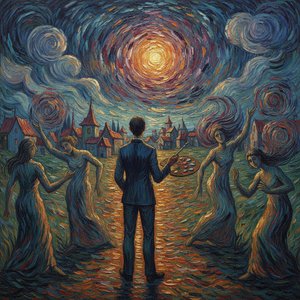
Beyond the Light: Capturing Emotion Through the Expressive Soul of Post-Impressionism
Explore the profound emotional depth of Post-Impressionism. Discover how masters like Van Gogh and Cézanne moved beyond light to capture raw feeling through color and texture. A journey into art history for the true connoisseur.

Beyond the Light: Discovering the Soul and Emotional Depth of Post-Impressionism
Embark on a cultural journey through Post-Impressionism. Discover the profound emotional depth of masters like Van Gogh and Cézanne, exploring how they moved beyond light to capture the very soul of human experience through vibrant color and symbolic form.
Explorez des œuvres d'art classées par thèmes, styles et caractéristiques.


