


 Aperçu en situation
 Partager
 Partager
 Détails
 Guide imprimable

 Télécharger
 Articles similaires
 Radiographie
 Voir le diaporama
 Statistiques
La Maison et les arbres


Paul Cézanne : Découvrez "La Maison et les arbres", une œuvre emblématique du post-impressionnisme au musée Barnes ! Paysages sereins et touche innovante pour un maître de l'art moderne. #Cézanne #PostImpressionisme
 Afficher la suite
Explorez l'art révolutionnaire de Paul Cézanne (1839-1906), un maître du post-impressionnisme qui a relié l'impressionnisme et le cubisme. Découvrez ses formes géométriques, ses coups de pinceau uniques, ses natures mortes et son impact durable sur l'art moderne. #Cézanne #PostImpressionnisme
Giclées et impressions d'art
Impressions giclées ou sur toile de qualité musée, avec une production rapide et des finitions au choix. ( Acheter la peinture faite à la main Passer au format image numérique)




P118B €10

P118H €10

P118W €10

P438Z €10

P508JH €12

P508YH €12

P805H €10

P805Z €10

P919BZ €10

P919G €10

P919XJ €10

P959ZH €10

P968JZ €12

W106C €8

W218G €10

W218JH €8

W218Y €10

W307PJ €10

W316G €10

W316PJ €8

W316Y €10

W398PJ €8

W4111J €10

W500HY €15

W500JH €15

W692G €12

W849H €8

W940BG €15

W953PJ €8




Format standard
personnalisé
CM
INCH
Choisissez parmi nos formats prédéfinis qui respectent les proportions originales de l’œuvre.
Loading sizes...

largeur
hauteur
Saisissez la largeur et la hauteur souhaitées pour qu'elles s'adaptent à votre cadre ou à votre mur. Une impression ne peut être que découpée, elle ne peut jamais être agrandie au-delà de l'image originale ; ainsi, un format de forme différente entraînera la perte d'une partie de l'image. Nous vous envoyons une maquette numérique pour approbation avant toute impression. L'image présentée sur cette page ne montre pas le recadrage réel — seule la maquette le permet.
Livraison dans le monde entier () en 2 semaines au lieu des 4/5 semaines habituelles. (23 octobre)

Livraison express gratuite dans le monde entier

Toile de lin de haute qualité

Assurance transport complète

Garantie de remboursement des droits de douane

Garantie de fidélité des couleurs

Garantie de retour de 100 jours (uniquement en cas de défaut)

Garantie de remboursement à 100%

Tarifs dégressifs sur quantité
 L'option verre n'est disponible que pour les dimensions inférieures à 110 cm.

La Maison et les arbres
Giclées et impressions d'art
Format de la reproduction
-


Prix total final
€ 61
House and Trees
Paul Cézanne’s *House and Trees*, painted in 1890, stands as an emblem of Post-Impressionism's radical departure from academic conventions and its profound engagement with the natural world. Currently residing at The Barnes Foundation in Philadelphia, this artwork transcends mere representation; it embodies Cézanne’s relentless pursuit of capturing the essence of form and color—a quest that irrevocably altered the trajectory of modern art.Composition and Style
The painting depicts a modest dwelling nestled amongst mature trees, punctuated by a solitary figure positioned on the right side of the canvas. Cézanne eschewed linear perspective, favoring instead a flattened pictorial space where objects appear to exist simultaneously in multiple planes—a technique characteristic of his distinctive style. Repetitive, exploratory brushstrokes build up complex fields of color, creating an atmosphere imbued with tranquility and a palpable connection to nature’s rhythms. Unlike Impressionists who sought to depict fleeting moments of light, Cézanne prioritized underlying structure, emphasizing geometric forms beneath the surface of pigment—a deliberate rejection of traditional artistic dogma.Artistic Influences
Cézanne's artistic vision drew inspiration from both Romanticism and Realism. However, he swiftly surpassed these movements by immersing himself in Impressionist explorations of color and form, recognizing their potential to convey emotional depth beyond mere visual accuracy. The influence of artists like Paul Gauguin is evident in Cézanne’s bold use of color palettes—particularly the earthy hues that dominate *House and Trees*. Furthermore, Cézanne's meticulous observation of nature mirrored the sensibilities of Realist painters who sought to depict everyday life with unflinching honesty.Legacy
Cézanne’s innovative approach cemented his reputation as “the father of us all” among subsequent generations of artists—including Henri Matisse and Pablo Picasso—who acknowledged his pivotal role in establishing Cubism's groundbreaking fragmentation technique. His unwavering dedication to formal experimentation paved the way for avant-garde movements that challenged established artistic norms, fostering a spirit of creative liberation. Cézanne’s enduring legacy continues to inspire art enthusiasts worldwide, reminding us that true beauty resides not merely in capturing appearances but in uncovering the hidden truths beneath them.Relevance in Modern Art
The Post-Impressionist movement—fueled by Cézanne's pioneering vision—established a crucial bridge between Impressionism and Cubism, marking a decisive shift toward abstraction and geometric simplification. Artists like Vincent van Gogh and Paul Klee absorbed Cézanne’s principles of form and color, adapting them to their own expressive languages. Cézanne’s influence can be discerned in countless artworks produced throughout the 20th century—a testament to his transformative impact on the history of art.- Paul Cézanne: Peaches, Pears and Grapes
- Paul Gauguin: Bouquet
- Vincent Van Gogh: Pine Trees in Front of the Wall of the Asylum
Explore Cézanne’s Artistic Movement
For a deeper understanding of Paul Cézanne's contributions to Post-Impressionism, visit Paul Cézanne's page on TopImpressionists. You can also explore the Wikipedia article on Paul Cézanne for a comprehensive overview of his life and artistic achievements.Questions et réponses
À quel point les couleurs de «La Maison et les arbres» de Paul Cézanne sont-elles harmonieuses ?
«La Maison et les arbres» de Paul Cézanne présente une harmonie de couleurs Forte unité chromatique.
Comment l'atmosphère de «La Maison et les arbres» de Paul Cézanne est-elle décrite ?
L'atmosphère générale de «La Maison et les arbres» de Paul Cézanne est Sérénité. Cette ambiance décrit l'impression globale de l'œuvre.
Existe-t-il un guide pour «La Maison et les arbres» de Paul Cézanne ?
La page Guide de «La Maison et les arbres» de Paul Cézanne propose une fiche pédagogique imprimable en deux volets : l'œuvre accompagnée de sa fiche d'identité, une frise chronologique la situant dans la vie de l'artiste, d'autres œuvres de l'artiste, la palette de couleurs mesurée, ainsi que des citations prêtes à être copiées en quatre styles différents.
Œuvres similaires


Biographie de l'artiste
jeune vie et influences
paul cézanne, peintre français post-impressionniste, est né le 19 janvier 1839 à Aix-en-Provence, en France. Sa jeune vie a été marquée par un fort attachement à sa famille, dont l'entreprise bancaire lui assurait une sécurité financière. Cela lui a permis de se consacrer à ses aspirations artistiques sans être entravé par des soucis financiers. les nabis, néo-impressionnisme et symbolisme ont influencé le travail de Cézanne au début, qui se caractérisait par son accent sur les formes géométriques et une palette de couleurs limitée. Son intérêt pour les œuvres de paul gauguin et georges seurat a renforcé son style post-impressionniste.style artistique et techniques
L'utilisation innovante de Cézanne des plans de couleurs et de petits coups de pinceau répétitifs a créé des champs complexes qui exprimaient son étude approfondie des sujets. Son approche souvent exploratoire de l'art a conduit au développement d'une nouvelle langue picturale, mettant l'accent sur la structure sous-jacente des objets dans une composition.- caractéristiques principales :
- formes géométriques et façonnage
- palette de couleurs réduite
- importance de l'essence constructive du monde physique
- perspective multiple et simultanéité
- œuvres influentes :
- le plan d'eau de Jas de Bouffan (1880)
- portrait d’Émile Zola (1866)
- forêt (1892)
- musées présentant l'œuvre de Cézanne :
- le musée Marmottan Monet à Paris, en France
- le musée des beaux-arts à Houston, aux États-Unis
héritage et impact
Le travail pionnier de Cézanne en post-impressionnisme a ouvert la voie à divers mouvements avant-gardistes, notamment le cubisme, le fauvisme et le surréalisme. Son influence se retrouve dans les œuvres de pablo picasso, henri matisse et georges braque. L'héritage de Cézanne continue d’inspirer les artistes et les amateurs d’art, consolidant ainsi sa place en tant que figure centrale de l’histoire de l’art moderne.- mouvements artistiques connexes :
- consultez les œuvres de Cézanne :

Paul Cézanne
1839 - 1906 , France
En bref
- Artistes Influents:
- Paul Gauguin
- Georges Seurat
- Date De Décès: 22 octobre 1906
- Date De Naissance: 19 janvier 1839
- Influences Artistiques:
- Pablo Picasso
- Henri Matisse
- Georges Braque
- Lieu De Naissance: Aix-en-Provence, France
- Mouvement Artistique: Post-impressionnisme
- Nationalité: Français
- Nom Complet: Paul Cézanne
- Œuvres Notables:
- Le Plan d'eau à Jas de Bouffan
- Portrait d’Émile Zola
- Forêt
- Mont Sainte-Victoire
Articles connexes
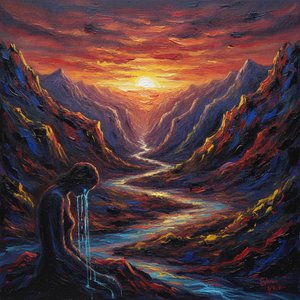
Capturing Emotion: A Journey Through the Soul of Expressionist Landscapes
Explore the profound emotional depth of Expressionist landscapes. Discover how Post-Impressionist masters moved beyond light to capture the soul through vibrant color and form. A curated journey for true art lovers seeking the beauty of expressive mastery.
Explorez des œuvres d'art classées par thèmes, styles et caractéristiques.


