


 Aperçu en situation
 Partager
 Partager
 Détails
 Guide imprimable

 Télécharger
 Articles similaires
 Radiographie
 Voir le diaporama
 Statistiques
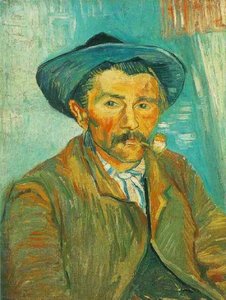
Le Fumoir
 Acrylique sur toile
- Art mural
- Post-Impressionism
 1890
1890 90.0 x 72.0 cm
Paul Cézanne's "Le Fumoir" est une huile sur toile emblématique du mouvement postimpressionniste, célébrée pour sa composition calme et ses couleurs vives reflétant une nouvelle approche artistique révolutionnaire. Découvrez cette œuvre majeure!
 Afficher la suite
Explorez l'art révolutionnaire de Paul Cézanne (1839-1906), un maître du post-impressionnisme qui a relié l'impressionnisme et le cubisme. Découvrez ses formes géométriques, ses coups de pinceau uniques, ses natures mortes et son impact durable sur l'art moderne. #Cézanne #PostImpressionnisme
Giclées et impressions d'art
Impressions giclées ou sur toile de qualité musée, avec une production rapide et des finitions au choix. ( Acheter la peinture faite à la main Passer au format image numérique)




P118B €10

P118H €10

P118W €10

P438Z €10

P508JH €12

P508YH €12

P805H €10

P805Z €10

P919BZ €10

P919G €10

P919XJ €10

P959ZH €10

P968JZ €12

W106C €8

W218G €10

W218JH €8

W218Y €10

W307PJ €10

W316G €10

W316PJ €8

W316Y €10

W398PJ €8

W4111J €10

W500HY €15

W500JH €15

W692G €12

W849H €8

W940BG €15

W953PJ €8




Format standard
personnalisé
CM
INCH
Choisissez parmi nos formats prédéfinis qui respectent les proportions originales de l’œuvre.
Loading sizes...

largeur
hauteur
Saisissez la largeur et la hauteur souhaitées pour qu'elles s'adaptent à votre cadre ou à votre mur. Une impression ne peut être que découpée, elle ne peut jamais être agrandie au-delà de l'image originale ; ainsi, un format de forme différente entraînera la perte d'une partie de l'image. Nous vous envoyons une maquette numérique pour approbation avant toute impression. L'image présentée sur cette page ne montre pas le recadrage réel — seule la maquette le permet.
Livraison dans le monde entier () en 2 semaines au lieu des 4/5 semaines habituelles. (23 octobre)

Livraison express gratuite dans le monde entier

Toile de lin de haute qualité

Assurance transport complète

Garantie de remboursement des droits de douane

Garantie de fidélité des couleurs

Garantie de retour de 100 jours (uniquement en cas de défaut)

Garantie de remboursement à 100%

Tarifs dégressifs sur quantité
 L'option verre n'est disponible que pour les dimensions inférieures à 110 cm.

Le Fumoir
Giclées et impressions d'art
Format de la reproduction
-


Prix total final
€ 61
The Smoker
Paul Cézanne's The Smoker is a captivating oil on canvas painting that exemplifies the artist’s unique style and contribution to the Post-Impressionist movement. Created in 1890, this work measures 90 x 72 cm and is currently housed at The State Hermitage Museum in Russia.A Profound Scene of Contemplation
The painting depicts a bearded man smoking a pipe, seated in front of a table adorned with apples, a bottle, and two wine glasses. A chair is positioned behind him, adding depth to the composition. The subject’s hands are clasped under his chin, conveying a sense of introspection and calmness. This seemingly simple tableau holds immense significance—it's not merely an observation of everyday life but a deliberate exploration of stillness and contemplation, mirroring Cézanne’s broader artistic preoccupation with capturing the essence of human experience.Artistic Influences and Style
Cézanne’s early influences included Romanticism and Realism, evident in works like the murals at Jas de Bouffan. However, he later developed a distinctive style by scrutinizing Impressionist techniques and incorporating elements of Cubism. This transition is reflected in The Smoker, where Cézanne’s use of bold colors and geometric forms creates a sense of structure and harmony. He rejected the fleeting effects of light favored by Impressionists in favor of solid shapes and flattened planes—a revolutionary departure from conventional artistic conventions that paved the way for future avant-garde movements. The artist meticulously rendered each element, prioritizing form over mere representation to convey an emotional resonance beyond visual appearance.Post-Impressionist Movement
As a pioneering figure in Post-Impressionism, Cézanne played a crucial role in bridging the gap between 19th-century Impressionism and 20th-century Cubism. His innovative approach to art paved the way for future avant-garde movements, including Fauvism and German Expressionism. He wasn’t interested in capturing optical sensations but rather in expressing inner feelings—a core principle of Post-Impressionist aesthetics. Cézanne's insistence on simplifying forms and reducing color palettes challenged the prevailing artistic dogma of his time, establishing a new visual language that would resonate throughout subsequent generations of artists.Relevance and Legacy
The Smoker is a testament to Cézanne’s enduring influence on modern art. The painting's themes of contemplation and everyday life continue to resonate with audiences today. For those interested in exploring more of Cézanne’s works, Still Life with Curtain and Flowered Pitcher is another notable piece by the artist—a similarly masterful depiction of domestic tranquility imbued with Cézanne’s signature geometric precision. Its quiet dignity speaks to a timeless fascination with human presence and the beauty found in simple objects.- The Smoker by Paul Cézanne
- Smoker by Paul Cézanne
- Vincent van Gogh
Questions et réponses
Quelle couleur domine la composition de «Le Fumoir» de Paul Cézanne ?
Brun espresso (#605934) est la couleur dominante de «Le Fumoir» de Paul Cézanne.
Existe-t-il une fiche informative sur «Le Fumoir» de Paul Cézanne destinée aux étudiants ?
La page Guide de «Le Fumoir» de Paul Cézanne propose une fiche pédagogique imprimable en deux volets : l'œuvre accompagnée de sa fiche d'identité, une frise chronologique la situant dans la vie de l'artiste, d'autres œuvres de l'artiste, la palette de couleurs mesurée, ainsi que des citations prêtes à être copiées en quatre styles différents.
L'œuvre « Le Fumoir » de Paul Cézanne est-elle dans le domaine public, et pourquoi ?
«Le Fumoir» de Paul Cézanne est dans le dans le domaine public - ses droits d'auteur ont expiré. Les droits d'auteur sont calculés à partir de l'année du décès de l'artiste, et Paul Cézanne est décédé en 1906.



Biographie de l'artiste
jeune vie et influences
paul cézanne, peintre français post-impressionniste, est né le 19 janvier 1839 à Aix-en-Provence, en France. Sa jeune vie a été marquée par un fort attachement à sa famille, dont l'entreprise bancaire lui assurait une sécurité financière. Cela lui a permis de se consacrer à ses aspirations artistiques sans être entravé par des soucis financiers. les nabis, néo-impressionnisme et symbolisme ont influencé le travail de Cézanne au début, qui se caractérisait par son accent sur les formes géométriques et une palette de couleurs limitée. Son intérêt pour les œuvres de paul gauguin et georges seurat a renforcé son style post-impressionniste.style artistique et techniques
L'utilisation innovante de Cézanne des plans de couleurs et de petits coups de pinceau répétitifs a créé des champs complexes qui exprimaient son étude approfondie des sujets. Son approche souvent exploratoire de l'art a conduit au développement d'une nouvelle langue picturale, mettant l'accent sur la structure sous-jacente des objets dans une composition.- caractéristiques principales :
- formes géométriques et façonnage
- palette de couleurs réduite
- importance de l'essence constructive du monde physique
- perspective multiple et simultanéité
- œuvres influentes :
- le plan d'eau de Jas de Bouffan (1880)
- portrait d’Émile Zola (1866)
- forêt (1892)
- musées présentant l'œuvre de Cézanne :
- le musée Marmottan Monet à Paris, en France
- le musée des beaux-arts à Houston, aux États-Unis
héritage et impact
Le travail pionnier de Cézanne en post-impressionnisme a ouvert la voie à divers mouvements avant-gardistes, notamment le cubisme, le fauvisme et le surréalisme. Son influence se retrouve dans les œuvres de pablo picasso, henri matisse et georges braque. L'héritage de Cézanne continue d’inspirer les artistes et les amateurs d’art, consolidant ainsi sa place en tant que figure centrale de l’histoire de l’art moderne.- mouvements artistiques connexes :
- consultez les œuvres de Cézanne :

Paul Cézanne
1839 - 1906 , France
En bref
- Artistes Influents:
- Paul Gauguin
- Georges Seurat
- Date De Décès: 22 octobre 1906
- Date De Naissance: 19 janvier 1839
- Influences Artistiques:
- Pablo Picasso
- Henri Matisse
- Georges Braque
- Lieu De Naissance: Aix-en-Provence, France
- Mouvement Artistique: Post-impressionnisme
- Nationalité: Français
- Nom Complet: Paul Cézanne
- Œuvres Notables:
- Le Plan d'eau à Jas de Bouffan
- Portrait d’Émile Zola
- Forêt
- Mont Sainte-Victoire
Articles connexes
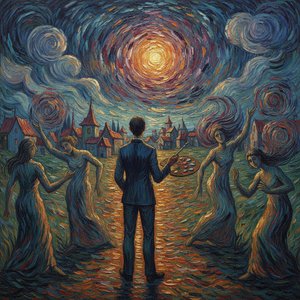
Beyond the Light: Capturing Emotion Through the Expressive Soul of Post-Impressionism
Explore the profound emotional depth of Post-Impressionism. Discover how masters like Van Gogh and Cézanne moved beyond light to capture raw feeling through color and texture. A journey into art history for the true connoisseur.
Explorez des œuvres d'art classées par thèmes, styles et caractéristiques.


