


 Aperçu en situation
 Partager
 Partager
 Détails
 Guide imprimable

 Télécharger
 Articles similaires
 Radiographie
 Voir le diaporama
 Statistiques
Moulin à Vent
 Acrylique sur toile
- Art mural
- Post-Impressionism
 1860
1860- Haut Moyen Âge
 23.0 x 31.0 cm
Paul Cézanne's « Moulin à Vent » captivate viewers with its serene landscape and masterful depiction of light & texture. Explore this iconic Impressionist masterpiece at TopImpressionists.com.
 Afficher la suite
Explorez l'art révolutionnaire de Paul Cézanne (1839-1906), un maître du post-impressionnisme qui a relié l'impressionnisme et le cubisme. Découvrez ses formes géométriques, ses coups de pinceau uniques, ses natures mortes et son impact durable sur l'art moderne. #Cézanne #PostImpressionnisme
Reproduction à l'huile faite à la main
Huile sur toile peinte à la main, avec cadre et dimensions personnalisés, réalisée sur commande par nos artistes. ( Passer au format impression Passer au format image numérique)




P118B €10

P118H €10

P118W €10

P438Z €10

P508JH €12

P508YH €12

P805H €10

P805Z €10

P919BZ €10

P919G €10

P919XJ €10

P959ZH €10

P968JZ €12

W106C €8

W218G €10

W218JH €8

W218Y €10

W307PJ €10

W316G €10

W316PJ €8

W316Y €10

W398PJ €8

W4111J €10

W500HY €15

W500JH €15

W692G €12

W849H €8

W940BG €15

W953PJ €8




Format standard
personnalisé
CM
INCH
Choisissez parmi nos formats prédéfinis qui respectent les proportions originales de l’œuvre.
Loading sizes...

largeur
hauteur
Saisissez la largeur et la hauteur souhaitées, pour s'adapter à votre cadre ou à votre mur. Cette œuvre est peinte à la main ; ainsi, pour un format de forme différente, l'artiste peut peindre un peu plus autour du tableau ou réduire légèrement les bords — c'est vous qui choisissez. Nous vous envoyons une maquette numérique pour approbation avant que la peinture ne commence. L'image présentée sur cette page ne reflète pas le résultat réel — seule la maquette le fait.
Exemples de personnalisation possibles : remplacer un visage par la photo du client ; ajouter un animal de compagnie (par exemple, remplacer un chat par un chien) ; inclure un message caché en arrière-plan ; modifier le paysage ou les éléments de l'arrière-plan.
Après la commande, l’équipe TopImpressionists.com contactera le client par e-mail pour recueillir ses instructions et lui fournira une maquette d’aperçu
Après la commande, l’équipe TopImpressionists.com contactera le client par e-mail pour recueillir ses instructions et lui fournira une maquette d’aperçu
Livraison dans le monde entier () en 3 à 4 semaines au lieu des 5 semaines habituelles. (21 octobre). Aucun compromis sur la qualité.

Livraison express gratuite dans le monde entier

Toile de lin de haute qualité

Assurance transport complète

Garantie de remboursement des droits de douane

Garantie de fidélité des couleurs

Garantie de retour de 100 jours (uniquement en cas de défaut)

Garantie de remboursement à 100%

Tarifs dégressifs sur quantité
 L'option verre n'est disponible que pour les dimensions inférieures à 110 cm.

Moulin à Vent
Technique de reproduction
Format de la reproduction
-


Prix total final
€ 235
Landscape with Mill
Paul Cézanne’s Landscape with Mill stands as a cornerstone of modern art, marking a decisive break from the conventions of Impressionism and propelling Cézanne toward the revolutionary explorations of Cubism. More than just a depiction of a rural scene—a tranquil meadow dotted with trees and punctuated by the gentle murmur of a river—it embodies Cézanne’s profound engagement with capturing the essence of perception itself. This painting, completed in 1860, isn't merely observed; it’s wrestled onto canvas, reflecting Cézanne’s relentless pursuit of formal unity and his unwavering belief that art should strive to represent not what is seen but how it feels.Artistic Style and Influence
Cézanne’s artistic journey began with Romanticism and Realism, absorbing influences from artists like Eugène Delacroix and Gustave Courbet. However, he swiftly rejected academic painting's emphasis on meticulous detail and idealized representation, opting instead for a radically new pictorial language. He prioritized geometric forms—particularly cylinders, cones, and planes—over naturalistic contours, dismantling the illusion of depth that dominated Impressionist canvases. This deliberate simplification wasn’t an abandonment of observation; it was a transformation of it – Cézanne sought to distill the underlying structure of objects into their fundamental elements, anticipating the groundbreaking innovations of Cubism spearheaded by Pablo Picasso and Henri Matisse. His distinctive brushstrokes—repetitive, exploratory, and imbued with palpable energy—became instantly recognizable and profoundly influential on subsequent generations of artists.Composition and Elements
The painting’s composition is deceptively simple yet meticulously crafted. Cézanne presents a serene landscape dominated by the presence of a house – its red roof and wooden structure anchoring the scene – alongside two figures positioned outside, engaged in quiet contemplation. Scattered birds contribute to the atmosphere, symbolizing freedom and spontaneity, while a boat gliding across the water adds dynamism to the tableau. The artist’s careful attention to spatial relationships—the layering of planes, the subtle gradations of color—creates an illusion of depth that transcends mere visual accuracy. Cézanne wasn't aiming for photographic realism; he was striving to convey a sense of immediacy and emotional resonance, capturing the fleeting beauty of the natural world through a rigorously structured framework.Light and Color
Cézanne’s masterful use of light and color is central to his artistic vision. Like all Impressionists, he recognized that light plays an indispensable role in shaping perception—influencing hue, saturation, and texture. However, Cézanne pushed beyond Impressionistic explorations of atmospheric effects, employing color modulation principles to achieve a sculptural quality within the canvas. The interplay of light and shadow sculpts the forms of trees and buildings alike, enhancing the painting’s depth and creating an immersive experience for the viewer. Cézanne's palette is restrained yet expressive, favoring earthy tones—ochres, browns, greens—that evoke the stillness and tranquility of the countryside.Modernism and Legacy
Cézanne’s contribution to modern art extends far beyond stylistic innovation; he fundamentally challenged artistic conventions and paved the way for new conceptual approaches. His insistence on geometric abstraction foreshadowed the emergence of Cubism, which dismantled traditional perspective and depicted objects from multiple viewpoints simultaneously. Cézanne's influence can be seen in countless works of art produced throughout the 20th century—a testament to his enduring legacy as a pioneer of artistic experimentation. Today, Landscape with Mill continues to captivate audiences worldwide, serving as an inspiration for artists and collectors alike. Its enduring appeal resides in its ability to convey a profound sense of beauty—a beauty rooted not in imitation but in the artist’s unwavering commitment to capturing the essence of visual experience.- The Kiss of the Muse by Paul Cézanne
- Paul Cézanne on Wikipedia
- Landscape with Mill by Paul Cézanne on TopImpressionists
For more information on Paul Cézanne and his works, visit https://TopImpressionists.com.
Questions et réponses
Quelle est la couleur dominante de «Moulin à Vent» de Paul Cézanne ?
La couleur qui ressort le plus dans « Moulin à Vent » est le Vert de phtalo (#252210). La couleur dominante est un atout précieux pour harmoniser une œuvre d'art avec un intérieur.
Quelle est la tonalité émotionnelle de «Moulin à Vent» de Paul Cézanne ?
«Moulin à Vent» de Paul Cézanne dégage une tonalité émotionnelle Calme.
Qui est l'auteur de « Moulin à Vent », et dans quel mouvement ?
Paul Cézanne a créé « Moulin à Vent » au sein du mouvement Post-Impressionism.


Biographie de l'artiste
jeune vie et influences
paul cézanne, peintre français post-impressionniste, est né le 19 janvier 1839 à Aix-en-Provence, en France. Sa jeune vie a été marquée par un fort attachement à sa famille, dont l'entreprise bancaire lui assurait une sécurité financière. Cela lui a permis de se consacrer à ses aspirations artistiques sans être entravé par des soucis financiers. les nabis, néo-impressionnisme et symbolisme ont influencé le travail de Cézanne au début, qui se caractérisait par son accent sur les formes géométriques et une palette de couleurs limitée. Son intérêt pour les œuvres de paul gauguin et georges seurat a renforcé son style post-impressionniste.style artistique et techniques
L'utilisation innovante de Cézanne des plans de couleurs et de petits coups de pinceau répétitifs a créé des champs complexes qui exprimaient son étude approfondie des sujets. Son approche souvent exploratoire de l'art a conduit au développement d'une nouvelle langue picturale, mettant l'accent sur la structure sous-jacente des objets dans une composition.- caractéristiques principales :
- formes géométriques et façonnage
- palette de couleurs réduite
- importance de l'essence constructive du monde physique
- perspective multiple et simultanéité
- œuvres influentes :
- le plan d'eau de Jas de Bouffan (1880)
- portrait d’Émile Zola (1866)
- forêt (1892)
- musées présentant l'œuvre de Cézanne :
- le musée Marmottan Monet à Paris, en France
- le musée des beaux-arts à Houston, aux États-Unis
héritage et impact
Le travail pionnier de Cézanne en post-impressionnisme a ouvert la voie à divers mouvements avant-gardistes, notamment le cubisme, le fauvisme et le surréalisme. Son influence se retrouve dans les œuvres de pablo picasso, henri matisse et georges braque. L'héritage de Cézanne continue d’inspirer les artistes et les amateurs d’art, consolidant ainsi sa place en tant que figure centrale de l’histoire de l’art moderne.- mouvements artistiques connexes :
- consultez les œuvres de Cézanne :

Paul Cézanne
1839 - 1906 , France
En bref
- Artistes Influents:
- Paul Gauguin
- Georges Seurat
- Date De Décès: 22 octobre 1906
- Date De Naissance: 19 janvier 1839
- Influences Artistiques:
- Pablo Picasso
- Henri Matisse
- Georges Braque
- Lieu De Naissance: Aix-en-Provence, France
- Mouvement Artistique: Post-impressionnisme
- Nationalité: Français
- Nom Complet: Paul Cézanne
- Œuvres Notables:
- Le Plan d'eau à Jas de Bouffan
- Portrait d’Émile Zola
- Forêt
- Mont Sainte-Victoire
Articles connexes

Beyond the Light: Discovering the Soul and Emotional Depth of Post-Impressionism
Embark on a cultural journey through Post-Impressionism. Discover the profound emotional depth of masters like Van Gogh and Cézanne, exploring how they moved beyond light to capture the very soul of human experience through vibrant color and symbolic form.
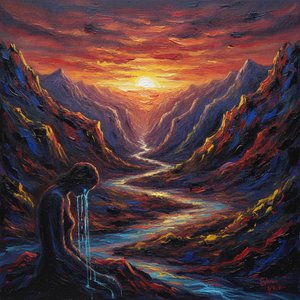
Capturing Emotion: A Journey Through the Soul of Expressionist Landscapes
Explore the profound emotional depth of Expressionist landscapes. Discover how Post-Impressionist masters moved beyond light to capture the soul through vibrant color and form. A curated journey for true art lovers seeking the beauty of expressive mastery.
Explorez des œuvres d'art classées par thèmes, styles et caractéristiques.


