


 Aperçu en situation
 Partager
 Partager
 Détails
 Guide imprimable

 Télécharger
 Articles similaires
 Radiographie
 Voir le diaporama
 Statistiques
Portrait de Vallier


Portrait de Vallier : Une œuvre emblématique de Cézanne capturant l'essence du paysage provençal et ouvrant la voie au cubisme. Reproduction haute qualité disponible chez TopImpressionists.com. Découvrez-la!
 Afficher la suite
Explorez l'art révolutionnaire de Paul Cézanne (1839-1906), un maître du post-impressionnisme qui a relié l'impressionnisme et le cubisme. Découvrez ses formes géométriques, ses coups de pinceau uniques, ses natures mortes et son impact durable sur l'art moderne. #Cézanne #PostImpressionnisme
Reproduction à l'huile faite à la main
Huile sur toile peinte à la main, avec cadre et dimensions personnalisés, réalisée sur commande par nos artistes. ( Passer au format impression Passer au format image numérique)




P118B €10

P118H €10

P118W €10

P438Z €10

P508JH €12

P508YH €12

P805H €10

P805Z €10

P919BZ €10

P919G €10

P919XJ €10

P959ZH €10

P968JZ €12

W106C €8

W218G €10

W218JH €8

W218Y €10

W307PJ €10

W316G €10

W316PJ €8

W316Y €10

W398PJ €8

W4111J €10

W500HY €15

W500JH €15

W692G €12

W849H €8

W940BG €15

W953PJ €8




Format standard
personnalisé
CM
INCH
Choisissez parmi nos formats prédéfinis qui respectent les proportions originales de l’œuvre.
Loading sizes...

largeur
hauteur
Saisissez la largeur et la hauteur souhaitées, pour s'adapter à votre cadre ou à votre mur. Cette œuvre est peinte à la main ; ainsi, pour un format de forme différente, l'artiste peut peindre un peu plus autour du tableau ou réduire légèrement les bords — c'est vous qui choisissez. Nous vous envoyons une maquette numérique pour approbation avant que la peinture ne commence. L'image présentée sur cette page ne reflète pas le résultat réel — seule la maquette le fait.
Exemples de personnalisation possibles : remplacer un visage par la photo du client ; ajouter un animal de compagnie (par exemple, remplacer un chat par un chien) ; inclure un message caché en arrière-plan ; modifier le paysage ou les éléments de l'arrière-plan.
Après la commande, l’équipe TopImpressionists.com contactera le client par e-mail pour recueillir ses instructions et lui fournira une maquette d’aperçu
Après la commande, l’équipe TopImpressionists.com contactera le client par e-mail pour recueillir ses instructions et lui fournira une maquette d’aperçu
Livraison dans le monde entier () en 3 à 4 semaines au lieu des 5 semaines habituelles. (22 octobre). Aucun compromis sur la qualité.

Livraison express gratuite dans le monde entier

Toile de lin de haute qualité

Assurance transport complète

Garantie de remboursement des droits de douane

Garantie de fidélité des couleurs

Garantie de retour de 100 jours (uniquement en cas de défaut)

Garantie de remboursement à 100%

Tarifs dégressifs sur quantité
 L'option verre n'est disponible que pour les dimensions inférieures à 110 cm.

Portrait de Vallier
Technique de reproduction
Format de la reproduction
-


Prix total final
€ 236
Portrait of Vallier : A Pioneering Vision of Cézanne’s Post-Impressionism
Paul Cézanne, born in Aix-en-Provence in 1839, stands as a monumental figure bridging the gap between the fleeting impressions of Impressionism and the fragmented forms of Cubism. His journey was not one of immediate acclaim; rather, it was a slow burn of artistic exploration, marked by periods of self-doubt and critical dismissal, ultimately culminating in a legacy that would irrevocably alter the art world. Though initially steered towards a legal career by his father’s ambitions, the pull of artistic expression proved too strong, and he eventually abandoned law to pursue painting, a decision that wouThe Subject and Composition
The Portrait of Vallier, painted by the renowned artist Paul Cézanne in 1906, is a captivating work that showcases the artist’s unique approach to portraiture. This painting is a testament to Cézanne’s innovative style, which blended elements of Impressionism and Post-Impressionism. The subject of the portrait is a man with a beard and mustache, dressed in a hat and jacket, sitting in front of a wall. The attire includes a tie, adding a touch of elegance to the overall appearance. The background features a chair that the man is sitting on, creating a sense of depth and context. Cézanne’s use of color and light creates a warm and inviting atmosphere, drawing the viewer into the scene.Artistic Significance
Paul Cézanne was a pioneer in the development of Post-Impressionism, and his works had a significant influence on modern art. The Portrait of Vallier is an excellent example of his innovative approach to portraiture, where he focused on capturing the essence of the subject rather than creating a realistic representation. This painting can be seen as part of Cézanne’s broader exploration of human subjects, which often featured everyday people in simple settings. His emphasis on form and structure over detailed realism contributed to the evolution of modern art movements.Relevance and Availability
The Portrait of Vallier is a significant work that continues to inspire art enthusiasts today. For those interested in owning a piece of history, TopImpressionists.com offers high-quality, handmade oil painting reproductions of this masterpiece. Visit /art/list/?Filter=A@D3CGZV-Discovering-the-Lowestoft-Maritime-Museum-(United-Kingdom)-and-Its-Artworks to explore more artworks and learn about the Lowestoft Maritime Museum. Additionally, TopImpressionists.com features other notable works by Paul Cézanne, such as The Large Bathers, which is available for your collection.Conclusion
The Portrait of Vallier by Paul Cézanne is a remarkable piece that showcases the artist’s unique style and contribution to modern art. Its blend of classic and innovative elements makes it a captivating work that continues to inspire art lovers today.Questions et réponses
Est-ce que «Portrait de Vallier» de Paul Cézanne est dans le domaine public ?
«Portrait de Vallier» de Paul Cézanne est dans le dans le domaine public - ses droits d'auteur ont expiré. Ce statut régit les modalités de reproduction de l'image de l'œuvre.
Quelle est la saturation des couleurs de «Portrait de Vallier» de Paul Cézanne ?
«Portrait de Vallier» de Paul Cézanne est présenté avec une saturation de Couleurs subtiles.
«Portrait de Vallier» est-il une œuvre célèbre du Post-Impressionism ?
«Portrait de Vallier» de Paul Cézanne est classé comme Iconique et appartient au mouvement Post-Impressionism.


Biographie de l'artiste
jeune vie et influences
paul cézanne, peintre français post-impressionniste, est né le 19 janvier 1839 à Aix-en-Provence, en France. Sa jeune vie a été marquée par un fort attachement à sa famille, dont l'entreprise bancaire lui assurait une sécurité financière. Cela lui a permis de se consacrer à ses aspirations artistiques sans être entravé par des soucis financiers. les nabis, néo-impressionnisme et symbolisme ont influencé le travail de Cézanne au début, qui se caractérisait par son accent sur les formes géométriques et une palette de couleurs limitée. Son intérêt pour les œuvres de paul gauguin et georges seurat a renforcé son style post-impressionniste.style artistique et techniques
L'utilisation innovante de Cézanne des plans de couleurs et de petits coups de pinceau répétitifs a créé des champs complexes qui exprimaient son étude approfondie des sujets. Son approche souvent exploratoire de l'art a conduit au développement d'une nouvelle langue picturale, mettant l'accent sur la structure sous-jacente des objets dans une composition.- caractéristiques principales :
- formes géométriques et façonnage
- palette de couleurs réduite
- importance de l'essence constructive du monde physique
- perspective multiple et simultanéité
- œuvres influentes :
- le plan d'eau de Jas de Bouffan (1880)
- portrait d’Émile Zola (1866)
- forêt (1892)
- musées présentant l'œuvre de Cézanne :
- le musée Marmottan Monet à Paris, en France
- le musée des beaux-arts à Houston, aux États-Unis
héritage et impact
Le travail pionnier de Cézanne en post-impressionnisme a ouvert la voie à divers mouvements avant-gardistes, notamment le cubisme, le fauvisme et le surréalisme. Son influence se retrouve dans les œuvres de pablo picasso, henri matisse et georges braque. L'héritage de Cézanne continue d’inspirer les artistes et les amateurs d’art, consolidant ainsi sa place en tant que figure centrale de l’histoire de l’art moderne.- mouvements artistiques connexes :
- consultez les œuvres de Cézanne :

Paul Cézanne
1839 - 1906 , France
En bref
- Artistes Influents:
- Paul Gauguin
- Georges Seurat
- Date De Décès: 22 octobre 1906
- Date De Naissance: 19 janvier 1839
- Influences Artistiques:
- Pablo Picasso
- Henri Matisse
- Georges Braque
- Lieu De Naissance: Aix-en-Provence, France
- Mouvement Artistique: Post-impressionnisme
- Nationalité: Français
- Nom Complet: Paul Cézanne
- Œuvres Notables:
- Le Plan d'eau à Jas de Bouffan
- Portrait d’Émile Zola
- Forêt
- Mont Sainte-Victoire
Articles connexes
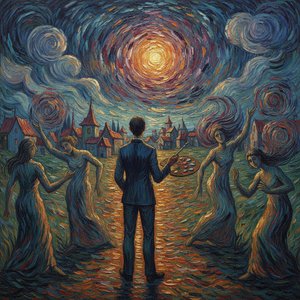
Beyond the Light: Capturing Emotion Through the Expressive Soul of Post-Impressionism
Explore the profound emotional depth of Post-Impressionism. Discover how masters like Van Gogh and Cézanne moved beyond light to capture raw feeling through color and texture. A journey into art history for the true connoisseur.
Explorez des œuvres d'art classées par thèmes, styles et caractéristiques.


