


 Aperçu en situation
 Partager
 Partager
 Détails
 Guide imprimable

 Télécharger
 Articles similaires
 Radiographie
 Voir le diaporama
 Statistiques
Self-Portrait
 Acrylique sur toile
- Décoration murale
- Post-Impressionism
 1895
1895- Moderne
 55.0 x 46.0 cm
"Self-Portrait" de Paul Cézanne : Une œuvre emblématique du postimpressionnisme où la maîtrise technique et l'introspection artistique rencontrent une esthétique innovante, influençant les mouvements modernes."
 Afficher la suite
Explorez l'art révolutionnaire de Paul Cézanne (1839-1906), un maître du post-impressionnisme qui a relié l'impressionnisme et le cubisme. Découvrez ses formes géométriques, ses coups de pinceau uniques, ses natures mortes et son impact durable sur l'art moderne. #Cézanne #PostImpressionnisme
Giclées et impressions d'art
Impressions giclées ou sur toile de qualité musée, avec une production rapide et des finitions au choix. ( Acheter la peinture faite à la main Passer au format image numérique)




P118B $10

P118H $10

P118W $10

P438Z $10

P508JH $12

P508YH $12

P805H $10

P805Z $10

P919BZ $10

P919G $10

P919XJ $10

P959ZH $10

P968JZ $12

W106C $8

W218G $10

W218JH $8

W218Y $10

W307PJ $10

W316G $10

W316PJ $8

W316Y $10

W398PJ $8

W4111J $10

W500HY $15

W500JH $15

W692G $12

W849H $8

W940BG $15

W953PJ $8




Format standard
personnalisé
CM
INCH
Choisissez parmi nos formats prédéfinis qui respectent les proportions originales de l’œuvre.
Loading sizes...

largeur
hauteur
Vous pouvez saisir vos propres dimensions pour vous adapter à un cadre ou à un espace spécifique. Si la taille sélectionnée ne correspond pas aux proportions de l'image originale, nous recadrerons l'œuvre ou étendrons l'image avec une bordure en miroir ou une couleur unie. Une maquette numérique vous sera envoyée pour approbation avant le début de la production.
Veuillez noter que l'aperçu à l'écran ne reflète pas le recadrage ou l'extension réelle. Seule la maquette montrera avec précision la composition finale.
Bien que des tailles personnalisées soient disponibles, nous vous recommandons de choisir une dimension dans la liste prédéfinie afin de préserver les proportions originales.
Livraison dans le monde entier () en 2 semaines au lieu des 4/5 semaines habituelles. (25 septembre)

Livraison express gratuite dans le monde entier

Toile de lin de haute qualité

Assurance transport complète

Garantie de remboursement des droits de douane

Garantie de fidélité des couleurs

Garantie de retour de 100 jours (uniquement en cas de défaut)

Garantie de remboursement à 100%

Tarifs dégressifs sur quantité
 L'option verre n'est disponible que pour les dimensions inférieures à 110 cm.

Self-Portrait
Giclées et impressions d'art
Format de la reproduction
-


Prix total final
$ 69
Self-Portrait
Paul Cézanne, a French Post-Impressionist painter, is renowned for his innovative and influential works that bridged the gap between late 19th-century Impressionism and early 20th-century Cubism. One of his notable pieces is the Self-Portrait, which exemplifies his unique style and artistic vision. It’s a painting that speaks volumes about Cézanne's introspection and his unwavering dedication to exploring the fundamental elements of visual representation—a quest that would ultimately reshape the course of modern art.Artistic Style and Technique
Cézanne’s self-portraits, including this particular piece, are characterized by their intense study of the subject and the use of planes of color and small brushstrokes. These techniques create complex fields that convey a sense of depth and dimensionality. Imagine Cézanne meticulously layering pigment onto canvas—not blending it smoothly like Impressionists would, but applying strokes with deliberate precision, building up surfaces to suggest solidity and volume. The repetitive, exploratory brushstrokes are highly recognizable and contribute to the painting’s distinctive appearance; they're not merely marks on the surface but rather fragments of a larger structure, hinting at Cézanne’s obsession with capturing underlying forms. This approach—a radical departure from traditional portraiture—became the cornerstone of his artistic method and profoundly influenced subsequent generations of artists.Historical Context
The Self-Portrait was painted in 1895, during Cézanne's final period. This time saw him producing some of his most significant works, including the famous series The Card Players. The self-portraits from this era reflect Cézanne’s introspection and self-appraisal, as he was nearing the end of his life. He wrestled with questions of identity and legacy—a preoccupation that finds expression in the careful observation of his own visage. This period coincided with a burgeoning interest in exploring form and structure beyond mere optical illusion, mirroring the broader artistic currents of the time. Cézanne’s work stood as a defiant challenge to academic conventions, signaling a decisive move toward abstraction and paving the way for movements like Cubism.Artistic Influence
Cézanne's work, including his self-portraits, had a profound impact on modern art. His emphasis on underlying structures and formal qualities influenced avant-garde movements such as Cubism. Artists like Henri Matisse and Pablo Picasso acknowledged Cézanne as "the father of us all," highlighting the significance of his contributions to the development of modern art. They saw in his canvases not just representations of objects but explorations of their essence—a concept that fundamentally altered artistic thinking. Cézanne’s influence extended far beyond painting, inspiring sculptors and architects alike to reconsider traditional approaches to form and space.Relevance in Contemporary Art
Today, Cézanne's self-portraits continue to inspire artists and art enthusiasts alike. His innovative techniques and artistic vision have made him a cornerstone of Post-Impressionism. The Self-Portrait is a testament to his enduring legacy and the timeless appeal of his work—a reminder that true artistry lies in confronting one’s own subjectivity while simultaneously striving for universal truths. Consider how Cézanne's exploration of materiality and perception resonates with contemporary artists grappling with issues of representation and authenticity.- Self-Portrait on a Rose Background by Paul Cézanne: Paul Cézanne: Self-Portrait on a Rose Background
- Self-Portrait by Paul Cézanne (44 x 36 cm, Kunstmuseum Bern): Paul Cézanne: Self-Portrait
- Self-Portrait by Paul Cézanne (65 x 50 cm, Musée d'Orsay): Paul Cézanne: Self-Portrait
- Self-Portrait by Paul Cézanne (The Phillips Collection): Paul Cézanne: Self-Portrait
- The Card Players by Paul Cézanne: The Card Players
Œuvres similaires


Biographie de l'artiste
jeune vie et influences
paul cézanne, peintre français post-impressionniste, est né le 19 janvier 1839 à Aix-en-Provence, en France. Sa jeune vie a été marquée par un fort attachement à sa famille, dont l'entreprise bancaire lui assurait une sécurité financière. Cela lui a permis de se consacrer à ses aspirations artistiques sans être entravé par des soucis financiers. les nabis, néo-impressionnisme et symbolisme ont influencé le travail de Cézanne au début, qui se caractérisait par son accent sur les formes géométriques et une palette de couleurs limitée. Son intérêt pour les œuvres de paul gauguin et georges seurat a renforcé son style post-impressionniste.style artistique et techniques
L'utilisation innovante de Cézanne des plans de couleurs et de petits coups de pinceau répétitifs a créé des champs complexes qui exprimaient son étude approfondie des sujets. Son approche souvent exploratoire de l'art a conduit au développement d'une nouvelle langue picturale, mettant l'accent sur la structure sous-jacente des objets dans une composition.- caractéristiques principales :
- formes géométriques et façonnage
- palette de couleurs réduite
- importance de l'essence constructive du monde physique
- perspective multiple et simultanéité
- œuvres influentes :
- le plan d'eau de Jas de Bouffan (1880)
- portrait d’Émile Zola (1866)
- forêt (1892)
- musées présentant l'œuvre de Cézanne :
- le musée Marmottan Monet à Paris, en France
- le musée des beaux-arts à Houston, aux États-Unis
héritage et impact
Le travail pionnier de Cézanne en post-impressionnisme a ouvert la voie à divers mouvements avant-gardistes, notamment le cubisme, le fauvisme et le surréalisme. Son influence se retrouve dans les œuvres de pablo picasso, henri matisse et georges braque. L'héritage de Cézanne continue d’inspirer les artistes et les amateurs d’art, consolidant ainsi sa place en tant que figure centrale de l’histoire de l’art moderne.- mouvements artistiques connexes :
- consultez les œuvres de Cézanne :

Paul Cézanne
1839 - 1906 , France
En bref
- Artistes Influents:
- Paul Gauguin
- Georges Seurat
- Date De Décès: 22 octobre 1906
- Date De Naissance: 19 janvier 1839
- Influences Artistiques:
- Pablo Picasso
- Henri Matisse
- Georges Braque
- Lieu De Naissance: Aix-en-Provence, France
- Mouvement Artistique: Post-impressionnisme
- Nationalité: Français
- Nom Complet: Paul Cézanne
- Œuvres Notables:
- Le Plan d'eau à Jas de Bouffan
- Portrait d’Émile Zola
- Forêt
- Mont Sainte-Victoire
Articles similaires
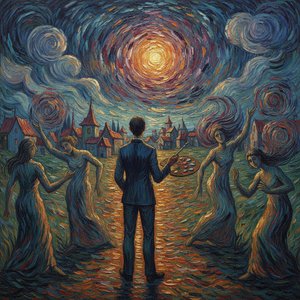
Beyond the Light: Capturing Emotion Through the Expressive Soul of Post-Impressionism
Explore the profound emotional depth of Post-Impressionism. Discover how masters like Van Gogh and Cézanne moved beyond light to capture raw feeling through color and texture. A journey into art history for the true connoisseur.
Explorez des œuvres d'art classées par thèmes, styles et caractéristiques.


