


 Aperçu en situation
 Envoyer
 Partager
 Détails de l'œuvre
 Guide
Guide

 Télécharger l'image
 Articles similaires
 Radiographie
 Diaporama
 Q&A
Q&A Statistiques
Untitled (7168)


Explorez 'Untitled (7168)' de Paul Cézanne – une nature morte post-impressionniste débordant de fruits, de colombes et de perspectives superposées. Découvrez son impasto texturé et sa profondeur symbolique.
 Lire la suite
Explorez l'art révolutionnaire de Paul Cézanne (1839-1906), un maître du post-impressionnisme qui a relié l'impressionnisme et le cubisme. Découvrez ses formes géométriques, ses coups de pinceau uniques, ses natures mortes et son impact durable sur l'art moderne. #Cézanne #PostImpressionnisme
Reproduction à l'huile faite à la main
Huile sur toile peinte à la main, avec cadre et dimensions personnalisés, réalisée sur commande par nos artistes. ( Passer au format impression Passer au format numérique)




P118B €10

P118H €10

P118W €10

P438Z €10

P508JH €12

P508YH €12

P805H €10

P805Z €10

P919BZ €10

P919G €10

P919XJ €10

P959ZH €10

P968JZ €12

W106C €8

W218G €10

W218JH €8

W218Y €10

W307PJ €10

W316G €10

W316PJ €8

W316Y €10

W398PJ €8

W4111J €10

W500HY €15

W500JH €15

W692G €12

W849H €8

W940BG €15

W953PJ €8




Format standard
sur mesure
CM
INCH
Choisissez parmi nos formats prédéfinis qui respectent les proportions originales de l’œuvre.
Loading sizes...

largeur
hauteur
Saisissez la largeur et la hauteur souhaitées, pour s'adapter à votre cadre ou à votre mur. Cette œuvre est peinte à la main ; ainsi, pour un format de forme différente, l'artiste peut peindre un peu plus autour du tableau ou réduire légèrement les bords — c'est vous qui choisissez. Nous vous envoyons une maquette numérique pour approbation avant que la peinture ne commence. L'image présentée sur cette page ne reflète pas le résultat réel — seule la maquette le fait.
Exemples de personnalisation possibles : remplacer un visage par la photo du client ; ajouter un animal de compagnie (par exemple, remplacer un chat par un chien) ; inclure un message caché en arrière-plan ; modifier le paysage ou les éléments de l'arrière-plan.
Après la commande, l’équipe TopImpressionists.com contactera le client par e-mail pour recueillir ses instructions et lui fournira une maquette d’aperçu
Après la commande, l’équipe TopImpressionists.com contactera le client par e-mail pour recueillir ses instructions et lui fournira une maquette d’aperçu
Livraison dans le monde entier () en 3 à 4 semaines au lieu des 5 semaines habituelles. (28 octobre). Aucun compromis sur la qualité.

Livraison express gratuite dans le monde entier

Toile de lin de qualité supérieure

Assurance transport complète

Garantie de remboursement des droits de douane

Garantie de fidélité des couleurs

Politique de retour de 100 jours (uniquement en cas de défaut)

Garantie de remboursement à 100%

Offre de tarifs dégressifs
 L'option verre n'est disponible que pour les dimensions inférieures à 110 cm.

Untitled (7168)
Technique de reproduction
Format de la reproduction
-


Prix total
€ 237
Une symphonie de formes et de couleurs : exploration de la nature morte de Cézanne
Cette nature morte captivante, appartenant sans équivoque au style de Paul Cézanne, offre un aperçu fascinant de l'approche révolutionnaire de l'artiste envers la peinture. Il ne s'agit pas d'une simple représentation d'objets ; c'est une exploration de la perception elle-même — de la manière dont nous voyons et comprenons le monde qui nous entoure. La composition s'articule autour d'une table regorgeant d'objets du quotidien : un panier généreux débordant de pommes, de poires et de citrons ; un pot en céramique magnifiquement rendu ; une bouteille ; un paysage niché au cœur même de la scène ; et une sculpture délicate de colombes.L'innovation postimpressionniste
Cézanne est largement considéré comme une figure charnière dans la transition de l'impressionnisme vers le cubisme. Tout en partageant l'intérêt des impressionnistes pour la capture des instants éphémères et des effets de la lumière, il a dépassé leur focalisation sur les impressions purement optiques. Au lieu de cela, Cézanne a cherché à comprendre la structure sous-jacente des objets — leurs formes géométriques essentielles. Cette peinture illustre parfaitement cette quête. Observez comment les fruits ne sont pas simplement rendus tels qu'ils apparaissent, mais sont construits à partir de plans de couleur, leur conférant une solidité et une présence rarement vues auparavant. Les coups de pinceau lâches et gestuels, caractéristiques du postimpressionnisme, définissent les formes plutôt que de les détourer méticuleusement, créant une énergie vibrante sur la toile.Technique et matériaux
L'œuvre est exécutée à l'huile avec une utilisation magistrale de l'impasto — d'épaisses couches de peinture appliquées sur la toile. Cette technique est particulièrement évidente dans la représentation des fruits et de la nappe, ajoutant texture et profondeur. Les coups de pinceau visibles ne sont pas cachés ; ils font partie intégrante de l'œuvre, révélant le processus de l'artiste et prêtant une qualité tactile à la scène. L'aplatissement délibéré de la perspective par Cézanne, privilégiant la forme et la couleur au détriment d'un réalisme strict, accentue davantage cette focalisation sur la matérialité même de la peinture.Symbolisme et interprétation
Au-delà de ses qualités formelles, le tableau invite à une interprétation symbolique. Les colombes, représentant traditionnellement la paix et l'amour, offrent un contrepoint plein d'espoir à l'abondance plus terrestre symbolisée par les fruits. L'inclusion d'un paysage au sein même de la nature morte est particulièrement intrigante — un méta-commentaire sur la représentation elle-même, questionnant la nature de l'art et sa relation à la réalité. Est-ce une fenêtre ouverte sur un autre monde, ou simplement une couche de peinture supplémentaire ?Contexte historique et héritage de Cézanne
Né à Aix-en-Provence en 1839, Paul Cézanne a d'abord lutté pour obtenir la reconnaissance qu'il méritait, avant de devenir l'un des artistes les plus influents de la fin du XIXe et du début du XXe siècle. Son accent mis sur les formes géométriques a profondément marqué les mouvements ultérieurs comme le cubisme, ouvrant la voie à l'art moderne tel que nous le connaissons. Cette nature morte est un témoignage de son héritage durable — un exemple puissant de la manière dont il a défié les normes artistiques conventionnelles et redéfini notre compréhension de la perception visuelle.Résonance émotionnelle et décoration d'intérieur
Ce tableau évoque un sentiment d'intimité tranquille et de beauté contemplative. La palette de couleurs chaudes et l'abondance de fruits créent une sensation de confort et de nourriture, tandis que les subtiles complexités de la composition invitent à une contemplation prolongée. Ses textures riches et ses couleurs harmonieuses en feraient un point focal époustouflant dans tout intérieur — d'un bureau traditionnel à un espace de vie contemporain. Une reproduction de haute qualité de cette œuvre apportera la vision innovante de Cézanne dans votre foyer, offrant une source quotidienne d'inspiration et de plaisir esthétique. C'est un investissement non seulement dans l'art, mais dans un véritable fragment d'histoire.Questions et réponses
Où puis-je télécharger «Untitled (7168)» de Paul Cézanne ?
Un téléchargement est disponible pour « Untitled (7168) » : la page Téléchargement de l'œuvre propose téléchargement d'une image numérique haute résolution.
Quelle est la technique utilisée pour «Untitled (7168)» de Paul Cézanne ?
«Untitled (7168)» de Paul Cézanne est réalisé en Huile sur toile. Les reproductions visent à restituer l'aspect de cette technique.
Combien de personnes consultent « Untitled (7168) » ?
Une page Statistiques est disponible pour « Untitled (7168) ». Elle présente l'évolution mensuelle des visites de l'œuvre ainsi que des autres créations de l'artiste, avec une répartition par pays et par langue.
Biographie de l'artiste
jeune vie et influences
paul cézanne, peintre français post-impressionniste, est né le 19 janvier 1839 à Aix-en-Provence, en France. Sa jeune vie a été marquée par un fort attachement à sa famille, dont l'entreprise bancaire lui assurait une sécurité financière. Cela lui a permis de se consacrer à ses aspirations artistiques sans être entravé par des soucis financiers. les nabis, néo-impressionnisme et symbolisme ont influencé le travail de Cézanne au début, qui se caractérisait par son accent sur les formes géométriques et une palette de couleurs limitée. Son intérêt pour les œuvres de paul gauguin et georges seurat a renforcé son style post-impressionniste.style artistique et techniques
L'utilisation innovante de Cézanne des plans de couleurs et de petits coups de pinceau répétitifs a créé des champs complexes qui exprimaient son étude approfondie des sujets. Son approche souvent exploratoire de l'art a conduit au développement d'une nouvelle langue picturale, mettant l'accent sur la structure sous-jacente des objets dans une composition.- caractéristiques principales :
- formes géométriques et façonnage
- palette de couleurs réduite
- importance de l'essence constructive du monde physique
- perspective multiple et simultanéité
- œuvres influentes :
- le plan d'eau de Jas de Bouffan (1880)
- portrait d’Émile Zola (1866)
- forêt (1892)
- musées présentant l'œuvre de Cézanne :
- le musée Marmottan Monet à Paris, en France
- le musée des beaux-arts à Houston, aux États-Unis
héritage et impact
Le travail pionnier de Cézanne en post-impressionnisme a ouvert la voie à divers mouvements avant-gardistes, notamment le cubisme, le fauvisme et le surréalisme. Son influence se retrouve dans les œuvres de pablo picasso, henri matisse et georges braque. L'héritage de Cézanne continue d’inspirer les artistes et les amateurs d’art, consolidant ainsi sa place en tant que figure centrale de l’histoire de l’art moderne.- mouvements artistiques connexes :
- consultez les œuvres de Cézanne :

Paul Cézanne
1839 - 1906 , France
L'essentiel de l'artiste
- Artistes Influents:
- Paul Gauguin
- Georges Seurat
- Date De Décès: 22 octobre 1906
- Date De Naissance: 19 janvier 1839
- Influences Artistiques:
- Pablo Picasso
- Henri Matisse
- Georges Braque
- Lieu De Naissance: Aix-en-Provence, France
- Mouvement Artistique: Post-impressionnisme
- Nationalité: Français
- Nom Complet: Paul Cézanne
- Œuvres Notables:
- Le Plan d'eau à Jas de Bouffan
- Portrait d’Émile Zola
- Forêt
- Mont Sainte-Victoire
Articles connexes
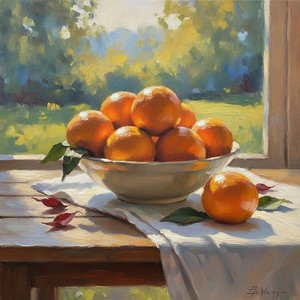
Sun-Drenched Citrus: The Vibrant Beauty of Oranges in Impressionist Masterpieces
Embark on a sensory journey through Impressionist masterpieces. Discover how Renoir and Cézanne captured the vibrant light and luscious textures of sun-drenched oranges in exquisite still life paintings designed to inspire and transform your home.

Beyond the Light: Discovering the Soul and Emotional Depth of Post-Impressionism
Embark on a cultural journey through Post-Impressionism. Discover the profound emotional depth of masters like Van Gogh and Cézanne, exploring how they moved beyond light to capture the very soul of human experience through vibrant color and symbolic form.

Capturing the Light: A Journey Through the Ethereal Magic of Impressionism and Post-Impressionism
Embark on a cultural journey through the luminous world of Impressionism. Discover the profound beauty of Monet, Van Gogh, and Cézanne through expert art history insights and explore how to bring these timeless masterpieces into your home with museum-quality hand-painted reproductions.
Explorez des œuvres d'art classées par thèmes, styles et caractéristiques.


