

Présenté : · Avec son cadre :
 Aperçu en situation
 Envoyer
 Partager
 Détails de l'œuvre
 Guide
Guide

 Télécharger l'image
 Articles similaires
 Radiographie
 Diaporama
 Questions et réponses
 Statistiques


€ 240
Reproduction à l'huile faite à la main
Huile sur toile peinte à la main, avec cadre et dimensions personnalisés, réalisée sur commande par nos artistes. ( Passer au format impression Passer au format numérique)
Format
·Format standard
sur mesure
CM
INCH
Choisissez parmi nos formats prédéfinis qui respectent les proportions originales de l’œuvre.
Chargement des formats...

largeur
hauteur
Saisissez la largeur et la hauteur souhaitées, pour s'adapter à votre cadre ou à votre mur. Cette œuvre est peinte à la main ; ainsi, pour un format de forme différente, l'artiste peut peindre un peu plus autour du tableau ou réduire légèrement les bords — c'est vous qui choisissez. Nous vous envoyons une maquette numérique pour approbation avant que la peinture ne commence. L'image présentée sur cette page ne reflète pas le résultat réel — seule la maquette le fait.
 En savoir plus
Finition
·
Bords blancs €1

Bords estompés €1

Bords imprimés €1

P118B €10

P118H €10

P118W €10

P438Z €10

P508JH €12

P508YH €12

P805H €10

P805Z €10

P919BZ €10

P919G €10

P919XJ €10

P959ZH €10

P968JZ €12

W106C €8

W218G €10

W218JH €8

W218Y €10

W307PJ €10

W316G €10

W316PJ €8

W316Y €10

W398PJ €8

W4111J €10

W500HY €15

W500JH €15

W692G €12

W849H €8

W940BG €15

W953PJ €8

H24-GOLD €30

H24-SILVER €30

H36-GOLD €45

H36-SILVER €45
Expédié dans un tube de protection, prêt à être encadré par votre professionnel habituel.
Options supplémentaires
optionnelQue comprennent les extras ?
Exemples de personnalisation possibles : Remplacer le visage par la photo du client ; Ajouter un animal (ex: remplacer le chat par un chien) ; Inclure un message caché en arrière-plan ; Modifier le paysage ou les éléments de l'arrière-plan.
Après la commande, l'équipe de TopImpressionists.com contactera le client par e-mail pour obtenir ses instructions et lui fournir un aperçu de la maquette
Après la commande, l'équipe de TopImpressionists.com contactera le client par e-mail pour obtenir ses instructions et lui fournir un aperçu de la maquette
Livraison dans le monde entier () en 3 à 4 semaines au lieu des 5 semaines habituelles. (7 novembre). Aucun compromis sur la qualité.
Vernis de protection
Cartel
Détails de la plaque en bronze gravée
This elegant plaque features the artist's name and the title of the artwork, finely engraved for a timeless presentation.
It is made from bronze with a refined, elegant finish. The text is precisely laser-engraved for a sharp and permanent result. Measuring 9x2 cm, the plaque is compact yet easy to read. It's built to be durable and scratch-resistant, offering a professional, museum-quality look. Mounting is simple thanks to the included adhesive backing.
Détails de la plaque en acrylique transparent
The plaque includes essential engraved details such as the artist's name, the title of the artwork, the date it was created, the type of media used-like oil on canvas or watercolor-a brief description of the piece, and a QR code that links to the complete artwork information.
It is crafted from clear acrylic, offering a sleek, modern appearance. The text is UV-engraved in black to ensure strong visual contrast. With a size of 10x15 cm, it ensures optimal readability. It comes equipped with two metal hooks for secure wall mounting. The plaque is designed to be weather-resistant, making it suitable for various environments, and it includes interactive features that work seamlessly with smartphone scanning.
Détails de la plaque en acrylique noir
This elegant plaque includes engraved information such as the artist's name, the title of the artwork, the date it was created, the type of media used (like oil on canvas or watercolor), a short description of the artwork, and a QR code for quick access to more information.
The plaque itself is made from refined black acrylic with a premium finish. The text is laser-engraved in white for high contrast and readability. Its size is 10x15 cm, designed to be easy to read. It comes with two metal hooks for professional mounting. The design is sleek and fits any interior style. It is also weather-resistant and durable, with built-in digital integration for mobile compatibility.
L'option verre n'est disponible que pour les dimensions inférieures à 110 cm.
 L'option verre n'est disponible que pour les dimensions inférieures à 110 cm.
- Livraison express gratuite dans le monde entier
- Toile de lin de qualité supérieure
- Assurance transport complète
- Garantie de remboursement des droits de douane
- Garantie de fidélité des couleurs
- Politique de retour de 100 jours (uniquement en cas de défaut)
- Garantie de remboursement à 100%
- Offre de tarifs dégressifs


Description de la pièce
Paul Signac's "The Demolisher" is a vibrant Pointillist masterpiece depicting urban transformation. Explore the artist’s systematic color application and its reflection of late 19th-century France. A captivating study in labor, time, and modern art.
Biographie de l'artiste
Découvrez Paul Signac (1863-1935), maître du néo-impressionnisme et du pointillisme ! Ses paysages côtiers lumineux et son influence sur l'art moderne chez TopImpressionists.
À propos de l'œuvre
The Demolisher: A Study in Urban Transformation Through Pointillism
Paul Signac’s “The Demolisher” is not merely a depiction of a construction scene; it's a carefully constructed meditation on the relentless march of progress, the labor that underpins it, and the inherent tension between tradition and modernity. Painted between 1897 and 1899 during his pivotal period within Neo-Impressionism, this large-scale oil on canvas (measuring 251 cm x 150.5 cm) offers a compelling glimpse into the social and artistic landscape of late 19th-century France. The painting immediately draws the viewer in with its vibrant yet meticulously rendered surface – a testament to Signac’s mastery of pointillism, a technique he developed alongside Georges Seurat.
At first glance, the scene presents a straightforward portrayal: a solitary figure, presumably a demolisher, stands atop a chaotic pile of rubble, wielding two hammers with focused determination. However, beneath this apparent simplicity lies a complex web of symbolism and artistic intent. Signac doesn’t simply record; he analyzes. The figures surrounding the central figure – other workers engaged in the demolition process – are not merely incidental details but contribute to an overall sense of collaborative effort, highlighting the collective nature of urban development. Crucially, the inclusion of a clock in the background immediately injects a note of urgency and constraint, suggesting that this work is governed by a strict schedule, a common characteristic of industrial labor at the time.
The Science of Color: Pointillism Unveiled
Signac’s genius lies not just in his subject matter but in his innovative technique. Pointillism, as he and Seurat championed, was more than a mere painting style; it was an attempt to scientifically analyze and reproduce the effects of light and color. Instead of blending colors directly on the canvas, Signac applied thousands of tiny, distinct dots – individual points of pure color – that would optically blend in the viewer’s eye. This process creates a shimmering, almost vibrating surface, full of subtle nuances and atmospheric depth. Observe how he builds up layers of blues, greens, and ochres to represent the weathered stone and the dust-filled air; or the sharp yellows and reds used to define the hammers and the figures' clothing. The effect is remarkably three-dimensional, inviting the viewer to actively participate in the creation of the image.
The meticulous nature of this technique demanded immense patience and precision. Each dot was carefully chosen and placed, reflecting Signac’s belief that color could be understood and manipulated through scientific principles. This wasn't about mimicking reality; it was about capturing its essence – the way light interacts with surfaces and how our eyes perceive color – in a new and revolutionary way.
Historical Context & Societal Reflection
"The Demolisher" is deeply rooted in the social and economic realities of late 19th-century Paris. The painting was created during a period of rapid urban expansion, as the city grappled with the challenges of accommodating a growing population. Demolition projects were commonplace, tearing down old buildings to make way for new ones – a process that often displaced communities and disrupted established ways of life. Signac’s choice of subject matter reflects this broader societal shift, offering a poignant commentary on the consequences of progress. The painting can be interpreted as an allegory for the destruction of the past in favor of the future, a theme that resonated powerfully with many artists and intellectuals of the time.
The fact that the work is housed at the Musée d'Orsay in Paris underscores its significance within the canon of Impressionist and Post-Impressionist art. It stands as a powerful example of Signac’s contribution to the evolution of modern painting, demonstrating his willingness to push the boundaries of artistic expression while remaining grounded in scientific observation.
Collecting & Experiencing “The Demolisher”
Reproductions of "The Demolisher" by TopImpressionists.com capture the vibrancy and intricate detail of Signac’s original masterpiece, allowing you to bring this compelling work into your home or office. Whether you are an art enthusiast, a collector seeking to expand your collection, or simply someone looking for a striking piece of decorative art, a high-quality reproduction offers a beautiful and accessible way to engage with this important work of art history. Consider how the pointillist technique translates to a print – the subtle shifts in color and texture create a captivating visual experience that mirrors the original painting’s dynamism. Explore more works by Paul Signac on our website, including "The Velodrome," for a deeper appreciation of his artistic vision.
Questions et réponses
Quelle palette de couleurs est utilisée dans «The Demolisher» de Paul Signac ?
Les couleurs de "The Demolisher" forment une palette Couleurs neutres. Cette classification décrit les familles de couleurs dominantes.
Comment le contraste et l'harmonie se conjuguent-ils dans « The Demolisher » ?
Dans « The Demolisher », un Doux contraste s'allie à une Palette discordante harmonie.
Comment le médium et le mouvement se conjuguent-ils dans « The Demolisher » ?
«The Demolisher» de Paul Signac allie la technique du Huile sur toile au style Neo-Impressionism. La technique et le mouvement désignent respectivement le procédé de réalisation et l'esthétique de l'œuvre.
Informations clés et quiz sur l'œuvre
À propos de Paul Signac

Paul Signac
1863 - 1935, France
Biographie de l'artiste
La Vision Harmonieuse de Paul Signac
Paul Victor Jules Signac, né à Paris en 1863, s'est imposé comme une figure charnière de l'évolution de l'art moderne, indissociablement lié à la naissance et au développement du Néo-Impressionnisme. Initialement attiré par l'architecture, une rencontre de jeunesse avec l'exposition de Claude Monet a allumé en lui une passion durable pour la peinture, le lançant sur une voie qui allait redéfinir la théorie des couleurs et l'expression artistique. Signac n'était pas seulement un peintre ; il était un explorateur dévoué de la lumière, de la couleur et de la science même qui sous-tend la perception visuelle. Ses premières œuvres, bien que manifestant des tendances impressionnistes, ont rapidement évolué sous l'influence profonde de Georges Seurat, forgeant un partenariat qui a donné naissance au Pointillisme – une technique caractérisée par l'application méticuleuse de minuscules points distincts de couleur pure, destinés à se mélanger optiquement dans l'œil du spectateur. Il ne s'agissait pas simplement d'esthétique ; c'était une tentative de systématiser la peinture, en l'ancrant dans des principes scientifiques et en défiant les normes artistiques conventionnelles.Un Dialogue avec Seurat et la Naissance du Néo-Impressionnisme
La rencontre entre Signac et Seurat en 1884 s'est révélée transformative pour les deux artistes. Ils partageaient une fascination pour les écrits d'Eugène Delacroix sur la théorie des couleurs, particulièrement son exploration des contrastes complémentaires et de l'impact émotionnel de la teinte. Ensemble, ils se sont lancés dans une investigation rigoureuse de ces principes, les traduisant en une technique picturale révolutionnaire. Signac a embrassé de tout cœur la vision de Seurat, abandonnant les touches fugaces de l'Impressionnisme pour l'application précise et calculée de points de couleur. Boulevard de Clichy (1886) constitue un premier témoignage de cette nouvelle approche, illustrant le style méticuleux de Signac et son engagement à capturer la vitalité de la vie urbaine à travers un prisme scientifique. Cependant, leur collaboration n'était pas seulement technique ; elle était intellectuelle, nourrie par le désir partagé d'élever la peinture au rang d'une science rigoureuse. Signac est devenu un fervent défenseur des idées de Seurat, promouvant sans relâche le Néo-Impressionnisme et défendant ses principes face aux critiques. La mort tragique et prématurée de Seurat en 1891 a laissé à Signac le rôle de principal champion de leur vision artistique commune, un rôle qu'il a assumé avec un dévouement inébranlable.Rêveries Côtières et Indépendance Artistique
Après la disparition de Seurat, le voyage artistique de Signac a pris une nouvelle dimension, profondément influencée par son amour profond pour la voile et l'attrait de la côte méditerranéenne. Il découvrit Saint-Tropez en 1892, y établissant une demeure qui devint un refuge pour les artistes et une source d'inspiration infinie. Les eaux scintillantes, les ports baignés de soleil et les villes côtières pittoresques offrirent un cadre idéal pour explorer l'interaction entre la lumière et la couleur. La Bouée Rouge, Saint-Tropez (1895) illustre parfaitement cette période, démontrant sa maîtrise du Pointillisme dans la capture des teintes vibrantes et de l'énergie dynamique de la mer. Sa technique a évolué, devenant plus fluide et expressive tout en conservant ses fondements scientifiques. Il commença à expérimenter avec des touches plus larges et une palette plus étendue, s'éloignant de l'adhésion stricte à la méthode de pointillé précis de Seurat. Les voyages de Signac s'étendirent au-delà de la France, englobant l'Italie, la Hollande et même Constantinople, chaque périple enrichissant son vocabulaire artistique et élargissant sa perspective.Un Mécène de l'Avant-Garde et un Héritage Durable
Au-delà de ses propres aspirations artistiques, Signac joua un rôle crucial dans la promotion du développement de l'art moderne grâce à son leadership au sein de la Société des Artistes Indépendants. En tant que président de 1908 jusqu'à sa mort en 1935, il fut le défenseur de la liberté artistique et offrit une plateforme aux talents émergents, notamment Henri Matisse, André Derain et d'autres pionniers du Fauvisme et du Cubisme. Il fut parmi les premiers à reconnaître et à soutenir leurs travaux novateurs, exposant des œuvres controversées qui défiaient les normes esthétiques conventionnelles. L'engagement de Signac envers l'inclusivité et sa volonté d'embrasser l'innovation ont aidé à façonner la trajectoire de l'art du XXe siècle. Ses écrits théoriques, notamment D'Eugène Delacroix au Néo-Impressionnisme (1899), ont davantage consolidé sa position de figure intellectuelle majeure dans le monde de l'art. L'héritage de Paul Signac s'étend bien au-delà de ses peintures captivantes ; il fut un artiste visionnaire, un théoricien dévoué et un mécène généreux qui influença profondément le cours de l'art moderne, laissant une marque indélébile sur les générations d'artistes à venir.Dates Clés et Réalisations
- 1863 : Naissance à Paris, France.
- 1884 : Cofondateur de la Société des Artistes Indépendants avec Georges Seurat.
- 1886 : Peint *Boulevard de Clichy*, un exemple clé du début du Pointillisme.
- 1895 : Création de *La Bouée Rouge, Saint-Tropez*, illustrant sa maîtrise des scènes côtières.
- 1899 : Publication de *D'Eugène Delacroix au Néo-Impressionnisme*, une œuvre séminale sur la théorie des couleurs.
- 1908 – 1935 : Président de la Société des Artistes Indépendants, défenseur des artistes d'avant-garde.
- 1935 : Décès à Paris à l'âge de 72 ans, laissant derrière lui un riche héritage artistique.
Informations clés sur Paul Signac
- Artistic Movement Or Style: Neo-Impressionism, Pointillism
- Artists Or Movements Influenced By This Artist:
- Henri Matisse
- Fauvism
- Artists Who Influenced This Artist:
- Claude Monet
- Georges Seurat
- Date Of Birth: 1863
- Date Of Death: 1935
- Full Name: Paul Victor Jules Signac
- Nationality: French
- Notable Artworks:
- Boulevard de Clichy
- The Red Buoy
- La Valleuse
- Place Of Birth: Paris
Œuvres similaires


Explorez des œuvres d'art classées par thèmes, styles et caractéristiques.


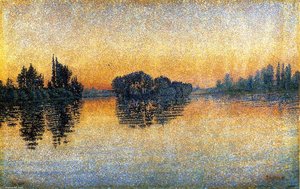

Paul Signac
The Demolisher
() ·
Avec son cadre : · Peint à la main à l'huile sur lin
Total