

 Aperçu en situation
 Envoyer
 Partager
 Détails de l'œuvre
 Guide
Guide

 Télécharger l'image
 Articles similaires
 Radiographie
 Diaporama
 Q&A
Q&A Statistiques
Children reading


Discover 'Children Reading' by Pekka Halonen (1916). A warm, realistic oil painting capturing Finnish childhood & education. Explore this national romantic masterpiece!
 Lire la suite
Pekka Halonen (1865-1933) fut un peintre finlandais renommé pour ses paysages romantiques nationaux et ses représentations réalistes de la vie finlandaise. Découvrez ses œuvres emblématiques comme « Sauna dans la neige » et découvrez comment il a promu l'identité nationale grâce à l'art.
Giclées et impressions d'art
Impressions giclées ou sur toile de qualité musée, avec une production rapide et des finitions au choix. ( Commander la reproduction peinte à la main Passer au format numérique)




P118B €10

P118H €10

P118W €10

P438Z €10

P508JH €12

P508YH €12

P805H €10

P805Z €10

P919BZ €10

P919G €10

P919XJ €10

P959ZH €10

P968JZ €12

W106C €8

W218G €10

W218JH €8

W218Y €10

W307PJ €10

W316G €10

W316PJ €8

W316Y €10

W398PJ €8

W4111J €10

W500HY €15

W500JH €15

W692G €12

W849H €8

W940BG €15

W953PJ €8




Format standard
sur mesure
CM
INCH
Choisissez parmi nos formats prédéfinis qui respectent les proportions originales de l’œuvre.
Loading sizes...

largeur
hauteur
Saisissez la largeur et la hauteur souhaitées pour qu'elles s'adaptent à votre cadre ou à votre mur. Une impression peut être recadrée, mais jamais agrandie au-delà de l'image originale ; ainsi, un format de forme différente entraînera la perte d'une partie de l'image. Nous vous envoyons une maquette numérique pour approbation avant toute impression. L'image présentée sur cette page ne montre pas le recadrage réel — seule la maquette le permet.
Livraison dans le monde entier () en 2 semaines au lieu des 4/5 semaines habituelles. (2 novembre)

Livraison express gratuite dans le monde entier

Toile de lin de qualité supérieure

Assurance transport complète

Garantie de remboursement des droits de douane

Garantie de fidélité des couleurs

Politique de retour de 100 jours (uniquement en cas de défaut)

Garantie de remboursement à 100%

Offre de tarifs dégressifs
 L'option verre n'est disponible que pour les dimensions inférieures à 110 cm.

Children reading
Giclées et impressions d'art
Format de la reproduction
-


Prix total
€ 61
A Quiet Moment in Time
In the soft, amber glow of a fading afternoon, Pekka Halonen’s "Children Reading" invites the viewer into a sanctuary of stillness and shared discovery. Painted in 1916, this evocative oil masterpiece captures more than just a simple pastime; it encapsulates a profound sense of intimacy and the quiet sanctity of childhood. Two young girls are nestled closely together, their focus entirely consumed by the pages of a book held between them. The composition is masterfully arranged to draw the eye toward this central point of connection—the delicate interplay of small hands and the printed word. Through Halonen’s lens, we witness a moment where time seems to suspend itself, allowing the outside world to recede and leaving only the warmth of companionship and the allure of storytelling.
The painting is a triumph of National Romanticism blended with a gentle, impressionistic touch. While Halonen is celebrated for his sweeping Finnish landscapes, "Children Reading" demonstrates his extraordinary ability to find epic emotion within the domestic sphere. The technique involves a rich layering of oil paints on canvas, where visible, expressive brushstrokes lend a tactile quality to the scene. Light serves as the primary protagonist here; streaming from an unseen window to the right, it bathes the figures in a soft, ethereal radiance. This directional light creates subtle shadows and highlights the textures of fabric and skin, imbuing the work with a three-dimensional presence that feels remarkably lifelike. The slightly low perspective places the observer at eye level with the children, fostering an emotional closeness that makes the viewer feel like a silent participant in this private ritual.
Symbolism and Lasting Legacy
Beyond its aesthetic beauty, the artwork serves as a poignant symbol of education, innocence, and the preservation of culture. During a period of significant national identity formation in Finland, Halonen’s focus on the simple, honest rhythms of life resonated deeply. The act of reading becomes a metaphor for the transmission of knowledge and the nurturing of the next generation. There is a nostalgic, almost bittersweet quality to the piece, suggesting a reverence for a way of life rooted in tradition and quiet contemplation. For the collector or interior designer, this painting offers more than mere decoration; it provides an emotional anchor for a room. Its warm palette and serene subject matter make it an ideal centerpiece for spaces designed for reflection, such as libraries, studies, or cozy living areas.
Whether viewed as a historical document of Finnish life or as a timeless study of human connection, "Children Reading" continues to captivate the modern heart. It is a work that speaks to the universal desire for peace and the enduring power of shared intellectual journeys. Owning a high-quality reproduction of this Halonen classic allows one to bring this sense of historical grace and domestic tranquility into a contemporary home, serving as a constant reminder of the beauty found in life's most quiet, unscripted moments.
Questions et réponses
En quoi "Children reading" s'inscrit-il dans l'œuvre de Pekka Halonen ?
«Children reading» partage avec les autres œuvres de Pekka Halonen son style Realism ainsi que ses thèmes récurrents : realism, finnish romanticism, impressionistic light, rural finland, childhood innocence, education.
Quelle couleur domine la composition de «Children reading» de Pekka Halonen ?
Driftwood (#a77e57) est la couleur dominante de «Children reading» de Pekka Halonen.
Quel usage est suggéré pour «Children reading» de Pekka Halonen ?
Une reproduction de «Children reading» de Pekka Halonen est recommandée pour Mood. Cette suggestion découle du sujet, de l'atmosphère et des couleurs de l'œuvre.
Œuvres similaires


Biographie de l'artiste
Pekka Halonen: A Pioneer of Finnish Landscape Painting
Pekka Halonen (1865-1933) stands as a pivotal figure in Finnish art history, recognized primarily for his masterful depictions of the Finnish landscape and its people during the National Romantic era. His artistic vision seamlessly blended realism with Impressionistic techniques, establishing him as one of Finland’s foremost painters and contributing significantly to the burgeoning sense of national identity at the turn of the century. Born September 23rd, 1865, in Linnasalmi, Lapinlahti, Finland, Halonen's upbringing profoundly shaped his artistic sensibilities. His father, Olli Halonen, was a farmer and amateur artist who instilled in Pekka a deep appreciation for craftsmanship and observation of the natural world – experiences that would become central to Halonen’s oeuvre. Notably, Olli Halonen frequently undertook decorative painting commissions on churches in neighboring districts, exposing young Pekka to artistic practice firsthand. This familial influence fostered an early fascination with color and form, laying the groundwork for his future explorations into landscape painting. Halonen pursued formal artistic training at Helsinki Art Society's Drawing School for four years, graduating with honors and securing a scholarship to study abroad. Recognizing the importance of broadening his horizons, he embarked on a journey to Paris in 1890, initially enrolling at the Académie Julian before gravitating towards the tutelage of Paul Gauguin at the Académie Vitti. Alongside these influential mentors, Halonen honed his skills at the École Supérieure des Beaux-Arts, immersing himself in the artistic currents of Impressionism and Post-Impressionism. This Parisian period proved transformative, exposing him to groundbreaking ideas about color theory and expressive brushwork – concepts that would permeate his subsequent paintings. His marriage to Maija Mäkinen in 1895 marked a significant chapter in Halonen’s personal life, establishing a home on Lake Tuusula where he cultivated an artist's community alongside fellow painters. The couple resided at ‘Halosenniemi,’ a magnificent pine villa designed collaboratively by Halonen and his brother Antti Halonen, completed in 1902. This architectural masterpiece served as both inspiration and studio space for Halonen’s artistic endeavors, embodying the ideals of Finnish national identity and reflecting the influence of Parisian villas. The villa's design prioritized natural light and expansive views of Lake Tuusula, mirroring Halonen’s dedication to capturing the essence of Finland’s landscape. Halonen’s artistic output is characterized by a distinctive blend of realism and Impressionistic color palettes. He meticulously rendered Finnish landscapes—particularly winter scenes—with remarkable accuracy, conveying atmospheric conditions and subtle tonal variations with exceptional skill. Simultaneously, he employed expressive brushstrokes and vibrant hues to infuse his paintings with emotion and dynamism – techniques borrowed from Gauguin’s stylistic innovations. His most celebrated works include “Sauna in the Snow,” a poignant portrayal of Finnish rural life imbued with symbolic resonance, and "Washing on the Ice," which exemplifies his masterful command of Impressionistic light and color. Furthermore, Halonen's contribution to fostering Finnish national identity through art is undeniable; he became an integral part of Tuusula’s artistic landscape, shaping its cultural heritage for generations to come. His legacy continues to inspire artists today, cementing his place as a cornerstone of Finnish visual culture.
Pekka Halonen
1865 - 1933 , Finlande
L'essentiel de l'artiste
- Artistic Movement Or Style: National Romanticism
- Artists Who Influenced This Artist:
- Yrjö Aleksanterjö Ollila
- Paul Gauguin
- Date Of Birth: 1865
- Date Of Death: 1933
- Full Name: Pekka Halonen
- Nationality: Finnish
- Notable Artworks:
- Sauna in the Snow
- Washing on the Ice
- Place Of Birth: Linnasalmi, Finland
Articles connexes

Akseli Gallen-Kallela: Shaping Finnish Identity Through National Romanticism & Symbolism
Explore the captivating world of Akseli Gallen-Kallela, Finland's iconic National Romantic painter. Discover his symbolic landscapes, Kalevala illustrations & lasting impact on Finnish identity. Expert analysis & high-quality reproductions at TopImpressionists.

Maîtrise du Graphite : Guide Expert pour Sculpter le Relief et la Texture au Crayon
Maîtrisez le relief et la texture au graphite grâce à nos conseils d'experts. Devenez un pro du dessin dès maintenant !

Top 10 des Chefs-d'œuvre du Réalisme : Artistes et Décor Intérieur
Plongez au cœur du Réalisme avec ! Découvrez 10 chefs-d'œuvre de Courbet, Millet et autres maîtres. Histoire, techniques & inspiration déco. Explorez la collection en ligne.

Echoes of a Turning Tide: Artistic Responses to 1916 – A Year of Conflict & Transformation
Explore the profound artistic responses to the tumultuous year of 1916. Discover how WWI shaped movements like Futurism & Expressionism, and delve into masterpieces by Kandinsky, Matisse, Nevinson & more. Learn about art history at TopImpressionists.
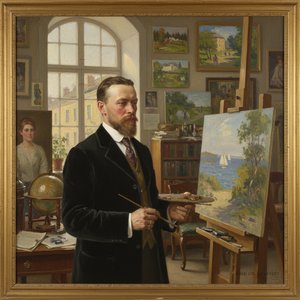
Albert Edelfelt: A Pioneer of Finnish Realism & International Impressionist Circles
Explore the life & work of Albert Edelfelt, a pioneering Finnish Realist painter who bridged Impressionism & national identity. Discover his masterpieces and lasting influence on art history.