

 Aperçu en situation
 Envoyer
 Partager
 Détails de l'œuvre
 Guide
Guide

 Télécharger l'image
 Articles similaires
 Radiographie
 Diaporama
 Questions et réponses
 Statistiques
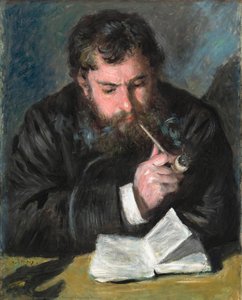
Claude Monet (The Reader)


Portrait de Claude Monet par Pierre-Auguste Renoir : une œuvre emblématique de l'impressionnisme capturant la lumière et la sérénité d'une rencontre intellectuelle et artistique. À voir au Musée national d'art américain à Washington.
 Lire la suite
Explorez le monde vibrant de Pierre-Auguste Renoir (1841-1919), un peintre impressionniste majeur, célébré pour ses portraits lumineux, scènes de vie parisienne et la beauté féminine. Découvrez son héritage et les contributions artistiques de sa famille.
Giclées et impressions d'art
Impressions giclées ou sur toile de qualité musée, avec une production rapide et des finitions au choix. ( Commander la reproduction peinte à la main Passer au format numérique)




P118B €10

P118H €10

P118W €10

P438Z €10

P508JH €12

P508YH €12

P805H €10

P805Z €10

P919BZ €10

P919G €10

P919XJ €10

P959ZH €10

P968JZ €12

W106C €8

W218G €10

W218JH €8

W218Y €10

W307PJ €10

W316G €10

W316PJ €8

W316Y €10

W398PJ €8

W4111J €10

W500HY €15

W500JH €15

W692G €12

W849H €8

W940BG €15

W953PJ €8




Format standard
sur mesure
CM
INCH
Choisissez parmi nos formats prédéfinis qui respectent les proportions originales de l’œuvre.
Loading sizes...

largeur
hauteur
Saisissez la largeur et la hauteur souhaitées pour qu'elles s'adaptent à votre cadre ou à votre mur. Une impression peut être recadrée, mais jamais agrandie au-delà de l'image originale ; ainsi, un format de forme différente entraînera la perte d'une partie de l'image. Nous vous envoyons une maquette numérique pour approbation avant toute impression. L'image présentée sur cette page ne montre pas le recadrage réel — seule la maquette le permet.
Livraison dans le monde entier () en 2 semaines au lieu des 4/5 semaines habituelles. (6 novembre)

Livraison express gratuite dans le monde entier

Toile de lin de qualité supérieure

Assurance transport complète

Garantie de remboursement des droits de douane

Garantie de fidélité des couleurs

Politique de retour de 100 jours (uniquement en cas de défaut)

Garantie de remboursement à 100%

Offre de tarifs dégressifs
 L'option verre n'est disponible que pour les dimensions inférieures à 110 cm.

Claude Monet (The Reader)
Giclées et impressions d'art
Format de la reproduction
-


Prix total
€ 63
Claude Monet (also known as The Reader) : A Portrait of Intellectual Companionship
Pierre-Auguste Renoir’s “Claude Monet (The Reader)” stands as a testament to Impressionism's ability to capture not just visual beauty but also the subtle nuances of human emotion and intellectual connection. Painted in 1873, this oil on canvas masterpiece resides at the National Gallery of Art in Washington, D.C., offering viewers an intimate glimpse into Monet’s world—a world illuminated by soft light and infused with a profound appreciation for quiet contemplation.- Subject Matter: The painting depicts Claude Monet engrossed in reading a book, accompanied by two cats nestled on either side of him. This seemingly simple composition is laden with symbolic significance, representing intellectual curiosity, artistic inspiration, and the comfort found in companionship.
- Style & Technique: Renoir’s masterful brushstrokes exemplify Impressionistic principles—a deliberate rejection of academic conventions favoring spontaneity and capturing fleeting moments of light and color. The artist skillfully blends hues to create a luminous atmosphere, prioritizing tonal variations over precise delineation.
- Historical Context: Created during the height of the Impressionist movement, “Claude Monet (The Reader)” reflects the broader artistic ethos of its time—a desire to portray everyday life with honesty and sensitivity. It aligns perfectly with Renoir’s fascination for capturing human subjects in natural settings.
Renoir's Approach to Portraiture: Capturing Essence Over Literal Representation
Renoir was renowned for his portraits, which distinguished themselves from traditional depictions by prioritizing emotional resonance over meticulous detail. He sought to convey not merely physical likeness but also the inner life of his subjects—their thoughts, feelings, and aspirations. In “Claude Monet (The Reader),” Renoir achieves this goal with remarkable success, portraying Monet’s face with a gentle expression that speaks volumes about his character.Color Palette & Light: The Language of Impressionism
Renoir's use of color is particularly noteworthy—a hallmark of Impressionist painting. He employs a harmonious palette dominated by warm tones—ochres, yellows, and reds—to evoke the warmth of Monet’s study and to imbue the scene with an aura of tranquility. The artist skillfully manipulates light, capturing its diffused glow and casting subtle shadows that enhance the depth and texture of the canvas. This technique underscores Renoir's commitment to portraying reality as perceived by the senses—a core principle of Impressionism.The Significance of Cats: Symbolism in Domestic Tranquility
Adding to the painting’s visual richness is the presence of two cats—one on Monet’s left and one on his right. These animals serve as emblems of domestic tranquility, warmth, and affection—elements that Renoir skillfully integrates into the composition. They represent a counterpoint to the intellectual pursuits depicted in the center of the canvas, suggesting that true contentment can be found in simple pleasures and human connection.A Legacy of Impressionistic Beauty
“Claude Monet (The Reader)” remains an enduring symbol of Impressionism’s artistic vision—a celebration of beauty, light, and emotion. Its placement at the National Gallery of Art ensures that this captivating artwork continues to inspire admiration and contemplation for generations to come. Explore more works by Renoir and other Impressionist artists: Pierre-Auguste Renoir: Claude Monet (also known as The Reader) - Paul Cézanne - Mary Cassatt These resources provide valuable insights into the lives and works of these influential artists, offering a deeper understanding of their contributions to the world of art. For art enthusiasts looking to explore more works by Renoir and other Impressionist artists, we recommend visiting the following links: - Pierre-Auguste Renoir: Claude Monet (also known as The Reader) - Paul Cézanne - Mary Cassatt These resources provide valuable insights into the lives and works of these influential artists, offering a deeper understanding of their contributions to the world of art. At TopImpressionists, we offer high-quality, handmade oil painting reproductions of famous artworks like Claude Monet (also known as The Reader). Our team of skilled artists carefully recreates each piece to ensure that it captures the essence and beauty of the original. For art enthusiasts looking to explore more works by Renoir and other Impressionist artists, we recommend visiting the following links: - Pierre-Auguste Renoir: Claude Monet (also known as The Reader) - Paul Cézanne - Mary Cassatt These resources provide valuable insights into the lives and works of these influential artists, offering a deeper understanding of their contributions to the world of art."Questions et réponses
Quelle taille et quel format sont recommandés pour un tirage de «Claude Monet (The Reader)» de Pierre-Auguste Renoir ?
Pour une impression de «Claude Monet (The Reader)» de Pierre-Auguste Renoir, un format Grand format avec une orientation Format portrait est recommandé.
Quelle couleur domine dans « Claude Monet (The Reader) » ?
Terre cuite (#906f3a) est la couleur dominante de «Claude Monet (The Reader)» de Pierre-Auguste Renoir.
À quel mouvement artistique appartient «Claude Monet (The Reader)» de Pierre-Auguste Renoir ?
«Claude Monet (The Reader)» de Pierre-Auguste Renoir appartient au mouvement Impressionist Painting. Ce mouvement apporte le contexte stylistique de l'œuvre.
Œuvres similaires




Biographie de l'artiste
jeunesse et carrière
pierre-auguste renoir, un artiste français essentiel, est né le 25 février 1841 à Limoges, en France. Il a joué un rôle crucial dans la formation du mouvement impressionniste, réputé pour sa lumière vibrante et ses couleurs saturées. L'œuvre de Renoir célébrait la beauté, en particulier la sensualité féminine, le plaçant dans une lignée d'artistes allant de Rubens à Watteau.héritage artistique
L'héritage de Renoir s'est étendu au-delà de ses toiles, en tant que patriarche d'une famille où l'art prospérait sous diverses formes. Ses enfants, pierre renoir (1885–1952), le cinéaste jean renoir (1894–1979) et l'artiste céramiste claude renoir (1901–1969), ont chacun apporté des contributions significatives dans leurs domaines respectifs. Son petit-fils, le cinéaste claude renoir (1913–1993), a davantage fait progresser l'héritage artistique de la famille.œuvres notables et musées
* la danse à Bougival, une peinture notable de Renoir, illustre sa maîtrise de la capture de l'essence de l'art impressionniste. * Le musée des collettes, situé à Cagnes-sur-Mer, en France, est une destination incontournable pour les amateurs d'art. Ce musée, autrefois la maison de pierre-auguste renoir, témoigne de sa vie et de son œuvre, abritant quinze de ses peintures. * Le musée maurice denis, une autre perle cachée en France, présente une impressionnante collection de peintures post-impressionnistes françaises du XIXe et début du XXe siècle.explorez l'art de Renoir avec TopImpressionists
- découvrez le charme du musée des collettes (France) et de son art impressionniste sur TopImpressionists : [https://TopImpressionists.com/@@/a@d3aupf](https://TopImpressionists.com/@@/a@d3aupf)
- explorez les merveilles du musée maurice denis (France) avec TopImpressionists : /fr/art/show/art-d3aue3-fr/
- visualisez les peintures de Renoir, y compris la danse à Bougival, sur TopImpressionists : [https://TopImpressionists.com/@/pierre-auguste renoir](https://TopImpressionists.com/@/pierre-auguste%20renoir)

Pierre-Auguste Renoir
1841 - 1919 , France
L'essentiel de l'artiste
- Artistes Influents:
- Rubens
- Watteau
- Camille Pissarro
- Édouard Manet
- Date De Décès: 3 décembre 1919
- Date De Naissance: 25 février 1841
- Influences Artistiques:
- Impressionnisme
- Post-impressionnisme
- Lieu De Naissance: Limoges, France
- Mouvement Artistique: Impressionnisme
- Nationalité: Française
- Nom Complet: Pierre-Auguste Renoir
- Oeuvres Notables:
- La Danse à Bougival
- Le Déjeuner des canotiers
- Bal au moulin de la Galette
- Après le bain
Articles connexes

Les 25 chefs-d'œuvre de Pierre-Auguste Renoir : l'essence de l'Impressionnisme
Explorez les 25 chefs-d'œuvre de Renoir et la magie de l'impressionnisme. Découvrez toute la collection sur TopImpressionists.com.

Les 10 Chefs-d'œuvre Impressionnistes qui ont Révolutionné la Peinture | TopImpressionists
Plongez au cœur de l'Impressionnisme avec les 10 chefs-d'œuvre incontournables de Monet, Renoir et Degas. Découvrez l'histoire, la technique & l'émotion derrière ces tableaux célèbres. Reproductions d'art de qualité musée sur TopImpressionists.com !

Les 10 Chefs-d'œuvre Impressionnistes qui ont Révolutionné le Paysage
Plongez dans l'univers vibrant de l'impressionnisme ! Découvrez les 10 chefs-d'œuvre de Monet, Renoir et autres maîtres qui ont révolutionné le paysage. Inspirez votre décoration intérieure avec TopImpressionists.com : reproductions tableaux de qualité muséale.

25 chefs-d'œuvre incontournables au Musée d'Orsay : le guide de l'Impressionnisme
Explorez 25 chefs-d'œuvre de l'impressionnisme au Musée d'Orsay. Découvrez ces trésors sur TopImpressionists.com.

Capturer la Lumière : Les 25 Chefs-d'œuvre Iconiques de Claude Monet
Explorez les 25 chefs-d'œuvre de Claude Monet et l'éclat de l'impressionnisme. Découvrez toute la collection sur TopImpressionists.com.
Explorez des œuvres d'art classées par thèmes, styles et caractéristiques.


