


 Aperçu en situation
 Partager
 Partager
 Détails
 Guide imprimable

 Télécharger
 Articles similaires
 Radiographie
 Voir le diaporama
 Statistiques
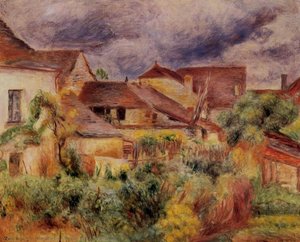
La Roche-Guyon


Plongez dans la beauté paisible de "La Roche-Guyon" de Renoir ! Ce tableau impressionniste capture un village français idyllique, témoin d'une époque révolue. Découvrez son histoire et son esthétique.
 Afficher la suite
Explorez le monde vibrant de Pierre-Auguste Renoir (1841-1919), un peintre impressionniste majeur, célébré pour ses portraits lumineux, scènes de vie parisienne et la beauté féminine. Découvrez son héritage et les contributions artistiques de sa famille.
Giclées et impressions d'art
Impressions giclées ou sur toile de qualité musée, avec une production rapide et des finitions au choix. ( Acheter la peinture faite à la main Passer au format image numérique)




P118B €10

P118H €10

P118W €10

P438Z €10

P508JH €12

P508YH €12

P805H €10

P805Z €10

P919BZ €10

P919G €10

P919XJ €10

P959ZH €10

P968JZ €12

W106C €8

W218G €10

W218JH €8

W218Y €10

W307PJ €10

W316G €10

W316PJ €8

W316Y €10

W398PJ €8

W4111J €10

W500HY €15

W500JH €15

W692G €12

W849H €8

W940BG €15

W953PJ €8




Format standard
personnalisé
CM
INCH
Choisissez parmi nos formats prédéfinis qui respectent les proportions originales de l’œuvre.
Loading sizes...

largeur
hauteur
Saisissez la largeur et la hauteur souhaitées pour qu'elles s'adaptent à votre cadre ou à votre mur. Une impression ne peut être que découpée, elle ne peut jamais être agrandie au-delà de l'image originale ; ainsi, un format de forme différente entraînera la perte d'une partie de l'image. Nous vous envoyons une maquette numérique pour approbation avant toute impression. L'image présentée sur cette page ne montre pas le recadrage réel — seule la maquette le permet.
Livraison dans le monde entier () en 2 semaines au lieu des 4/5 semaines habituelles. (24 octobre)

Livraison express gratuite dans le monde entier

Toile de lin de haute qualité

Assurance transport complète

Garantie de remboursement des droits de douane

Garantie de fidélité des couleurs

Garantie de retour de 100 jours (uniquement en cas de défaut)

Garantie de remboursement à 100%

Tarifs dégressifs sur quantité
 L'option verre n'est disponible que pour les dimensions inférieures à 110 cm.

La Roche-Guyon
Giclées et impressions d'art
Format de la reproduction
-


Prix total final
€ 61
La Roche-Guyon : Un Reflet de Sérénité Impressionniste
Pierre-Auguste Renoir’s La Roche-Guyon, painted in 1885, isn't merely a landscape; it’s an invitation to stillness. This evocative scene, currently residing within the esteemed Aberdeen Art Gallery and Museums in the United Kingdom, captures a fleeting moment of rural tranquility – a village nestled amidst the verdant embrace of the Vexin region, just outside Paris. More than simply depicting a location, Renoir masterfully translates the feeling of that place onto canvas, utilizing his signature Impressionist techniques to create an atmosphere thick with light and a profound sense of peace.
The composition immediately draws the eye towards the prominent house, its red roof a vibrant counterpoint to the muted greens and blues of the surrounding landscape. This central structure isn’t imposing; rather, it feels integrated into the scene, almost as if grown from the earth itself. Smaller buildings, scattered thoughtfully throughout the village, contribute to a sense of intimate community, while the profusion of trees – some close, others receding into the distance – establishes a compelling depth and dimension. Renoir’s deliberate use of perspective guides the viewer's eye through the scene, creating an illusion of space that is both realistic and dreamlike. The artist skillfully employs broken brushstrokes and dappled light to capture the ephemeral quality of a summer afternoon, mirroring the Impressionist movement’s fascination with capturing fleeting moments in time.
L'Art de la Lumière et la Technique Renoirienne
Renoir’s approach to painting is inextricably linked to his exploration of light and color. In La Roche-Guyon, he employs a vibrant palette – the warm reds of the roof, the cool greens of the foliage, and the soft blues of the sky – not with rigid precision but with an intuitive understanding of how these hues interact in natural light. The painting is executed in oil on canvas, a medium that allowed Renoir to build up layers of color and texture, creating a rich and luminous surface. Notice particularly the way he captures the sunlight filtering through the trees, broken into shimmering patches of light and shadow. This delicate handling of light is characteristic of Impressionism, where the artist’s primary goal was not to represent reality with photographic accuracy but to convey the subjective experience of seeing.
The brushstrokes themselves are loose and visible, contributing to the painting's sense of movement and spontaneity. Renoir wasn’t interested in meticulously detailing every leaf or brick; instead, he focused on capturing the overall impression of the scene – its light, color, and atmosphere. This approach aligns perfectly with the Impressionist philosophy of “plein air” painting, where artists worked outdoors directly from nature, allowing them to observe and record the ever-changing effects of light and weather.
Un Contexte Artistique et Personnel
La Roche-Guyon exists within a rich artistic context. Renoir was a pivotal figure in the Impressionist movement, alongside artists like Monet, Degas, and Cézanne. He shared with them a desire to break away from the academic traditions of the Salon system and explore new ways of representing the world. His work often focused on capturing scenes of Parisian life – cafes, theaters, and social gatherings – but he also enjoyed painting landscapes, as evidenced by this serene depiction of rural France. The painting’s subject matter—a small village—reflects Renoir's interest in portraying everyday life with a sense of beauty and charm.
Interestingly, Renoir’s artistic journey was shaped by his early apprenticeship as a porcelain painter, an experience that instilled in him a deep appreciation for detail and craftsmanship. However, he soon found himself drawn to the Impressionist movement, embracing its emphasis on capturing fleeting moments and conveying subjective experiences. His exploration of portraiture, exemplified by works like Woman Leaning on Her Elbows (Femme accoudée), further demonstrates his ability to capture the essence of human emotion and personality.
Un Héritage et une Inspiration Durable
La Roche-Guyon stands as a testament to Renoir’s mastery of Impressionist techniques. It's a painting that invites contemplation, offering a glimpse into a peaceful corner of rural France and showcasing the artist’s ability to capture light, color, and atmosphere with remarkable sensitivity. The work’s enduring appeal lies in its ability to evoke a sense of nostalgia and tranquility – a reminder of simpler times and the beauty of the natural world. For those seeking to experience the magic of Renoir's art firsthand, TopImpressionists offers meticulously crafted hand-painted reproductions that faithfully capture the essence of this captivating landscape.
To explore more of Renoir’s masterpieces, including his portraits and Parisian scenes, visit TopImpressionists.com to discover a curated collection of high-quality reproductions.
Questions et réponses
Comment puis-je obtenir un fichier numérique de «La Roche-Guyon» de Pierre-Auguste Renoir ?
« La Roche-Guyon » est disponible en tant que un téléchargement d'image numérique haute résolution, à acheter directement sur sa page Image numérique.
Puis-je visionner « La Roche-Guyon » sous forme de diaporama en plein écran ?
Le diaporama de « La Roche-Guyon » peut être visionné sur la page Diaporama de l'œuvre.
À quelle étape de la carrière de Pierre-Auguste Renoir « La Roche-Guyon » appartient-elle ?
Au cours de la carrière de Pierre-Auguste Renoir, « La Roche-Guyon » s'inscrit dans la période Mature Period. Cette phase permet de le comparer aux autres œuvres de l'artiste.
Œuvres similaires




Biographie de l'artiste
jeunesse et carrière
pierre-auguste renoir, un artiste français essentiel, est né le 25 février 1841 à Limoges, en France. Il a joué un rôle crucial dans la formation du mouvement impressionniste, réputé pour sa lumière vibrante et ses couleurs saturées. L'œuvre de Renoir célébrait la beauté, en particulier la sensualité féminine, le plaçant dans une lignée d'artistes allant de Rubens à Watteau.héritage artistique
L'héritage de Renoir s'est étendu au-delà de ses toiles, en tant que patriarche d'une famille où l'art prospérait sous diverses formes. Ses enfants, pierre renoir (1885–1952), le cinéaste jean renoir (1894–1979) et l'artiste céramiste claude renoir (1901–1969), ont chacun apporté des contributions significatives dans leurs domaines respectifs. Son petit-fils, le cinéaste claude renoir (1913–1993), a davantage fait progresser l'héritage artistique de la famille.œuvres notables et musées
* la danse à Bougival, une peinture notable de Renoir, illustre sa maîtrise de la capture de l'essence de l'art impressionniste. * Le musée des collettes, situé à Cagnes-sur-Mer, en France, est une destination incontournable pour les amateurs d'art. Ce musée, autrefois la maison de pierre-auguste renoir, témoigne de sa vie et de son œuvre, abritant quinze de ses peintures. * Le musée maurice denis, une autre perle cachée en France, présente une impressionnante collection de peintures post-impressionnistes françaises du XIXe et début du XXe siècle.explorez l'art de Renoir avec TopImpressionists
- découvrez le charme du musée des collettes (France) et de son art impressionniste sur TopImpressionists : [https://TopImpressionists.com/@@/a@d3aupf](https://TopImpressionists.com/@@/a@d3aupf)
- explorez les merveilles du musée maurice denis (France) avec TopImpressionists : /fr/art/show/art-d3aue3-fr/
- visualisez les peintures de Renoir, y compris la danse à Bougival, sur TopImpressionists : [https://TopImpressionists.com/@/pierre-auguste renoir](https://TopImpressionists.com/@/pierre-auguste%20renoir)

Pierre-Auguste Renoir
1841 - 1919 , France
En bref
- Artistes Influents:
- Rubens
- Watteau
- Camille Pissarro
- Édouard Manet
- Date De Décès: 3 décembre 1919
- Date De Naissance: 25 février 1841
- Influences Artistiques:
- Impressionnisme
- Post-impressionnisme
- Lieu De Naissance: Limoges, France
- Mouvement Artistique: Impressionnisme
- Nationalité: Française
- Nom Complet: Pierre-Auguste Renoir
- Oeuvres Notables:
- La Danse à Bougival
- Le Déjeuner des canotiers
- Bal au moulin de la Galette
- Après le bain
Articles connexes

Paul Cézanne : Les 25 Œuvres Maîtresses d'un Génie Révolutionnaire | TopImpressionists
Plongez dans l'univers de Paul Cézanne avec les 25 œuvres incontournables du maître post-impressionniste. Découvrez l'histoire, la technique et l'émotion derrière ses tableaux iconiques comme 'Les Baigneuses' ou 'Mont Sainte-Victoire'. Reproductions d'art haute qualité sur TopImpressionists.com.

Les 10 Chefs-d'œuvre Impressionnistes qui ont Révolutionné le Paysage
Plongez dans l'univers vibrant de l'impressionnisme ! Découvrez les 10 chefs-d'œuvre de Monet, Renoir et autres maîtres qui ont révolutionné le paysage. Inspirez votre décoration intérieure avec TopImpressionists.com : reproductions tableaux de qualité muséale.

Renoir : 25 Chefs-d'œuvre Incontournables – L’Art de la Lumière
Plongez au cœur de l'univers vibrant de Pierre-Auguste Renoir ! Découvrez 25 chefs-d’œuvre emblématiques, explorant la lumière, les couleurs et la joie de vivre. Reproductions d'art de qualité musée sur TopImpressionists.com.

Évocations de lieux : Un voyage historique à travers l'art du paysage
Explorez l'histoire fascinante de la peinture de paysage à travers les chefs-d'œuvre du Romantisme. Découvrez Friedrich, Turner et Aivazovski et laissez-vous inspirer par la beauté sauvage et le sublime. Reproduction d'art de qualité chez TopImpressionists.

Évocations de Lieux : Un Voyage Historique à Travers l'Art du Paysage
Explorez l'histoire fascinante de la peinture de paysage romantique ! Découvrez les maîtres (Friedrich, Turner) et le concept du sublime. Conseils d'experts pour collectionner et apprécier cet art intemporel.
Explorez des œuvres d'art classées par thèmes, styles et caractéristiques.


